Crude Oil Surges 8% as Hormuz Strait Crisis Deepens and Diplomacy Falters
Key Takeaways
- Brent crude surged past $109 per barrel, marking a nearly 8% weekly increase
- Shipping through the Strait of Hormuz continues at significantly reduced levels
- President Trump warned of diminishing patience with Tehran and suggested potential military escalation
- The International Energy Agency projects severe supply deficits could persist through October
- The Beijing summit between Trump and Xi concluded with limited tangible outcomes on trade or energy cooperation
Global crude oil markets experienced significant upward momentum this week as the Strait of Hormuz crisis continued unabated while diplomatic channels failed to produce meaningful breakthroughs in the Iran standoff.
By Friday’s close, Brent crude had crossed the $109 per barrel threshold, marking an approximately 8% weekly advance. West Texas Intermediate settled around $105. The gains represent the most substantial weekly increases either benchmark has recorded in several months.
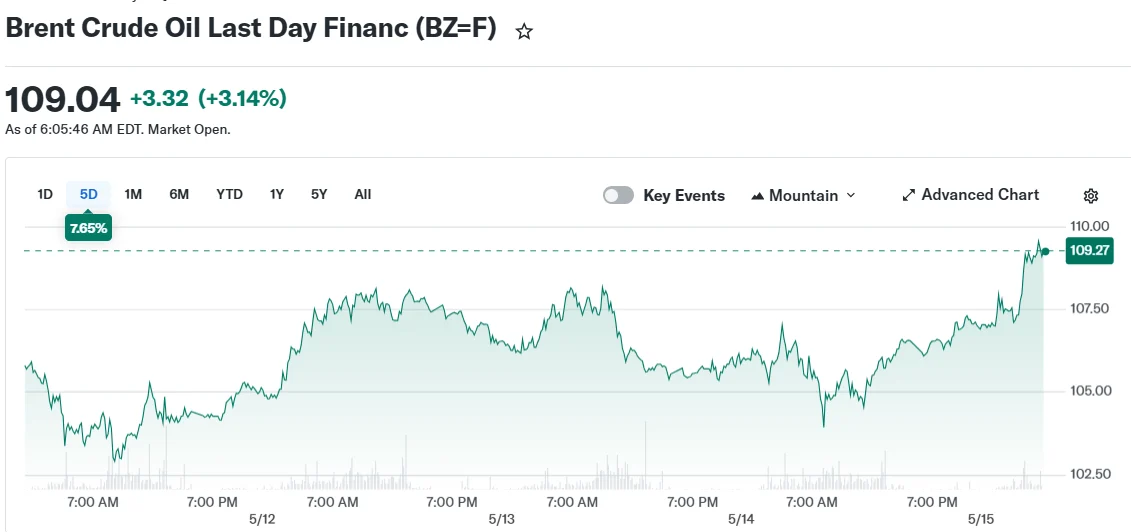 Brent Crude Oil Last Day Financ (BZ=F)
The Strait of Hormuz represents a critical chokepoint for global energy markets. Approximately 20% of worldwide petroleum supplies typically transit this narrow waterway.
Following the outbreak of hostilities in late February, vessel movements through the strait have plummeted dramatically. According to U.S. Energy Information Administration data, crude oil and refined product flows declined by nearly 6 million barrels daily during the first quarter.
Iranian state sources indicated roughly 30 ships navigated the waterway over the past week. Nevertheless, maritime traffic volumes remain substantially depressed compared to historical norms, with tanker companies maintaining cautious approaches to transit operations due to persistent security concerns.
Commodity trading firm Vitol Group has begun marketing Iraqi crude sourced from routes bypassing Hormuz. This development indicates that certain regional producers have successfully established alternative export corridors.
Presidential Frustration With Tehran Intensifies
While a ceasefire agreement has technically held since early April, multiple incidents have tested its durability. Washington and Tehran remain deeply divided on terms for a permanent settlement.
The ongoing conflict has depleted global petroleum stockpiles at unprecedented rates. The International Energy Agency warned this week that worldwide markets face the prospect of remaining “severely undersupplied” through October, even assuming hostilities cease within the next month.
Beijing Summit Produces Limited Concrete Results
President Trump conducted a two-day summit with Chinese President Xi Jinping in Beijing. Discussion topics encompassed the Iran situation, energy security frameworks, and bilateral trade relationships.
Both leaders acknowledged the critical importance of maintaining open access through the Strait of Hormuz for global energy security. Xi indicated China’s willingness to increase purchases of U.S. crude oil as a strategy to diminish reliance on Persian Gulf sources.
Xi characterized the discussions as productive, stating that China and America agreed to pursue stable trade relations and enhanced dialogue on regional security matters. Chinese official media reported both nations achieved “important consensus.”
Despite the positive rhetoric, the summit failed to yield substantial concrete agreements. While Trump claimed Xi expressed interest in expanded American oil purchases, China’s official summit readout notably omitted energy topics from the list of subjects addressed.
Friday witnessed a widespread retreat in bond markets. Market participants voiced concerns that petroleum supply chains will not normalize rapidly, potentially fueling inflationary pressures.
Physical crude oil markets have experienced renewed tightening in recent sessions, underscoring the broader stress the international petroleum industry faces as the conflict drags on.
The post Crude Oil Surges 8% as Hormuz Strait Crisis Deepens and Diplomacy Falters appeared first on Blockonomi.


You May Also Like

Spot CVD Chart Reveals Critical Bitcoin Support Levels as Institutional Orders Surge on April 2

Bitcoin Exchange Supply Hits Lowest Level Since 2018 While Ethereum Supply Rises