BitcoinWorld Crucial Fed Rate Cuts: JPMorgan’s Latest Economic Forecast Unveiled The financial world is buzzing with anticipation over the future direction of interest rates. For anyone tracking the economy, understanding the Federal Reserve’s next moves, especially regarding Fed rate cuts, is paramount. JPMorgan has recently weighed in with a significant forecast, offering a clearer picture of what we might expect from the central bank in the coming months. JPMorgan’s Outlook: A Gradual Path to Fed Rate Cuts JPMorgan’s Chief Economist, Michael Feroli, has reaffirmed his projections for the Federal Reserve. He anticipates a measured approach to monetary policy, specifically forecasting a series of gradual Fed rate cuts. This measured strategy is expected to bring the benchmark interest rate down to a range between 3.25% and 3.5% by early next year. This isn’t a sudden, sharp drop, but rather a cautious unwinding of the aggressive rate hikes seen previously. Such a gradual adjustment aims to stabilize the economy without triggering new inflationary pressures or stifling growth too much. For businesses and consumers alike, understanding this trajectory is key to financial planning. What Variables Could Impact Future Fed Rate Cuts? While the forecast offers a baseline, Feroli highlighted specific variables that could influence this path. One significant factor is a potential Supreme Court case involving Fed Governor Lisa Cook. An unfavorable ruling in this case could set a precedent, potentially threatening the positions of other governors within the Federal Reserve system. Such a development could introduce an element of instability and uncertainty into the Fed’s leadership, possibly affecting its decision-making process. The independence and composition of the Fed are crucial for maintaining consistent monetary policy, making this legal challenge a noteworthy concern for economists. The Politicization Risk: A Threat to Independent Fed Rate Cuts? Another critical point raised by Feroli concerns the increasing politicization of the Federal Reserve. He specifically mentioned that a more politically influenced Fed could become vulnerable to external pressures, particularly from a potential Trump administration. This scenario raises questions about the central bank’s autonomy. The Fed’s independence is a cornerstone of its ability to make sound economic decisions based purely on data and its dual mandate of maximum employment and price stability. If political agendas begin to sway monetary policy, it could lead to less predictable and potentially less effective outcomes for the economy. This potential for political interference is a serious consideration when forecasting future Fed rate cuts and broader economic stability. Why Are Fed Rate Cuts Important for the Economy? Interest rate decisions by the Federal Reserve have far-reaching implications. Lower interest rates typically make borrowing cheaper for businesses and consumers. This can stimulate economic activity, encouraging investment, hiring, and spending. For instance, mortgage rates often track the Fed’s benchmark rates, directly impacting the housing market. Moreover, cheaper credit can boost stock market performance as companies find it less expensive to finance growth and expansion. However, too-rapid or ill-timed Fed rate cuts could reignite inflation, which the central bank has worked hard to bring under control. The balance is delicate, and the gradual approach signals a careful navigation of these economic forces. What Does This Mean for Investors and Businesses? For investors, a clear forecast of gradual Fed rate cuts provides some certainty. It suggests an environment where growth could be supported without aggressive inflation. This might encourage investment in sectors sensitive to interest rates, such as real estate, technology, and consumer discretionary stocks. However, investors should also monitor the political landscape and potential legal challenges that could introduce volatility. Businesses, especially those reliant on financing, can plan with more confidence knowing the expected trajectory of borrowing costs. Lower rates could facilitate expansion plans, mergers, and acquisitions, or simply reduce the cost of existing debt. Staying informed about these economic signals is vital for strategic decision-making in a dynamic market. JPMorgan’s forecast for gradual Fed rate cuts offers a measured outlook on the future of monetary policy. While the path seems clear for a reduction in interest rates, potential political and legal challenges loom as significant variables. The independence of the Federal Reserve remains crucial for stable economic management. As we move towards early next year, observing how these factors unfold will be essential for understanding the true trajectory of the economy and the impact of the anticipated Fed rate cuts. Frequently Asked Questions (FAQs) About Fed Rate Cuts Q1: What is JPMorgan’s current forecast for Fed rate cuts?A1: JPMorgan’s Chief Economist Michael Feroli forecasts gradual Fed rate cuts of 25 basis points until the federal funds rate reaches between 3.25% and 3.5% by early next year. Q2: How many basis points are the Fed rate cuts expected to be?A2: The forecast suggests gradual cuts of 25 basis points at a time, indicating a measured approach rather than large, sudden reductions. Q3: What is the significance of the Supreme Court case involving Lisa Cook?A3: A potential Supreme Court case involving Fed Governor Lisa Cook is a variable that could pose a threat to other governors if an unfavorable ruling occurs, potentially impacting the stability and composition of the Fed’s leadership. Q4: How could a politicized Fed impact future rate decisions?A4: A politicized Federal Reserve could become more vulnerable to external pressures, such as from a potential Trump administration, potentially compromising its independence and leading to less predictable monetary policy decisions. Q5: Why are gradual Fed rate cuts preferred over sharp ones?A5: Gradual rate cuts allow the economy to adjust smoothly, aiming to stimulate activity without reigniting inflation. Sharp cuts could introduce instability or unintended consequences. Did you find this analysis on JPMorgan’s forecast for Fed rate cuts insightful? Share your thoughts and this article with your network on social media! Your engagement helps us bring more crucial economic insights to a wider audience. Stay informed and help others understand the complex world of monetary policy. To learn more about the latest explore our article on key developments shaping economic forecasts and market trends. This post Crucial Fed Rate Cuts: JPMorgan’s Latest Economic Forecast Unveiled first appeared on BitcoinWorld.BitcoinWorld Crucial Fed Rate Cuts: JPMorgan’s Latest Economic Forecast Unveiled The financial world is buzzing with anticipation over the future direction of interest rates. For anyone tracking the economy, understanding the Federal Reserve’s next moves, especially regarding Fed rate cuts, is paramount. JPMorgan has recently weighed in with a significant forecast, offering a clearer picture of what we might expect from the central bank in the coming months. JPMorgan’s Outlook: A Gradual Path to Fed Rate Cuts JPMorgan’s Chief Economist, Michael Feroli, has reaffirmed his projections for the Federal Reserve. He anticipates a measured approach to monetary policy, specifically forecasting a series of gradual Fed rate cuts. This measured strategy is expected to bring the benchmark interest rate down to a range between 3.25% and 3.5% by early next year. This isn’t a sudden, sharp drop, but rather a cautious unwinding of the aggressive rate hikes seen previously. Such a gradual adjustment aims to stabilize the economy without triggering new inflationary pressures or stifling growth too much. For businesses and consumers alike, understanding this trajectory is key to financial planning. What Variables Could Impact Future Fed Rate Cuts? While the forecast offers a baseline, Feroli highlighted specific variables that could influence this path. One significant factor is a potential Supreme Court case involving Fed Governor Lisa Cook. An unfavorable ruling in this case could set a precedent, potentially threatening the positions of other governors within the Federal Reserve system. Such a development could introduce an element of instability and uncertainty into the Fed’s leadership, possibly affecting its decision-making process. The independence and composition of the Fed are crucial for maintaining consistent monetary policy, making this legal challenge a noteworthy concern for economists. The Politicization Risk: A Threat to Independent Fed Rate Cuts? Another critical point raised by Feroli concerns the increasing politicization of the Federal Reserve. He specifically mentioned that a more politically influenced Fed could become vulnerable to external pressures, particularly from a potential Trump administration. This scenario raises questions about the central bank’s autonomy. The Fed’s independence is a cornerstone of its ability to make sound economic decisions based purely on data and its dual mandate of maximum employment and price stability. If political agendas begin to sway monetary policy, it could lead to less predictable and potentially less effective outcomes for the economy. This potential for political interference is a serious consideration when forecasting future Fed rate cuts and broader economic stability. Why Are Fed Rate Cuts Important for the Economy? Interest rate decisions by the Federal Reserve have far-reaching implications. Lower interest rates typically make borrowing cheaper for businesses and consumers. This can stimulate economic activity, encouraging investment, hiring, and spending. For instance, mortgage rates often track the Fed’s benchmark rates, directly impacting the housing market. Moreover, cheaper credit can boost stock market performance as companies find it less expensive to finance growth and expansion. However, too-rapid or ill-timed Fed rate cuts could reignite inflation, which the central bank has worked hard to bring under control. The balance is delicate, and the gradual approach signals a careful navigation of these economic forces. What Does This Mean for Investors and Businesses? For investors, a clear forecast of gradual Fed rate cuts provides some certainty. It suggests an environment where growth could be supported without aggressive inflation. This might encourage investment in sectors sensitive to interest rates, such as real estate, technology, and consumer discretionary stocks. However, investors should also monitor the political landscape and potential legal challenges that could introduce volatility. Businesses, especially those reliant on financing, can plan with more confidence knowing the expected trajectory of borrowing costs. Lower rates could facilitate expansion plans, mergers, and acquisitions, or simply reduce the cost of existing debt. Staying informed about these economic signals is vital for strategic decision-making in a dynamic market. JPMorgan’s forecast for gradual Fed rate cuts offers a measured outlook on the future of monetary policy. While the path seems clear for a reduction in interest rates, potential political and legal challenges loom as significant variables. The independence of the Federal Reserve remains crucial for stable economic management. As we move towards early next year, observing how these factors unfold will be essential for understanding the true trajectory of the economy and the impact of the anticipated Fed rate cuts. Frequently Asked Questions (FAQs) About Fed Rate Cuts Q1: What is JPMorgan’s current forecast for Fed rate cuts?A1: JPMorgan’s Chief Economist Michael Feroli forecasts gradual Fed rate cuts of 25 basis points until the federal funds rate reaches between 3.25% and 3.5% by early next year. Q2: How many basis points are the Fed rate cuts expected to be?A2: The forecast suggests gradual cuts of 25 basis points at a time, indicating a measured approach rather than large, sudden reductions. Q3: What is the significance of the Supreme Court case involving Lisa Cook?A3: A potential Supreme Court case involving Fed Governor Lisa Cook is a variable that could pose a threat to other governors if an unfavorable ruling occurs, potentially impacting the stability and composition of the Fed’s leadership. Q4: How could a politicized Fed impact future rate decisions?A4: A politicized Federal Reserve could become more vulnerable to external pressures, such as from a potential Trump administration, potentially compromising its independence and leading to less predictable monetary policy decisions. Q5: Why are gradual Fed rate cuts preferred over sharp ones?A5: Gradual rate cuts allow the economy to adjust smoothly, aiming to stimulate activity without reigniting inflation. Sharp cuts could introduce instability or unintended consequences. Did you find this analysis on JPMorgan’s forecast for Fed rate cuts insightful? Share your thoughts and this article with your network on social media! Your engagement helps us bring more crucial economic insights to a wider audience. Stay informed and help others understand the complex world of monetary policy. To learn more about the latest explore our article on key developments shaping economic forecasts and market trends. This post Crucial Fed Rate Cuts: JPMorgan’s Latest Economic Forecast Unveiled first appeared on BitcoinWorld.

Crucial Fed Rate Cuts: JPMorgan’s Latest Economic Forecast Unveiled

BitcoinWorld
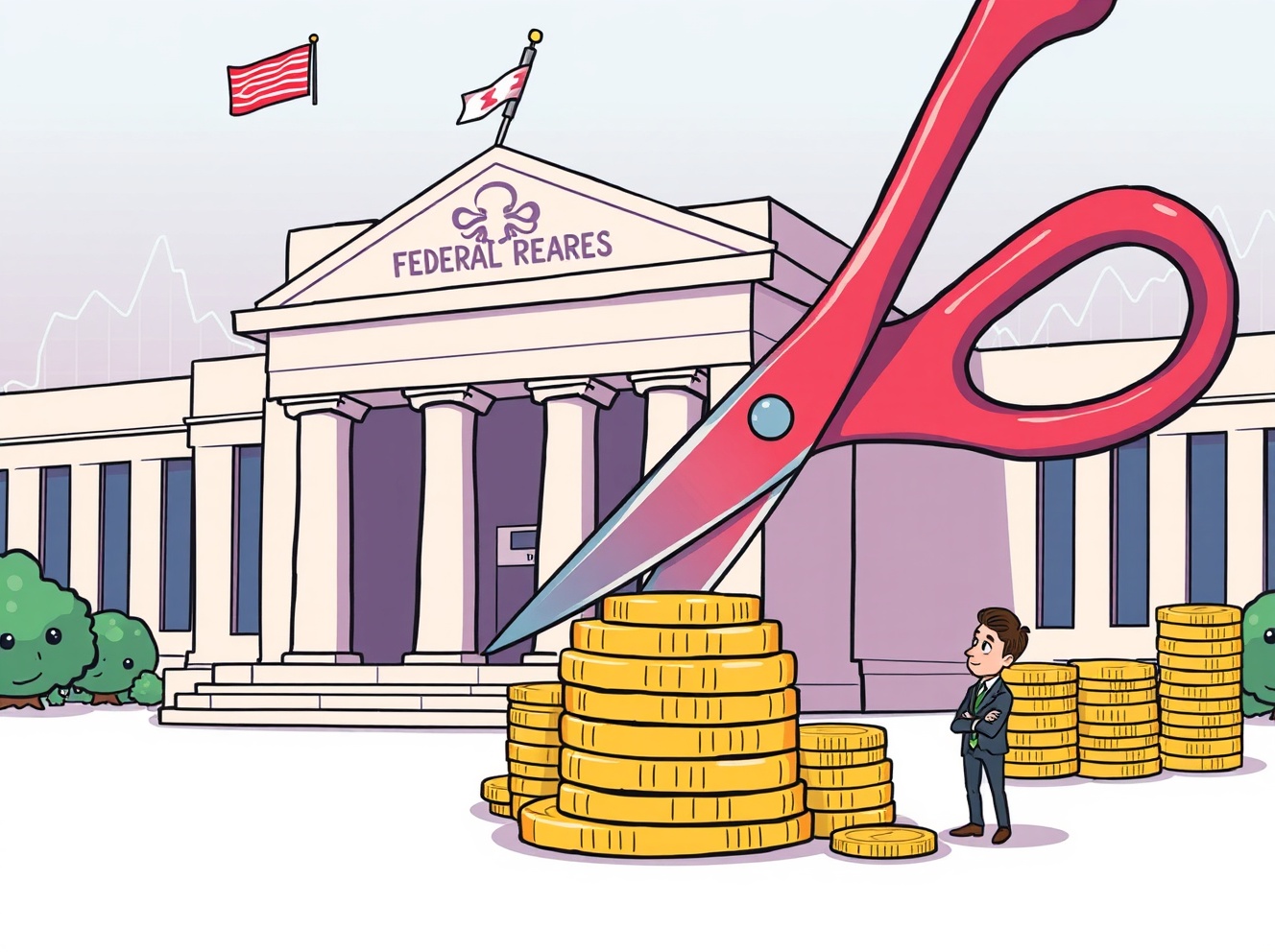
Crucial Fed Rate Cuts: JPMorgan’s Latest Economic Forecast Unveiled

The financial world is buzzing with anticipation over the future direction of interest rates. For anyone tracking the economy, understanding the Federal Reserve’s next moves, especially regarding Fed rate cuts, is paramount. JPMorgan has recently weighed in with a significant forecast, offering a clearer picture of what we might expect from the central bank in the coming months.

JPMorgan’s Outlook: A Gradual Path to Fed Rate Cuts

JPMorgan’s Chief Economist, Michael Feroli, has reaffirmed his projections for the Federal Reserve. He anticipates a measured approach to monetary policy, specifically forecasting a series of gradual Fed rate cuts. This measured strategy is expected to bring the benchmark interest rate down to a range between 3.25% and 3.5% by early next year.

This isn’t a sudden, sharp drop, but rather a cautious unwinding of the aggressive rate hikes seen previously. Such a gradual adjustment aims to stabilize the economy without triggering new inflationary pressures or stifling growth too much. For businesses and consumers alike, understanding this trajectory is key to financial planning.

What Variables Could Impact Future Fed Rate Cuts?

While the forecast offers a baseline, Feroli highlighted specific variables that could influence this path. One significant factor is a potential Supreme Court case involving Fed Governor Lisa Cook. An unfavorable ruling in this case could set a precedent, potentially threatening the positions of other governors within the Federal Reserve system.

Such a development could introduce an element of instability and uncertainty into the Fed’s leadership, possibly affecting its decision-making process. The independence and composition of the Fed are crucial for maintaining consistent monetary policy, making this legal challenge a noteworthy concern for economists.

The Politicization Risk: A Threat to Independent Fed Rate Cuts?

Another critical point raised by Feroli concerns the increasing politicization of the Federal Reserve. He specifically mentioned that a more politically influenced Fed could become vulnerable to external pressures, particularly from a potential Trump administration. This scenario raises questions about the central bank’s autonomy.

The Fed’s independence is a cornerstone of its ability to make sound economic decisions based purely on data and its dual mandate of maximum employment and price stability. If political agendas begin to sway monetary policy, it could lead to less predictable and potentially less effective outcomes for the economy. This potential for political interference is a serious consideration when forecasting future Fed rate cuts and broader economic stability.

Why Are Fed Rate Cuts Important for the Economy?

Interest rate decisions by the Federal Reserve have far-reaching implications. Lower interest rates typically make borrowing cheaper for businesses and consumers. This can stimulate economic activity, encouraging investment, hiring, and spending. For instance, mortgage rates often track the Fed’s benchmark rates, directly impacting the housing market.

Moreover, cheaper credit can boost stock market performance as companies find it less expensive to finance growth and expansion. However, too-rapid or ill-timed Fed rate cuts could reignite inflation, which the central bank has worked hard to bring under control. The balance is delicate, and the gradual approach signals a careful navigation of these economic forces.

What Does This Mean for Investors and Businesses?

For investors, a clear forecast of gradual Fed rate cuts provides some certainty. It suggests an environment where growth could be supported without aggressive inflation. This might encourage investment in sectors sensitive to interest rates, such as real estate, technology, and consumer discretionary stocks. However, investors should also monitor the political landscape and potential legal challenges that could introduce volatility.

Businesses, especially those reliant on financing, can plan with more confidence knowing the expected trajectory of borrowing costs. Lower rates could facilitate expansion plans, mergers, and acquisitions, or simply reduce the cost of existing debt. Staying informed about these economic signals is vital for strategic decision-making in a dynamic market.

JPMorgan’s forecast for gradual Fed rate cuts offers a measured outlook on the future of monetary policy. While the path seems clear for a reduction in interest rates, potential political and legal challenges loom as significant variables. The independence of the Federal Reserve remains crucial for stable economic management. As we move towards early next year, observing how these factors unfold will be essential for understanding the true trajectory of the economy and the impact of the anticipated Fed rate cuts.

Frequently Asked Questions (FAQs) About Fed Rate Cuts

  • Q1: What is JPMorgan’s current forecast for Fed rate cuts?
    A1: JPMorgan’s Chief Economist Michael Feroli forecasts gradual Fed rate cuts of 25 basis points until the federal funds rate reaches between 3.25% and 3.5% by early next year.
  • Q2: How many basis points are the Fed rate cuts expected to be?
    A2: The forecast suggests gradual cuts of 25 basis points at a time, indicating a measured approach rather than large, sudden reductions.
  • Q3: What is the significance of the Supreme Court case involving Lisa Cook?
    A3: A potential Supreme Court case involving Fed Governor Lisa Cook is a variable that could pose a threat to other governors if an unfavorable ruling occurs, potentially impacting the stability and composition of the Fed’s leadership.
  • Q4: How could a politicized Fed impact future rate decisions?
    A4: A politicized Federal Reserve could become more vulnerable to external pressures, such as from a potential Trump administration, potentially compromising its independence and leading to less predictable monetary policy decisions.
  • Q5: Why are gradual Fed rate cuts preferred over sharp ones?
    A5: Gradual rate cuts allow the economy to adjust smoothly, aiming to stimulate activity without reigniting inflation. Sharp cuts could introduce instability or unintended consequences.

Did you find this analysis on JPMorgan’s forecast for Fed rate cuts insightful? Share your thoughts and this article with your network on social media! Your engagement helps us bring more crucial economic insights to a wider audience. Stay informed and help others understand the complex world of monetary policy.

To learn more about the latest explore our article on key developments shaping economic forecasts and market trends.

This post Crucial Fed Rate Cuts: JPMorgan’s Latest Economic Forecast Unveiled first appeared on BitcoinWorld.

Market Opportunity
FUTURECOIN Logo
FUTURECOIN Price(FUTURE)
$0.08407
$0.08407$0.08407
+0.05%
USD
FUTURECOIN (FUTURE) Live Price Chart
Disclaimer: The articles reposted on this site are sourced from public platforms and are provided for informational purposes only. They do not necessarily reflect the views of MEXC. All rights remain with the original authors. If you believe any content infringes on third-party rights, please contact [email protected] for removal. MEXC makes no guarantees regarding the accuracy, completeness, or timeliness of the content and is not responsible for any actions taken based on the information provided. The content does not constitute financial, legal, or other professional advice, nor should it be considered a recommendation or endorsement by MEXC.

You May Also Like

Shocking OpenVPP Partnership Claim Draws Urgent Scrutiny

Shocking OpenVPP Partnership Claim Draws Urgent Scrutiny

The post Shocking OpenVPP Partnership Claim Draws Urgent Scrutiny appeared on BitcoinEthereumNews.com. The cryptocurrency world is buzzing with a recent controversy surrounding a bold OpenVPP partnership claim. This week, OpenVPP (OVPP) announced what it presented as a significant collaboration with the U.S. government in the innovative field of energy tokenization. However, this claim quickly drew the sharp eye of on-chain analyst ZachXBT, who highlighted a swift and official rebuttal that has sent ripples through the digital asset community. What Sparked the OpenVPP Partnership Claim Controversy? The core of the issue revolves around OpenVPP’s assertion of a U.S. government partnership. This kind of collaboration would typically be a monumental endorsement for any private cryptocurrency project, especially given the current regulatory climate. Such a partnership could signify a new era of mainstream adoption and legitimacy for energy tokenization initiatives. OpenVPP initially claimed cooperation with the U.S. government. This alleged partnership was said to be in the domain of energy tokenization. The announcement generated considerable interest and discussion online. ZachXBT, known for his diligent on-chain investigations, was quick to flag the development. He brought attention to the fact that U.S. Securities and Exchange Commission (SEC) Commissioner Hester Peirce had directly addressed the OpenVPP partnership claim. Her response, delivered within hours, was unequivocal and starkly contradicted OpenVPP’s narrative. How Did Regulatory Authorities Respond to the OpenVPP Partnership Claim? Commissioner Hester Peirce’s statement was a crucial turning point in this unfolding story. She clearly stated that the SEC, as an agency, does not engage in partnerships with private cryptocurrency projects. This response effectively dismantled the credibility of OpenVPP’s initial announcement regarding their supposed government collaboration. Peirce’s swift clarification underscores a fundamental principle of regulatory bodies: maintaining impartiality and avoiding endorsements of private entities. Her statement serves as a vital reminder to the crypto community about the official stance of government agencies concerning private ventures. Moreover, ZachXBT’s analysis…
Share
BitcoinEthereumNews2025/09/18 02:13
Pinecone Matches INIBOX: The Ultimate Guide to High-Performance Mining

Pinecone Matches INIBOX: The Ultimate Guide to High-Performance Mining

  Introduction to Pinecone Matches INIBOX (850Mh) We present the definitive guide to the Pinecone Matches INIBOX (850Mh) — a cutting-edge cryptocurrency mining
Share
Techbullion2026/01/22 12:27
Solana Founder Reveals Three Essential Principles To Attract Capital Successfully

Solana Founder Reveals Three Essential Principles To Attract Capital Successfully

The post Solana Founder Reveals Three Essential Principles To Attract Capital Successfully appeared on BitcoinEthereumNews.com. Crypto Projects: Solana Founder
Share
BitcoinEthereumNews2026/01/22 11:49
