Cloudflare CEO Matthew Prince announced the launch of NET Dollar, a U.S. dollar-backed stablecoin designed for AI agent micropayments on Thursday. The connectivity cloud company plans to deploy NET Dollar as the payment backbone for autonomous AI systems that book flights, order groceries, and manage calendars without human intervention. “For decades, the business model of the Internet ran on ad platforms and bank transfers,” Prince stated, adding that “The Internet’s next business model will be powered by pay-per-use, fractional payments, and microtransactions.” The stablecoin will leverage Cloudflare’s global network to process payments at internet speed, targeting fundamental limitations in current financial systems designed for human-initiated transactions. AI Agents Drive New Payment Infrastructure Requirements NET Dollar emerges as AI agents increasingly require payment systems capable of handling millions of automated transactions without human oversight. Traditional payment rails, such as wire transfers and credit cards, cannot accommodate the instant settlements and micropayments that autonomous systems demand. The company’s stablecoin will allow global payments across different currencies and time zones, facilitate instant programmatic transactions for time-sensitive purchases, and provide compensation for content creators and API developers. Personal AI agents could automatically purchase the cheapest available flight tickets or buy items the moment they go on sale, while business agents might pay suppliers immediately upon delivery confirmation. Cloudflare is simultaneously contributing to open standards, including the Agent Payments Protocol and x402, which simplify payment processing across the internet infrastructure. The x402 protocol, developed with Coinbase, converts the HTTP “402 Payment Required” error code into a functional payment system, allowing machines to purchase data and services directly. Amazon Web Services is already exploring x402 integration for cloud computing payments, potentially transforming the $1.9 trillion cloud market expected by 2030.x402 Playground / Source: Cloudflare Regulatory Framework Shapes Stablecoin Infrastructure Development The NET Dollar announcement comes amid unprecedented regulatory clarity for stablecoins, with the U.S. GENIUS Act providing comprehensive federal guidelines that have reshaped industry strategy. The U.S. Commodity Futures Trading Commission has launched an initiative allowing stablecoins to serve as tokenized collateral in derivatives markets, with CFTC acting chair Caroline Pham calling it the “killer app” for modernizing financial infrastructure. European markets are simultaneously positioning themselves for competition, with nine major euro banks backing a MiCA-regulated stablecoin set to launch in the second half of 2026, seeking to challenge U.S. dollar dominance. Meanwhile, the regulatory momentum has allowed tech giants to embrace stablecoin integration, with Google adding stablecoin support to its new AI payment framework through partnerships with Coinbase and the Ethereum Foundation. Google’s James Tromans called stablecoins “probably one of the most important payment upgrades since the SWIFT network,” with a network effect that has triggered a growing consensus among tech giants regarding the role of programmable money in autonomous systems. Within the same interval, the broader stablecoin market has expanded from $4 billion in 2020 to over $280 billion today, with bots already accounting for 70% of stablecoin transfer volume, according to industry data. In fact, recent industry projections from Citigroup have shown that the stablecoin sector could reach over $2 trillion in market capitalization by 2030. Major stablecoin issuers now rank 17th globally in U.S. Treasury holdings, surpassing countries such as South Korea and Germany in their influence on government debt markets. Additionally, Cloudflare is not the first to implement an AI-powered payment system. Circle co-founder Sean Neville recently launched Catena Labs with $18 million in funding to create the first fully regulated AI-native financial institution, positioning stablecoins as essential infrastructure for autonomous economic activity. While stablecoins are growing and being adopted across various verticals, banking industry groups are pushing back against the growth, warning that regulatory gaps could trigger $6.6 trillion in deposit outflows from traditional banks. However, Coinbase research suggests that most stablecoin activity occurs internationally, does not pose a threat to banks, and could instead strengthen dollar dominance without materially impacting domestic banking depositsCloudflare CEO Matthew Prince announced the launch of NET Dollar, a U.S. dollar-backed stablecoin designed for AI agent micropayments on Thursday. The connectivity cloud company plans to deploy NET Dollar as the payment backbone for autonomous AI systems that book flights, order groceries, and manage calendars without human intervention. “For decades, the business model of the Internet ran on ad platforms and bank transfers,” Prince stated, adding that “The Internet’s next business model will be powered by pay-per-use, fractional payments, and microtransactions.” The stablecoin will leverage Cloudflare’s global network to process payments at internet speed, targeting fundamental limitations in current financial systems designed for human-initiated transactions. AI Agents Drive New Payment Infrastructure Requirements NET Dollar emerges as AI agents increasingly require payment systems capable of handling millions of automated transactions without human oversight. Traditional payment rails, such as wire transfers and credit cards, cannot accommodate the instant settlements and micropayments that autonomous systems demand. The company’s stablecoin will allow global payments across different currencies and time zones, facilitate instant programmatic transactions for time-sensitive purchases, and provide compensation for content creators and API developers. Personal AI agents could automatically purchase the cheapest available flight tickets or buy items the moment they go on sale, while business agents might pay suppliers immediately upon delivery confirmation. Cloudflare is simultaneously contributing to open standards, including the Agent Payments Protocol and x402, which simplify payment processing across the internet infrastructure. The x402 protocol, developed with Coinbase, converts the HTTP “402 Payment Required” error code into a functional payment system, allowing machines to purchase data and services directly. Amazon Web Services is already exploring x402 integration for cloud computing payments, potentially transforming the $1.9 trillion cloud market expected by 2030.x402 Playground / Source: Cloudflare Regulatory Framework Shapes Stablecoin Infrastructure Development The NET Dollar announcement comes amid unprecedented regulatory clarity for stablecoins, with the U.S. GENIUS Act providing comprehensive federal guidelines that have reshaped industry strategy. The U.S. Commodity Futures Trading Commission has launched an initiative allowing stablecoins to serve as tokenized collateral in derivatives markets, with CFTC acting chair Caroline Pham calling it the “killer app” for modernizing financial infrastructure. European markets are simultaneously positioning themselves for competition, with nine major euro banks backing a MiCA-regulated stablecoin set to launch in the second half of 2026, seeking to challenge U.S. dollar dominance. Meanwhile, the regulatory momentum has allowed tech giants to embrace stablecoin integration, with Google adding stablecoin support to its new AI payment framework through partnerships with Coinbase and the Ethereum Foundation. Google’s James Tromans called stablecoins “probably one of the most important payment upgrades since the SWIFT network,” with a network effect that has triggered a growing consensus among tech giants regarding the role of programmable money in autonomous systems. Within the same interval, the broader stablecoin market has expanded from $4 billion in 2020 to over $280 billion today, with bots already accounting for 70% of stablecoin transfer volume, according to industry data. In fact, recent industry projections from Citigroup have shown that the stablecoin sector could reach over $2 trillion in market capitalization by 2030. Major stablecoin issuers now rank 17th globally in U.S. Treasury holdings, surpassing countries such as South Korea and Germany in their influence on government debt markets. Additionally, Cloudflare is not the first to implement an AI-powered payment system. Circle co-founder Sean Neville recently launched Catena Labs with $18 million in funding to create the first fully regulated AI-native financial institution, positioning stablecoins as essential infrastructure for autonomous economic activity. While stablecoins are growing and being adopted across various verticals, banking industry groups are pushing back against the growth, warning that regulatory gaps could trigger $6.6 trillion in deposit outflows from traditional banks. However, Coinbase research suggests that most stablecoin activity occurs internationally, does not pose a threat to banks, and could instead strengthen dollar dominance without materially impacting domestic banking deposits

Cloudflare CEO Announces NET Dollar Stablecoin for AI Agent Micropayments

2025/09/26 05:06
4 min read
For feedback or concerns regarding this content, please contact us at [email protected]

Cloudflare CEO Matthew Prince announced the launch of NET Dollar, a U.S. dollar-backed stablecoin designed for AI agent micropayments on Thursday.

The connectivity cloud company plans to deploy NET Dollar as the payment backbone for autonomous AI systems that book flights, order groceries, and manage calendars without human intervention.

“For decades, the business model of the Internet ran on ad platforms and bank transfers,” Prince stated, adding that “The Internet’s next business model will be powered by pay-per-use, fractional payments, and microtransactions.”

The stablecoin will leverage Cloudflare’s global network to process payments at internet speed, targeting fundamental limitations in current financial systems designed for human-initiated transactions.

AI Agents Drive New Payment Infrastructure Requirements

NET Dollar emerges as AI agents increasingly require payment systems capable of handling millions of automated transactions without human oversight.

Traditional payment rails, such as wire transfers and credit cards, cannot accommodate the instant settlements and micropayments that autonomous systems demand.

The company’s stablecoin will allow global payments across different currencies and time zones, facilitate instant programmatic transactions for time-sensitive purchases, and provide compensation for content creators and API developers.

Personal AI agents could automatically purchase the cheapest available flight tickets or buy items the moment they go on sale, while business agents might pay suppliers immediately upon delivery confirmation.

Cloudflare is simultaneously contributing to open standards, including the Agent Payments Protocol and x402, which simplify payment processing across the internet infrastructure.

The x402 protocol, developed with Coinbase, converts the HTTP “402 Payment Required” error code into a functional payment system, allowing machines to purchase data and services directly.

Amazon Web Services is already exploring x402 integration for cloud computing payments, potentially transforming the $1.9 trillion cloud market expected by 2030.
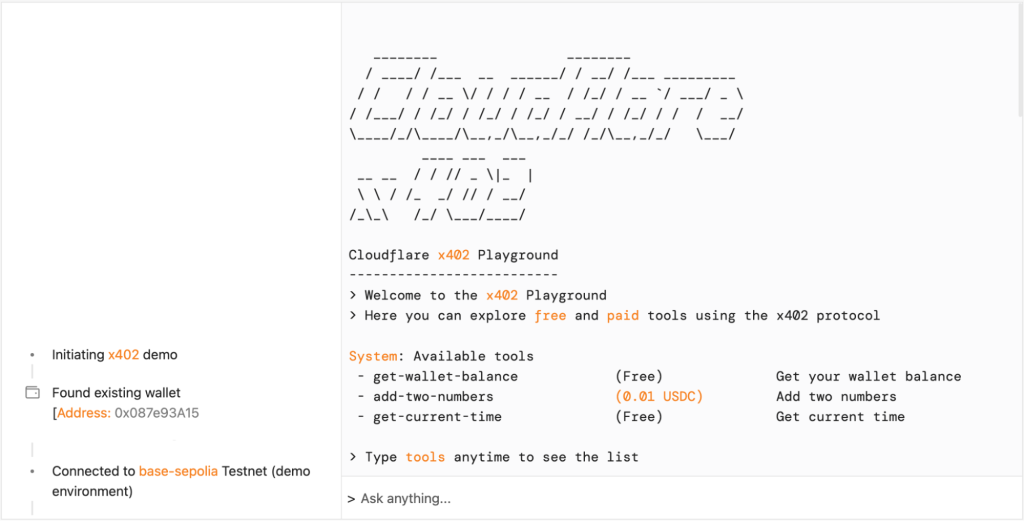
Cloudflare CEO Announces NET Dollar Stablecoin for AI Agent Micropaymentsx402 Playground / Source: Cloudflare

Regulatory Framework Shapes Stablecoin Infrastructure Development

The NET Dollar announcement comes amid unprecedented regulatory clarity for stablecoins, with the U.S. GENIUS Act providing comprehensive federal guidelines that have reshaped industry strategy.

The U.S. Commodity Futures Trading Commission has launched an initiative allowing stablecoins to serve as tokenized collateral in derivatives markets, with CFTC acting chair Caroline Pham calling it the “killer app” for modernizing financial infrastructure.

European markets are simultaneously positioning themselves for competition, with nine major euro banks backing a MiCA-regulated stablecoin set to launch in the second half of 2026, seeking to challenge U.S. dollar dominance.

Meanwhile, the regulatory momentum has allowed tech giants to embrace stablecoin integration, with Google adding stablecoin support to its new AI payment framework through partnerships with Coinbase and the Ethereum Foundation.

Google’s James Tromans called stablecoins “probably one of the most important payment upgrades since the SWIFT network,” with a network effect that has triggered a growing consensus among tech giants regarding the role of programmable money in autonomous systems.

Within the same interval, the broader stablecoin market has expanded from $4 billion in 2020 to over $280 billion today, with bots already accounting for 70% of stablecoin transfer volume, according to industry data.

In fact, recent industry projections from Citigroup have shown that the stablecoin sector could reach over $2 trillion in market capitalization by 2030.

Major stablecoin issuers now rank 17th globally in U.S. Treasury holdings, surpassing countries such as South Korea and Germany in their influence on government debt markets.

Additionally, Cloudflare is not the first to implement an AI-powered payment system. Circle co-founder Sean Neville recently launched Catena Labs with $18 million in funding to create the first fully regulated AI-native financial institution, positioning stablecoins as essential infrastructure for autonomous economic activity.

While stablecoins are growing and being adopted across various verticals, banking industry groups are pushing back against the growth, warning that regulatory gaps could trigger $6.6 trillion in deposit outflows from traditional banks.

However, Coinbase research suggests that most stablecoin activity occurs internationally, does not pose a threat to banks, and could instead strengthen dollar dominance without materially impacting domestic banking deposits.


Market Opportunity
null Logo
null Price(null)
--
----
USD
null (null) Live Price Chart
Disclaimer: The articles reposted on this site are sourced from public platforms and are provided for informational purposes only. They do not necessarily reflect the views of MEXC. All rights remain with the original authors. If you believe any content infringes on third-party rights, please contact [email protected] for removal. MEXC makes no guarantees regarding the accuracy, completeness, or timeliness of the content and is not responsible for any actions taken based on the information provided. The content does not constitute financial, legal, or other professional advice, nor should it be considered a recommendation or endorsement by MEXC.

You May Also Like

Buterin pushes Layer 2 interoperability as cornerstone of Ethereum’s future

Buterin pushes Layer 2 interoperability as cornerstone of Ethereum’s future

Ethereum founder, Vitalik Buterin, has unveiled new goals for the Ethereum blockchain today at the Japan Developer Conference. The plan lays out short-term, mid-term, and long-term goals touching on L2 interoperability and faster responsiveness among others. In terms of technology, he said again that he is sure that Layer 2 options are the best way […]
Share
Cryptopolitan2025/09/18 01:15
UK Looks to US to Adopt More Crypto-Friendly Approach

UK Looks to US to Adopt More Crypto-Friendly Approach

The post UK Looks to US to Adopt More Crypto-Friendly Approach appeared on BitcoinEthereumNews.com. The UK and US are reportedly preparing to deepen cooperation on digital assets, with Britain looking to copy the Trump administration’s crypto-friendly stance in a bid to boost innovation.  UK Chancellor Rachel Reeves and US Treasury Secretary Scott Bessent discussed on Tuesday how the two nations could strengthen their coordination on crypto, the Financial Times reported on Tuesday, citing people familiar with the matter.  The discussions also involved representatives from crypto companies, including Coinbase, Circle Internet Group and Ripple, with executives from the Bank of America, Barclays and Citi also attending, according to the report. The agreement was made “last-minute” after crypto advocacy groups urged the UK government on Thursday to adopt a more open stance toward the industry, claiming its cautious approach to the sector has left the country lagging in innovation and policy.  Source: Rachel Reeves Deal to include stablecoins, look to unlock adoption Any deal between the countries is likely to include stablecoins, the Financial Times reported, an area of crypto that US President Donald Trump made a policy priority and in which his family has significant business interests. The Financial Times reported on Monday that UK crypto advocacy groups also slammed the Bank of England’s proposal to limit individual stablecoin holdings to between 10,000 British pounds ($13,650) and 20,000 pounds ($27,300), claiming it would be difficult and expensive to implement. UK banks appear to have slowed adoption too, with around 40% of 2,000 recently surveyed crypto investors saying that their banks had either blocked or delayed a payment to a crypto provider.  Many of these actions have been linked to concerns over volatility, fraud and scams. The UK has made some progress on crypto regulation recently, proposing a framework in May that would see crypto exchanges, dealers, and agents treated similarly to traditional finance firms, with…
Share
BitcoinEthereumNews2025/09/18 02:21
PBOC Sets Strongest Fix In 34 Months, Signaling Strategic Shift

PBOC Sets Strongest Fix In 34 Months, Signaling Strategic Shift

The post PBOC Sets Strongest Fix In 34 Months, Signaling Strategic Shift appeared on BitcoinEthereumNews.com. Yuan Mid-Point Soars: PBOC Sets Strongest Fix In 34
Share
BitcoinEthereumNews2026/03/05 11:45