Vitalik Buterin: AI-Powered Formal Verification Could Transform Crypto Security
BitcoinWorld
Vitalik Buterin: AI-Powered Formal Verification Could Transform Crypto Security
Ethereum co-founder Vitalik Buterin has predicted that integrating artificial intelligence with formal verification technology could significantly strengthen the security of cryptocurrency systems and broader internet infrastructure. The remarks, reported by CoinDesk, highlight a growing intersection between AI and blockchain development.
What is Formal Verification?
Formal verification is a rigorous method of mathematically proving that a piece of software operates exactly as intended. Unlike traditional testing, which can only find bugs, formal verification provides a high level of assurance that certain classes of errors do not exist. However, it has historically been a slow and labor-intensive process, limiting its widespread adoption in fast-moving fields like crypto development.
AI as a Catalyst for Security
Buterin explained that recent advances in AI are making the process of writing both code and verification proofs far more efficient. While AI can rapidly generate large volumes of code—some of which may be inaccurate—formal verification can re-establish the accuracy of that code. This synergy, he argued, could be transformative.
“AI can generate code at a massive scale, but it also generates a lot of incorrect code. Formal verification is the tool that can bring that accuracy back,” Buterin stated, according to the report. He emphasized that the combination allows developers to move faster without sacrificing security.
Key Areas of Impact
Buterin identified several critical areas within the cryptocurrency ecosystem where this combined approach will become increasingly important:
- Smart Contracts: Verifying that complex DeFi protocols and NFT contracts behave as expected, reducing the risk of exploits.
- Zero-Knowledge (ZK) Proofs: Ensuring the correctness of ZK circuits, which are foundational to privacy and scalability solutions.
- Consensus Mechanisms: Proving the mathematical soundness of protocols that secure proof-of-stake networks.
- Quantum-Resistant Cryptography: Validating the security of new cryptographic algorithms designed to withstand future quantum computing attacks.
Why This Matters Now
The crypto industry has suffered billions of dollars in losses from smart contract bugs, bridge hacks, and protocol exploits. Traditional auditing, while valuable, is not infallible. Formal verification offers a higher standard of proof, but its adoption has been limited by cost and complexity. Buterin’s comments suggest that AI is on the cusp of removing those barriers, potentially making mathematically verified code a standard practice rather than a luxury.
Not a Silver Bullet
Buterin also offered a cautionary note, stating that formal verification is not a panacea. He pointed out that it cannot solve all problems, particularly those arising from incorrect underlying assumptions or hardware-level vulnerabilities. If the specification itself is flawed, or if the hardware executing the code has a bug, formal verification of the software will not catch those issues.
Conclusion
The combination of AI and formal verification represents a pragmatic evolution in crypto security. By leveraging AI to accelerate the verification process, developers can aim for higher assurance without the traditional time penalties. While not a cure-all, this approach could become a critical tool in the ongoing effort to build more resilient and trustworthy decentralized systems.
FAQs
Q1: What is formal verification in simple terms?
It is a mathematical method to prove that a piece of code will always behave exactly as designed, eliminating entire categories of bugs and vulnerabilities.
Q2: How does AI help with formal verification?
AI can automate the generation of verification proofs and help write code that is easier to verify, dramatically reducing the time and expertise required to use formal methods.
Q3: Will formal verification make crypto completely hack-proof?
No. Formal verification can only prove correctness relative to its specifications. It cannot protect against flawed design assumptions, oracle manipulation, or hardware failures.
This post Vitalik Buterin: AI-Powered Formal Verification Could Transform Crypto Security first appeared on BitcoinWorld.


You May Also Like
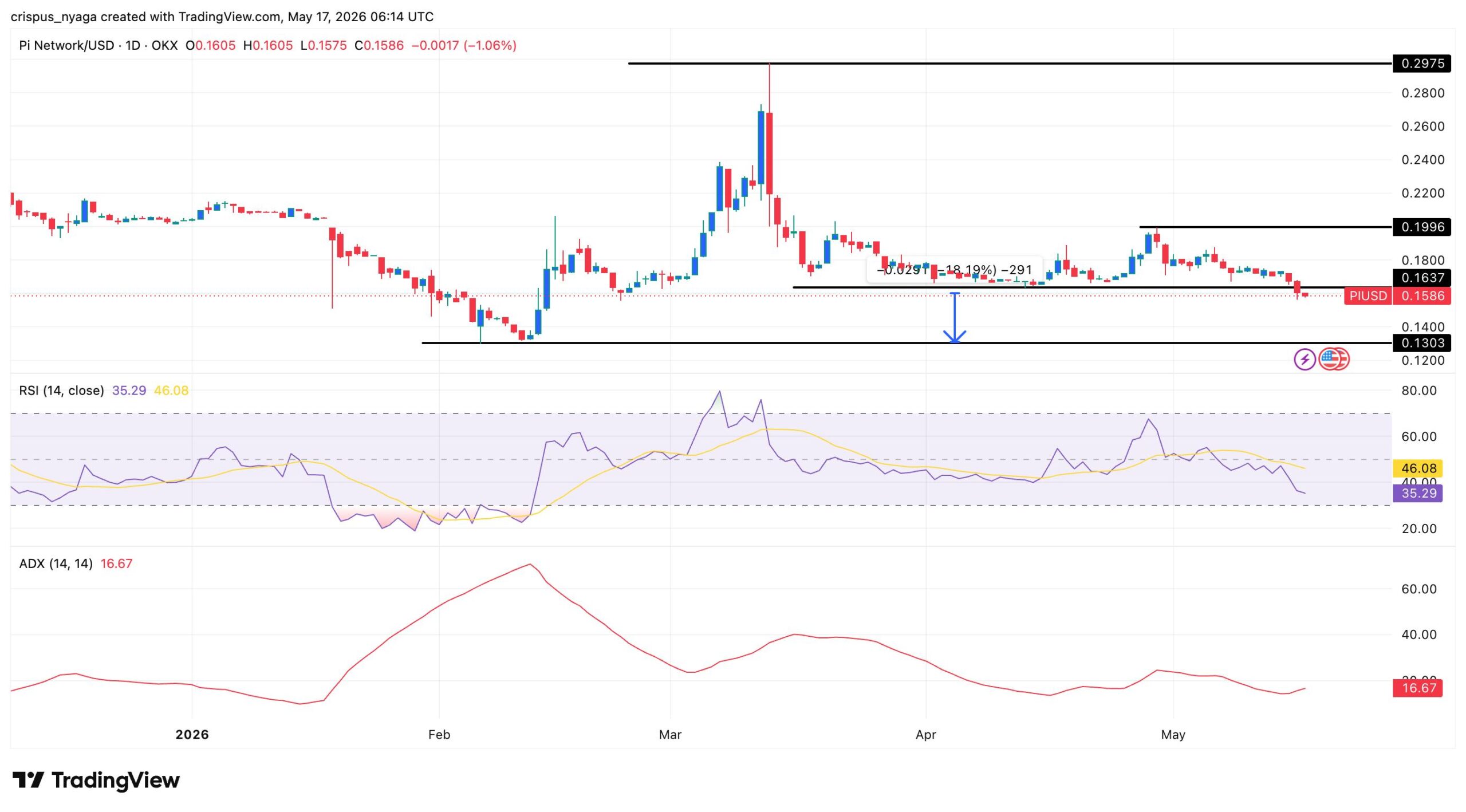
Pi Coin Price Crashes Another 7.5% Before Pi Network Protocol 23 Mainnet Activation

The Chemistry of UV Resistance: How Titanium Dioxide Protects Against the California Sun