

Must Read
DATA CENTER. A technician works at an Amazon Web Services AI data center in New Carlisle, Indiana, US, October 2, 2025DATA CENTER. A technician works at an Amazon Web Services AI data center in New Carlisle, Indiana, US, October 2, 2025
[OPINION] Globe Telecom continues to sizzle with strong Q1 performance
For feedback or concerns regarding this content, please contact us at [email protected]
Consistent with its demonstrated record of sustainability, Globe Telecom turned in a strong growth and stable profitability performance for the first quarter of 2026 against the backdrop of ongoing global uncertainties, including geopolitical tensions affecting energy costs and consumer behavior.
Consolidated gross service revenues reached P42 billion, up 5% year-on-year, driven by sustained demand for connectivity and digital services.
Furthermore, data essentially contributed 91% of total consolidated service revenues, and mobile data remained as key growth driver, lifting revenues by 11% year-on-year to P26.8 billion.
Traffic also expanded by 18% to 1,810 petabytes, reflecting sustained usage across video, social media, gaming, and digital payments.
While revenue in the first quarter dropped in contrast with the immediately preceding fourth quarter, this decline, as explained by management, is only a matter of sequential decline or an expected baseline reset due to seasonality differential rather than a cause for concern.
The fourth quarter result is the highest the company has ever recorded in its history, while the first quarter is Globe Telecom’s second-highest revenue level record, reflecting sustained business momentum.
Additionally, Globe Telecom’s first quarter performance represents one of its strongest beginning-of-the-year starts in recent periods, with all core segments, including mobile, broadband, and enterprise, contributing to growth.
More financial results on high-impact network and capacity upgrades
Globe Telecom has adopted a focused and disciplined operating approach to protect margins and sustain overall service quality. The company continues to prioritize efficient capital allocation, directing investments toward high-impact network and capacity upgrades while maintaining positive free cash flow and minimizing foreign exchange exposure, reinforcing the durability of Globe Telecom’s revenue base.
In the words of Globe Telecom president Carl Raymond R. Cruz, “We are operating with discipline with a war-like stance, focusing on protecting margins, optimizing our capital spend, and ensuring that our customers continue to receive a reliable, high-quality network experience. This approach allows us to remain resilient while positioning the business for long-term growth.”
Among other things, mobile revenues reached P30 billion, up 6% year-on-year, supported by strong data monetization and a growing subscriber base.
Broadband and corporate data revenues particularly Globe At Home broadband grew 6% to P6.2 billion, driven by a growing fiber subscriber base. Corporate data revenues also rose 6% to P5.1 billion, led by the demand for ICT and cloud-enabled solutions.
Profitability remained stable, with Earnings Before Interest, Taxes, Depreciation, and Amortization (EBITDA) growing 7% year-on-year to P22.2 billion.
EBITDA margin also improved to 52.8%, outperforming its full-year guidance of 50%, supported by operational discipline, including lower marketing spend and reduced maintenance.
Core net income rose 9% year-on-year to P4.9 billion, indicating underlying earnings strength despite external pressures.
Needless to say, Globe Telecom’s financial health was as well enhanced by its Fintech and digital services investment in GCash, which accounted for approximately 30% of its pre-tax income.
GCash, via parent company Mynt, continued its explosive growth and served as a major pillar. Mynt contributed P1.9 billion in equity earnings equivalent to an 8% year-on-year increase, which concurrently represents a significant portion of Globe’s pre-tax net income. (READ: What you need to know before trading stocks on GCash)
GFiber Prepaid subscription hit a milestone: Number of subscribers reached one million resulting in fiber accounting for roughly 93% of total broadband revenues.
Globe Telecom added 408 new 5G sites during the quarter, boosting outdoor 5G coverage to over 98% in Metro Manila and key urban centers.
Capital expenditures (CAPEX) for the quarter surged 51% year-on-year to P12.7 billion to sustain network capacity, with 91% allocated to data-related projects that include new 5G sites and fiber-to-the-home installations, reinforcing Globe’s commitment to delivering a reliable and high-quality network experience nationwide.
In relation to this, Globe Telecom has partnered with SpaceX/Starlink to introduce Direct-to-Cell (DTC) services, a first in Southeast Asia, aimed at providing satellite-based cellular connectivity in remote areas, with a goal of 100% coverage by the second quarter of this year.
Lastly, it may be noted that while the first quarter had strong topline performance, attributable net income after tax obviously fell 20% to P5.55 billion. Nonetheless, this can be explained as a sequential decline arising from previously booked one-off tower sale gains and Mynt dilution gains alongside higher depreciation and interest expenses.
Market advisory and trading call
Globe’s first-quarter results underscore the strength of its data-driven strategy, demonstrating that connectivity-led growth remains resilient across economic cycles while continuing to support the country’s accelerating digital transformation.
It serves as the company’s primary growth engine, driving the bulk of its total service revenues as traditional services like voice and SMS continue to decline.
This was why among the starting lineup of stock picks for the regular asset allocation exercise done at the start of the year, Globe Telecom is actually my first choice. I wrote this in my first article in January, entitled “Why Globe Telecom is a good buy.”
Globe Telecom has established itself over time as a top investment pick compared to the other companies from its industry sector essentially for its strong connectivity services, high dividend yields record, and digital growth potential.
Like what I further said in my earlier article, aside from a strong brand and network standing, Globe Telecom has successfully pivoted from a traditional telco to a tech-driven business, expanding its portfolio beyond connectivity such as enterprise ICT solutions and hyperscale data center infrastructure.
On global standing, Globe Telecom climbed five spots to become the 10th strongest telecommunications brand globally according to Brand Finance, the world’s leading independent brand valuation and strategy consultancy, with headquarters in London and operating across more than 25 countries. Brand Finance particularly specializes in “bridging the gap between marketing and finance” by calculating the precise financial value of corporate brands.
Looking ahead, following the earlier statement of the president of Globe Telecom, the commercial rollout of Starlink Direct-to-Cell and the scaling of the STT Fairview data center may serve as catalysts to drive further growth and capture underserved market segments.
Under these existing circumstances, Globe Telecom is a strong “Buy” on the back of a market consensus that it is very possible to realize a potential capital return of 23% at the current trading price of P1,799 per share, not to mention its 2026 fiscal year dividend yield forecast of 6.2%. – Rappler.com
(The article has been prepared for general circulation for the reading public and must not be construed as an offer, or solicitation of an offer to buy or sell any securities or financial instruments whether referred to herein or otherwise. Moreover, the public should be aware that the writer or any investing parties mentioned in the column may have a conflict of interest that could affect the objectivity of their reported or mentioned investment activity. You may reach the writer at [email protected])
Market Opportunity
Gensyn Price(AI)
$0.03315
$0.03315$0.03315
USD
Gensyn (AI) Live Price Chart


Disclaimer: The articles reposted on this site are sourced from public platforms and are provided for informational purposes only. They do not necessarily reflect the views of MEXC. All rights remain with the original authors. If you believe any content infringes on third-party rights, please contact [email protected] for removal. MEXC makes no guarantees regarding the accuracy, completeness, or timeliness of the content and is not responsible for any actions taken based on the information provided. The content does not constitute financial, legal, or other professional advice, nor should it be considered a recommendation or endorsement by MEXC.
You May Also Like
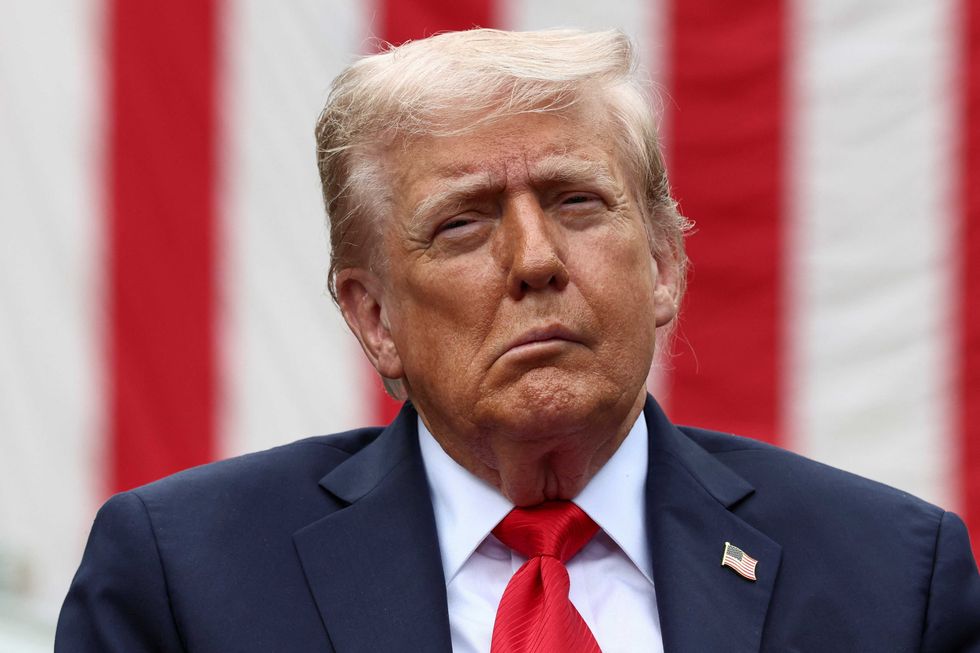
This man is the antidote to Trump's poison
I met David Letterman twice. Once when he first began his show, walking up 53rd Street. Such an approachable guy. And once again, after he’d left, at a Starbucks
Share
Rawstory2026/05/22 17:30

Spotify Universal Music AI brings licensed AI covers & remixes to Premium
Spotify Universal Music AI brings AI music licensing to Premium via a paid add-on, with opt-in artist consent and usage-based compensation.
Share
The Cryptonomist2026/05/22 15:34
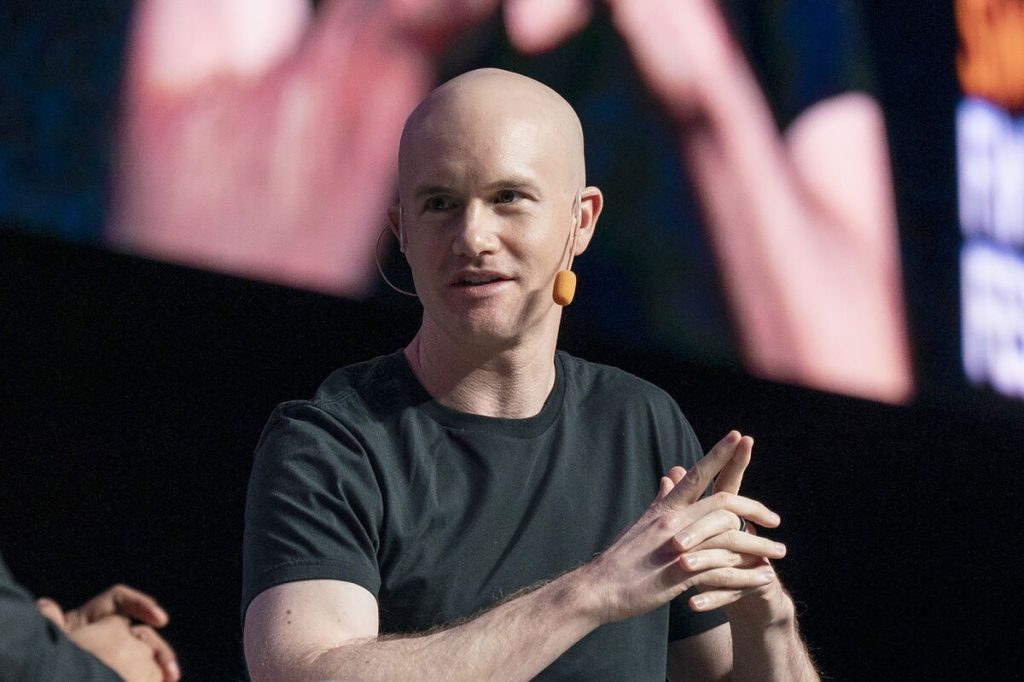
Quantum Debate in Bitcoin Grows! After Elon Musk and CZ, Coinbase CEO Brian Armstrong Also Makes a Statement!
Coinbase CEO Brian Armstrong has called for a collective effort to address the quantum risk in Bitcoin (BTC). Continue Reading: Quantum Debate in Bitcoin Grows
Share
Bitcoinsistemi2026/04/02 20:58



