

AI Recreates Voices of Dead Pilots, Prompting NTSB to Shutter Public Docket System
BitcoinWorld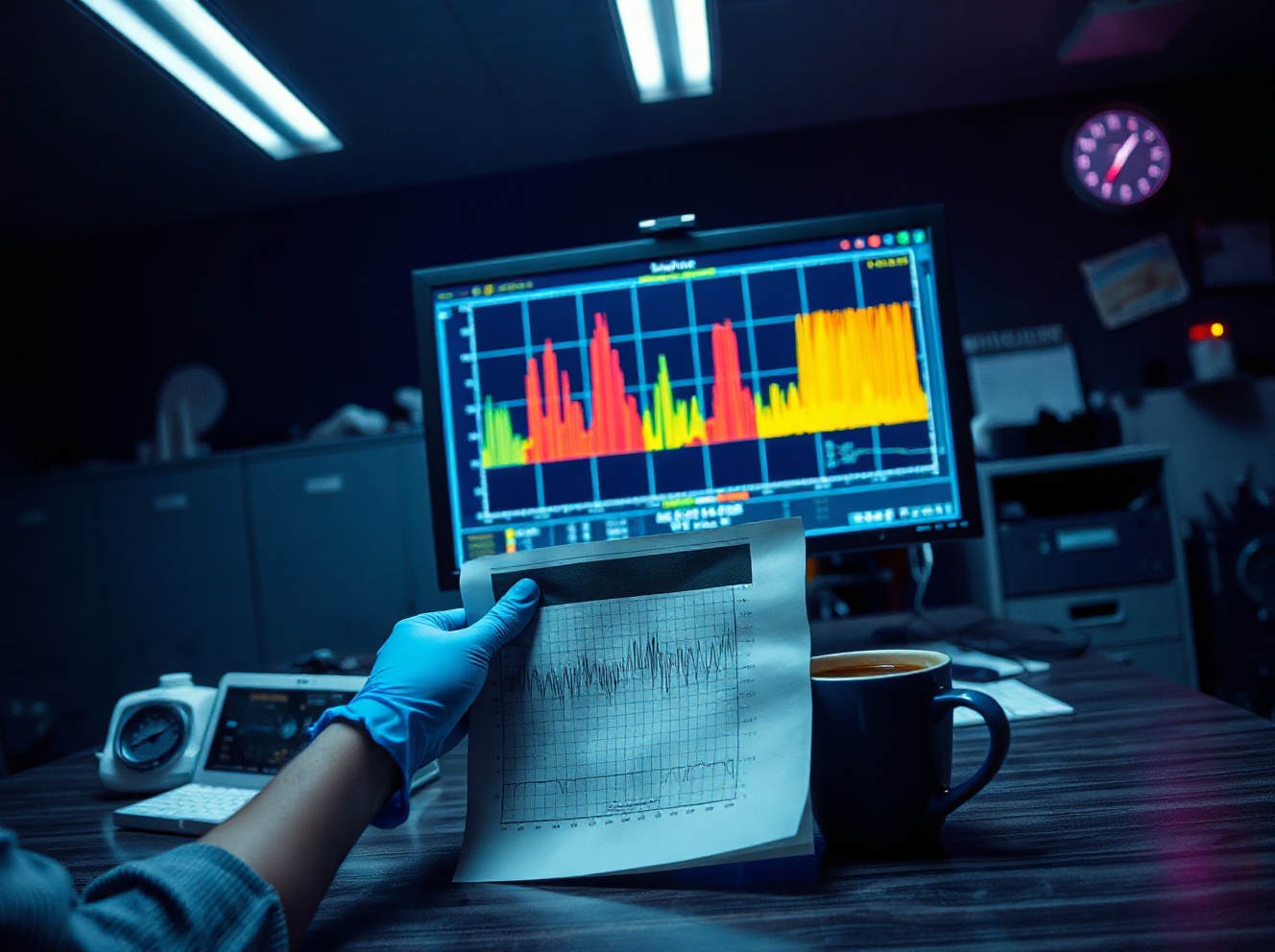
AI Recreates Voices of Dead Pilots, Prompting NTSB to Shutter Public Docket System
The National Transportation Safety Board temporarily removed public access to its online docket system last week after discovering that individuals had used artificial intelligence tools to recreate the voices of pilots killed in a UPS cargo plane crash. The incident marks a disturbing new frontier in the misuse of AI-generated audio, raising urgent questions about privacy, federal law, and the limits of public data access.
How a Spectrogram Became a Source for AI Reconstruction
The controversy centers on UPS Flight 2976, which crashed in Louisville, Kentucky, last year. Under federal law, the NTSB is explicitly prohibited from releasing cockpit voice recorder audio to the public. However, the agency’s accident docket for the flight included a spectrogram file — a visual representation of sound frequencies over time. While not audio itself, a spectrogram contains enough encoded data that, when combined with a publicly available transcript, can be used to approximate the original recording.
Popular science commentator Scott Manley noted on X that reconstructing audio from the spectrogram’s data was technically feasible. Soon after, individuals used AI tools, including Codex, to generate audio approximations of the cockpit recording. The resulting clips, which simulated the voices of the deceased pilots, began circulating online.
NTSB Response and Ongoing Investigations
Upon discovering the recreated audio, the NTSB swiftly removed the entire docket system from public view. The agency restored access on Friday but kept 42 investigations closed pending review, including the docket for Flight 2976. The NTSB has not stated how long the review will take or whether future dockets will exclude spectrogram files.
This is not the first time public records have been misused, but it is among the most sensitive. Cockpit voice recordings capture the final moments of flight crews, often under extreme stress or during catastrophic failures. Recreating and distributing these recordings without consent violates the privacy of the deceased and their families, and may also breach federal regulations governing the handling of investigative materials.
Why This Matters Beyond Aviation
The incident has broader implications for any agency or organization that publishes spectrograms or similar data-rich visualizations. As AI voice synthesis tools become more accessible and accurate, the line between permissible public data and private, recreatable information blurs. Spectrograms are used in fields ranging from medicine to music analysis, and their presence in public records could now be exploited to reconstruct sensitive audio without authorization.
Legal experts note that current U.S. privacy laws were not written with AI reconstruction in mind. The NTSB’s actions may prompt Congress or federal regulators to revisit what constitutes a ‘recording’ under the law, and whether data that can be algorithmically converted into audio should be subject to the same restrictions.
Conclusion
The NTSB’s decision to lock down its docket system reflects a growing tension between government transparency and the unintended consequences of open data in the AI era. While the agency works to prevent further misuse, the episode serves as a stark reminder that public records designed for legitimate investigative purposes can be repurposed in ways that cause significant harm. For now, the families of the Flight 2976 crew and the broader aviation community are left waiting for clarity on how this balance will be struck going forward.
FAQs
Q1: Is it legal to recreate cockpit voice recordings from spectrograms?
Federal law prohibits the NTSB from releasing cockpit voice recordings to the public, but it does not explicitly address the reconstruction of audio from non-audio files like spectrograms. The legal status of such reconstructions remains unclear and may require new legislation or regulatory guidance.
Q2: What is a spectrogram and how does it enable audio reconstruction?
A spectrogram is a visual representation of sound frequencies over time. It uses mathematical processes to encode audio data into an image. With sufficient resolution and the right tools, the image can be reverse-engineered to approximate the original sound, especially when combined with a transcript or other contextual information.
Q3: Will the NTSB change its docket procedures after this incident?
The NTSB has not announced permanent policy changes, but it has temporarily closed 42 investigations and removed spectrogram files from public access. It is likely that future dockets will either exclude spectrograms or include them in a format that prevents audio reconstruction.
This post AI Recreates Voices of Dead Pilots, Prompting NTSB to Shutter Public Docket System first appeared on BitcoinWorld.


You May Also Like

Metaplanet buys 5,075 Bitcoin in Q1 to become 3rd-largest treasury

The changing face of elder care in Malaysia — Sayed Mohammad Reza Yamani Sayed Umar

One Of Frank Sinatra’s Most Famous Albums Is Back In The Spotlight



