BitcoinWorld AI Data Centers: Unpacking the Colossal Investments Reshaping the Future of AI In the fast-evolving landscape where technological prowess often dictates market leadership, the recent flood of headlines about monumental AI data center investments has sent ripples across the global tech industry, including the cryptocurrency space. The sheer scale of capital being poured into these digital fortresses by giants like OpenAI, Nvidia, and Oracle isn’t just about processing power; it’s about laying the foundation for the next generation of artificial intelligence, which will undoubtedly impact every facet of our digital lives, from decentralized finance to automated trading. Understanding these massive moves is crucial for anyone looking to navigate the future of technology. What’s Driving the Colossal Investment in AI Data Centers? The tech world buzzed with news of unprecedented financial commitments this week, all centered around bolstering AI capabilities. At the forefront was Nvidia, a company synonymous with the graphic processing units (GPUs) that are the bedrock of modern AI. Nvidia announced a staggering investment of up to $100 billion in OpenAI, signaling a deep strategic partnership and a clear bet on OpenAI’s future trajectory. This investment underscores the critical need for advanced hardware to power increasingly complex AI models. Not to be outdone, OpenAI itself unveiled ambitious plans to construct five new ‘Stargate’ AI data centers in collaboration with Oracle and Softbank. These facilities are designed to add gigawatts of new computing capacity, a scale previously unimaginable. To finance this monumental undertaking, Oracle reportedly sold $18 billion in bonds, demonstrating the significant financial muscle required to bring such projects to fruition. Each of these deals, individually, represents a dizzying sum. In aggregate, they paint a clear picture: Silicon Valley is moving heaven and Earth to provide OpenAI with enough computational power to train and serve future versions of its flagship product, ChatGPT. These investments are not merely about incremental upgrades; they represent a fundamental re-architecting of global computing infrastructure. The demand for AI processing is growing exponentially, driven by the increasing sophistication of models and the desire to deliver more complex, real-time AI services to a global user base. This shift is creating a new arms race in the tech sector, where access to immense computing power is the ultimate differentiator. OpenAI’s Ambitious Vision: Scaling ChatGPT’s Capabilities The motivation behind these colossal investments becomes clearer when examining OpenAI’s product roadmap. The company is not content with the current iteration of ChatGPT; it envisions a future where AI is more deeply integrated into daily life, offering proactive and personalized services. A glimpse into this future arrived this week with the launch of ‘Pulse’ – a new feature within ChatGPT that works overnight to deliver personalized morning briefings to users. Pulse offers an experience akin to a personalized news app or a social feed, designed to be the first thing users check in the morning. Crucially, it operates independently, even when users are not actively interacting with the ChatGPT app. This ‘always-on’ nature represents a new class of OpenAI products that require continuous, high-intensity processing. The company’s desire to deliver many more such features, and eventually roll them out to its free user base, is currently hampered by a significant bottleneck: the number of available computer servers. OpenAI explicitly stated that Pulse can only be offered to its $200-a-month Pro subscribers due to these capacity constraints. This limitation highlights the direct link between infrastructure investment and product innovation. To democratize access to advanced AI features and realize its full potential, OpenAI needs vastly more computing resources. The Stargate project and Nvidia’s investment are direct responses to this pressing need, aiming to unlock the next generation of AI applications for everyone. Nvidia’s Indispensable Role and Oracle’s Strategic Play in AI Infrastructure The names Nvidia and Oracle are central to this narrative for distinct but equally critical reasons. Nvidia has established itself as the undisputed leader in GPU technology, which is the specialized hardware essential for training and running complex AI models. Without Nvidia’s powerful chips, the rapid advancements in AI seen over the past decade would have been impossible. Their $100 billion investment in OpenAI solidifies their position not just as a hardware provider, but as a strategic partner in shaping the future of AI. This move ensures that Nvidia’s technology remains at the core of cutting-edge AI development, further entrenching their market dominance. Oracle’s involvement, particularly through the Stargate project and its substantial bond issuance, marks a strategic pivot and aggressive expansion into the cloud computing space, specifically targeting AI workloads. While traditional cloud providers like AWS, Azure, and Google Cloud have been dominant, Oracle is leveraging its enterprise-grade infrastructure and financial strength to become a significant player in the high-demand AI infrastructure market. By partnering with OpenAI, Oracle positions itself as a critical enabler for the most advanced AI research and deployment, attracting future AI-driven enterprises to its cloud services. The $18 billion bond sale underscores the massive capital expenditure required for these projects, but also Oracle’s confidence in the long-term returns from becoming a foundational pillar of the AI economy. The Future of ChatGPT: Beyond the App Experience The evolution of ChatGPT, exemplified by features like Pulse, points towards a future where AI is less of a tool we actively summon and more of an ambient intelligence that proactively assists us. Imagine AI companions that anticipate your needs, manage your schedule, summarize vast amounts of information, and even generate creative content without explicit prompts. These advanced capabilities require not only sophisticated algorithms but also an immense, always-on computational backbone. The investments in AI data centers are not just about making existing AI models faster; they are about enabling entirely new paradigms of human-AI interaction. As capacity expands, OpenAI can experiment with larger models, more complex multimodal inputs (like video and audio), and more nuanced, personalized outputs. This means AI could become a seamless part of our digital environment, offering continuous support and insight. The ability to roll out such features to free users will be a game-changer, democratizing access to powerful AI and accelerating its adoption across society. This future also raises questions about the ethical implications, data privacy, and the societal impact of such pervasive AI. As AI becomes more autonomous and integrated, the need for robust governance and responsible development becomes even more paramount. The tech industry, alongside policymakers, will need to address these challenges as the capabilities of AI continue to grow. The Grand Challenge: Is This AI Infrastructure Worth the Investment? This brings us to the fundamental question: are features like Pulse, and the promise of future AI advancements, truly worth the hundreds of billions of dollars being invested in the underlying AI infrastructure? On the surface, a personalized morning briefing might seem a tall order for such a monumental investment. However, the true value lies not just in individual features but in the cumulative impact of enabling a new era of AI. The investment is a bet on the transformative power of AI across all industries. From scientific discovery and medical breakthroughs to personalized education and entertainment, advanced AI promises to unlock unprecedented levels of efficiency, innovation, and economic growth. The ability to train larger, more capable models means AI can tackle problems previously deemed intractable. The immediate return on investment might be hard to quantify for a single feature, but the long-term strategic advantage of being at the forefront of AI development is immeasurable. Challenges remain, particularly regarding the immense energy consumption of these massive data centers. Powering gigawatts of computing capacity will require sustainable energy solutions and significant advancements in cooling technologies. Furthermore, the economic viability of these projects hinges on the continued rapid adoption and monetization of AI services. Yet, the consensus among tech giants is clear: the future is AI-driven, and those who control the infrastructure will control that future. These monumental shifts in AI infrastructure are often the hot topics at premier tech gatherings. Events like the upcoming Bitcoin World, celebrating its 20th anniversary, provide a crucial platform for tech and VC leaders to dissect these trends, explore growth opportunities, and forge connections. With speakers from Netflix, Box, a16z, and Sequoia Capital, attendees can gain insights into how AI’s exponential growth impacts various sectors, including the blockchain and crypto ecosystems. Understanding the underlying infrastructure fueling AI is key for anyone looking to innovate or invest in the digital future. Join 10,000+ tech leaders at the epicenter of innovation in San Francisco from October 27-29, 2025. Register before September 26 to save up to $668. Conclusion: A New Era of AI-Powered Possibilities The recent headlines about colossal investments in AI data centers by OpenAI, Nvidia, and Oracle are not just financial news; they are indicators of a profound technological transformation. These companies are not merely building bigger server farms; they are constructing the digital cathedrals of the future, designed to house the immense computational power required to unlock the next generation of artificial intelligence. From the development of advanced ChatGPT features like Pulse to the broader vision of an AI-powered world, these investments underscore a collective belief in AI’s potential to redefine industries and human-computer interaction. The scale of these endeavors presents both immense opportunities and significant challenges, from sustainability concerns to the ethical implications of pervasive AI. However, one thing is clear: the race to build the ultimate AI infrastructure is on, and its outcome will shape the technological landscape for decades to come. As these digital foundations are laid, we can anticipate a future where AI becomes an even more integral, intelligent, and indispensable part of our daily lives, driving innovation across every sector, including the dynamic world of cryptocurrency and blockchain. To learn more about the latest AI infrastructure trends, explore our article on key developments shaping AI models and institutional adoption. This post AI Data Centers: Unpacking the Colossal Investments Reshaping the Future of AI first appeared on BitcoinWorld.BitcoinWorld AI Data Centers: Unpacking the Colossal Investments Reshaping the Future of AI In the fast-evolving landscape where technological prowess often dictates market leadership, the recent flood of headlines about monumental AI data center investments has sent ripples across the global tech industry, including the cryptocurrency space. The sheer scale of capital being poured into these digital fortresses by giants like OpenAI, Nvidia, and Oracle isn’t just about processing power; it’s about laying the foundation for the next generation of artificial intelligence, which will undoubtedly impact every facet of our digital lives, from decentralized finance to automated trading. Understanding these massive moves is crucial for anyone looking to navigate the future of technology. What’s Driving the Colossal Investment in AI Data Centers? The tech world buzzed with news of unprecedented financial commitments this week, all centered around bolstering AI capabilities. At the forefront was Nvidia, a company synonymous with the graphic processing units (GPUs) that are the bedrock of modern AI. Nvidia announced a staggering investment of up to $100 billion in OpenAI, signaling a deep strategic partnership and a clear bet on OpenAI’s future trajectory. This investment underscores the critical need for advanced hardware to power increasingly complex AI models. Not to be outdone, OpenAI itself unveiled ambitious plans to construct five new ‘Stargate’ AI data centers in collaboration with Oracle and Softbank. These facilities are designed to add gigawatts of new computing capacity, a scale previously unimaginable. To finance this monumental undertaking, Oracle reportedly sold $18 billion in bonds, demonstrating the significant financial muscle required to bring such projects to fruition. Each of these deals, individually, represents a dizzying sum. In aggregate, they paint a clear picture: Silicon Valley is moving heaven and Earth to provide OpenAI with enough computational power to train and serve future versions of its flagship product, ChatGPT. These investments are not merely about incremental upgrades; they represent a fundamental re-architecting of global computing infrastructure. The demand for AI processing is growing exponentially, driven by the increasing sophistication of models and the desire to deliver more complex, real-time AI services to a global user base. This shift is creating a new arms race in the tech sector, where access to immense computing power is the ultimate differentiator. OpenAI’s Ambitious Vision: Scaling ChatGPT’s Capabilities The motivation behind these colossal investments becomes clearer when examining OpenAI’s product roadmap. The company is not content with the current iteration of ChatGPT; it envisions a future where AI is more deeply integrated into daily life, offering proactive and personalized services. A glimpse into this future arrived this week with the launch of ‘Pulse’ – a new feature within ChatGPT that works overnight to deliver personalized morning briefings to users. Pulse offers an experience akin to a personalized news app or a social feed, designed to be the first thing users check in the morning. Crucially, it operates independently, even when users are not actively interacting with the ChatGPT app. This ‘always-on’ nature represents a new class of OpenAI products that require continuous, high-intensity processing. The company’s desire to deliver many more such features, and eventually roll them out to its free user base, is currently hampered by a significant bottleneck: the number of available computer servers. OpenAI explicitly stated that Pulse can only be offered to its $200-a-month Pro subscribers due to these capacity constraints. This limitation highlights the direct link between infrastructure investment and product innovation. To democratize access to advanced AI features and realize its full potential, OpenAI needs vastly more computing resources. The Stargate project and Nvidia’s investment are direct responses to this pressing need, aiming to unlock the next generation of AI applications for everyone. Nvidia’s Indispensable Role and Oracle’s Strategic Play in AI Infrastructure The names Nvidia and Oracle are central to this narrative for distinct but equally critical reasons. Nvidia has established itself as the undisputed leader in GPU technology, which is the specialized hardware essential for training and running complex AI models. Without Nvidia’s powerful chips, the rapid advancements in AI seen over the past decade would have been impossible. Their $100 billion investment in OpenAI solidifies their position not just as a hardware provider, but as a strategic partner in shaping the future of AI. This move ensures that Nvidia’s technology remains at the core of cutting-edge AI development, further entrenching their market dominance. Oracle’s involvement, particularly through the Stargate project and its substantial bond issuance, marks a strategic pivot and aggressive expansion into the cloud computing space, specifically targeting AI workloads. While traditional cloud providers like AWS, Azure, and Google Cloud have been dominant, Oracle is leveraging its enterprise-grade infrastructure and financial strength to become a significant player in the high-demand AI infrastructure market. By partnering with OpenAI, Oracle positions itself as a critical enabler for the most advanced AI research and deployment, attracting future AI-driven enterprises to its cloud services. The $18 billion bond sale underscores the massive capital expenditure required for these projects, but also Oracle’s confidence in the long-term returns from becoming a foundational pillar of the AI economy. The Future of ChatGPT: Beyond the App Experience The evolution of ChatGPT, exemplified by features like Pulse, points towards a future where AI is less of a tool we actively summon and more of an ambient intelligence that proactively assists us. Imagine AI companions that anticipate your needs, manage your schedule, summarize vast amounts of information, and even generate creative content without explicit prompts. These advanced capabilities require not only sophisticated algorithms but also an immense, always-on computational backbone. The investments in AI data centers are not just about making existing AI models faster; they are about enabling entirely new paradigms of human-AI interaction. As capacity expands, OpenAI can experiment with larger models, more complex multimodal inputs (like video and audio), and more nuanced, personalized outputs. This means AI could become a seamless part of our digital environment, offering continuous support and insight. The ability to roll out such features to free users will be a game-changer, democratizing access to powerful AI and accelerating its adoption across society. This future also raises questions about the ethical implications, data privacy, and the societal impact of such pervasive AI. As AI becomes more autonomous and integrated, the need for robust governance and responsible development becomes even more paramount. The tech industry, alongside policymakers, will need to address these challenges as the capabilities of AI continue to grow. The Grand Challenge: Is This AI Infrastructure Worth the Investment? This brings us to the fundamental question: are features like Pulse, and the promise of future AI advancements, truly worth the hundreds of billions of dollars being invested in the underlying AI infrastructure? On the surface, a personalized morning briefing might seem a tall order for such a monumental investment. However, the true value lies not just in individual features but in the cumulative impact of enabling a new era of AI. The investment is a bet on the transformative power of AI across all industries. From scientific discovery and medical breakthroughs to personalized education and entertainment, advanced AI promises to unlock unprecedented levels of efficiency, innovation, and economic growth. The ability to train larger, more capable models means AI can tackle problems previously deemed intractable. The immediate return on investment might be hard to quantify for a single feature, but the long-term strategic advantage of being at the forefront of AI development is immeasurable. Challenges remain, particularly regarding the immense energy consumption of these massive data centers. Powering gigawatts of computing capacity will require sustainable energy solutions and significant advancements in cooling technologies. Furthermore, the economic viability of these projects hinges on the continued rapid adoption and monetization of AI services. Yet, the consensus among tech giants is clear: the future is AI-driven, and those who control the infrastructure will control that future. These monumental shifts in AI infrastructure are often the hot topics at premier tech gatherings. Events like the upcoming Bitcoin World, celebrating its 20th anniversary, provide a crucial platform for tech and VC leaders to dissect these trends, explore growth opportunities, and forge connections. With speakers from Netflix, Box, a16z, and Sequoia Capital, attendees can gain insights into how AI’s exponential growth impacts various sectors, including the blockchain and crypto ecosystems. Understanding the underlying infrastructure fueling AI is key for anyone looking to innovate or invest in the digital future. Join 10,000+ tech leaders at the epicenter of innovation in San Francisco from October 27-29, 2025. Register before September 26 to save up to $668. Conclusion: A New Era of AI-Powered Possibilities The recent headlines about colossal investments in AI data centers by OpenAI, Nvidia, and Oracle are not just financial news; they are indicators of a profound technological transformation. These companies are not merely building bigger server farms; they are constructing the digital cathedrals of the future, designed to house the immense computational power required to unlock the next generation of artificial intelligence. From the development of advanced ChatGPT features like Pulse to the broader vision of an AI-powered world, these investments underscore a collective belief in AI’s potential to redefine industries and human-computer interaction. The scale of these endeavors presents both immense opportunities and significant challenges, from sustainability concerns to the ethical implications of pervasive AI. However, one thing is clear: the race to build the ultimate AI infrastructure is on, and its outcome will shape the technological landscape for decades to come. As these digital foundations are laid, we can anticipate a future where AI becomes an even more integral, intelligent, and indispensable part of our daily lives, driving innovation across every sector, including the dynamic world of cryptocurrency and blockchain. To learn more about the latest AI infrastructure trends, explore our article on key developments shaping AI models and institutional adoption. This post AI Data Centers: Unpacking the Colossal Investments Reshaping the Future of AI first appeared on BitcoinWorld.


AI Data Centers: Unpacking the Colossal Investments Reshaping the Future of AI

9 min read

BitcoinWorld

AI Data Centers: Unpacking the Colossal Investments Reshaping the Future of AI

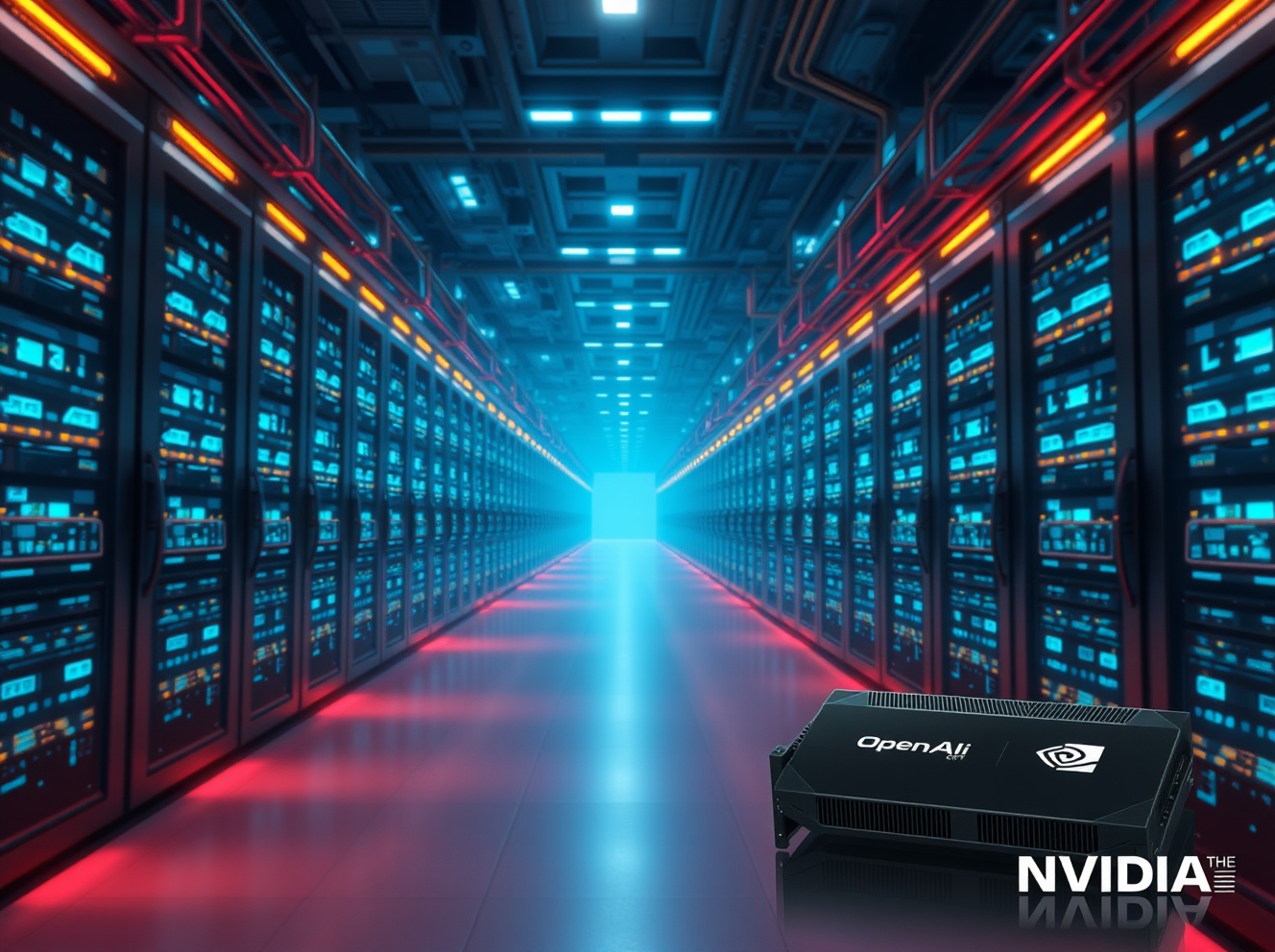
In the fast-evolving landscape where technological prowess often dictates market leadership, the recent flood of headlines about monumental AI data center investments has sent ripples across the global tech industry, including the cryptocurrency space. The sheer scale of capital being poured into these digital fortresses by giants like OpenAI, Nvidia, and Oracle isn’t just about processing power; it’s about laying the foundation for the next generation of artificial intelligence, which will undoubtedly impact every facet of our digital lives, from decentralized finance to automated trading. Understanding these massive moves is crucial for anyone looking to navigate the future of technology.

What’s Driving the Colossal Investment in AI Data Centers?

The tech world buzzed with news of unprecedented financial commitments this week, all centered around bolstering AI capabilities. At the forefront was Nvidia, a company synonymous with the graphic processing units (GPUs) that are the bedrock of modern AI. Nvidia announced a staggering investment of up to $100 billion in OpenAI, signaling a deep strategic partnership and a clear bet on OpenAI’s future trajectory. This investment underscores the critical need for advanced hardware to power increasingly complex AI models.

Not to be outdone, OpenAI itself unveiled ambitious plans to construct five new ‘Stargate’ AI data centers in collaboration with Oracle and Softbank. These facilities are designed to add gigawatts of new computing capacity, a scale previously unimaginable. To finance this monumental undertaking, Oracle reportedly sold $18 billion in bonds, demonstrating the significant financial muscle required to bring such projects to fruition. Each of these deals, individually, represents a dizzying sum. In aggregate, they paint a clear picture: Silicon Valley is moving heaven and Earth to provide OpenAI with enough computational power to train and serve future versions of its flagship product, ChatGPT.

These investments are not merely about incremental upgrades; they represent a fundamental re-architecting of global computing infrastructure. The demand for AI processing is growing exponentially, driven by the increasing sophistication of models and the desire to deliver more complex, real-time AI services to a global user base. This shift is creating a new arms race in the tech sector, where access to immense computing power is the ultimate differentiator.

OpenAI’s Ambitious Vision: Scaling ChatGPT’s Capabilities

The motivation behind these colossal investments becomes clearer when examining OpenAI’s product roadmap. The company is not content with the current iteration of ChatGPT; it envisions a future where AI is more deeply integrated into daily life, offering proactive and personalized services. A glimpse into this future arrived this week with the launch of ‘Pulse’ – a new feature within ChatGPT that works overnight to deliver personalized morning briefings to users.

Pulse offers an experience akin to a personalized news app or a social feed, designed to be the first thing users check in the morning. Crucially, it operates independently, even when users are not actively interacting with the ChatGPT app. This ‘always-on’ nature represents a new class of OpenAI products that require continuous, high-intensity processing. The company’s desire to deliver many more such features, and eventually roll them out to its free user base, is currently hampered by a significant bottleneck: the number of available computer servers.

OpenAI explicitly stated that Pulse can only be offered to its $200-a-month Pro subscribers due to these capacity constraints. This limitation highlights the direct link between infrastructure investment and product innovation. To democratize access to advanced AI features and realize its full potential, OpenAI needs vastly more computing resources. The Stargate project and Nvidia’s investment are direct responses to this pressing need, aiming to unlock the next generation of AI applications for everyone.

Nvidia’s Indispensable Role and Oracle’s Strategic Play in AI Infrastructure

The names Nvidia and Oracle are central to this narrative for distinct but equally critical reasons. Nvidia has established itself as the undisputed leader in GPU technology, which is the specialized hardware essential for training and running complex AI models. Without Nvidia’s powerful chips, the rapid advancements in AI seen over the past decade would have been impossible. Their $100 billion investment in OpenAI solidifies their position not just as a hardware provider, but as a strategic partner in shaping the future of AI. This move ensures that Nvidia’s technology remains at the core of cutting-edge AI development, further entrenching their market dominance.

Oracle’s involvement, particularly through the Stargate project and its substantial bond issuance, marks a strategic pivot and aggressive expansion into the cloud computing space, specifically targeting AI workloads. While traditional cloud providers like AWS, Azure, and Google Cloud have been dominant, Oracle is leveraging its enterprise-grade infrastructure and financial strength to become a significant player in the high-demand AI infrastructure market. By partnering with OpenAI, Oracle positions itself as a critical enabler for the most advanced AI research and deployment, attracting future AI-driven enterprises to its cloud services. The $18 billion bond sale underscores the massive capital expenditure required for these projects, but also Oracle’s confidence in the long-term returns from becoming a foundational pillar of the AI economy.

The Future of ChatGPT: Beyond the App Experience

The evolution of ChatGPT, exemplified by features like Pulse, points towards a future where AI is less of a tool we actively summon and more of an ambient intelligence that proactively assists us. Imagine AI companions that anticipate your needs, manage your schedule, summarize vast amounts of information, and even generate creative content without explicit prompts. These advanced capabilities require not only sophisticated algorithms but also an immense, always-on computational backbone.

The investments in AI data centers are not just about making existing AI models faster; they are about enabling entirely new paradigms of human-AI interaction. As capacity expands, OpenAI can experiment with larger models, more complex multimodal inputs (like video and audio), and more nuanced, personalized outputs. This means AI could become a seamless part of our digital environment, offering continuous support and insight. The ability to roll out such features to free users will be a game-changer, democratizing access to powerful AI and accelerating its adoption across society.

This future also raises questions about the ethical implications, data privacy, and the societal impact of such pervasive AI. As AI becomes more autonomous and integrated, the need for robust governance and responsible development becomes even more paramount. The tech industry, alongside policymakers, will need to address these challenges as the capabilities of AI continue to grow.

The Grand Challenge: Is This AI Infrastructure Worth the Investment?

This brings us to the fundamental question: are features like Pulse, and the promise of future AI advancements, truly worth the hundreds of billions of dollars being invested in the underlying AI infrastructure? On the surface, a personalized morning briefing might seem a tall order for such a monumental investment. However, the true value lies not just in individual features but in the cumulative impact of enabling a new era of AI.

The investment is a bet on the transformative power of AI across all industries. From scientific discovery and medical breakthroughs to personalized education and entertainment, advanced AI promises to unlock unprecedented levels of efficiency, innovation, and economic growth. The ability to train larger, more capable models means AI can tackle problems previously deemed intractable. The immediate return on investment might be hard to quantify for a single feature, but the long-term strategic advantage of being at the forefront of AI development is immeasurable.

Challenges remain, particularly regarding the immense energy consumption of these massive data centers. Powering gigawatts of computing capacity will require sustainable energy solutions and significant advancements in cooling technologies. Furthermore, the economic viability of these projects hinges on the continued rapid adoption and monetization of AI services. Yet, the consensus among tech giants is clear: the future is AI-driven, and those who control the infrastructure will control that future.

These monumental shifts in AI infrastructure are often the hot topics at premier tech gatherings. Events like the upcoming Bitcoin World, celebrating its 20th anniversary, provide a crucial platform for tech and VC leaders to dissect these trends, explore growth opportunities, and forge connections. With speakers from Netflix, Box, a16z, and Sequoia Capital, attendees can gain insights into how AI’s exponential growth impacts various sectors, including the blockchain and crypto ecosystems. Understanding the underlying infrastructure fueling AI is key for anyone looking to innovate or invest in the digital future. Join 10,000+ tech leaders at the epicenter of innovation in San Francisco from October 27-29, 2025. Register before September 26 to save up to $668.

Conclusion: A New Era of AI-Powered Possibilities

The recent headlines about colossal investments in AI data centers by OpenAI, Nvidia, and Oracle are not just financial news; they are indicators of a profound technological transformation. These companies are not merely building bigger server farms; they are constructing the digital cathedrals of the future, designed to house the immense computational power required to unlock the next generation of artificial intelligence. From the development of advanced ChatGPT features like Pulse to the broader vision of an AI-powered world, these investments underscore a collective belief in AI’s potential to redefine industries and human-computer interaction.

The scale of these endeavors presents both immense opportunities and significant challenges, from sustainability concerns to the ethical implications of pervasive AI. However, one thing is clear: the race to build the ultimate AI infrastructure is on, and its outcome will shape the technological landscape for decades to come. As these digital foundations are laid, we can anticipate a future where AI becomes an even more integral, intelligent, and indispensable part of our daily lives, driving innovation across every sector, including the dynamic world of cryptocurrency and blockchain.

To learn more about the latest AI infrastructure trends, explore our article on key developments shaping AI models and institutional adoption.

This post AI Data Centers: Unpacking the Colossal Investments Reshaping the Future of AI first appeared on BitcoinWorld.

Market Opportunity
null Logo
null Price(null)
--
----
USD
null (null) Live Price Chart
Disclaimer: The articles reposted on this site are sourced from public platforms and are provided for informational purposes only. They do not necessarily reflect the views of MEXC. All rights remain with the original authors. If you believe any content infringes on third-party rights, please contact [email protected] for removal. MEXC makes no guarantees regarding the accuracy, completeness, or timeliness of the content and is not responsible for any actions taken based on the information provided. The content does not constitute financial, legal, or other professional advice, nor should it be considered a recommendation or endorsement by MEXC.

You May Also Like

Top NYC Book Publishing Companies

Top NYC Book Publishing Companies

New York City has been the epicenter of American publishing for generations, but “NYC publishing” isn’t just one lane. Today’s landscape includes two very different
Share
Techbullion2026/02/06 14:02
Sensorion Announces its Participation in the Association for Research in Otolaryngology ARO 49th Annual Midwinter Meeting

Sensorion Announces its Participation in the Association for Research in Otolaryngology ARO 49th Annual Midwinter Meeting

MONTPELLIER, France–(BUSINESS WIRE)–Regulatory News: Sensorion (FR0012596468 – ALSEN) a pioneering clinical-stage biotechnology company which specializes in the
Share
AI Journal2026/02/06 14:45
AI Crypto Trading Secrets: What They Won’t Tell You About Profits and Pitfalls|9-Figure Media

AI Crypto Trading Secrets: What They Won’t Tell You About Profits and Pitfalls|9-Figure Media

AI crypto trading is everywhere, and every YouTube guru claims their bot mints money while they sleep. Sounds dreamy, right? However, most don’t discuss the full story, the wild profits possible, and the lurking pitfalls. As someone obsessed with the intersection of artificial intelligence and digital assets, let me pull back the curtain on the realities of algorithmic trading in the crypto jungle. Here’s what nobody tells you: 87% of retail traders using automated systems lose money within their first year. The marketing materials show cherry-picked results. The testimonials come from paid affiliates. But here’s the twist. The remaining 13% who succeed aren’t just lucky. They understand something the majority misses entirely. The Reality Behind the Hype The crypto world loves success stories. You’ve probably seen them. “I made $50,000 in three months using this bot.” What they don’t mention? The $200,000 they lost by testing seventeen other systems first. Real talk: most trading algorithms fail because they’re built for perfect market conditions. Crypto markets are anything but perfect. Think about it like this. Would you trust a Formula 1 car to handle rush hour traffic? That’s essentially what most people do with their trading bots. Why Smart Money Uses Crypto AI Tools Differently Professional traders approach crypto AI tools with surgical precision. They don’t expect miracles. They expect consistent, measured results. The difference lies in understanding what these tools actually do well: • Risk management automation • Pattern recognition at scale • Emotional bias elimination • 24/7 market monitoring • Portfolio rebalancing Notice what’s missing from that list? Get-rich-quick schemes. The smartest crypto AI tools focus on protecting capital first. Profits come second. This mindset separates winners from losers. Here’s something interesting. 9-figure media companies track these patterns religiously. They know which crypto AI tools produce sustainable results versus flashy short-term gains. Professional traders using crypto AI tools typically target 15–25% annual returns. Not 500% monthly moonshots. The Startup Connection Most People Ignore AI for startups isn’t just about building the next ChatGPT. Many successful companies use AI to optimize their crypto treasury management. Smart startups integrate crypto AI tools into their financial operations early. They automate routine decisions. They reduce human error. They scale their trading operations without hiring armies of analysts. But here’s where it gets interesting. The best AI for startup applications in crypto aren’t the obvious ones. Consider automated tax reporting. Or real-time compliance monitoring. Or treasury optimization across multiple blockchains. These unsexy applications generate more consistent profits than flashy trading algorithms. AI for startups in the crypto space succeeds when it solves boring problems efficiently. Not when it promises unrealistic returns. The most successful AI for startups implementations focus on operational efficiency. They reduce costs. They minimize risks. They free up human resources for strategic decisions. Learning from Top AI Start-Ups Top AI start-ups in the crypto space share common characteristics. They prioritize transparency over marketing hype. Look at successful top AI start-ups like Chainalysis or Elliptic. They don’t promise easy money. They provide essential infrastructure. The best top AI start-ups focus on solving real problems: • Market data analysis • Security monitoring • Regulatory compliance • Portfolio analytics • Risk assessment These top AI start-ups understand something crucial. Sustainable businesses solve actual problems. They don’t just ride hype cycles. 9-figure media outlets consistently highlight these fundamental companies. They ignore the noise. They focus on substance. Many top AI start-ups actually discourage retail trading. They know the odds. They’ve seen the casualties. Instead, successful top AI start-ups build tools for institutions. Banks. Hedge funds. Companies with proper risk management systems. The Hidden Costs Nobody Discusses Using crypto AI tools costs more than subscription fees. Much more. First, there’s the learning curve. Most people spend months figuring out proper settings. During this time, they’re paying tuition to the market. Second, there’s infrastructure. Reliable crypto AI tools require stable internet, backup systems, and proper security measures. Third, there’s opportunity cost. Time spent tweaking algorithms could be spent learning fundamental analysis. The real cost? Most people using crypto AI tools trade more frequently. Increased trading usually means increased losses. Think about 9-figure media companies again. They understand that technology amplifies existing skills. It doesn’t replace them. Smart Implementation Strategies Successful crypto AI tools users follow specific patterns: • Start with paper trading • Use position sizing rules • Set strict stop losses • Monitor performance weekly • Adjust strategies quarterly They treat crypto AI tools like any other business tool. With respect. With caution. With realistic expectations, startup applications work similarly. They augment human decision-making. They don’t replace it. The most successful AI for startups implementations in crypto involve human oversight at every level. Algorithms suggest. Humans decide. What Actually Works Here’s what separates successful crypto AI tools users from everyone else: They focus on consistency over home runs. They understand that small, regular gains compound better than occasional big wins followed by devastating losses. They apply AI principles to their approach for startups. They iterate quickly. They fail fast. They learn constantly. They study top AI start-ups for inspiration. But they don’t try to replicate their exact strategies. Most importantly, they never risk money they can’t afford to lose. The crypto market will humble anyone. AI doesn’t change this fundamental truth. Your success with crypto AI tools depends more on your discipline than the sophistication of your algorithms. Remember: the house always has an edge. Your job is to find where that edge doesn’t apply. That’s the secret they won’t tell you. AI Crypto Trading Secrets: What They Won’t Tell You About Profits and Pitfalls|9-Figure Media was originally published in Coinmonks on Medium, where people are continuing the conversation by highlighting and responding to this story
Share
Medium2025/09/18 23:20