

Let’s not waste opportunity to strengthen the rule of law
It’s ironic, but the late dictator’s son has provided the space we need to repair our democracy, assaulted and scarred by Rodrigo Duterte. Duterte’s sweeping strongman tactics affected institutions such as the courts, the Ombudsman, the Solicitor General, the legislature, political parties, civil society, and the media.
We have the remaining years of the Marcos presidency to make our democracy resilient enough to withstand the shocks from a potential return to autocracy.
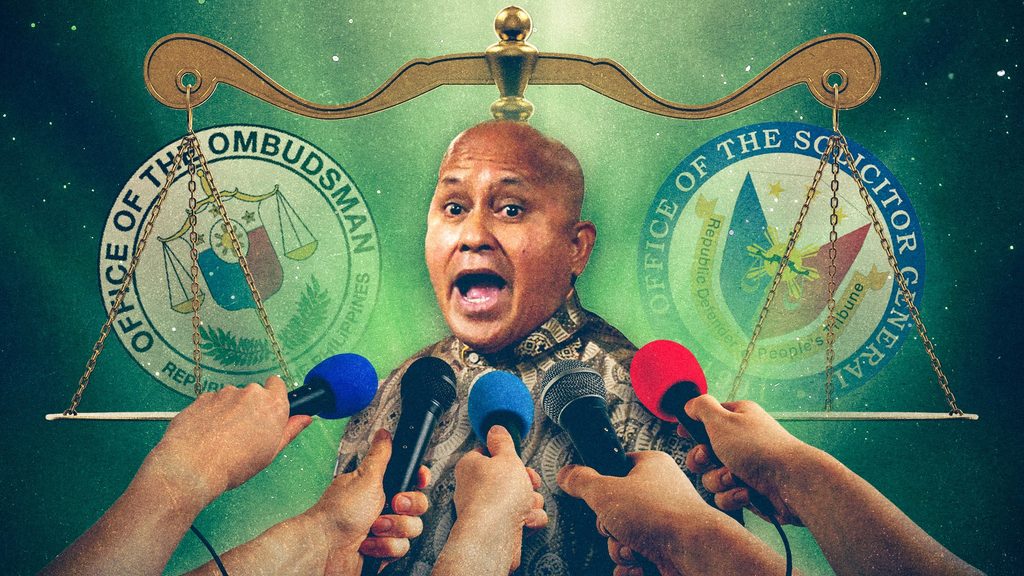
The case of Senator Ronald “Bato” dela Rosa is one big opportunity to strengthen the rule of law, a mainstay in a democracy, no matter how flawed ours is. In the recent move of pro-Duterte senators to grab the majority and protect the fugitive senator wanted by the International Criminal Court (ICC) for enforcing the war on drugs that led to thousands of extrajudicial killings, three institutions stood out, rising above the chaos and providing clarity.
- The Ombudsman took decisive action and suspended the Senate sergeant-at-arms, retired police general Mao Aplasca, for six months while an investigation on the shooting is taking place.
- The Solicitor General, in a well-argued and clearly written 83-page comment, urged the Supreme Court to deny Dela Rosa’s plea to block the ICC arrest warrant.
- It was the media that shone the light on events as they unfolded in the Senate, reporting amid the piercing sound of gunshots, questioning the majority’s narrative, probing, and informing the public of the facts.
But one institution sank into ignominy as the majority wrapped itself in its partisan agenda and self-interest. As we saw in the Senate theatrics last week, it placed itself above the law by harboring Dela Rosa within its premises and creating the fiction of “protective custody.”
Now, we await the Supreme Court’s decision on whether the ICC warrant must pass through a local court. The Court has already denied Dela Rosa interim relief.
As far as Malacañang is concerned, the ICC warrant is valid. It is the Supreme Court’s turn to rise to the occasion — and the public is watching.
Law as anchor
There’s a shaft of hope, and it is in an old law that shows the Philippines’ adherence to international norms. Who would have anticipated, at the time, that it would be at the heart of the debate on the validity of an ICC arrest warrant in the future?
Seventeen years ago, in 2009, Congress passed Republic Act (RA) No. 9851, “An Act Defining and Penalizing Crimes Against International Humanitarian Law, Genocide and Other Crimes Against Humanity, Organizing Jurisdiction, Designating Special Courts, and for Related Purposes.” Its main authors were then-senator Richard Gordon and then-representative Lorenzo “Erin” Tañada III.
Section 17 clearly states: “In the interest of justice, the relevant Philippine authorities may dispense with the investigation or prosecution of a crime punishable under this Act if another court or international tribunal is already conducting the investigation or undertaking the prosecution of such crime. Instead, the authorities may surrender or extradite suspected or accused persons in the Philippines to the appropriate international court, if any, or to another State pursuant to the applicable extradition laws and treaties.”
RA 9851 is the Solicitor General’s key argument, a domestic law coming back to life, one that has outlived our country’s membership in the ICC. It has already been applied in Duterte’s arrest. It should do the same to Dela Rosa.
‘Fix the room while the sun is shining’
Overall, the country has two more years to repair its democracy so that it can hold up against the strong jolts of a possible authoritarian rule.
Opportunities for organizing, mass mobilization, and forming coalitions have arisen, peaking when calls for accountability intensified following the unearthing of the mega-corruption in flood control projects, succeeded by the push to impeach Vice President Sara Duterte for graft and unexplained massive wealth. Civil society groups and progressive members of the House of Representatives have been working together, united by common goals.
Among the institutions, the Senate and the House require hard work. This challenge can be partly met by passing vital legislation, such as the anti-dynasty bill, and acts to reform campaign finance and political parties. The rest is up to the voters.
Last year, more by accident than by design, President Ferdinand Marcos Jr. upheld the rule of law by having Duterte arrested and brought to the ICC to face trial for committing crimes against humanity. It was the rupture of the Uniteam, the death of a once-powerful alliance, that enabled Marcos to ship off Duterte to The Hague. Still, it was a big win in the country’s quest for justice.
Marcos also took off the lid on the unprecedented corruption in the public works department, siphoning off billions for badly needed infrastructure to mitigate floods in vulnerable areas. He did not anticipate — or he did not know — that it would lead to his doorstep with his cousin, former speaker Martin Romualdez, and his ally, former representative Zaldy Co, as pivotal actors in diverting a huge chunk of the budget to questionable public works projects.
The wheels of justice have been moving exceedingly slow. No big fish has yet been put behind bars. This is one area where more pressure should be put on government.
As the International IDEA, an intergovernmental organization that supports democracy, recommends: “Fix the roof while the sun is shining.” We in the Philippines have a window of opportunity to fix our roof, apply the law equally, and not let the powerful corrode the rule of law.
Let me know what you think. You can email me at [email protected].
Till next newsletter!
ICYMI Related articles!
ICYMI Related articles:


You May Also Like

dvv group Announces Enhanced Capabilities Across Its Private Network

Spotify (SPOT) Surges 6% Following Universal Music AI Partnership Announcement

Ant International’s Alipay+ Enables Mobile Payments for Global Travellers in Latin America



