

BIS completes Project Agorá tokenization pilot with seven central banks
BitcoinWorld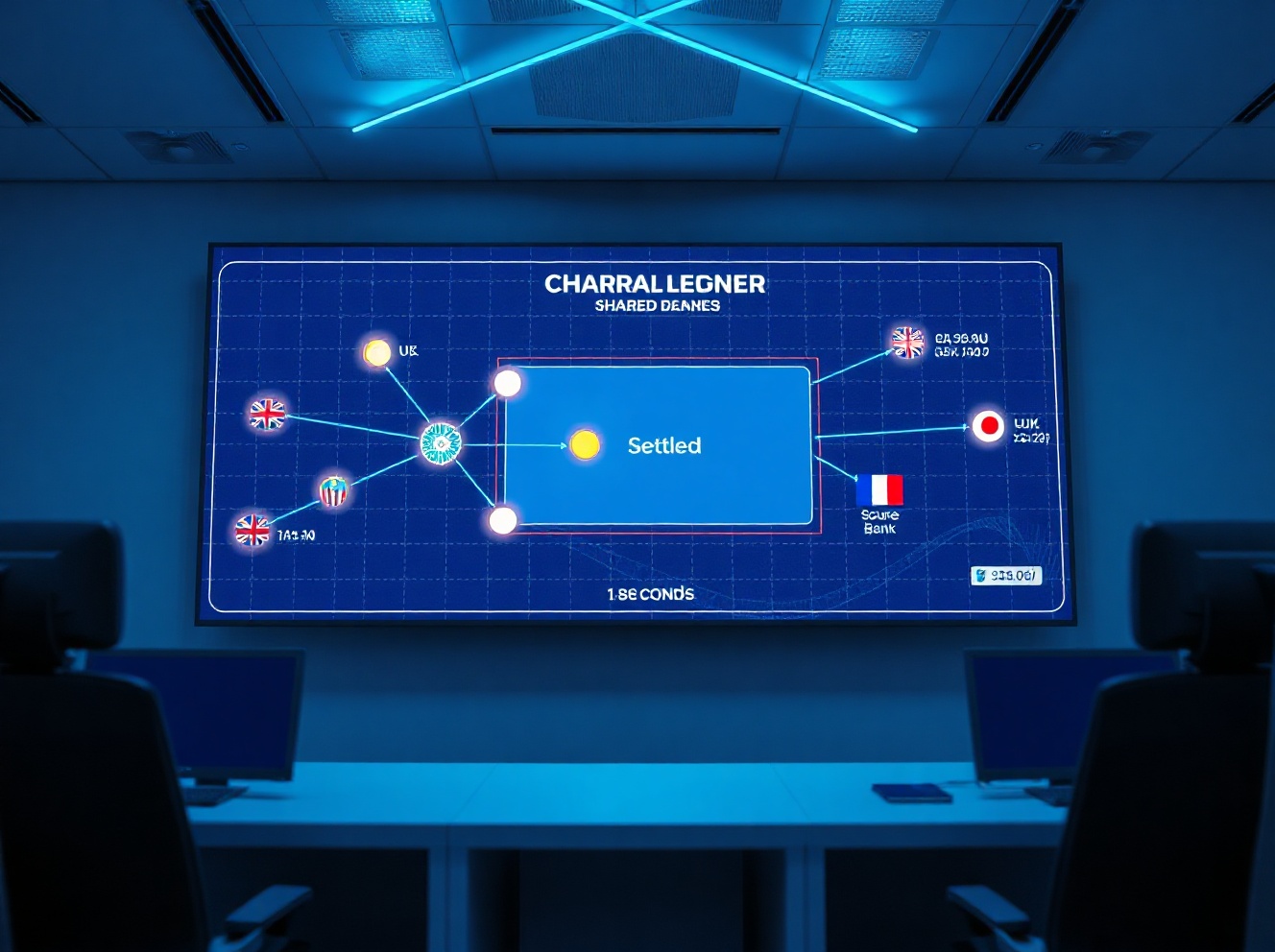
BIS completes Project Agorá tokenization pilot with seven central banks
The Bank for International Settlements (BIS) has concluded a prototype test for Project Agorá, its ambitious initiative to develop a token-based international wholesale payment system. The pilot was conducted in collaboration with seven central banks and over 40 private financial institutions, marking a significant step in the exploration of distributed ledger technology (DLT) for cross-border settlements.
How the prototype works
According to a BIS report, the prototype tokenizes both central bank reserves and commercial bank deposits on a shared distributed ledger. This design allows for atomic settlement, a mechanism that eliminates credit and settlement risks by ensuring transactions are either completed in full or not at all. The system processes payments in seconds and enables all parties to monitor payment status in real-time, a significant improvement over current multi-day settlement processes.
Participants and expansion
Central bank participants included the Bank of Korea, the New York Federal Reserve Bank, the Bank of England, and the Bank of Japan. South Korean commercial banks involved in the pilot were KB Kookmin Bank, Shinhan Bank, and Hana Bank. On the same day the BIS announced the completion of the prototype, the Bank of Canada also confirmed it had joined the project, signaling growing international interest in the initiative.
Why this matters for global payments
Project Agorá addresses a long-standing inefficiency in cross-border payments: the reliance on correspondent banking networks that introduce delays, costs, and settlement risks. By using a shared ledger and tokenized assets, the BIS aims to create a more transparent, faster, and secure system. While still a prototype, the successful test demonstrates that central banks and commercial banks can operate on a common platform, potentially reshaping the infrastructure for international wholesale payments.
Conclusion
The completion of Project Agorá’s prototype test represents a concrete milestone in the evolution of central bank digital currencies (CBDCs) for wholesale use. With continued participation from major central banks and the addition of new members like the Bank of Canada, the project is positioned to influence the future design of global payment systems. Further development and regulatory considerations will determine whether this prototype transitions into a live operational system.
FAQs
Q1: What is Project Agorá?
Project Agorá is a BIS-led initiative to explore a token-based wholesale payment system using a shared distributed ledger. It aims to improve the speed, transparency, and security of cross-border payments between central banks and commercial banks.
Q2: What is atomic settlement?
Atomic settlement is a mechanism that ensures a transaction is either fully completed or not executed at all, eliminating the risk of one party fulfilling their obligation while the other does not. In Project Agorá, this is used to remove credit and settlement risks.
Q3: Which central banks participated in the pilot?
The pilot involved the Bank of Korea, the New York Federal Reserve Bank, the Bank of England, and the Bank of Japan. The Bank of Canada has since joined the project.
This post BIS completes Project Agorá tokenization pilot with seven central banks first appeared on BitcoinWorld.


You May Also Like

COVIP contribution 2026: what changes and the tax on pension funds

Group working on Trump's 'war on fraud' is run by accused fraudsters: report

ETH Enters High-Stakes Decision Zone



