

7,000+ stocks, zero fees: Binance US stocks trading takes on brokerages
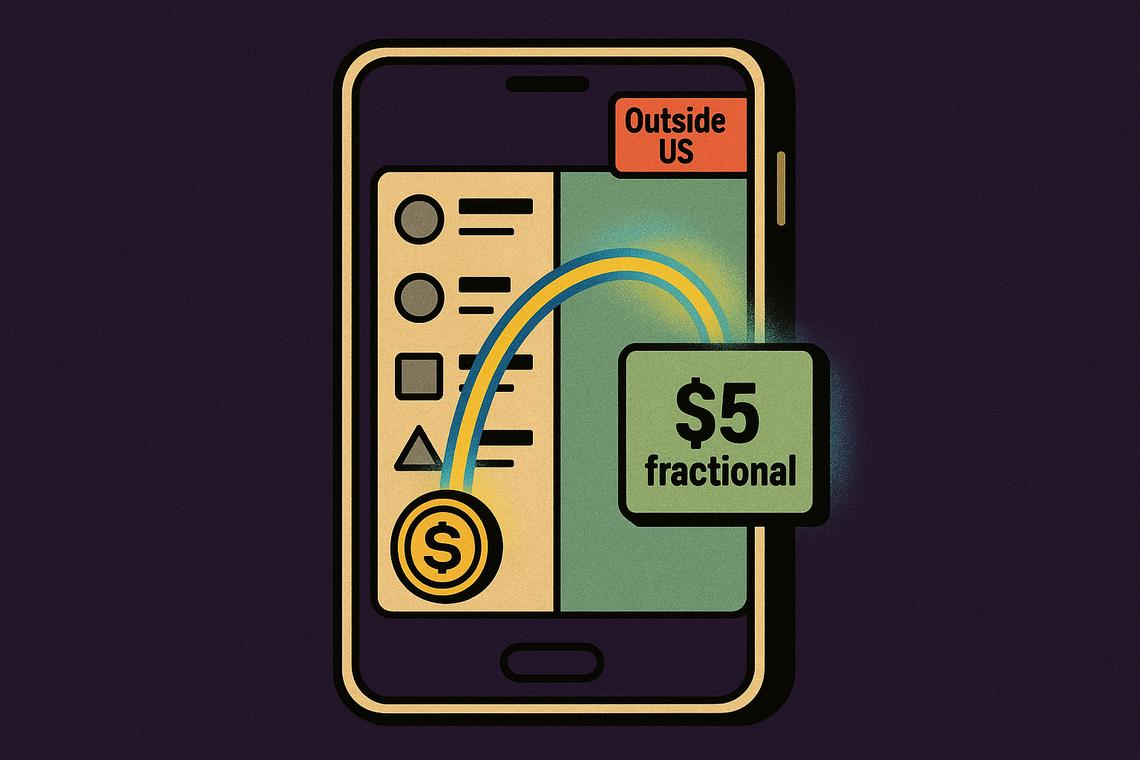
Binance has launched Binance US stocks trading, adding more than 7,000 U.S. shares and exchange-traded funds (ETFs) to its platform in a move that pushes the crypto exchange deeper into traditional finance. The rollout is available only to users outside the United States, and it puts Binance in more direct competition with online brokerages.
The new service lets eligible traders buy fractional shares starting from as little as $5. It also gives non-U.S. users a way to access high-priced American equities without needing a large upfront investment, while keeping the experience inside the Binance app.
Just as importantly, the launch shows how quickly crypto exchanges add stocks and widen their pitch beyond digital assets. Instead of serving only token traders, these platforms are trying to become multi-asset broker crypto hubs where users can move between crypto, stablecoins, and equities in one place.
Binance US stocks trading brings fractional shares and zero commissions
Under the new setup, stock trading is commission-free. That matters because Binance is positioning the service as a low-friction alternative to standard brokerage accounts, especially for users who already hold digital assets.
In practice, customers can fund stock purchases with stablecoins and selected cryptocurrencies rather than moving money through traditional banking rails. Binance says accounts can be funded with USDC and USDT, as well as selected assets such as BNB. As a result, the company is linking stock trading with stablecoins in a way that mirrors how crypto users already move between assets.
The setup creates a streamlined path from digital dollars to U.S. equities. More importantly, it keeps funds inside the Binance ecosystem, where users can shift between volatile crypto assets, stablecoins, and blue-chip stocks.
How Binance built the stock trading service
Binance provides the customer-facing platform, but the infrastructure behind the service depends on traditional financial partners. That structure helps the exchange offer stock access while relying on established brokerage mechanics for execution and custody.
Nest Trading handles execution
Transaction execution is arranged through Nest Trading, a specialized broker-dealer. Meanwhile, Alpaca handles custody of the underlying assets, along with dividend processing and support for corporate actions.
By using those partners, Binance can offer Binance US stocks trading while keeping much of the broker-dealer work outside its core exchange system. At the same time, the model connects digital funding methods with centralized clearing and settlement processes.
Crypto exchanges add stocks as the competition widens
Binance is not the only company chasing this market. The broader trend shows crypto exchanges add stocks as they try to build all-in-one financial platforms that can hold more of a customer’s capital.
- Coinbase is building an “Everything Exchange” to combine different financial instruments in one workspace.
- Kraken recently expanded its tokenized equities offering to international users.
- MEXC introduced direct access to real U.S. shares through brokerage partners.
This push increases pressure on legacy brokers, which typically rely on banking hours and slower settlement timelines. By contrast, crypto platforms are promoting 24/5 access and faster movement between assets. That shift could change how international retail investors interact with Wall Street over time.
Why the move matters for global retail investors
The rise of the multi-asset broker crypto model reflects a wider effort to keep users inside one financial app for as long as possible. For Binance, the appeal is clear: if users can trade tokens, stablecoins, and U.S. equities in one dashboard, the platform becomes harder to leave.
For now, the service is limited to users outside the United States, and Binance has not detailed which jurisdictions are eligible. Still, the launch gives the company a new foothold in the race to merge crypto trading with mainstream investing.
FAQ
Who can trade US stocks on Binance?
The service is available to Binance users outside the United States.
What is the minimum investment?
Users can buy fractional shares starting from $5.
Can I fund stock purchases with cryptocurrency?
Yes, purchases can be funded with USDC, USDT, and selected cryptocurrencies such as BNB.


You May Also Like

Not a loophole: Singapore AI export controls let China tap US AI legally

Exclusive interview with Smokey The Bera, co-founder of Berachain: How the innovative PoL public chain solves the liquidity problem and may be launched in a few months

Crypto Market Drops as Fear Grows and Major Assets Decline



