

War is transforming how the world views Fujairah
There is a moment, cresting the Hajjar mountains on the highway from Dubai to Fujairah, that fairly knocks you back.
You have driven through the desert, climbed through the dramatic rock formations, and then all of a sudden there it is: the Gulf of Oman stretching away to the horizon, deep azure but with whitecap waves hinting at the turbulent Indian Ocean beyond.
It is very different from the pristine white sands and turquoise ripples you left a couple of hours ago in Jumeirah.
For many Dubai residents, that view has been the signal of a relaxing weekend ahead. Fujairah is where Dubaians go to decompress – to find spacious beaches and empty wadis, weekend brunches without the frenzy and a pace of life that the western coast abandoned sometime around 2005.
Fujairah – until recently – was always the quieter sibling of the Emirates. Before oil transformed the Gulf coast, east and west were not so different – small fishing communities, farming settlements in the wadis, in the same subsistence rhythms that had defined the region for centuries.
But the oil and the trade were on the western side and the economic boom took off there rapidly, as Dubai and Abu Dhabi surged ahead. Fujairah, cut off by the mountains, did not.
The road through the Hajjar only opened in 1978, seven years after independence. The port followed in 1983, the airport in 1987. The backwater was opening up, but very slowly.
The result, half a century later, is a population of roughly 360,000, against Dubai’s 3.9 million and Abu Dhabi’s 3.8 million. Fujairah is one-twelfth the size of its western neighbours. Think Brighton to London, for those who know their English geography.
But it may not always be like that.
The US-Israeli war with Iran – whatever its outcome – has already begun to redraw the UAE’s economic map in ways that will outlast any ceasefire. The Strait of Hormuz, even if it reopens in some form, will never again be taken for granted.
The memory of what happened in 2026 will permanently alter how the world thinks about Gulf energy exports. Any country in the region that has export capacity outside a permanent Hormuz risk premium will benefit.
Fujairah already has a deepwater port handling a third of the world’s bunkering traffic and a pipeline from Habshan in Abu Dhabi emirate that has been pumping at full capacity since soon after February 28. More pipelines are planned.
It is already the world’s second-largest bunkering hub. Post-war, it will become a prime maritime gateway to the world. That is a structural shift in the country’s economic landscape.
The emirate is embracing the change. For example, Etihad Rail’s passenger network is about to launch its first services, connecting Abu Dhabi, Dubai and Fujairah at 200 kilometres per hour.
The Fujairah station is already complete – the first in the entire network to be finished. It sits waiting, fully built, while Dubai and Abu Dhabi are still applying their finishing touches. The backwater is ready before its glitzy western neighbours.
The financial infrastructure is modest but not negligible – a free zone, the National Bank of Fujairah, the Fujairah Oil Industry Zone that handles the economics of bunkering and storage.
This is not DIFC or ADGM, of course. But then, nothing in Dubai resembled DIFC before 2004 either.
Further reading:
- UAE non-oil growth subdued as headwinds buffet Kuwait and Egypt
- Abu Dhabi rent freeze signals a city under housing pressure
- Growth in UAE coffee market fuels rise of homegrown brands
History offers instructive parallels. Shenzhen was a fishing village of 30,000 people in 1980. Beijing made a policy decision to create a Special Economic Zone on the border with Hong Kong and within a generation Shenzhen had 17 million inhabitants and a skyline that made Manhattan look understated.
Rotterdam, Singapore, Piraeus – the great port cities of the world were rarely the most important cities of their era when they began their ascent. They were the ones in the right place when the trade routes shifted.
The question is not whether Fujairah will grow. It is already growing, at more than 5 per cent a year before the war’s full consequences have registered. The question is what that growth looks like, and how fast it will be.
When I next crest the mountain near the fort at Al Hail and look down at the Indian Ocean, the vista will be the same, with the same sense of arrival at something quieter and older – for now.
But I wonder how long that view will survive, or whether the next generation of visitors will see something more like the canyons of Sheikh Zayed Road, or the shark-fin spires of the Abu Dhabi Corniche.
Frank Kane is Editor-at-Large of AGBI and an award-winning business journalist. He acts as a consultant to the Ministry of Energy of Saudi Arabia
Frank Kane’s Diary
- Dubai’s Eid ritual: going away – and coming back
- The new energy lexicon of the Hormuz era
- Champagne and binoculars on the Suez passage


You May Also Like

Best Music AI Websites For Songs And Soundtracks

Strategy Michael Saylor Bitcoin acquisition signals another buy after chart post
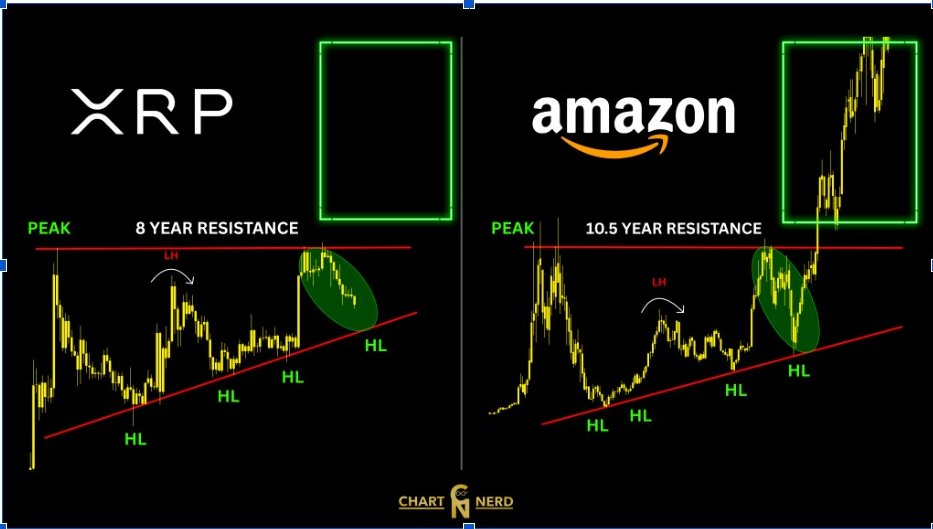
XRP Price Faces Deeper Pullback as Analysts Track $0.70 Support Zone



