

Switzerland ATM Withdrawal Guide: Fees & Best ATMs (2026)
Getting Swiss francs without bleeding fees comes down to one screen choice
Switzerland looks expensive before you’ve even landed, so the last thing you want is an ATM quietly skimming another 12% off every withdrawal. The good news: most Swiss bank machines barely touch foreign cards for fees. The catch is the private ATMs parked exactly where tourists land — convenient but comes with a surcharge. Here’s how to get CHF the cheap way.
| What | Details |
|---|---|
| Do Swiss ATMs charge foreign cards? | Usually little to nothing. Major bank Bancomats (UBS, PostFinance, Raiffeisen, cantonal) rarely add their own surcharge; any fee tends to come from your home bank |
| Which to avoid | Euronet and other private ATMs: a per-withdrawal surcharge plus a DCC markup of up to ~12% |
| Per-transaction limit | Set by your own card or bank, not the Swiss ATM (machines often allow several thousand CHF) |
| The DCC trap | Always choose CHF, never SGD, when the screen asks |
| Cash to carry | 100–200 CHF (~S$162–S$324) for mountain huts, rural valleys and parking meters |
| Cheapest way | YouTrip: first S$400/month overseas ATM withdrawals free, 2% after, 0% FX, lock CHF in-app |
Table of Contents
- Can You Use a Singapore Card at Swiss ATMs?
- How Much It Costs to Withdraw CHF in Switzerland
- Best ATMs in Switzerland (and Which to Avoid)
- How to Withdraw CHF at a Swiss ATM
- Swiss ATM Withdrawal Limits
- How Much Cash Do You Actually Need in Switzerland?
- Get Swiss Francs in Singapore or Withdraw on Arrival?
- The Smartest Way to Pay and Withdraw in Switzerland
- Tips to Avoid Extra Fees: Use a Multi-Currency Card
- Safety Tips for Using ATMs in Switzerland
- FAQ
Can You Use a Singapore Card at Swiss ATMs?
Yes. Any Visa or Mastercard from a Singapore bank or travel card works at Swiss ATMs, which the locals call Bancomats. Acceptance isn’t the issue in Switzerland; the fee stack on a regular bank card is.
Pay with a standard Singapore debit or credit card, and you’re usually looking at:
- Foreign transaction fee: 2.5–3.5% on every card payment
- Bank FX markup: roughly 1–3% baked into the rate your bank gives you
- Overseas ATM fee: a flat charge or a percentage your home bank adds on each withdrawal
None of that shows up as a line item, which is exactly why it’s easy to miss. A multi-currency travel card strips most of it out, and we’ll get to the maths further down.
How Much It Costs to Withdraw CHF in Switzerland

For most travellers, withdrawing from a major Swiss bank ATM costs little to nothing in operator fees. The real costs hide in two places: dynamic currency conversion at the screen, and whatever your home bank charges behind the scenes.
Three fees can stack on a single withdrawal:
- The ATM operator fee: major bank Bancomats (UBS, PostFinance, Raiffeisen, cantonal banks) rarely add their own surcharge for foreign cards. Private machines like Euronet are the exception and can charge a few francs per withdrawal.
- Your home bank’s overseas withdrawal fee: a flat fee or 1–3% of the amount, added by your Singapore card issuer. A multi-currency card removes most of this.
- The DCC markup: the big one, and the one you control. More below.
| Cost type | Typical amount |
|---|---|
| Swiss bank Bancomat operator fee (foreign card) | Rarely a surcharge |
| Private ATM (Euronet and similar) | A per-withdrawal surcharge, often a few CHF, plus DCC |
| Your home bank’s overseas ATM fee | Flat fee or ~1–3% (varies by card) |
| DCC markup if you pick SGD | Up to ~12% on the rate |
ATM fees are subject to change; verify on screen before withdrawal.
The DCC trap: always choose CHF, never SGD
When a Swiss ATM offers to charge you in Singapore dollars instead of francs, decline it every time. That offer is dynamic currency conversion (DCC), where the machine converts the amount at its own rate instead of your card network’s. On private ATMs that markup can reach up to around 12%, which is more than the whole rest of the fee stack combined.
The fix takes one tap: when the screen shows “with conversion” (SGD) or “without conversion” (CHF), pick CHF / without conversion. Your own card then does the conversion at the Mastercard or Visa wholesale rate, which is almost always better.
Best ATMs in Switzerland (and Which to Avoid)

Stick to ATMs attached to a real Swiss bank, and avoid the standalone private machines in tourist spots. The bank ones rarely surcharge foreign cards; the private ones exist to charge you.
1. UBS — Locate your nearest UBS Bancomat here
The safest default. UBS has the densest Bancomat network in the country, rarely surcharges foreign cards, and gives a real Visa/Mastercard interbank rate. Worth knowing: Credit Suisse has merged into UBS, and former Credit Suisse branches and machines are being converted to UBS (the client migration wrapped up in early 2026). If your old guidebook says look for Credit Suisse machines, that name is on the way out. Look for the UBS logo instead.
2. PostFinance — Locate your nearest PostFinance ATM here
The post-office bank. Its yellow Bancomats are in virtually every town and village, rarely charge foreign cards, and make a reliable fallback when you’re off the beaten track.
3. Raiffeisen and cantonal banks — Find a Raiffeisen Bancomat here, or a Zürcher Kantonalbank ATM here
Strong regional and rural coverage. Cantonal banks (like Zürcher Kantonalbank in Zurich or Banque Cantonale de Genève in Geneva) and Raiffeisen branches seldom surcharge foreign cards and are often the only bank machine in smaller alpine towns.
4. Euronet and other private ATMs — Avoid
You’ll spot these in airports, main stations and tourist squares, usually in bright branding with no Swiss bank logo. They tack on a per-withdrawal surcharge and push DCC hard, with markups that can hit double digits. If a machine doesn’t carry a bank’s name, walk on and find a Bancomat that does.
How to Withdraw CHF at a Swiss ATM
Withdrawing francs takes about a minute. The only step that matters for your wallet is declining conversion at the end.
Here’s how to withdraw Australian Dollars with YouTrip in 4 easy steps:
- Locate a Bancomat displaying the Visa/Mastercard logo and insert your YouTrip card
- Select ‘Saving account’
- Key in your 4-digit ATM & Card PIN
- Withdraw your desired amount in CHF
If the machine offers conversion to SGD, choose without conversion (CHF), then take your cash and card.
- Enjoy FREE S$400 monthly withdrawals with YouTrip per calendar month, with a 2% fee imposed thereafter
Resets on the 1st of each month.
 Related Guide: YouTrip Withdrawal Guide For Singaporeans: ATM Fees & Limits
Swiss ATM Withdrawal Limits
There’s no single nationwide cap, and Swiss ATMs themselves often let you take out several thousand francs in one go. The limit that actually bites is the one on your own card or bank, so that’s the one to check.
| Limit | Amount |
|---|---|
| Swiss ATM per-transaction maximum | Often several thousand CHF (varies by machine) |
| Your home bank’s daily cap | Varies; check before you fly |
| Your travel card’s ATM limit | Adjustable in-app for most cards |
If you’ve set a low daily ATM limit on your YouTrip or bank card, raise it in the app before you travel so a big withdrawal doesn’t get declined. Pulling out one larger amount also beats several small ones if any flat fee is involved.
How Much Cash Do You Actually Need in Switzerland?
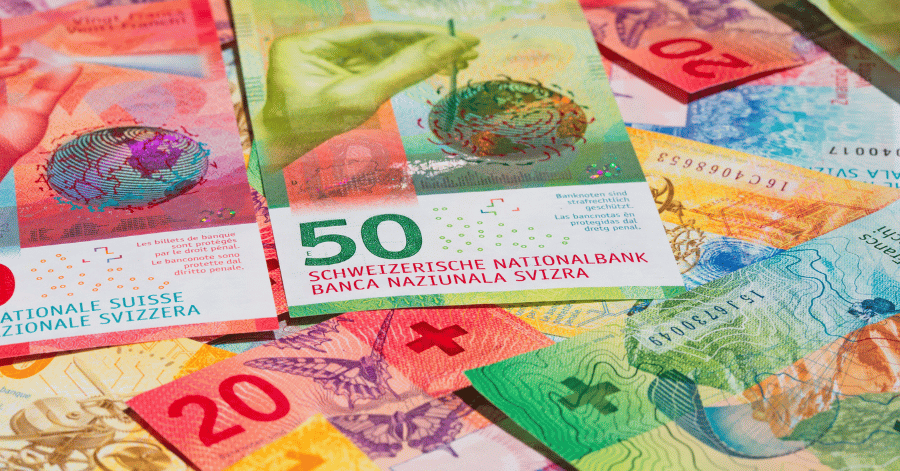
Less than you’d think, but not zero. Switzerland is heavily card-friendly, and contactless works almost everywhere in cities, on trains and at supermarkets. Cash still matters in a handful of very Swiss situations.
Carry 100–200 CHF (~S$162–S$324) for:
- Mountain huts: many SAC alpine huts are cash-only, with no card terminal at altitude
- Rural valley restaurants and kiosks: small spots where the card machine occasionally goes offline
- Parking meters and some vending machines: still coin-fed in plenty of towns
- Tipping: not expected (service is included), but rounding up the bill in cash is the norm for good service
In Zurich, Geneva or Lucerne you can go almost entirely contactless. The further you head into the Alps, the more you’ll lean on cash, so top up before you take a cable car into a valley.
Get Swiss Francs in Singapore or Withdraw on Arrival?
Withdraw on arrival, from a Swiss bank Bancomat, with a card that doesn’t charge FX. That beats changing cash in Singapore for a currency as pricey as the franc.
A money changer in Singapore doesn’t show you a “fee”; it bakes a markup into the rate it quotes, and that spread is wider on less common currencies like CHF, worse again at airport counters. Pulling francs from a Swiss bank Bancomat with a multi-currency card gets you the wholesale rate instead, plus your free monthly allowance.
If you want a small float in hand before you fly, keep it small (enough for your first taxi or coffee) and withdraw the rest in Switzerland. Don’t load up on francs at a Changi counter for the whole trip.
The Smartest Way to Pay and Withdraw in Switzerland
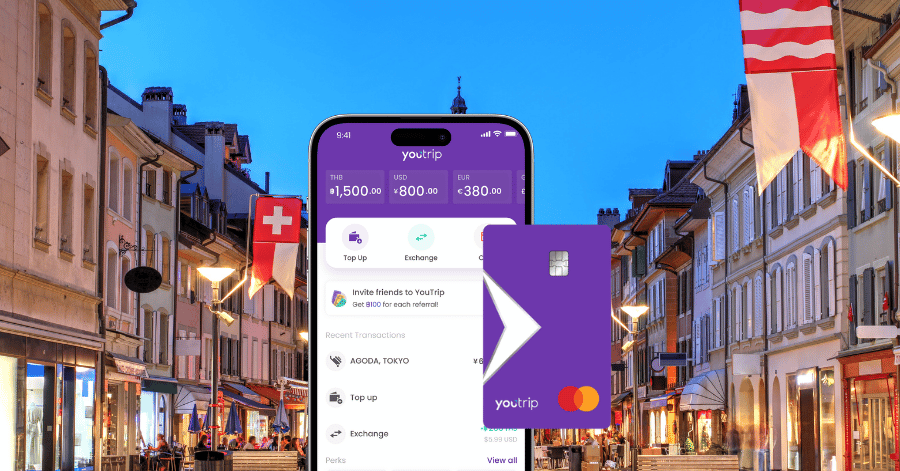
Pair card spending with the occasional free ATM pull, and carry a multi-currency card built for it. For Singapore travellers, that’s where YouTrip earns its place in Switzerland.
CHF is one of YouTrip’s holdable wallet currencies, so you can lock in your francs in-app when the rate looks good and spend them later with no surprises. Every tap and contactless payment runs at the Mastercard wholesale rate with 0% foreign transaction fee, versus the 2.5–3.5% a regular credit card quietly adds overseas.
For the cash you do need, YouTrip’s first S$400 of overseas ATM withdrawals each calendar month is free, then a flat 2% after that, resetting on the 1st. Use it for one or two Bancomat withdrawals to cover the alpine, cash-only bits, and tap for everything else.
Here’s the maths on a typical Switzerland trip. Spend the equivalent of S$2,000 on cards over a week, and a regular card’s ~3% FX adds about S$60 in fees you’d never itemise. On YouTrip, that’s S$0. Add one 300 CHF cash withdrawal inside your free allowance, and you’ve skipped the DCC markup a private ATM would’ve charged on top.
Related Guide: SGD To CHF Exchange Rate Guide: Best Ways to Convert Singapore Dollar to Swiss Franc
Tips to Avoid Extra Fees: Use a Multi-Currency Card
A multi-currency card lets you spend like a local, without the markups or hidden charges traditional banks typically apply. Some waive FX fees entirely.
Cards like YouTrip, Wise, and Revolut are worth considering if you want to save on foreign exchange and ATM fees. These cards typically:
- Give you real-time exchange rates
- Charge zero or lower foreign transaction fees compared to traditional banks
- Offer free monthly ATM withdrawals and work at most ATMs and retail stores in Switzerland
Here’s a quick comparison of the top multi-currency cards in Singapore:
| YouTrip | Revolut | Wise | Amaze | |
|---|---|---|---|---|
| CHF Exchange Rate | 1 SGD = 0.6194 CHF | 1 SGD = 0.6193 CHF | 1 SGD = 0.6183 CHF | 1 SGD = 0.6191 CHF |
| FX Fees | No fees | Weekdays: no fees within your plan’s fair-usage limit. Weekends: 1% fee regardless of plan | Currency conversion fee from 0.26% (varies by currency) | No FX fees; 1% domestic fee on SGD transactions |
| ATM Withdrawal Fees | Up to S$400 free/month; 2% fee thereafter | Up to S$350 or 5 withdrawals free/month; 2% fee thereafter | From 1 May 2026: free up to S$100/month; 1.75% fee thereafter | 2% fee on all amounts withdrawn |
Rates taken as of 9 June 2026
Related Guide: 7 Best Multi-Currency Cards in Singapore
Safety Tips for Using ATMs in Switzerland
Switzerland is one of the safer places to use an ATM, but the basics still apply, especially around busy stations and tourist squares where private machines cluster.
- Use Bancomats inside or attached to a bank branch over standalone street machines
- Avoid private ATMs entirely: it’s both a fee tip and a safety one
- Cover the keypad when you enter your PIN, even with no one nearby
- Check the card slot for anything loose or added before inserting your card
- Pocket your cash straight away and move off before counting it
- Turn on transaction alerts in your banking or travel-card app before you fly
- If a machine keeps your card, freeze it immediately. YouTrip users can do this in-app in seconds, then call the issuer
FAQ
Usually not much. Major bank Bancomats (UBS, PostFinance, Raiffeisen and cantonal banks) rarely add their own operator surcharge for foreign cardholders. The exceptions are private ATMs like Euronet, which add a per-withdrawal surcharge plus an aggressive DCC markup. Your own home bank may still add an overseas withdrawal fee on top, which a multi-currency card removes.
You trigger dynamic currency conversion (DCC), where the machine converts at its own rate instead of your card network’s. On private ATMs that markup can reach around 12%, far more than any other fee on the withdrawal. Always choose CHF, or “without conversion”, so your card handles the exchange at the wholesale rate.
There’s no single Swiss-wide cap, and machines often allow several thousand francs per withdrawal. In practice the limit that applies first is the daily cap set by your own card or bank, so check and adjust it before you travel.
Only a small float, if any. Changing CHF cash in Singapore means paying a marked-up rate, wider on a pricey currency like the franc. It’s cheaper to withdraw on arrival from a Swiss bank Bancomat with a card that charges no FX, keeping just enough francs in hand for your first taxi or coffee.
Strongly card. Contactless works across cities, trains and shops, so you can spend most of a Swiss trip without cash. Keep 100–200 CHF (~S$162–S$324) on hand for mountain huts, rural restaurants, parking meters and tips, and lean more on cash the deeper you go into the Alps.
Country ATM Guides
Need fee-free or lower-fee ATM recommendations elsewhere? Explore our country-specific withdrawal guides:
 Malaysia |
  Japan |
  Thailand |
  South Korea |
  Taiwan |
  Hong Kong |
  Indonesia |
  Vietnam |
  Australia |
  Macau |
  China |
  US |
US |  South Africa |
  Philippines |
  France |
  UK |
UK |  New Zealand |
  Italy |
  Cambodia |
  Canada | Switzerland
Save on The Francs, Splurge on The Fondue
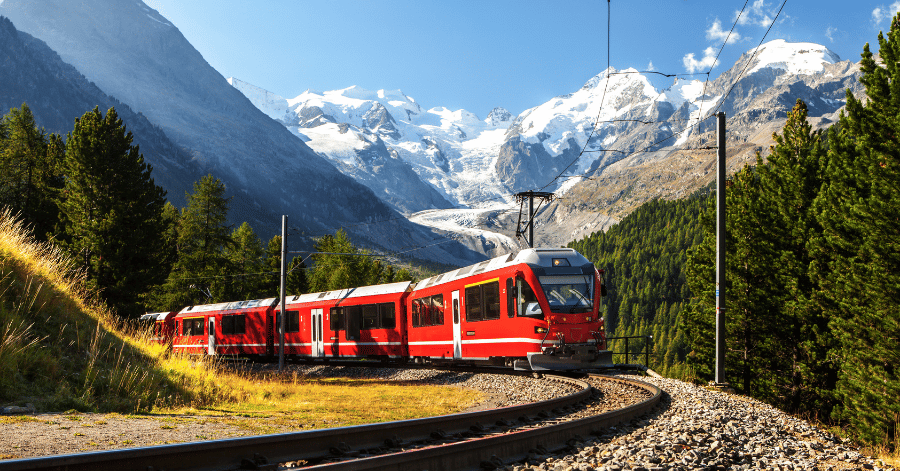
Switzerland is expensive enough without an ATM taking a cut, so use a Bancomat, say no to SGD at the screen, and keep a little cash for the cable-car bits.
Not a YouTrooper yet? Singapore’s go-to multi-currency wallet helps you save with great FX rates and zero fees. Skip the money changer and get a free YouTrip card + S$5 YouTrip credits with code <YTBLOG5>.
Then, head over to our YouTrip Perks page for exclusive offers and promotions — we promise you won’t regret it. Join our Telegram (@YouTripSG) and Community Group (@YouTripSquad) for travel tips, event invites, and more!
Happy travels!
Related Articles
The Ultimate 7-Day Switzerland Itinerary For Winter
Best Travel Agency in Singapore For Stress-Free Travel
Winter Wear Singapore Guide: Where to Buy, Rent & Save on Winter Clothes
The post Switzerland ATM Withdrawal Guide: Fees & Best ATMs (2026) appeared first on YouTrip Singapore.


You May Also Like

Cathie Wood’s ARK Invest Buys $13.7M in Circle Shares While Selling Robinhood Stock

Metaplanet buys 5,075 Bitcoin in Q1 to become 3rd-largest treasury

The changing face of elder care in Malaysia — Sayed Mohammad Reza Yamani Sayed Umar



