

Oil Surges Toward $94 as Iran Shuts Down Strait of Hormuz Amid U.S. Strikes
TLDR
- Tehran announced a complete shutdown of the Strait of Hormuz to all maritime traffic following recent U.S. military action
- Brent crude hovers near $93-$94 per barrel, with WTI trading between $89-$91
- Weekly U.S. crude inventories dropped 7.2 million barrels, significantly exceeding analyst projections
- Energy analysts at Rystad warn crude could surge to $150 per barrel if military conflict intensifies
- Prospects for a diplomatic resolution between Washington and Tehran have deteriorated from approximately 40% to highly uncertain
Military confrontations between the United States and Iran this week have sent oil markets into turmoil, sparking concerns about disruptions to Middle Eastern energy shipments.
Tehran announced a complete blockade of the Strait of Hormuz, prohibiting all maritime passage including oil tankers and commercial shipping. Iranian authorities issued stern warnings that vessels attempting to navigate the waterway would face military action.
The Strait of Hormuz represents one of the planet’s most vital energy transit routes. Approximately one-fifth of the world’s petroleum supply travels through this narrow passage daily.
Brent crude futures climbed to the $93-$94 per barrel range. West Texas Intermediate traded between $89 and $91 per barrel. Both benchmarks initially surged more than 2% during Asian market hours before moderating slightly.
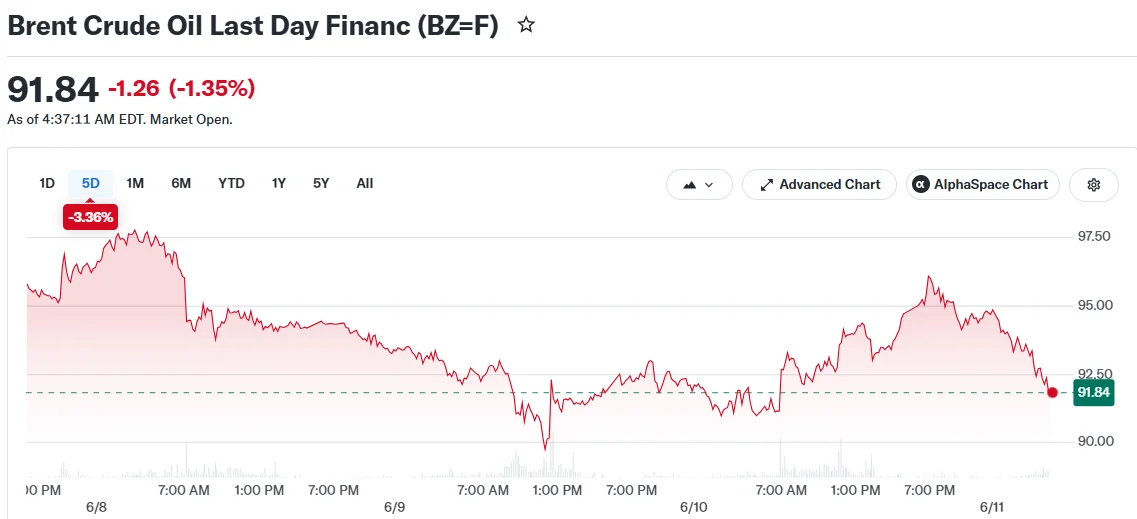 Brent Crude Oil Last Day Financ (BZ=F)
President Trump declared Wednesday that the United States would strike Iran “very hard” should diplomatic efforts collapse. American military forces subsequently launched additional strikes against Iranian installations overnight.
Tehran claimed it retaliated with attacks on American military installations in Kuwait and Bahrain. The previous wave of U.S. strikes occurred after Iranian forces downed a U.S. Army Apache helicopter operating near the Strait of Hormuz.
Trump further disclosed that U.S. military vessels had been covertly providing security for oil tankers transiting the strait. He indicated that over 100 million barrels had successfully passed through under American military escort.
Diplomatic Prospects Dim as Military Conflict Intensifies
Jorge Leon, an energy analyst at Rystad Energy, noted that determining whether the current situation represents a complete breakdown or a temporary flare-up remains premature.
Leon indicated that the likelihood of achieving a diplomatic breakthrough in the immediate term has plummeted from roughly 40% several weeks ago to deeply uncertain territory. He emphasized that the coming days would prove decisive.
John Oh, an analyst with Commonwealth Bank, stated that Tehran’s actions within 12 hours of U.S. strikes would be scrutinized intensely. He noted that any Iranian military response would undermine market confidence that a diplomatic agreement was imminent.
Analysts at ING wrote in a research note that energy shipments from the Persian Gulf region would face significant disruption for the foreseeable future. They concluded that a negotiated settlement appears distant.
Petroleum Inventories Already Declining
Data released by the U.S. Energy Information Administration revealed crude oil inventories decreased by 7.2 million barrels during the week ending June 5. Market analysts had forecast a drawdown of approximately 3 million barrels.
Gasoline inventories posted modest gains. Distillate supplies, encompassing diesel fuel and heating oil, declined by 0.2 million barrels.
Rystad’s Leon cautioned that should the United States and Iran enter into comprehensive military conflict, oil prices could skyrocket to $150 per barrel. He projected that price fluctuations would remain elevated until concrete evidence emerges that a sustainable ceasefire can be maintained.
U.S. consumer price inflation registered 4.2% in May, fueling apprehensions that elevated energy costs could sustain higher interest rates for an extended period. Market participants monitored upcoming U.S. producer price figures and weekly unemployment claims for additional insights into Federal Reserve monetary policy direction.
The post Oil Surges Toward $94 as Iran Shuts Down Strait of Hormuz Amid U.S. Strikes appeared first on Blockonomi.


You May Also Like

Crypto Presale NFT Project: 10 Tokens for 2026

SpaceX IPO exposes hidden risks for SPV investors: Shares may be delayed or lost

Trump Says Iran Deal Could Be Signed This Weekend, VP Vance to Attend



