

14 Best Things to Do in Yunnan, China (2026 Guide)
China’s most scenic province is closer than you think, and quieter than you’d expect
Most Singaporeans planning a China trip default to Shanghai, Beijing, or a Chengdu panda run. Yunnan barely makes the shortlist, which is exactly why it’s worth your annual leave. It’s a four-hour direct flight, visa-free for 30 days, and stitches together snow mountains, an 800-year-old town, and Tibetan monasteries in one loop.
| Highlights | Details |
|---|---|
| Where | Southwest China, bordering Myanmar, Laos and Vietnam. Capital city: Kunming |
| Best time to go | Mar–May and Sep–Nov for mild, clear weather · winter is dry and quiet · Jun–Aug is the rainy season |
| How long you need | 6–8 days for the classic Kunming–Dali–Lijiang–Shangri-La loop (4 days minimum) |
| How to get there | Direct Singapore–Kunming flight, around 4–4.5 hours (Scoot, China Eastern). Singapore passport = 30-day visa-free entry |
| Don’t miss | Lijiang Old Town, Jade Dragon Snow Mountain, Erhai Lake, Tiger Leaping Gorge, the Stone Forest |
| Watch the altitude | Kunming sits at 1,890m and Shangri-La at ~3,300m. Go south-to-north so your body adjusts |
| Pay smart | Alipay and WeChat Pay run China. Add your YouTrip card, tap to pay at 0% FX, and withdraw CNY free on your first S$400 each month |
Table of Contents
- Why Visit Yunnan?
- Where Is Yunnan?
- How to Get to Yunnan from Singapore
- Best Time to Visit Yunnan
- A Note on Altitude (Read This Before You Book)
- Best Things to Do in Yunnan, City by City
- Kunming
- Dali
- Lijiang
- Shangri-La
- What to Eat in Yunnan
- Getting Around Yunnan
- How Many Days Do You Need? Sample Yunnan Itinerary
- How Much Does a Yunnan Trip Cost?
- How to Pay and Withdraw Cash in Yunnan
- FAQs About Yunnan, China (2026)
- The China Most People Skip, and Shouldn’t
Why Visit Yunnan?
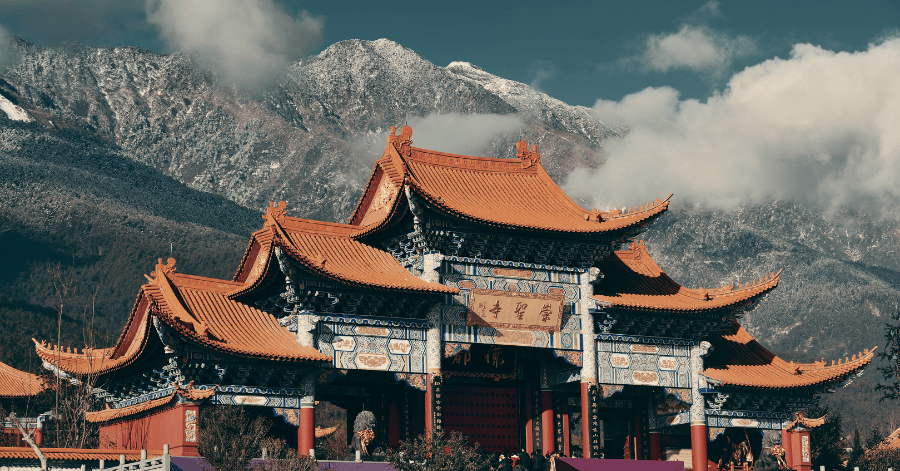
Because it doesn’t feel like the China you’ve seen on your feed. Yunnan is the country’s southwest corner, wedged against Myanmar, Laos and Vietnam, and it trades skyscrapers for snow peaks, terraced fields, and 25 different ethnic minority cultures.
Here’s what you’re actually signing up for:
- Scenery that changes by the hour. You can start the day in subtropical Kunming and be standing on a glacier by mid-afternoon.
- Old towns that are still lived in. Lijiang and Dali aren’t museum pieces. People still run shops, play Naxi music, and dry chillies on the cobblestones.
- A proper route, not a single stop. The Kunming–Dali–Lijiang–Shangri-La chain is one of the most satisfying overland loops in Asia.
- Far fewer crowds than the big-name cities, especially outside Chinese public holidays.
It’s the kind of trip that recalibrates what you think a China holiday looks like.
 Related Guide: Want another underrated China city break? Our 15 Best Things to Do in Chongqing covers the night views, hotpot, and that famous train-through-a-building.
Where Is Yunnan?
Yunnan is in the far southwest of China, sharing borders with Myanmar, Laos and Vietnam. It’s a big, mountainous province, so most trips stick to one well-trodden corridor in the north rather than trying to see all of it.
These are the four stops that make up the classic loop, running south to north:
| City | What it is | Roughly |
|---|---|---|
| Kunming | The capital and your arrival airport, the “Spring City” | Your base for day one |
| Dali | Lakeside old town on Erhai Lake, Bai culture | ~2 hours from Kunming by rail |
| Lijiang | UNESCO old town below Jade Dragon Snow Mountain | ~3.5 hours from Kunming by rail |
| Shangri-La | High Tibetan plateau town, monasteries and gorges | ~1.5 hrs from Lijiang by high-speed rail |
They sit in a rough line heading north and up in altitude, which is exactly why the standard route runs Kunming → Dali → Lijiang → Shangri-La. Knowing that shape upfront makes the rest of the planning click into place.
Related Guide: Pairing Yunnan with the capital? Our 17 Best Things to Do in Beijing rounds out a bigger China trip.
How to Get to Yunnan from Singapore
Fly straight into Kunming Changshui International Airport (KMG), the province’s main gateway. The direct Singapore–Kunming flight takes around 4 to 4.5 hours, with Scoot and China Eastern running non-stop services and roughly 18 flights a week between them.
A few things that make this easier than most China trips:
- No visa needed. Singapore passport holders get 30-day visa-free entry to China, extended through 31 December 2026. Just turn up with a valid passport and an onward ticket.
- Direct return fares often start from around S$200 when you book ahead, which is sharp for a four-hour hop.
- Kunming is your hub. From there you connect onward to Dali, Lijiang and Shangri-La by high-speed rail or short domestic flights.
One thing to sort before you fly: a working internet plan. China blocks most of the apps you rely on (Google Maps, WhatsApp, Instagram), so a travel eSIM with a built-in workaround or a VPN set up before departure saves you a lot of pain on the ground.
Related Guide: Wondering if your card works over there? Our Can YouTrip Be Used in China? guide breaks down exactly how to pay once you land.
Best Time to Visit Yunnan
The sweet spots are March to May and September to November, when the weather is mild, the skies are clear, and the landscapes are at their best. That said, Yunnan is a genuine year-round destination, and each season has its own logic.
| Season | What to expect | Good for |
|---|---|---|
| Spring (Mar–May) | Mild, dry, flowers blooming across the valleys | First-timers, photography, the full loop |
| Summer (Jun–Aug) | Rainy season, 15–20 wet days a month, but cool and green | Escaping SG heat, fewer mainland crowds midweek |
| Autumn (Sep–Nov) | Crisp, clear, golden light, rains gone | The best all-rounder for scenery |
| Winter (Dec–Feb) | Dry and sunny, cold up north, very few crowds | Quiet trips, snow on Jade Dragon, lower prices |
The one window to plan around is Chinese New Year and the early-October Golden Week, when domestic travel peaks and the old towns get packed. If your dates are flexible, dodge both.
Related Guide: Heading deeper into Sichuan too? Our 20 Best Things to Do in Chengdu pairs neatly with a Yunnan add-on.
A Note on Altitude (Read This Before You Book)

This is the part most Yunnan guides skip, and it genuinely affects how you plan. Yunnan climbs hard as you head north, and Shangri-La sits high enough that some travellers feel it.
| Place | Elevation | How it usually feels |
|---|---|---|
| Kunming | 1,890m | Easy, barely noticeable |
| Dali | ~2,000m | Comfortable for most |
| Lijiang | 2,400m | Mild, some shortness of breath on stairs |
| Shangri-La | ~3,300m | Noticeable. Headaches and tiredness are common on day one |
| Jade Dragon Snow Mountain (glacier park) | up to ~4,500m | High. Move slowly, oxygen cans are sold on site |
The fix is mostly about sequencing: travel south to north (Kunming → Dali → Lijiang → Shangri-La) so your body adjusts gradually instead of jumping straight to altitude. Drink more water than feels necessary, take it slow on your first day up high, and don’t plan anything strenuous the day you arrive in Shangri-La.
 If you have a heart or lung condition, it’s worth a quick chat with your doctor before booking the Shangri-La leg!
Related Guide: Sorting your data before you fly? Our Best Travel eSIMs guide covers the China-friendly options so offline maps still work up the mountain.
Best Things to Do in Yunnan, City by City
Yunnan isn’t one destination; it’s four very different stops strung along one route. Here’s what’s worth your time in each.
Kunming
Kunming is the “Spring City”, your arrival point and a gentle place to shake off the flight before heading up-country. It’s mild year-round and easy to walk, and a day or two here eases you into the altitude before you climb higher.
1. The Stone Forest (Shilin)
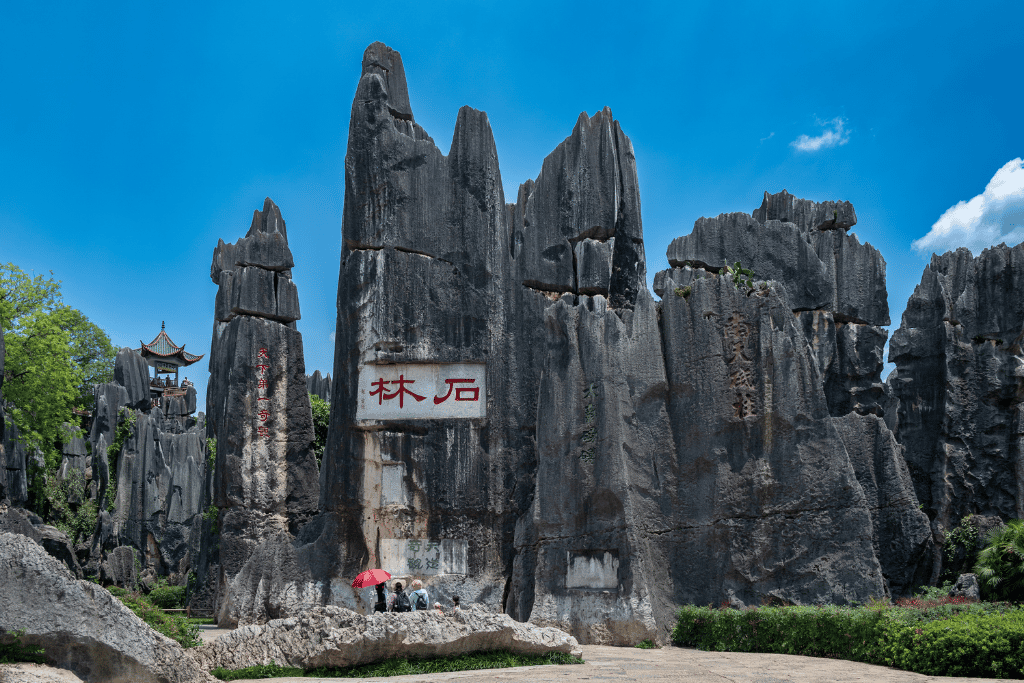
Image Credits: Wikipedia
The Stone Forest is a UNESCO-listed maze of grey limestone pillars, some taller than a house, shaped by around 270 million years of erosion from an ancient seabed. Narrow paths thread between the karst spires, over stepping-stone bridges and past hidden ponds. The whole area is the homeland of the Sani (a branch of the Yi people), whose Ashima legend gives the park its signature pillar — a maiden said to have turned to stone.
It’s about 80km east of Kunming (roughly 1.5 hours by car or bus) and gets busy with tour groups, but the sheer scale still earns the trip. Give yourself 2–3 hours for the main loop, and grab the optional battery cart (around 25 CNY (~S$5)) if you’d rather save your legs for the trails.
- Price: ~130 CNY (~S$25)
- Opening Hours: Around 8 AM–6 PM
2. Green Lake Park (Cuihu)
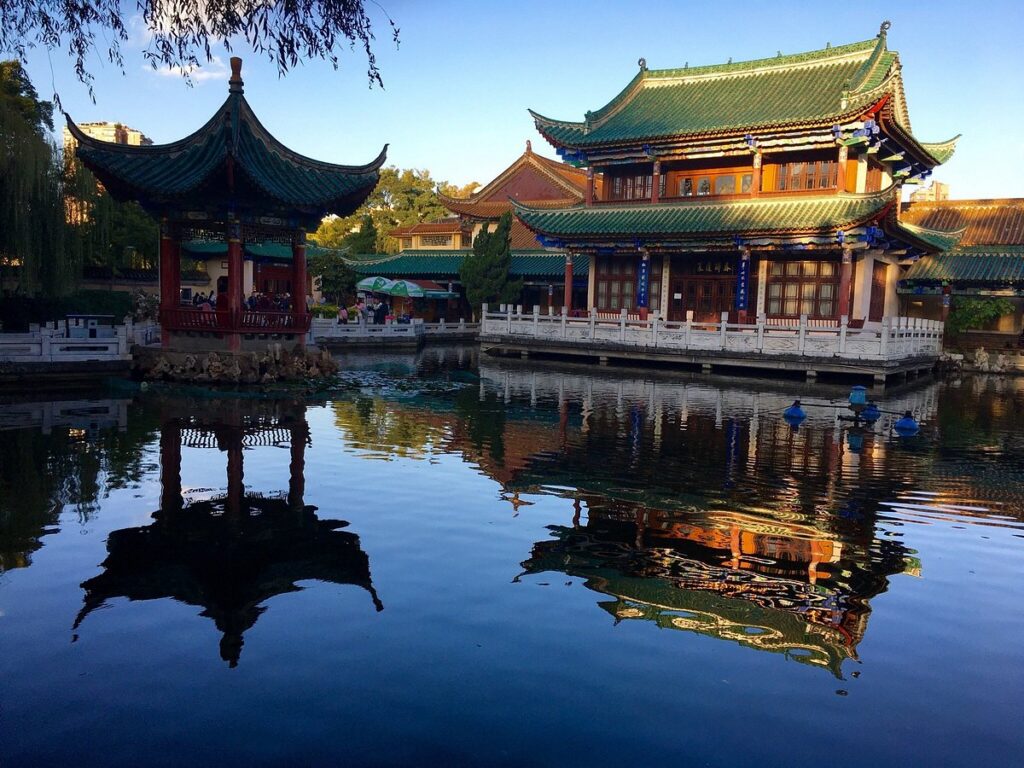
Image Credits: Tripadvisor
Green Lake Park is a free, willow-lined park in the city centre, four small lakes linked by causeways and arched bridges, where locals come to do tai chi, sing, dance, and play cards from early morning. The real draw is winter: from mid-November to March, thousands of black-headed seagulls fly in from Siberia, and you can buy a bag of feed and have them swarm around you. It sits right across from Yunnan University, so it slots neatly into a slow Kunming morning.
- Price: Free
- Opening Hours: 7 AM–11 PM
3. Dianchi Lake

Image Credits: CGTN
Dianchi is Yunnan’s largest lake, on Kunming’s southwestern edge, nicknamed the “Pearl of the Plateau”. You can stroll the lakeside parks, take a cheap cruise, or come in winter for yet more seagulls and a good sunset over the water. It’s not essential if you’re tight on time, but it’s a free, easy way to spend a couple of unhurried hours, and it sits right below the Western Hills.
4. Yunnan Nationalities Village

Image Credits: Klook
Set on the shore of Dianchi, this open-air park recreates the homes of Yunnan’s 25 ethnic minorities as walkable villages, with traditional architecture, costumes, song-and-dance performances and re-enacted festivals. It’s touristy and a touch theme-park, but it’s genuinely the easiest single place to grasp how diverse the province is before you head up into Bai, Naxi and Tibetan country. Allow a half-day if you want to catch the performances.
- Daytime entry: ~90 CNY (~S$17)
- Opening Hours: From morning to early evening
5. Dragon Gate and the Western Hills
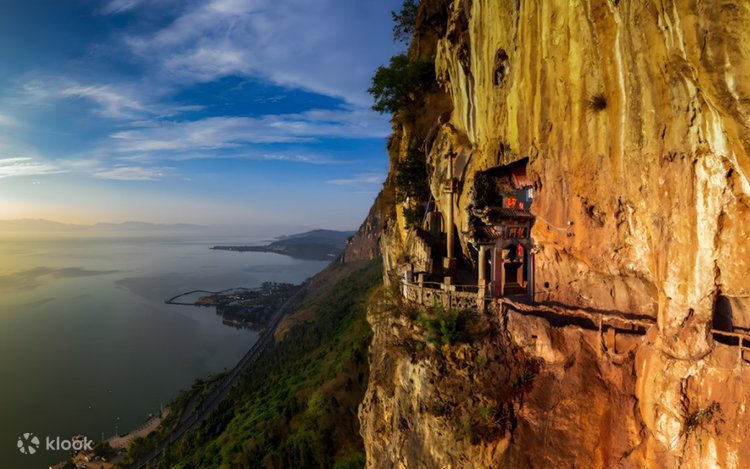
Image Credits: Klook
The Western Hills (Xishan) rise along the western shore of Dianchi, and the highlight is Dragon Gate (Longmen), a run of grottoes, shrines and narrow walkways that monks spent decades chiselling straight into the cliff face hundreds of metres above the lake.
The walk out to the carved gateway isn’t for the vertigo-prone, but the views over Dianchi are the payoff. You can hike up through the forest park or ride a cable car.
- Heads-up: the Western Hills cableway is under renovation until mid-2027, so check which lifts are running before you go.
- Entry Price: ~40 CNY (~S$8)
Dali
Dali is the laid-back one, built around Erhai Lake and the Cangshan mountains, and home to the Bai people. It’s where you slow your pace right down.
6. Cycling Around Erhai Lake
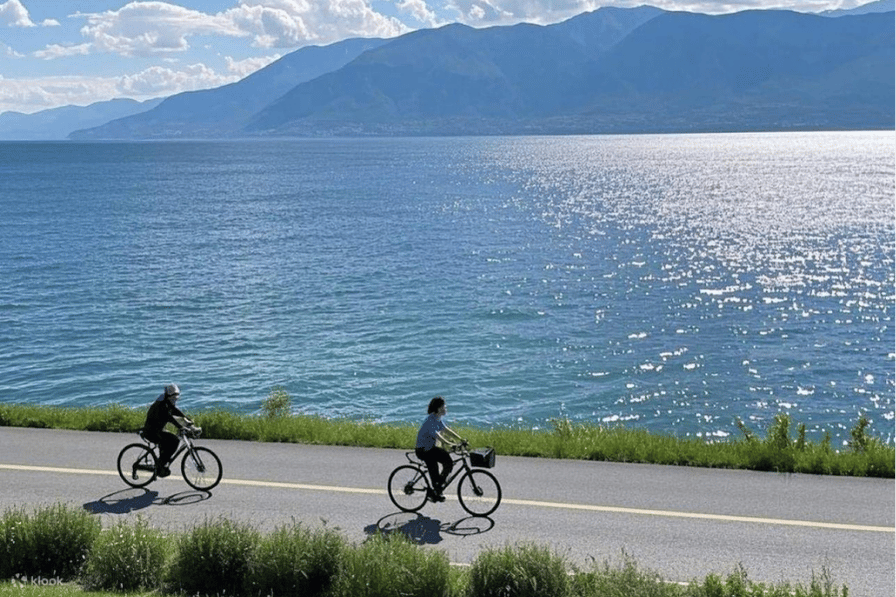
Image Credits: Klook
Cycling the Erhai shoreline is the single best thing to do in Dali. The lakeside ecological corridor runs past Bai fishing villages, rice fields and willow trees, with the eastern shore the prettier, quieter ride and the western side closer to the cafes and old towns.
The full loop is around 125km (a serious all-day effort), so most people rent an e-bike and ride a scenic stretch for a few hours, stopping for photos at the wharves and reed beds. Early morning gives you the calmest water and the best light.
E-bike rental runs about 20–60 CNY (~S$4–11) per day.
7. Dali Old Town

Image Credits: Klook
Dali Old Town is a walled Bai town beneath the Cangshan range, free to wander, with cobbled streets, old city gates and a relaxed tea-house culture worth lingering in. The famous Three Pagodas (Chongsheng) stand just outside the north wall, and the lanes are full of Bai snacks, tie-dye shops and cafes.
If you get the chance, try the Bai Three-Course Tea, a ceremony of three cups (bitter, then sweet, then a lingering aftertaste) each meant to mirror a stage of life.
8. Xizhou Ancient Town

Image Credits: Yunnan Exploration
Xizhou is a well-preserved Bai village about 20km north of Dali Old Town, known for its grand courtyard houses and a wonderfully unpolished daily morning market (a working bazaar of produce, spices, and live chickens that winds down by late morning).
Don’t leave without a Xizhou baba, a crispy flatbread that comes sweet (rose jam) or savoury (pork and spring onion) for just a few yuan. Come early for the market, stay for the baba, and you can cycle out here from the lake. Free to explore.
Lijiang
Lijiang is the headline act for most people, and the reason a lot of trips get planned in the first place.
9. Lijiang Old Town (Dayan)


Image Credits: Rory Maya on Facebook
Known as the Venice of the East, Lijiang’s old town is a UNESCO World Heritage maze of canals, cobblestones, and wooden Naxi houses, over 800 years old and still laced with running water fed from the Black Dragon Pool.
At its heart is Sifang Street, a stone square from which lanes spoke out over little bridges, and on the slope above sits the Mu Mansion, the restored palace of the Naxi chieftains who ruled here for centuries. It’s touristy and shop-heavy by day, but genuinely atmospheric at dawn and after dark once the day-trippers thin.
Note the 50 CNY (~S$9) old-town maintenance fee (cut from 80 CNY in August 2025, valid 365 days); keep the receipt, as you’ll need it for Black Dragon Pool Park too.
10. Jade Dragon Snow Mountain

Image Credits: Klook
Jade Dragon Snow Mountain is a glacier massif of thirteen peaks looming over Lijiang, its highest, Shanzidou, reaching 5,596m and never summited. The headline experience is the glacier-park cable car, which lifts you from 3,356m to around 4,506m, where the air is thin enough that the park sells oxygen cans (take it slow up there).
Lower down, the scenic area also holds the milky-turquoise Blue Moon Valley and White Water River, the alpine meadows of Ganhaizi and Spruce Meadow, and Impression Lijiang, a vast open-air song-and-dance show staged against the mountain by director Zhang Yimou.
- Park entry: ~100 CNY (~S$19); ropeway and shuttle charged separately
- Opening Hours: gates open from about 6:30 AM and ticket sales close at 4 PM.
11. Black Dragon Pool Park

Image Credits:
Black Dragon Pool is the postcard shot of Lijiang: a spring-fed pool at the foot of Elephant Hill where, on a clear day, Jade Dragon Snow Mountain lines up perfectly behind a Qing-era pavilion and arched bridge. The water here is the source that feeds the old town’s canals, so it quietly ties the whole place together.
The park is free, but you’ll need to show your Lijiang Old Town maintenance-fee receipt at the gate. Go early, before any breeze, for the calmest reflections.
Shangri-La
The highest and most remote stop, Shangri-La is where Yunnan turns Tibetan: prayer flags, yaks, and big open plateau skies.
12. Songzanlin Monastery

Image Credits: Klook
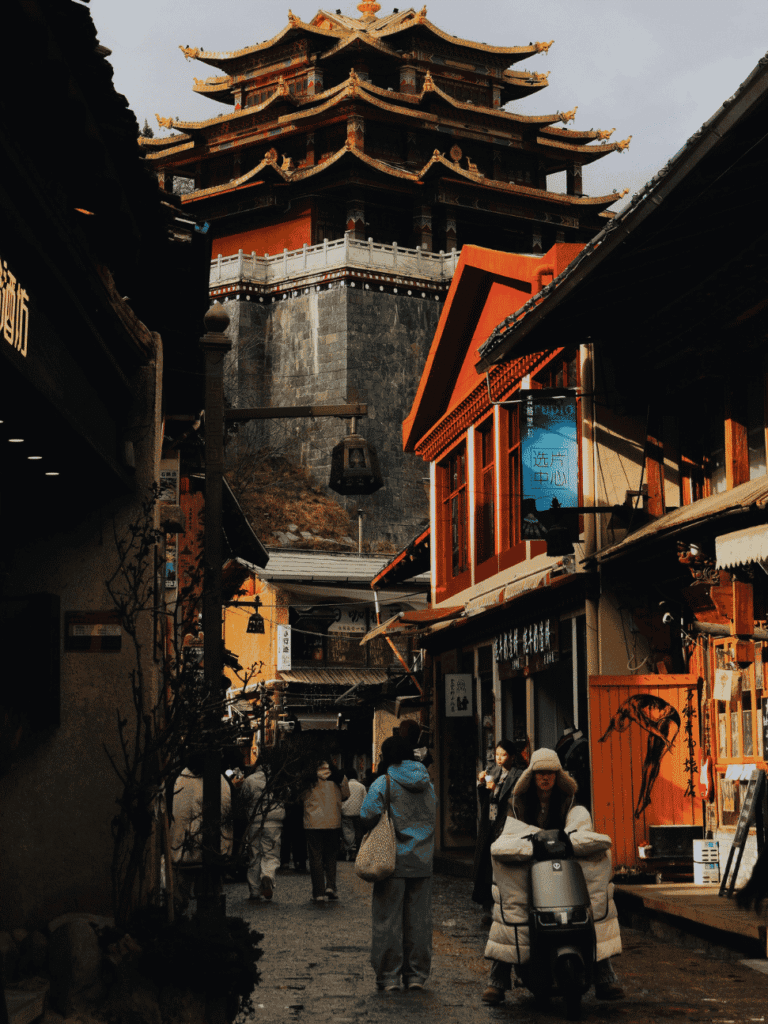
Songzanlin is the largest Tibetan Buddhist monastery in Yunnan, nicknamed the “Little Potala Palace” for the way its golden-roofed halls climb a hillside in tiers of white-washed walls. It’s a living, working monastery with hundreds of resident monks, so wandering the prayer halls, murals, and butter-lamp rooms feels like a real glimpse of Tibetan Buddhism rather than a stage set. The hilltop terraces give you a sweeping view back over the monastery and the plateau.
Entry: ~75 CNY (~S$14), shuttle bus included.
13. Tiger Leaping Gorge
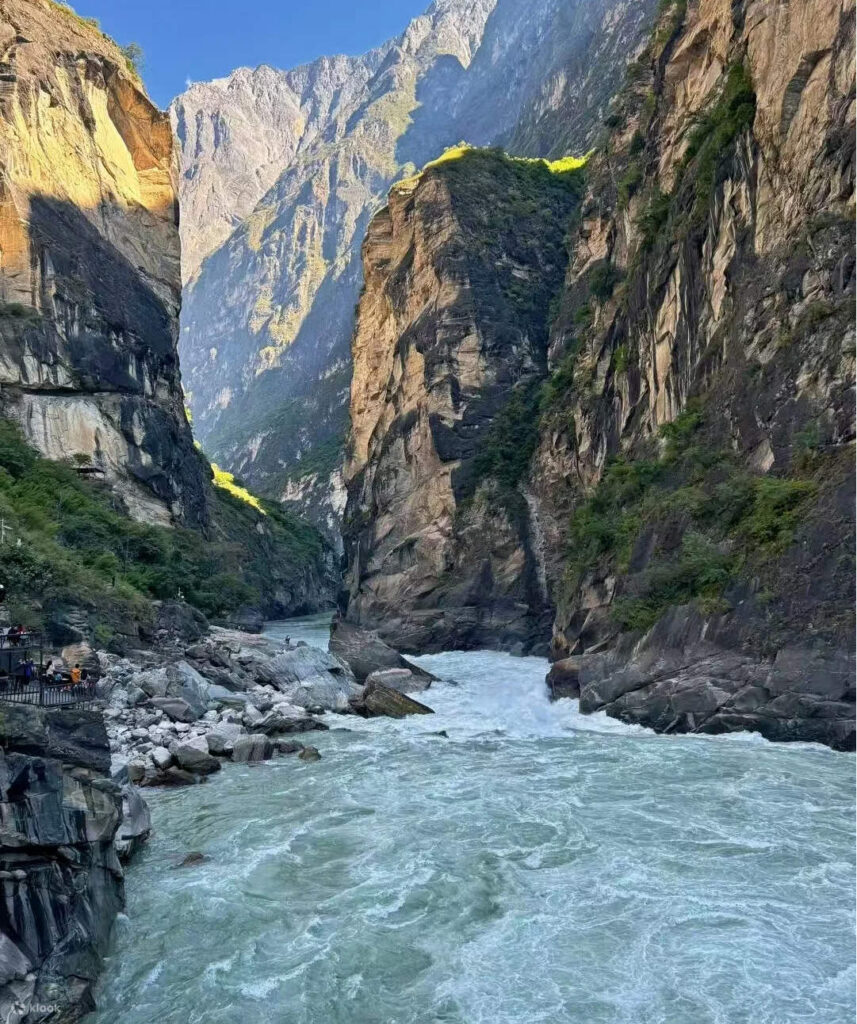
Image Credits: Klook
Tiger Leaping Gorge is one of the deepest river canyons on earth, where the Jinsha (upper Yangtze) roars through a narrow gap between two 5,000m-plus massifs, the river a green thread far below.
You can do it two ways:
- A quick 1–2 hour visit to the developed Upper Gorge viewing platforms and the mid-river rock the legendary tiger is said to have leapt across
- The famous two-day High Trail trek from Qiaotou, which climbs the lung-busting 28 Bends switchbacks and overnights in Naxi-run guesthouses along the way.
After heavy rain, the lower paths can be closed by landslides, so check conditions first. Upper Gorge entry is around 45 CNY (~S$8.50).
14. Pudacuo National Park
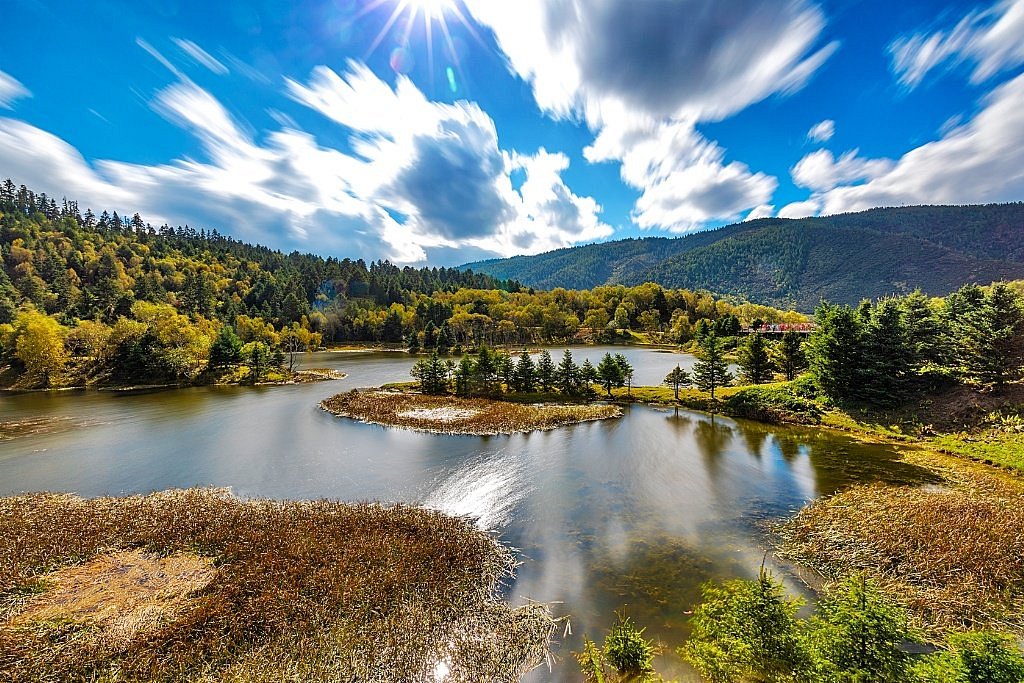
Image Credits: Tripadvisor
Pudacuo is a high-altitude national park of alpine lakes, meadows and forest boardwalks, centred on the still, clear waters of Shudu and Bita lakes and the Militang grassland. It’s pricey and best saved for a blue-sky day, but when the weather plays along it’s some of the cleanest, emptiest scenery in the province, with yaks grazing and snowmelt streams running through the meadows.
Boardwalk trails and a shuttle bus link the main sights, so it’s an easy day even at altitude. A combined ticket (entry plus sightseeing bus) runs around 258 CNY (~S$49), with seasonal variation.
 Attraction prices are seasonal and change often — verify on the official scenic-area site or on arrival before you pay.
Related Guide: Building a wider southern-China itinerary? Our What to Do in Guangzhou guide is a handy add-on if you route home via the south.
What to Eat in Yunnan

Image Credits: Wikipedia
Yunnan food is its own world, shaped by the province’s mountains, wild mushrooms and 25 ethnic cuisines. It’s one of China’s most distinctive regional kitchens, and most of it is cheap. A few things to seek out:
- Crossing-the-bridge noodles (过桥米线). Yunnan’s signature dish and a Kunming institution, listed as an official intangible cultural heritage since 2008. You get a bowl of scalding chicken-and-pork broth kept hot under a layer of oil, plus raw plates of thin ham, chicken, vegetables and rice noodles that you tip in to cook at the table. Order it at least once. Usually around 20–40 CNY (~S$4–8).
- Rice noodles (mixian), any way. The everyday Yunnan breakfast, served in dozens of styles across the province. Cheap, filling, and on every corner. Around 10–20 CNY (~S$2–4).
- Wild mushrooms (野生菌). Yunnan is China’s mushroom capital, and if you visit in the summer rainy season (June–August) the markets and hotpot restaurants overflow with dozens of varieties. A wild-mushroom hotpot is a proper Yunnan experience.
- Bai food in Dali. Around Erhai Lake, look for clay-pot sour-and-spicy fish and other Bai dishes, plus the Xizhou baba flatbread from the village just north of town.
- Rose flower cakes (鲜花饼) and pu’er tea. Yunnan is the home of both pu’er tea and fresh-flower pastries. The rose cakes are everywhere in Lijiang and Dali, and both make good edible souvenirs.
Related Guide: Chasing more China food? Our 15 Best Things to Do in Hangzhou has the West Lake views and the Longjing tea.
Getting Around Yunnan

Image Credits: Klook
The good news: Yunnan’s main loop is well connected by high-speed rail, so you rarely need to fly internally.
- Kunming to Lijiang by high-speed train: the fastest C-trains take around 3.5 hours (most run 3.5–4 hours), with fares from around 220 CNY (~S$42) to 351 CNY (~S$66) depending on seat class.
- Kunming to Dali: about 2 hours by high-speed rail, an easy first hop.
- Lijiang to Shangri-La: the Lijiang–Shangri-La high-speed railway (opened late 2023) now does it in about 1.5 hours. The scenic road route takes 3–4 hours, but it lets you stop at Tiger Leaping Gorge on the way, which is why plenty of people still drive this leg.
Book train tickets a few days ahead during peak periods, and bring your passport, since you’ll need it both to buy tickets and to board. Within each city, Didi (China’s ride-hailing app, which runs inside Alipay or WeChat) is cheap and easy, and short cross-town rides are settled straight from your phone, no cash or haggling.
Because the loop is so well connected by rail, Yunnan is very doable independently rather than on a packaged tour. A guided package takes the logistics off your plate (handy if Mandarin and app-only payments feel daunting), but booking your own trains and hotels gives you more flexibility and usually costs less, especially once your YouTrip card is handling the spending.
Related Guide: Settling fares and taxis by phone? Our WeChat Pay for Foreigners guide walks through the setup before you go.
How Many Days Do You Need? Sample Yunnan Itinerary
For the classic loop, 6 to 8 days is the sweet spot. Here’s how the trip scales:
- 4 days: Kunming, Dali and Lijiang only, skipping Shangri-La. The fast highlights run if leave is tight.
- 6–8 days: The full Kunming → Dali → Lijiang → Shangri-La loop at a comfortable pace, with time to actually slow down in each town. The sweet spot.
- 10+ days: Slow right down. Add a night in Shaxi (a sleepy Tea Horse Road town between Dali and Lijiang, with a famous Friday market), the two-day Tiger Leaping Gorge trek, or a push north to Meili Snow Mountain, Yunnan’s sacred 6,740m peak beyond Shangri-La. Lugu Lake and the Yuanyang rice terraces are other worthy detours.
Here’s a clean 7-day route, sequenced south-to-north so the altitude builds gently:
- Day 1 – Kunming. Fly in, settle, stroll Green Lake Park, ease into the altitude.
- Day 2 – Kunming. Day trip to the Stone Forest, then catch an evening train to Dali.
- Day 3 – Dali. Cycle the Erhai Lake loop, wander the Old Town at golden hour.
- Day 4 – Dali to Lijiang. Morning in Xizhou, then high-speed rail up to Lijiang.
- Day 5 – Lijiang. Jade Dragon Snow Mountain by cable car, Black Dragon Pool on the way back.
- Day 6 – Lijiang to Shangri-La. Scenic drive north, stopping at Tiger Leaping Gorge en route.
- Day 7 – Shangri-La. Songzanlin Monastery and Pudacuo National Park, then fly out from Shangri-La or loop back to Kunming.
Related Guide: Need cash for the smaller towns? Our China ATM Withdrawal Guide covers which machines work and what they charge.
How Much Does a Yunnan Trip Cost?
Less than you’d think. Yunnan is one of China’s more affordable regions, and outside the peak summer and Golden Week spikes, your money goes a long way. Rough per-person guide:
| What | Budget | Mid-range |
|---|---|---|
| Accommodation | Guesthouses 100–200 CNY (~S$19–38)/night | Hotels 250–400 CNY (~S$47–75)/night |
| Meals | 60–100 CNY (~S$11–19)/day | 100–200 CNY (~S$19–38)/day |
| Attraction tickets | 100–300 CNY (~S$19–57) on sightseeing days | same |
| Inter-city trains | 100–350 CNY (~S$19–66) per leg | same |
So a careful traveller can do Yunnan on roughly S$70–110 a day excluding flights, while a comfortable mid-range trip lands closer to S$130–200 a day. Two things to watch:
- Peak-season surcharge. Hotel and some attraction prices jump from June to August and during Golden Week (early October). Off-peak (November to March) is the cheapest, with many attractions running low-season discounts.
- Scenic-area mark-ups. Food and drink inside the big attractions cost noticeably more than the same thing in town. Eat before you enter.
Whatever your budget, the single easiest saving is on the money itself, which is exactly what the next section is about.
Related Guide: Pairing Yunnan with a city stop? Our 31 Things to Do in Shanghai covers the food and the skyline.
How to Pay and Withdraw Cash in Yunnan
China runs on Alipay and WeChat Pay, full stop. From your morning noodles to a Stone Forest ticket to a Dali e-bike rental, almost everything is settled by scanning a QR code. Physical cards are barely accepted, and cash is fading fast outside the smallest stalls.
Here’s the setup that actually works for a Singapore traveller:
- Add your YouTrip card to Alipay or WeChat Pay before you fly
Once linked, you tap or scan like a local, and every payment auto-converts your SGD to CNY at the Mastercard wholesale rate with 0% foreign transaction fee. That beats a credit card quietly adding 3–3.5% FX on every spend.
- Bring a little cash for the cash-only spots
The smart way to get CNY isn’t a money changer back home, it’s withdrawing it from an ATM when you land. With YouTrip, your first S$400 of overseas ATM withdrawals each calendar month is free; then it’s a flat 2% (some ATM operators add their own on-screen fee, so check before you confirm). The allowance resets on the 1st.
- Set up Alipay’s built-in translation and transport features
They double as a lifesaver for menus, metro tickets, and ride-hailing once you’re offline from your usual apps.
A quick reality check on rates: money changers don’t show you a “fee”, they bake a markup of a few percent into the rate they quote. YouTrip gives you the wholesale rate with no such spread, which is why tapping your card or withdrawing on arrival always beats changing cash before you go.
Related Guide: New to paying by QR in China? Our Alipay for Foreigners guide has the full step-by-step.
FAQs About Yunnan, China (2026)
No. Singapore passport holders get 30-day visa-free entry to China, currently extended through 31 December 2026. You just need a valid passport and proof of an onward or return ticket. That covers all of Yunnan, including Kunming, Lijiang and Shangri-La.
Six to eight days is ideal for the full Kunming–Dali–Lijiang–Shangri-La loop. You can do a shorter four-day trip if you skip Shangri-La and stick to Kunming, Dali and Lijiang, or stretch to ten-plus days if you want to add the full Tiger Leaping Gorge trek.
March to May and September to November offer the most reliable weather, with mild temperatures and clear skies. Winter is dry, sunny and quiet (just cold up north), while June to August is the rainy season, though it stays cool and green. Avoid Chinese New Year and early-October Golden Week if you can.
It can be in the north. Kunming (1,890m) and Dali (~2,000m) are comfortable, but Shangri-La sits at around 3,300m and Jade Dragon Snow Mountain’s glacier park reaches ~4,500m, where some travellers feel headaches or breathlessness. Travelling south-to-north helps your body adjust gradually.
Yes, but the smart way is to add it to Alipay or WeChat Pay first, since China runs almost entirely on QR payments. Once linked, you scan to pay and your SGD auto-converts to CNY at the wholesale rate with no FX fee. You can also use YouTrip to withdraw CNY from ATMs, free on your first S$400 each month.
By high-speed train. The fastest C-trains take around 3.5 hours (most run 3.5–4 hours), with fares from around 220 CNY (~S$42) to 351 CNY (~S$66). Bring your passport to buy tickets and board.
Yes, with a bit of prep. Singapore passport holders enter visa-free for 30 days, the main loop is well signposted and easy by high-speed rail, and Alipay and WeChat Pay handle payment everywhere. English is limited outside hotels, so download offline maps and a translation app before you fly.
There’s no month to truly avoid, but June to August is the rainy season (expect 15–20 wet days and the odd landslide on mountain roads), and Chinese New Year plus the early-October Golden Week bring the heaviest domestic crowds and highest prices. For the best balance, aim for spring or autumn.
Plenty. Kunming’s Green Lake Park, Dali Old Town and the Erhai lakeshore, the Xizhou morning market, and Lijiang’s Black Dragon Pool Park (free once you’ve paid the old-town maintenance fee) all cost nothing. Wandering the ancient towns at dawn, before the shops and ticket gates open, is the best free experience of all.
Yes, with the altitude in mind. The old towns, lake cycling and the Stone Forest are easy, engaging family days out, and the Jade Dragon Snow Mountain cable car is a real thrill. Just take Shangri-La (3,300m) and the glacier park slowly with young children, and build in rest on the first day at altitude.
For deeper detail, see our SGD to CNY rate guide and how wholesale exchange rates work.
The Part of China Most People Miss

Yunnan is the rare trip where the photos undersell it. Snow mountains, a living 800-year-old town, Tibetan plateau skies, and barely a Singaporean in sight, all four hours and one visa-free stamp away. Sequence it south-to-north, pack layers, and let your YouTrip card handle the money so you can spend your energy on the views.
Not a YouTrooper yet? Singapore’s go-to multi-currency wallet helps you save with great FX rates and zero fees. Skip the money changer and get a free YouTrip card + S$5 YouTrip credits with code <YTBLOG5>.
Then, head over to our YouTrip Perks page for exclusive offers and promotions — we promise you won’t regret it. Join our Telegram (@YouTripSG) and Community Group (@YouTripSquad) for travel tips, event invites, and more!
Happy travels!


The post 14 Best Things to Do in Yunnan, China (2026 Guide) appeared first on YouTrip Singapore.


You May Also Like

Solana Price Prediction: SOL Slides Below $80 As $270M Hack Triggers Selloff

Raydium DEX Exploit Results in $1.3 Million Loss, Legacy Liquidity Pools Drained

Bitcoin Whales Are Quietly Accumulating: A Strategic Move That Could Signal Major Market Shift



