

Japan Unveils New Crypto Regulation With 20% Tax Rate and ETF Framework
Key highlights:
- The Japanese parliament’s Lower House has approved a key crypto bill.
- The legislation intends to govern crypto assets under the same rules as stocks and bonds.
- The bill will also pave the way to the potential launch of crypto ETFs.
As more countries are taking proactive measures to foster the growth of the crypto market, Japan is moving forward with new legislation. The parliament’s Lower House has approved a new crypto bill that places digital assets under the same rules as stocks and other traditional assets. Pending approval from the Upper House, the bill is expected to take effect next year.
Japan’s crypto bill also seeks to slash digital asset taxes to 20%. The legislation also intends to open the door for crypto exchange-traded funds (ETFs).
Japan Approves Key Crypto Bill: What You Should Know
According to a Bloomberg report today, the Japanese crypto market is facing a significant transformation as the country is advancing with key legislation. On Thursday, the Lower House passed a crypto bill that would classify digital assets similarly to stocks.
Commenting on this major development, Financial Services Agency (FSA )’s Masato Yoshizawa noted,
Notably, Japan’s crypto bill seeks to treat cryptocurrencies like traditional financial assets, such as stocks and bonds. It also introduces a major crypto tax cut, reducing the rate from the current 55% to just 20%. While the classification is expected to take effect in the next year, the tax cut may come into force by 2028.
How Could This Bill Benefit Japan’s Crypto Market?
Significantly, the crypto bill could bring notable changes to the Japanese digital asset industry. First of all, it could attract more investors and institutions to crypto. As the bill brings both crypto and stocks under the same rules, it guarantees regulatory clarity to investors.
QCP Group’s Koichi Kano stated that the latest crypto bill provides the digital asset with the much-needed regulatory clarity. Kano believes that these rules could offer more confidence to market participants.
In addition, the crypto bill intends to tighten registration guidelines. Regulators seek to create a favourable and safe crypto environment, prioritizing customer protection. The country will introduce tougher penalties for unregistered crypto sales and insider trading. Asia Web3 Alliance President Hinza Asif stated,
One of the main advantages of the crypto bill is the potential approval of exchange-traded funds. The bill may pave the way to launch crypto ETFs, particularly benefiting traditional investors.
However, the legislation will not be applicable to stablecoins. Stable tokens will be governed under Japan’s payment services rules as before.
Global Countries are Launching Clearer Crypto Rules
Japan’s new crypto bill comes amid a broader trend of launching clearer regulations in the digital asset space. Countries like South Korea are launching stringent regulations to protect crypto investors from fraud and hacks.
Japan is already a leader in crypto regulation. Unlike many other countries, Japan accepts cryptocurrency as a mode of payment. There are already solid regulatory norms existing in the country.
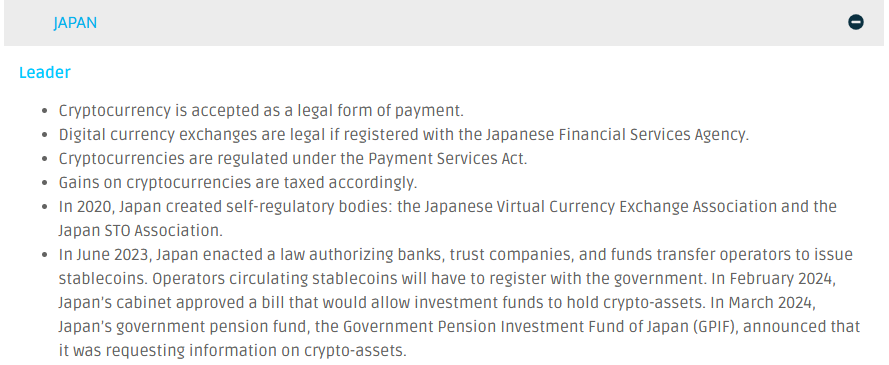
Source: Proeliem Law Crypto Regulation Tracker
The United States has moved ahead with crypto ETFs, launching Bitcoin, Ethereum, and other altcoin ETFs tracking assets like XRP, SOL, and ADA. Other countries like the United Kingdom, China, and Germany have also followed the US in this direction. However, the US lags behind in crypto regulation as the crypto bills like the CLARITY Act are still pending to become law.


You May Also Like

Metaplanet Stock Passes MARA to Become Third-Largest BTC Holder — Stock Slips Anyway

Best Music AI Websites For Songs And Soundtracks

StakeStone (STO) Rockets 125%: What $981M Trading Volume Reveals



