

Binance’s Philippines Return Faces BSP License Gap Warning
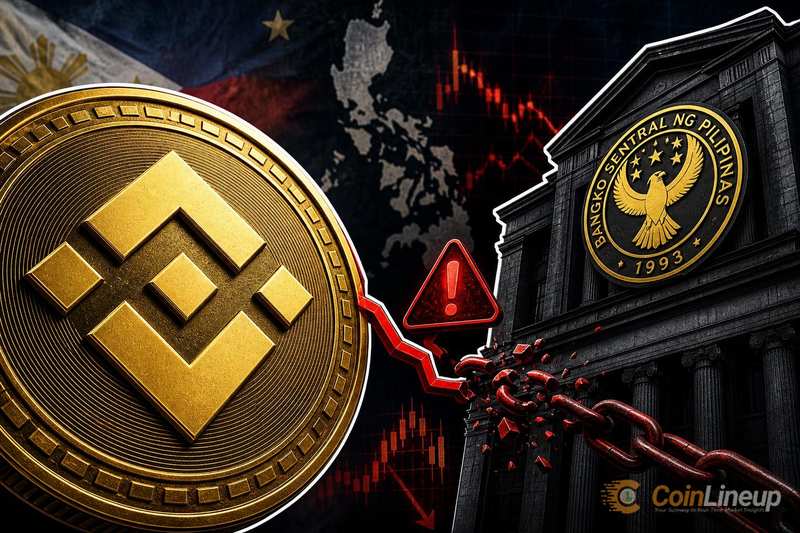
The Bangko Sentral ng Pilipinas has confirmed that neither Binance nor its local partner BlockShoals Technologies holds a Certificate of Authority to operate as a Virtual Asset Service Provider in the Philippines, raising a direct licensing obstacle for the exchange’s anticipated return to the country.
Why Binance’s Philippines Return Claim Is Meeting Immediate Pushback
The BSP’s warning, reported by BitPinas on June 11, 2026, clarified that participation in the Philippine Securities and Exchange Commission’s StratBox sandbox does not remove separate central bank licensing requirements. The two regulators are coordinating on the BlockShoals-Binance sandbox arrangement, but the licensing gap remains unresolved.
The distinction between market interest in Binance’s return and actual regulatory readiness is critical. While BlockShoals received initial SEC clearance on November 12, 2025, neither entity has cleared the BSP’s independent vetting process. Any suggestion that Binance has already returned to the Philippine retail market remains unconfirmed; the SEC itself clarified on June 11 that the sandbox remains testing-only and public onboarding is not yet allowed.
What the BSP License Gap Means for Binance’s Operating Position
BSP Circular No. 1108 requires any entity operating as a VASP in the Philippines to secure a Certificate of Authority to function as a money service business. Without it, an exchange cannot legally process fiat-to-crypto conversions or offer custody services to Filipino users.
The BSP’s public VASP directory, dated May 31, 2026, lists 11 licensed VASP entries. Neither Binance nor BlockShoals appears among them. This is not a technicality; it means neither entity has completed the central bank’s requirements for anti-money laundering controls, capital requirements, and consumer protection standards.
The SEC’s sandbox approval and the BSP’s licensing authority operate on separate tracks. BSP Circular No. 1153 explicitly states that sandbox participants must still comply with applicable laws and regulations, meaning SEC clearance alone does not grant permission to handle customer funds. This two-track licensing problem, where securities and central bank regulators impose independent requirements, mirrors the kind of regulatory tightening seen in U.S. states advancing new crypto compliance bills.
Even setting the BSP license gap aside, the SEC’s own approved rollout imposes a lengthy runway. BitPinas reported that the process begins with a 90-day integration phase with a licensed domestic VASP before any user onboarding through Binance infrastructure can begin.
Live operational testing is not scheduled to begin until the second half of 2026, with a minimum duration of two years.
That timeline means any full public launch, even under the most optimistic scenario, would not arrive before late 2028 at the earliest.
What This Warning Signals for Philippine Crypto Users and the Market
For Filipino users who may have seen headlines about Binance’s return, the BSP’s confirmation resets expectations. The exchange is not licensed to operate in the Philippines today, and the SEC sandbox path has multiple checkpoints ahead.
The immediate signal to watch is whether BlockShoals or Binance applies for the BSP Certificate of Authority. Without that step, a regulatory paradox persists: a testing framework exists, but the entity inside it lacks the separate authorization needed to handle Philippine peso transactions or offer custodial services to local users.
The competitive implications are also worth tracking. Established BSP-licensed VASPs could benefit from the uncertainty, as the prolonged licensing process keeps the world’s largest exchange on the sideline. In the broader landscape where major technology platforms are competing aggressively for market position, local operators have a window to consolidate their user base before any Binance-linked service goes live.
BNB traded at roughly $601 at press time, up about 3.1% over 24 hours, suggesting the licensing warning has not materially affected token price. The broader crypto market registered an extreme fear reading on sentiment indicators, though that sentiment appears unrelated to the Philippine regulatory story.
Users considering any platform claiming to offer Binance services in the Philippines should verify that the operator holds a valid BSP Certificate of Authority. The central bank’s licensed VASP list is publicly available and remains the authoritative checkpoint for lawful operations in the country.
Disclaimer: This article is for informational purposes only and does not constitute financial or investment advice. Cryptocurrency and digital asset markets carry significant risk. Always do your own research before making decisions.


You May Also Like
Super Micro Computer (SMCI) Stock: $7B Capital Raise to Fund AI Server Production
Bitcoin-Linked Stock Trading Volume Halves as Spot Correction Cools Leverage Demand
Xenea Wallet Daily Quiz 12 June 2026: Win Coins



