

Crypto Kings: Singapore And UAE Dominate Global Digital Currency Usage – Study
Singapore and the United Arab Emirates have climbed to the top of recent crypto adoption lists, with different reports placing the city-state and the Gulf federation among the most digital currency-friendly places on earth.
According to Henley & Partners and surveys compiled by industry trackers, Singapore holds the number one spot in some indexes, while the UAE posts some of the highest ownership rates recorded.
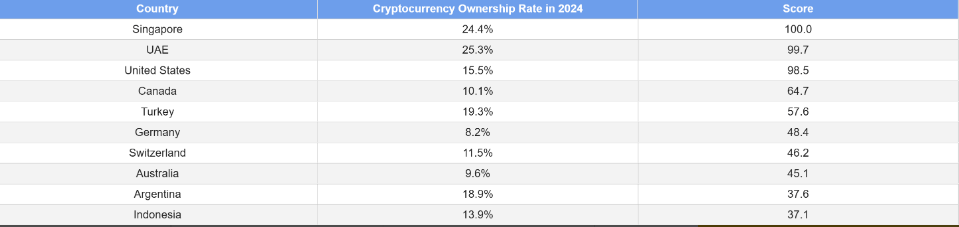
Based on reports, about 24.4% of Singapore’s population is estimated to own crypto, and the UAE shows about 25.3% ownership — figures that are far above the global average.
Singapore’s Position And Policy Mix
Singapore’s lead is tied to its mix of clear rules and strong finance infrastructure. Regulatory sandboxes, licensing for exchanges, and a banking system that works with digital currency firms are often cited as factors.
Meanwhile, the ApeX Protocol study shows that nearly a quarter of Singaporeans—24.4%—own digital assets, a figure that has more than doubled from 11% the year before.
This surge is also mirrored online, with the country generating about 2,000 crypto searches per 100,000 people, the highest level seen anywhere in the world.
UAE’s Tax Edge And Rapid Uptake
The UAE is pushing hard to attract users and companies. Based on reports, the country scored a perfect 10/10 on tax-friendliness in one index, and its zero-tax stance on trading, staking, mining, or selling bitcoin across many emirates is a major draw.
Dubai’s Virtual Assets Regulatory Authority (VARA) and other local initiatives have created licensing paths and special zones for digital asset firms.
Henley & Partners lists the UAE among the top jurisdictions for crypto wealth, often placing it in the top five for investor-friendly climates. Those policies appear to help explain why roughly a quarter of people in the UAE are reported to hold crypto assets.
Ownership Numbers And What They MeanReports place the global number of crypto users in the hundreds of millions — around 562 million by some counts — but that figure hides big differences. Some countries show high ownership because many people treat crypto as an investment.
In others, crypto is used more for payments or savings. Methodologies differ: some studies count any wallet with activity, others rely on surveys asking people if they own crypto.
Featured image from Roslan Rahman/AFP/Getty Images, chart from TradingView


You May Also Like

SEC approves generic listing standards for faster crypto ETF approvals
The Securities and Exchange Commission has approved standards that could speed up spot crypto ETF approvals, as each application would not been to be assessed individually. The US Securities and Exchange Commission has approved a set of listing standards for commodity-based trust shares, opening the door for digital asset listings without requiring individual approvals. The decision, detailed in SEC filings on stock exchanges like the Nasdaq, NYSE Arca, and Cboe BZX, on Wednesday, would streamlines the process under Rule 6c-11, significantly reducing approval timelines, which have taken several months in the past. “By approving these generic listing standards, we are ensuring that our capital markets remain the best place in the world to engage in the cutting-edge innovation of digital assets,” SEC Chair Paul Atkins said in a separate statement.It comes as spot ETF applications for the likes of Solana (SOL), XRP (XRP), Litecoin (LTC) and Dogecoin (DOGE) await official approval.The SEC was facing deadlines from October onwards to decide on those cases, in addition to a handful of others.This is a developing story, and further information will be added as it becomes available.Read more

Iran invites global powers to negotiate Strait of Hormuz transit
Trump risks his presidency with a single night of obscenity



