

Behind school walls: A surprise museum find in Naga City
For most, the image of a museum appears to be fronted by a huge façade beaming in all white with giant columns and inside, spacious halls with giant galleries. Then there are those that remain almost hidden in plain sight, tucked behind old corridors, historic walls; and in the case of this surprising find in Naga City, inside the grounds of a trailblazing university.
Inside the campus of Universidad de Sta. Isabel in Naga City, the Museo Histórico de la Universidad de Sta. Isabel functions exactly like that: hiding a rich collection of artifacts related to faith, revolution, and women’s rights.
The museum does not simply narrate the history of a pioneering university. It also tells the story of a transforming country beginning in the latter decades of the 19th century.
University origins
Declared a National Historical Landmark, the university traces its origins to 1868, when Bishop Francisco Gainza, a Spanish Dominican bishop assigned to Nueva Cáceres, the old name of Naga, envisioned something radical for its time: a formal institution dedicated to the education of women. In an era when women were largely confined to domestic roles, the idea bordered on revolutionary.
“Women have a big role in society,” museum curator Luis Banzuela explained during a guided tour through the galleries. “By educating women, you can educate the world.”
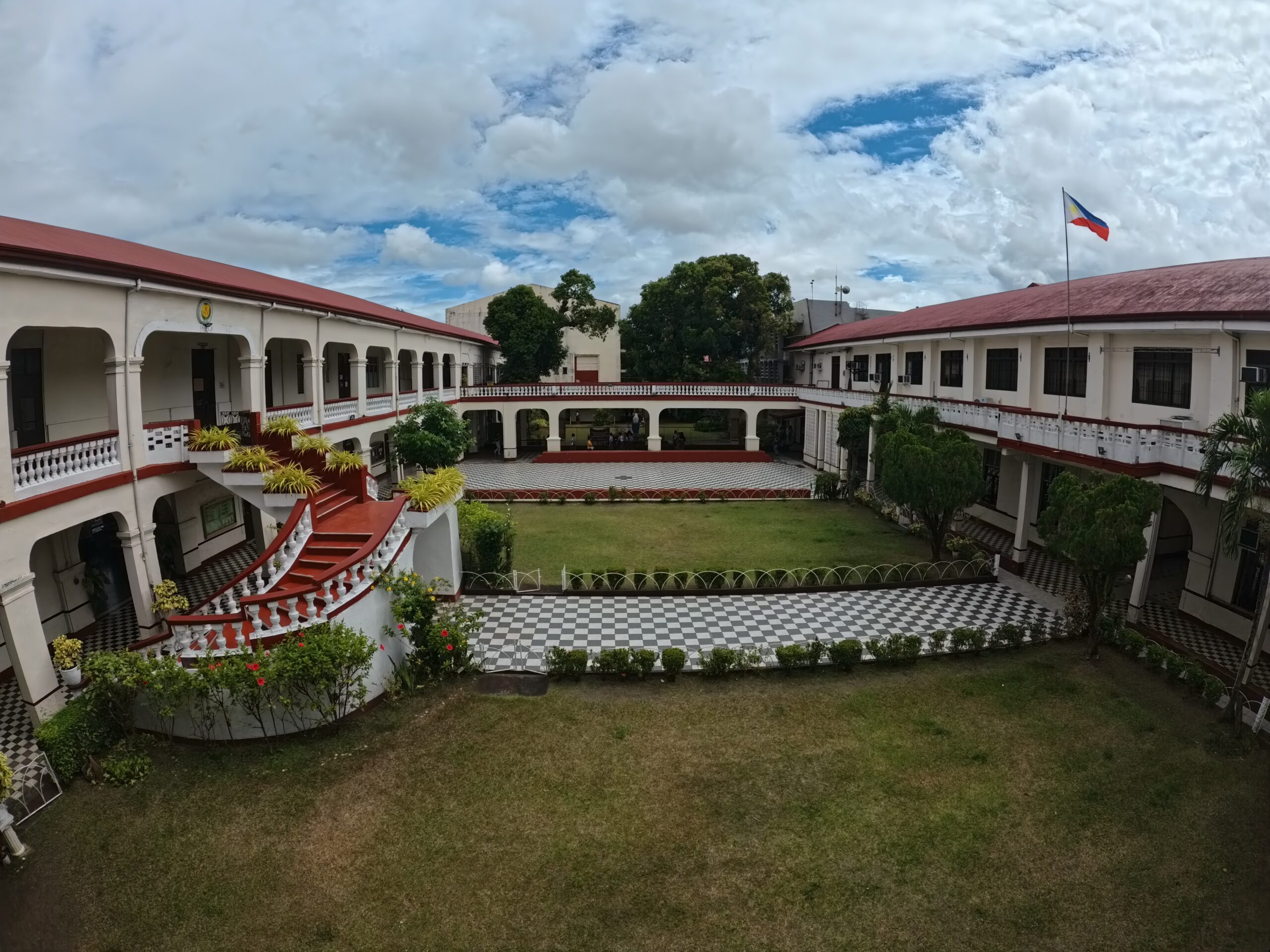 The curved staircase and the adjoining hall are from the original structure of the university. All photos by Marky Ramone Go
The bishop’s dream would eventually become the first normal school for women in Southeast Asia, and among the earliest institutions in Asia dedicated to training female teachers.
The word “normal,” Banzuela explained, did not refer to ordinary schooling but to norms or standards of teaching. In modern terms, it was teacher education.
At first, there was no grand campus. The school temporarily occupied rooms inside the convent beside the cathedral. Gainza wanted permanence.
In a petition to Spain, he requested that the school be built beside the cathedral, the bishop’s palace and the seminary. The location of the university today stands as the fulfillment of that request.
The museum’s first gallery recreates this origin story through a series of paintings completed in 1968 for the institution’s centennial anniversary. They are among the museum’s most prized pieces: a visual chronicles of arrival, aspiration, and colonial-era Bicol.
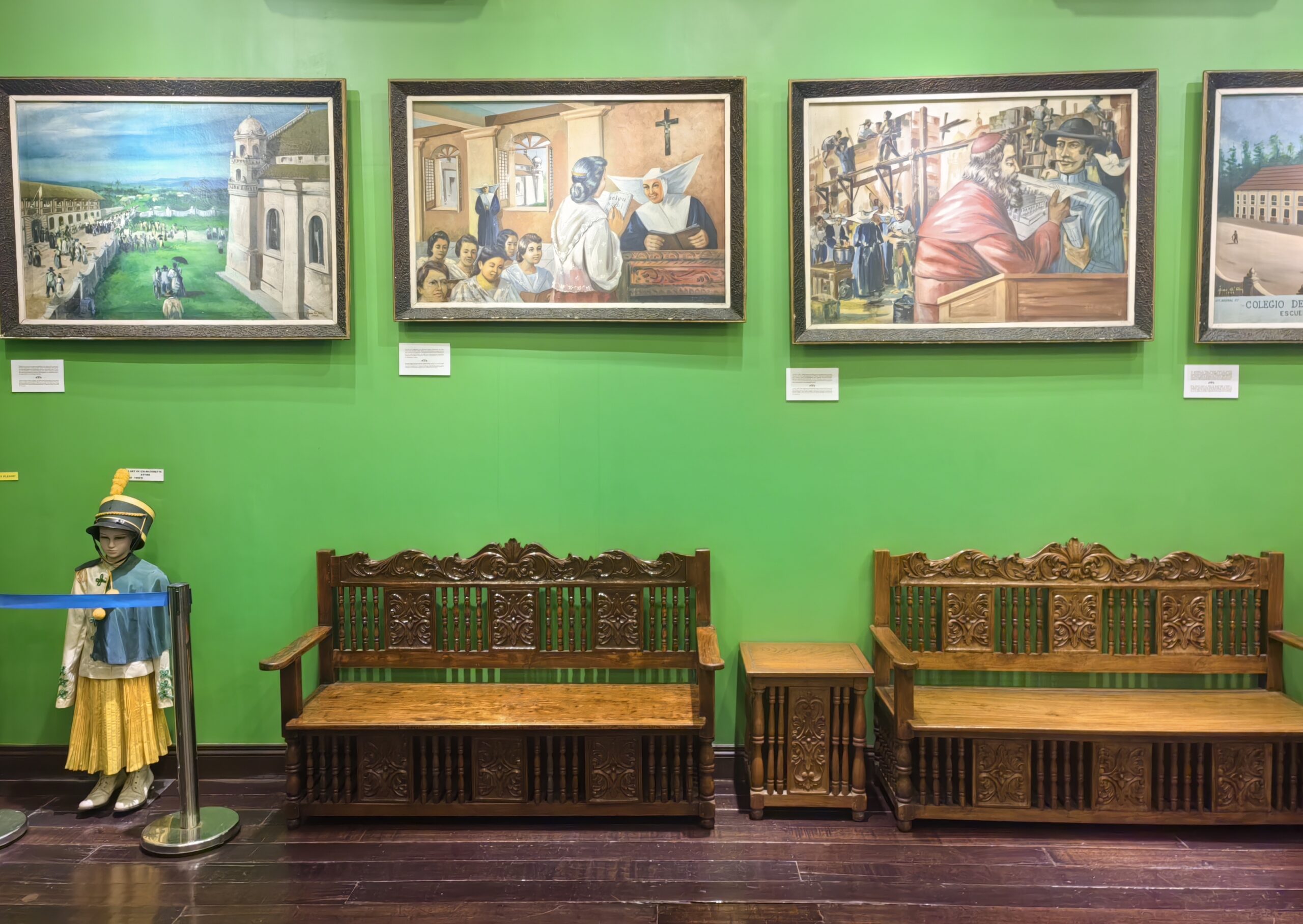 The artworks painted during the university’s Centennial celebration in 1968.
One canvas depicts the six Daughters of Charity sisters from Spain who stayed at the university for some time after Gainza secured royal approval for the school. According to Banzuela, locals were astonished by the sight of women clothed in garments resembling those of priests, and the series of paintings shows how the locals welcomed them.
One painting shows their difficult voyage to Bicol in April 1868, traveling through the Bicol River aboard local watercraft from Pasacao to Nueva Cáceres in time for Palm Sunday.
Elsewhere in the gallery hangs a recreation of the school’s early uniform, the saya negra suelta, a school implemented dressworn by the students to discourage sharp distinctions between those coming from wealthy families and those from poorer communities.
“To discourage discrimination between the rich and poor,” Banzuela explained, “all girls wore black.”
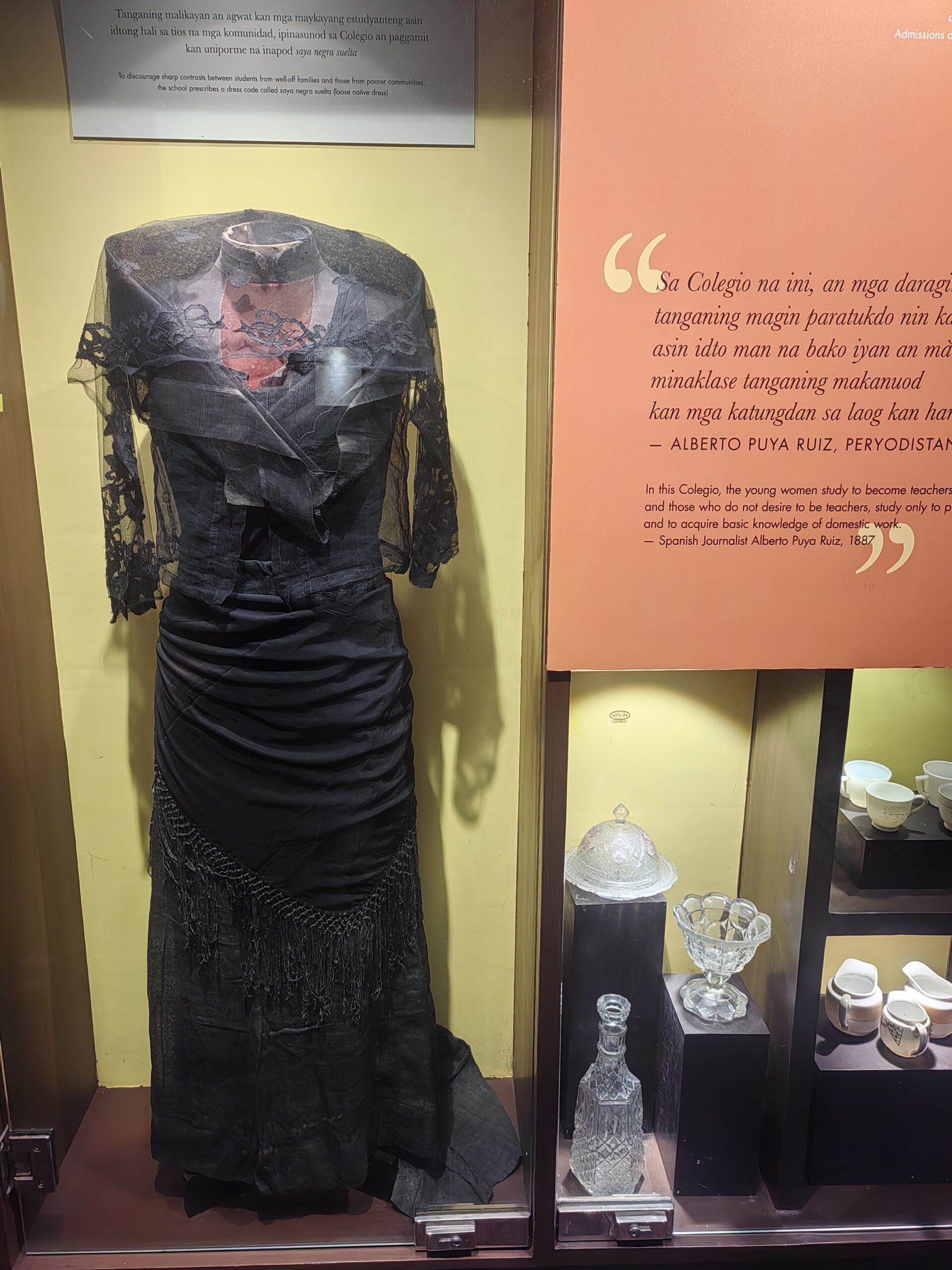 The saya negra suelta
That commitment to education extended beyond finishing-school refinement. After only a few years, Gainza grew dissatisfied that graduates were not becoming teachers. He petitioned Spain again, this time to elevate the institution into an Escuela Normal de Maestras, a teacher-training school. Approval arrived in 1872.
Inside glass cases are photocopies of application letters written by young women hoping to study there, maps showing how students traveled from across Luzon to Naga, and speeches intended for the first graduates of the teacher-training program.
One address, written by Gainza in Spanish for the school’s first 11 graduates, had to be delivered by someone else because the bishop had grown too ill to read it himself.
But perhaps the museum’s most remarkable collection lies deeper inside the galleries: its relics.
Saintly relics
Rows of shrines containing first-, second-, and third-class relics of saints line the displays with surprising numbers. Some contain fragments of bone. Others preserve cloth touched by canonized figures.
For Catholic visitors, they are sacred objects. For historians, they are artifacts of devotion and ecclesiastical networks stretching across continents.
Among the most prized pieces is a reliquary gifted by Queen Isabella II to Bishop Gainza during an audience in Spain on October 1, 1867. The story behind it was made more fascinating by how Banzuela narrated it to visitors.
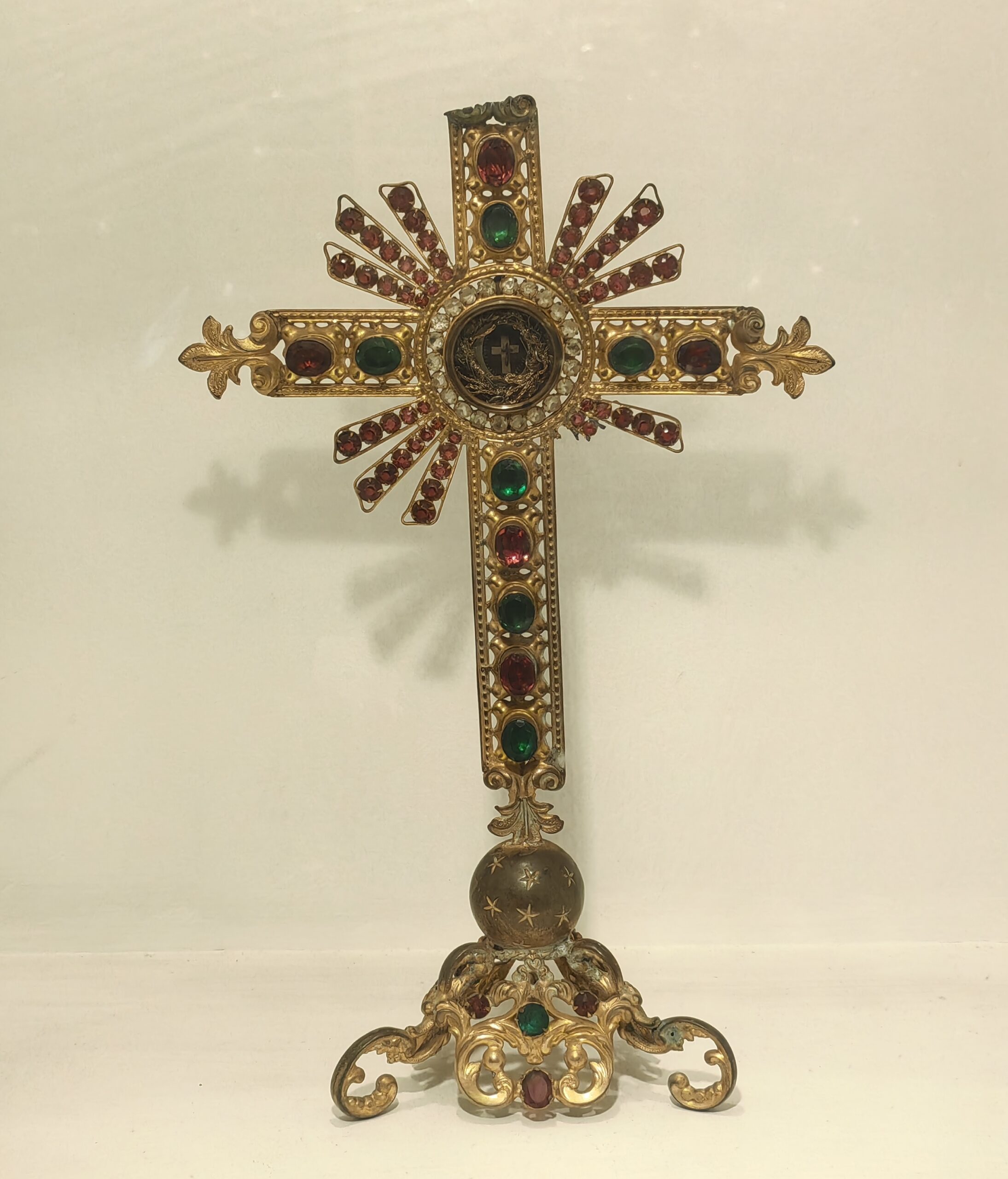 The relic of St. Elizabeth
Gainza had traveled to Europe and hoped to personally meet the queen after years of writing letters about his plans in Bicol. During their meeting, he discussed his vision of establishing a school for women in Nueva Caceres.
Pleased with the bishop’s mission, the queen presented him with a relic associated with Elizabeth of Hungary, the saint for whom the school would later be named (Isabel is the Spanish version of the name Elizabeth).
For years, the object was introduced simply as a relic of St. Elizabeth. Later research, however, suggested that the relic also contained something far rarer: a fragment believed to be from the True Cross. Inside the small container rests a tiny piece of wood said to come from the cross upon which Jesus was crucified.
According to Banzuela, Queen Isabella II herself was believed to be a descendant of St. Elizabeth of Hungary, adding another layer of symbolism to the gift. The queen, he said, chose to dedicate the school not after herself, but after a “celestial queen.”
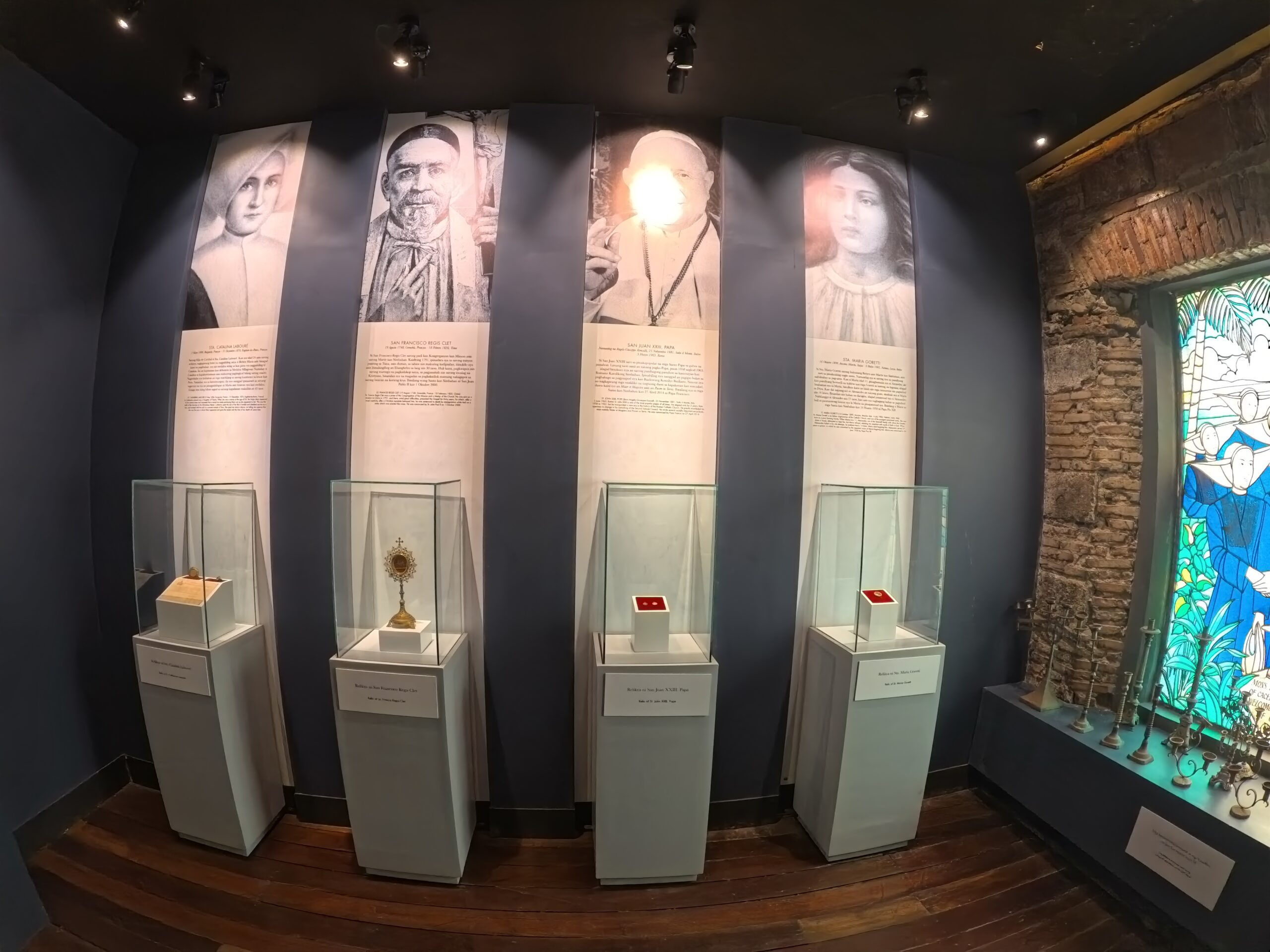 The relics of Saints Gallery
The museum’s relic collection, accumulated from gifts from the Spanish Queen, as she grew more admiring of the university’s functions, also includes first-class relics connected to Vincent de Paul and Louise de Marillac, reinforcing the university’s deep ties to the Vincentian tradition.
Other than religion and education, the museum also displays the scars of war. During the Philippine Revolution, the campus served as headquarters for Filipino rebels, including Corporal Elias Angeles, who led revolutionary forces in Bicol against the Spanish in 1898.
During World War II, the Japanese military occupied the campus as a garrison. American bombings reduced much of the original structures to ruins.
Photographs displayed in the galleries show shattered walls and skeletal remains of buildings. Empty bomb shells, wartime currency known as “Mickey Mouse money,” and surviving artifacts from the occupation are displayed in one of the galleries.
For all its historical significance, however, the museum remains low-key. Banzuela guides visitors like a storyteller eager to share overlooked details: the social hierarchy reflected in antique chicken carriers called gallineras; the vanished relics and wartime artifacts stolen before heritage preservation became a thing; the annual rotation of objects from storage to keep repeat visitors returning.
There is something more appealing about the place. In an age when museums increasingly compete for grandness, the Museo Histórico de la Universidad de Sta. Isabel instead relies on the stories it tells, especially about a city once called Nueva Caceres, of women breaking social boundaries through education, of revolutionaries and six nuns, of relics traveling from royal courts in Spain to a university in Bicol — all that making this museum a must-visit among history enthusiasts. – Rappler.com


You May Also Like

Scotland Predicted Lineup vs Haiti: Starting XI, Team News & Tactical Analysis

Binance TR’s Pizza-Themed Social Media Event: Opportunity to Win a Domino’s Gift Voucher Worth 800 TL

Türkiye Predicted Lineup vs Australia: Starting XI, Team News & Tactical Analysis



