

Oil Prices Plunge to Four-Month Lows Amid U.S.-Iran Diplomatic Breakthrough
Key Highlights
- Brent crude tumbled 3.4% to reach $87.33 per barrel, marking its weakest performance since March 5, concluding the week with a 6.2% decline
- Diplomatic negotiations between Washington and Tehran are progressing toward an agreement that may reopen the critical Strait of Hormuz
- Pakistani officials confirmed that a finalized text has been established and are coordinating next steps with both nations
- Tehran’s top diplomat stated a memorandum of understanding has reached unprecedented proximity to completion amid mixed signals
- The oil cartel reduced its 2026 demand growth projection from 1.2 million barrels daily to 1 million
Energy markets experienced a significant downturn on Friday, with Brent crude plummeting to its weakest position since the beginning of March. The decline was fueled by mounting expectations that Washington and Tehran are nearing a diplomatic resolution that would restore access through the Strait of Hormuz.
Brent benchmark prices closed at $87.33 per barrel, representing a daily decline of 3.4% and a weekly drop of 6.2%. The West Texas Intermediate benchmark decreased 3.2%. Natural gas prices across Europe plunged as much as 8.4%.
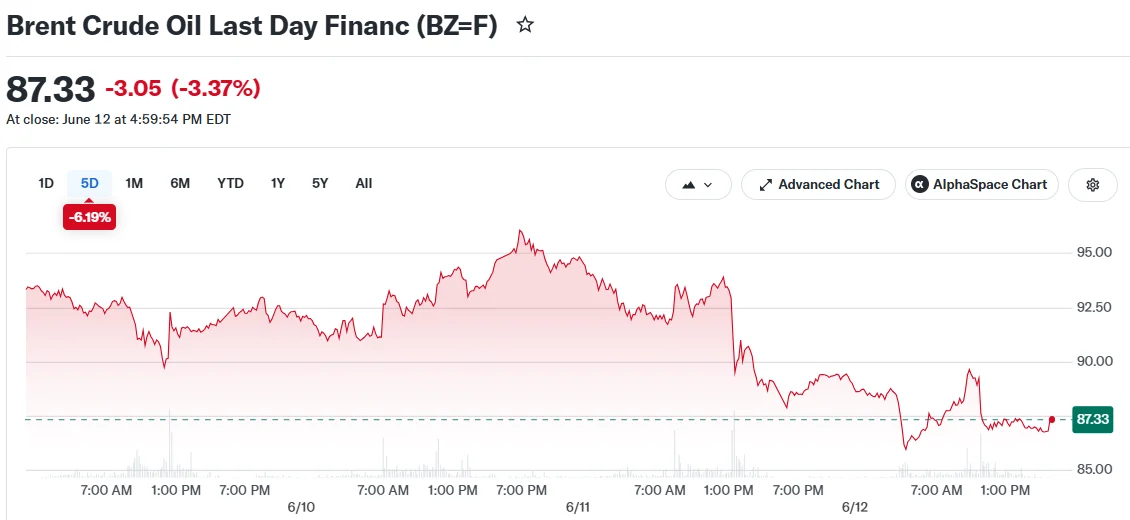 Brent Crude Oil Last Day Financ (BZ=F)
The strategically vital Strait of Hormuz has remained essentially blocked since hostilities erupted between Washington and Tehran in late February. Prior to the outbreak of conflict, this critical chokepoint facilitated approximately one-fifth of global petroleum and natural gas shipments.
President Trump announced Thursday that negotiators had achieved a breakthrough and suggested formal signatures could follow shortly. He indicated the arrangement would restore passage through the strait, terminate the American naval embargo against Iran, and guarantee Tehran abandons nuclear weapons development.
Diplomatic Momentum Builds
Despite encouraging developments, financial markets maintain a skeptical stance. Multiple previous announcements of major progress ultimately proved inaccurate, and the contradictory messaging between Washington and Tehran has introduced additional volatility.
Production Constraints Persist
Oil values remain approximately 30% below the conflict’s peak levels. However, market observers caution that prices may face downside limitations as production capacity remains restricted.
Chevron’s chief executive Mike Wirth cautioned Friday that petroleum stockpiles are declining toward “concerning” thresholds. The United States continues exporting crude from strategic emergency reserves at unprecedented rates.
Macquarie energy analyst Vikas Dwivedi attributed the recent $11 per barrel decline to market enthusiasm surrounding a potential agreement. He noted that crude valuations maintain support levels as long as the strait remains inaccessible.
Certain vessels have navigated the strait with tracking transponders disabled, and global markets have developed alternative mechanisms to address the supply interruption. However, industry experts suggest that even following strait reopening, purchasers may demonstrate preference for American crude over Persian Gulf supplies for an extended period.
Rob Haworth from U.S. Bank noted that tanker vessels traveling the strait to Asian destinations would require two months for complete round-trip voyages. Scott Shelton of ICAP predicted markets would probably “shift procurement patterns away” from Persian Gulf sources in the immediate term.
The oil cartel revised downward its 2026 petroleum demand growth projection to 1 million barrels daily, reduced from 1.2 million. It increased its 2027 forecast. Alternative forecasting organizations, including the IEA and EIA, maintain more conservative outlooks, with both anticipating demand contraction in 2026.
The European Central Bank referenced the Iran-related petroleum price surge as a primary factor influencing its determination to increase interest rates this week.
The post Oil Prices Plunge to Four-Month Lows Amid U.S.-Iran Diplomatic Breakthrough appeared first on Blockonomi.


You May Also Like

Q2 Market Insights: Bitcoin regains dominance in risk-averse environment, ETFs remain critical to market structure

‘Limitless’ Pedri emerges as Spain’s natural heir to Xavi, Iniesta

Taiwan starts AI-powered campaign to recruit Chinese informants and whistleblowers



