

Bitcoin Just Got Another Major Vote of Confidence From SpaceX
SpaceX Allocates Approximately 6% of Corporate Treasury to Bitcoin, Strengthening Institutional Adoption Narrative
SpaceX has reportedly allocated approximately 6% of its corporate treasury to Bitcoin, a move that further reinforces the growing trend of institutional cryptocurrency adoption among some of the world's most influential companies.
The revelation has attracted significant attention across financial markets, cryptocurrency communities, and institutional investment circles, where Bitcoin's role as a corporate treasury asset continues to evolve.
As one of the world's most valuable technology and aerospace companies, SpaceX's reported Bitcoin exposure carries symbolic and strategic significance.
The allocation demonstrates how digital assets are increasingly being considered alongside traditional treasury instruments as companies seek diversification, inflation protection, and exposure to emerging financial technologies.
The development also comes at a time when institutional interest in Bitcoin continues expanding through exchange-traded funds, corporate treasury strategies, and broader participation from traditional financial institutions.
For many investors, SpaceX's reported allocation represents another signal that Bitcoin's integration into mainstream corporate finance is accelerating.
 |
| Source: XPost |
The Rise of Corporate Bitcoin Adoption
Corporate ownership of Bitcoin has become one of the defining trends of the digital asset industry over the past several years.
What began as an experimental treasury strategy among a small number of companies has gradually evolved into a broader institutional movement.
Businesses increasingly evaluate Bitcoin as a potential complement to traditional treasury assets such as:
-
Cash reserves
-
Government bonds
-
Short-term securities
-
Corporate debt instruments
Supporters argue that Bitcoin's limited supply and global accessibility make it an attractive alternative store of value.
As adoption expands, companies are becoming more willing to explore digital asset exposure within treasury management frameworks.
Why Companies Hold Bitcoin
Several factors have contributed to growing corporate interest in Bitcoin.
One of the most frequently cited reasons involves long-term inflation concerns.
Traditional cash holdings can lose purchasing power over time due to monetary expansion and inflationary pressures.
Bitcoin's fixed supply structure offers a fundamentally different monetary model.
Many investors view this scarcity as one of the asset's most important characteristics.
Corporate treasury managers evaluating long-term capital preservation strategies increasingly consider Bitcoin as part of a diversified approach.
The objective is not necessarily replacing traditional assets entirely but adding alternative sources of potential value appreciation.
SpaceX's Position Within the Digital Asset Ecosystem
SpaceX occupies a unique position among companies that have embraced Bitcoin.
Unlike firms operating directly within cryptocurrency markets, SpaceX's core business focuses on:
-
Aerospace technology
-
Satellite communications
-
Launch services
-
Space exploration
As a result, its reported Bitcoin allocation is often viewed as a treasury decision rather than a core business strategy.
This distinction makes the development particularly noteworthy.
When companies outside the cryptocurrency sector allocate capital to Bitcoin, many investors interpret the move as evidence of broader institutional confidence in the asset class.
The Influence of Elon Musk
Discussions surrounding SpaceX and Bitcoin frequently involve the influence of Elon Musk.
Over the years, Musk has become one of the most recognizable figures associated with both technology innovation and cryptocurrency markets.
His public comments have historically generated significant market reactions across digital assets.
While corporate treasury decisions are typically driven by financial and strategic considerations, Musk's interest in emerging technologies has contributed to increased attention surrounding digital asset adoption within his companies.
This dynamic has amplified investor interest in SpaceX's reported Bitcoin holdings.
Bitcoin's Evolution as a Treasury Asset
Bitcoin's journey from a niche digital experiment to a corporate treasury asset represents one of the most significant transformations in financial history.
In its early years, Bitcoin was largely associated with retail investors and technology enthusiasts.
Today, institutional participation includes:
-
Public companies
-
Investment funds
-
Asset managers
-
Family offices
-
Financial institutions
This evolution has dramatically changed market perceptions.
Many analysts now view Bitcoin as an emerging asset class capable of coexisting alongside traditional financial instruments.
Institutional Adoption Continues Accelerating
The broader institutional adoption trend extends far beyond individual corporate treasuries.
Recent years have seen increasing participation from major financial institutions seeking exposure to digital assets.
Several developments have contributed to this momentum:
-
Spot Bitcoin investment products
-
Regulatory progress
-
Custody solutions
-
Institutional infrastructure improvements
These advancements have reduced barriers to participation while increasing confidence among professional investors.
The result has been a steady increase in institutional engagement across cryptocurrency markets.
Bitcoin's Role in Portfolio Diversification
Diversification remains a core principle of modern portfolio management.
Institutional investors often seek assets with unique characteristics that may behave differently from traditional markets.
Bitcoin's historical performance and independent market structure have attracted attention from investors seeking alternative sources of return.
While volatility remains a consideration, some institutions view Bitcoin as a long-term strategic allocation rather than a short-term trading instrument.
SpaceX's reported allocation aligns with this broader trend.
Corporate Treasury Management Is Changing
The concept of corporate treasury management continues evolving.
Historically, treasury reserves focused primarily on safety and liquidity.
However, prolonged periods of low interest rates and changing macroeconomic conditions have encouraged companies to explore alternative strategies.
This shift has prompted discussions regarding:
-
Capital efficiency
-
Inflation protection
-
Asset diversification
Bitcoin has increasingly become part of these conversations.
Although adoption remains far from universal, the asset's growing presence within corporate balance sheets reflects changing attitudes toward treasury management.
Market Reaction to the Report
News of SpaceX's reported Bitcoin allocation generated considerable discussion among investors and market analysts.
Supporters viewed the development as another validation of Bitcoin's growing institutional legitimacy.
The report also fueled renewed optimism regarding future corporate adoption trends.
Market participants frequently monitor treasury allocations because they can provide insight into how sophisticated organizations perceive long-term opportunities and risks.
As a result, developments involving major corporations often influence broader market sentiment.
The Strategic Importance of a 6% Allocation
While a 6% treasury allocation may appear modest relative to total corporate assets, it remains significant from a strategic perspective.
Treasury reserves are typically managed conservatively.
Allocating a meaningful percentage to Bitcoin demonstrates a level of confidence in the asset's long-term prospects.
The reported allocation suggests that digital assets are increasingly being considered legitimate components of institutional financial strategies.
This gradual normalization may influence future adoption decisions among other corporations.
Bitcoin and the Future of Corporate Finance
The integration of Bitcoin into corporate balance sheets raises broader questions about the future of finance.
As digital technologies continue reshaping global markets, financial infrastructure is undergoing rapid transformation.
Blockchain-based assets may play an increasingly important role in:
-
Treasury management
-
Settlement systems
-
International payments
-
Capital markets
While widespread adoption remains a long-term process, developments involving major companies provide valuable insight into potential future trends.
Risks Remain Part of the Conversation
Despite growing adoption, Bitcoin remains a volatile asset.
Corporate treasury managers must carefully evaluate both opportunities and risks when considering digital asset exposure.
Key considerations include:
-
Market volatility
-
Regulatory developments
-
Accounting treatment
-
Liquidity management
These factors continue influencing adoption decisions.
Nevertheless, the willingness of major companies to allocate capital to Bitcoin suggests confidence in the asset's long-term potential.
Conclusion
SpaceX's reported decision to allocate approximately 6% of its corporate treasury to Bitcoin highlights the continuing evolution of institutional digital asset adoption.
The move reinforces Bitcoin's growing role as a strategic treasury asset and underscores the increasing willingness of major corporations to incorporate digital assets into broader financial strategies.
As institutional participation expands and financial infrastructure continues maturing, Bitcoin's presence within corporate balance sheets is likely to remain a key theme shaping the future of global finance.
For investors, the development serves as another reminder that digital assets are increasingly moving beyond speculation and becoming integrated into mainstream financial decision-making.
hokanews.com – Not Just Crypto News. It’s Crypto Culture.
Writer @Ethan
Ethan Collins is a passionate crypto journalist and blockchain enthusiast, always on the hunt for the latest trends shaking up the digital finance world. With a knack for turning complex blockchain developments into engaging, easy-to-understand stories, he keeps readers ahead of the curve in the fast-paced crypto universe. Whether it’s Bitcoin, Ethereum, or emerging altcoins, Ethan dives deep into the markets to uncover insights, rumors, and opportunities that matter to crypto fans everywhere.
Disclaimer:
The articles on HOKANEWS are here to keep you updated on the latest buzz in crypto, tech, and beyond—but they’re not financial advice. We’re sharing info, trends, and insights, not telling you to buy, sell, or invest. Always do your own homework before making any money moves.
HOKANEWS isn’t responsible for any losses, gains, or chaos that might happen if you act on what you read here. Investment decisions should come from your own research—and, ideally, guidance from a qualified financial advisor. Remember: crypto and tech move fast, info changes in a blink, and while we aim for accuracy, we can’t promise it’s 100% complete or up-to-date.


You May Also Like
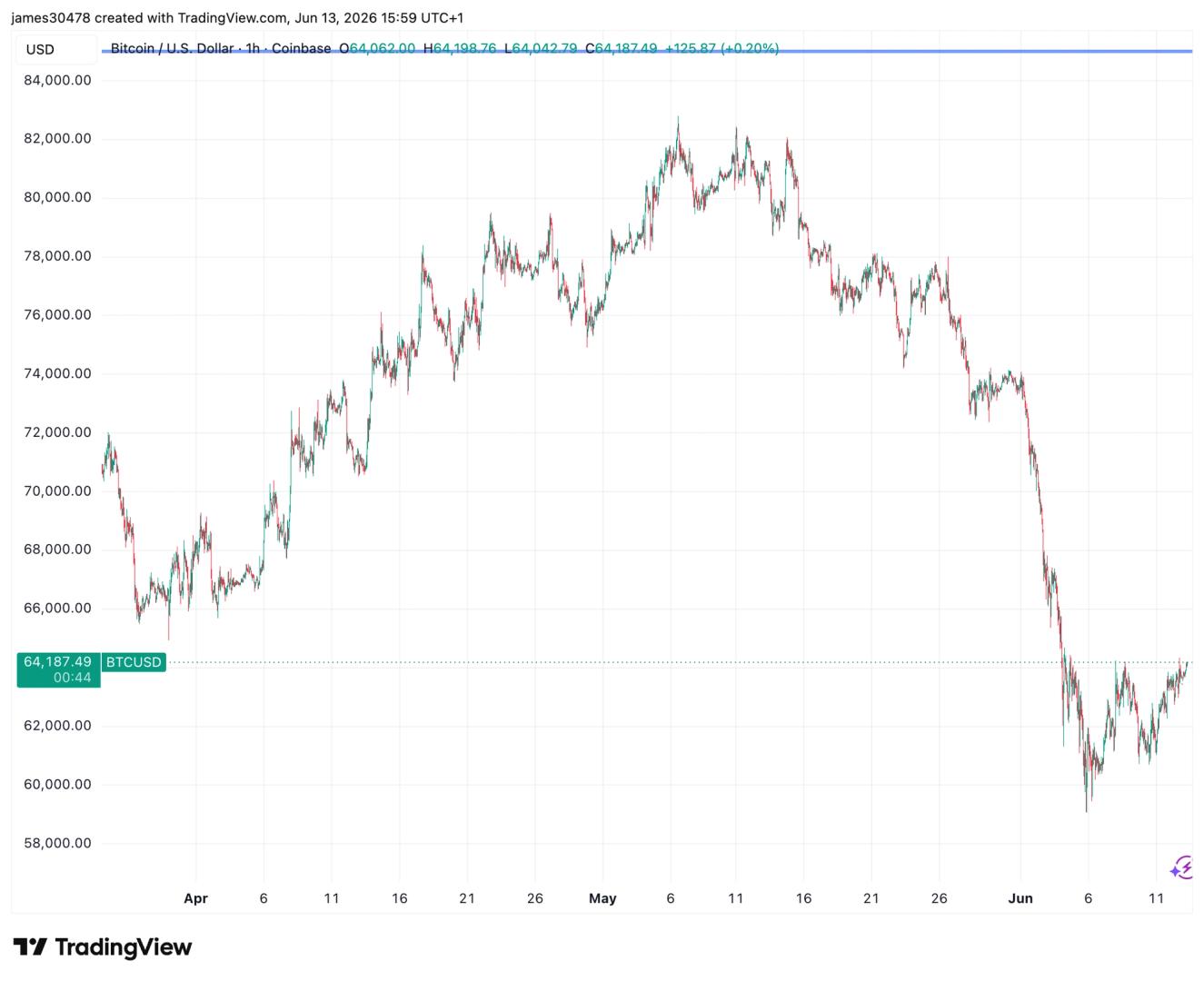
Bitcoin rises above $64,000 after Pakistan prime minister says Iran peace deal is near

Coinbase And Ethena Launch High Yield USDC Vault Powered By Morpho
Best Stablecoins Compared by Safety, Yield, Liquidity and Risk



