

Must Read
As the train quietly moved through Tokyo, I looked at my son and wondered which country he will eventually think of as home. I hope, for his sake, the answer isAs the train quietly moved through Tokyo, I looked at my son and wondered which country he will eventually think of as home. I hope, for his sake, the answer is
[Between Islands] The unfinished work of Philippine independence
For feedback or concerns regarding this content, please contact us at [email protected]
There I was at Ueno Park, standing alone in a line at Ana’s Trading that barely seemed to move. Around me, Filipinos chatted in a mix of Tagalog, English, Japanese, and regional dialects while Original Pinoy Music blasted through oversized speakers. Smoke from the barbecue drifted into the humid Tokyo afternoon as people impatiently checked how far they still were from the food stalls.
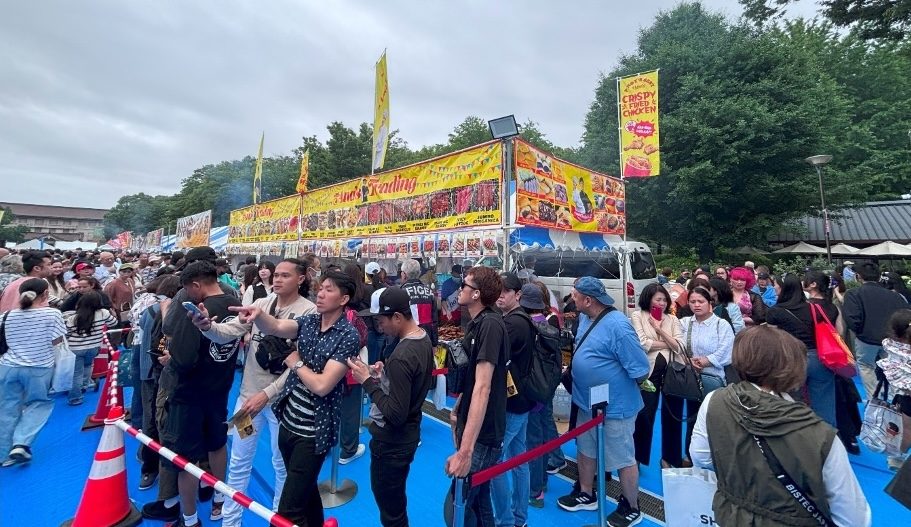 QUEUE. Japanese, Filipinos, and other nationalities line up for the popular Ana’s Trading selling classic Pinoy food like isaw, dinuguan, and lechon paksiw. Photo by Ricky Sabornay
My wife and our 10-year-old son had already given up on my line entirely and wandered off somewhere else to buy kwek-kwek (deep-fried quail eggs), fish balls, and kikiam (pork roll).
A few meters away from me, a group of Filipinos were already deep into bottles of San Miguel and Red Horse, loudly daring one another to eat balut (cooked duck egg with embryo) while everyone around them laughed. Nearby, mixed Filipino-Japanese families lined up patiently for food, casually switching between Tagalog and Japanese mid-conversation in a way that somehow felt uniquely normal in Tokyo.
After nearly 30 minutes of waiting, I finally reached the front of the stall and triumphantly secured my food: isaw ng baboy (pork intestines), dinuguan (pork blood stew), and lechon paksiw (stewed roast pork in vinegar).
For a moment, Ueno Park stopped feeling like Japan.
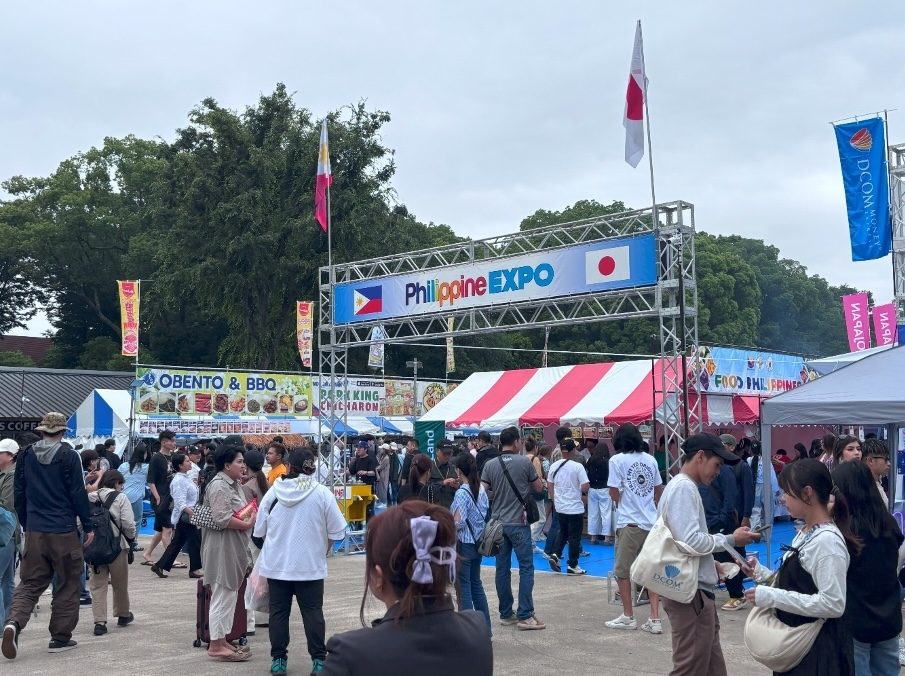 EXPO. The Philippine Expo 2026 on June 5 to 7, 2026 draws an enormous crowd estimated at 100,000. Photo by Ricky Sabornay
The Philippine Expo 2026 had drawn an enormous crowd that weekend. Families carried plastic bags stuffed with dried mangoes, ube snacks, and instant pancit canton (stir-fried noodles) as if they were bringing home precious cargo, while Japanese visitors lined up for halo-halo (Filipino dessert with shaved ice) and lumpia (spring roll) beside Filipinos trying to decide which stalls still had the shortest queues.
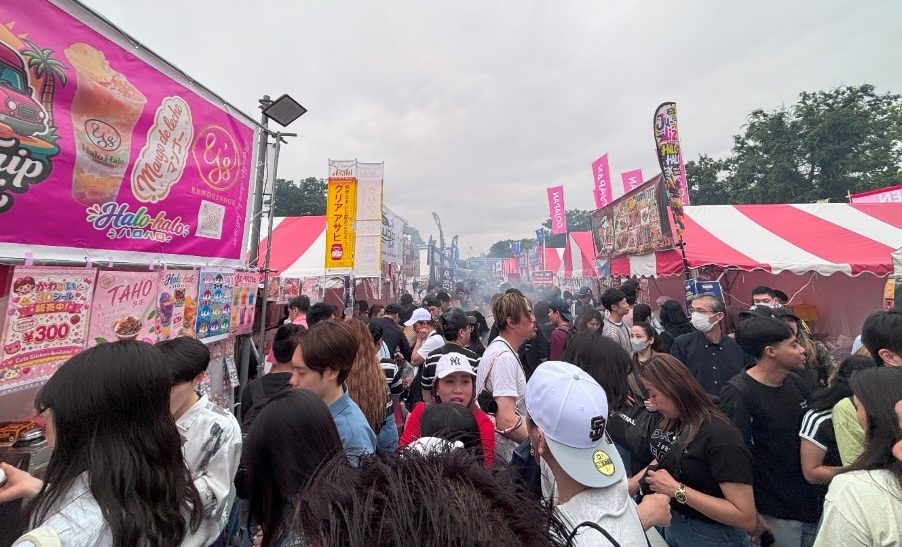 FOOD. Japanese visitors lined up for halo-halo and lumpia beside Filipinos trying to decide which stalls still had the shortest queues. Photo by Ricky Sabornay
It was loud, crowded, sweaty, and deeply familiar.
Then, almost inevitably, the conversations around me drifted back to the Philippines: politics, inflation, corruption, the cost of living, relatives trying to migrate abroad. Even during celebrations like this, Filipinos somehow find their way back to the same anxieties.
Living in Japan for eight years has changed the way I notice things. I realize this every time I return home and become irrationally frustrated by things that should probably not feel extraordinary — trains that do not work properly, government systems nobody fully understands, lines that move slowly because no one seems accountable for delays. (READ: [Between Islands] Philippines, Japan weave a shared future as friendship turns 70)
Tokyo is hardly a perfect city. But it is a place where people generally trust that institutions will still function the next morning. Trains arrive when they are supposed to. Paperwork moves. Public systems, however imperfect, are expected to work. That kind of trust quietly shapes how people live.
And perhaps that is why, standing in the middle of this joyful celebration of Filipino identity overseas, I kept asking myself a question I could not quite shake: What does it actually mean to be an independent Filipino in 2026?
Respect and relevance
The question lingered because the past few weeks in Tokyo had also been filled with symbols of Philippine success on the international stage.
During President Marcos’ recent state visit to Japan, the Philippines formally upgraded its relationship with Tokyo into a Comprehensive Strategic Partnership. Watching a Philippine president address the Japanese National Diet and later receive Japan’s highest honor would have once seemed unimaginable to older generations who still carried memories of the war. (WATCH: [Hindi ito Marites] Japan: From enemy to bestie)
Today, Japan increasingly speaks to the Philippines not simply as a recipient of aid, but as a strategic partner in an increasingly unstable region. (READ: Marcos goes to Japan amid historic strategic shift)
In the days surrounding the visit, I helped facilitate meetings between Japanese companies and the Philippine Special Envoy to Japan for Trade and Investment together with Philippine Chamber of Commerce in Japan chairman Allan Reyes. Across boardrooms in Tokyo, Japanese firms spoke seriously about expanding operations in the Philippines, hiring Filipino workers, and building long-term partnerships.
For decades, the Philippines wanted international respect and relevance. In many ways, we are finally receiving it.
But diplomatic recognition does not automatically translate into an easier life for ordinary Filipinos.
That contradiction became impossible to ignore again during the President’s meeting with the Filipino community in Tokyo. Representatives from Filipino organizations across Japan filled the venue, reflecting a community that has now grown to roughly 350,000 people.
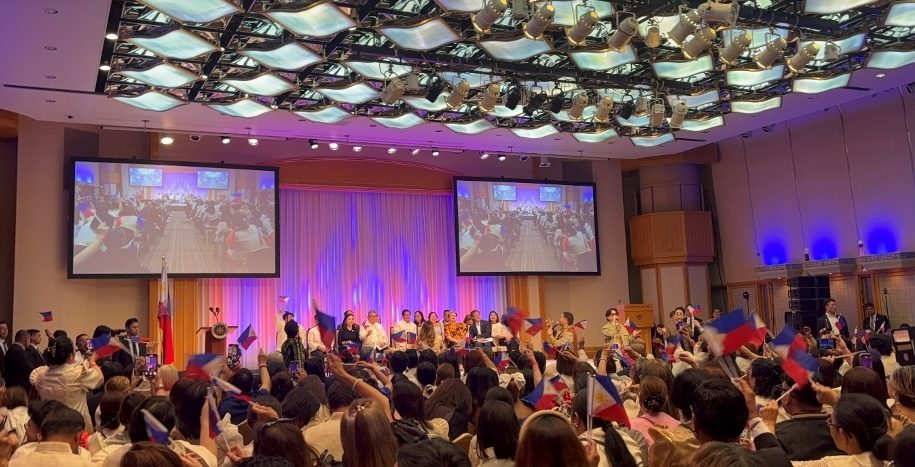 OFWs. The President’s meeting with the Filipino community in Tokyo is filled by representatives from Filipino organizations across Japan, reflecting a community that has now grown to roughly 350,000 people. Photo by Ricky Sabornay
 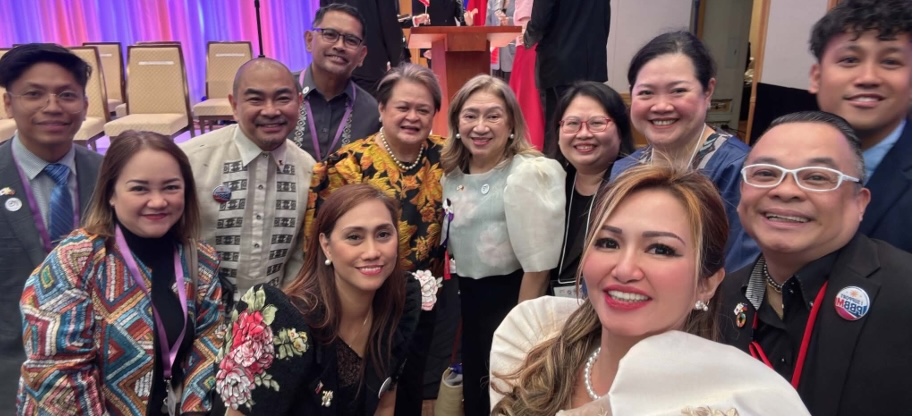 Foreign Affairs Secretary Ma. Theresa Lazaro (third left, second row), Philippine Ambassador Mylene Garcia-Albano (fourth left, second row), Consul Generals of Osaka and Nagoya Shirlene C. Mananquil (sixth left, second row) and Donna M. Rodriguez ((fifth left, second row) pose with some of the leaders of the Filipino community in Japan. Photo by Ricky Sabornay
(READ: [Between Islands] Mender of frayed threads: 70 years of women at the heart of PH–Japan ties)
Many have built successful lives here. Across Tokyo, Osaka, Nagoya, and smaller prefectures, Filipino nurses, engineers, caregivers, teachers, IT professionals, factory workers, and service workers have quietly become part of the fabric of Japanese society.
But beneath many success stories is a quieter truth people rarely say out loud: for many Filipinos overseas, migration was never really about adventure. It was about survival.
People leave because opportunities at home remain uneven. Because salaries often cannot keep up with the cost of living. Because corruption and institutional dysfunction slowly wear people down.
We celebrate overseas Filipino workers as modern-day heroes, and rightly so. Their sacrifices continue to sustain the Philippine economy. But there is also something deeply uncomfortable about a country relying so heavily on the departure of its own people just to stay afloat.
How free are we, really, when millions of Filipinos still believe that stability, dignity, and opportunity are easier to find somewhere else?
Unfinished work
That thought returned to me again during the reception marking the 128th anniversary of Philippine Independence in Tokyo.
The Philippines marked the 128th anniversary of its independence in Tokyo on June 9, coinciding with the 70th anniversary of Philippine-Japan diplomatic relations.
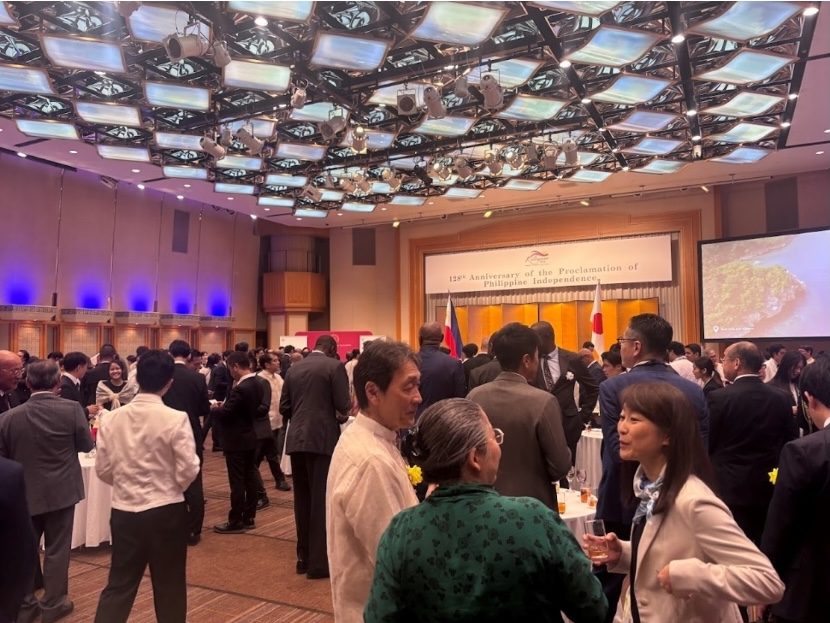 70 YEARS. The Philippines marks the 128th anniversary of its independence in Tokyo on June 9, 2026 coinciding with the 70th anniversary of Philippine-Japan diplomatic relations. Photo by Ricky Sabornay
The gathering was elegant and hopeful. Diplomats exchanged speeches while community leaders greeted one another warmly across the reception hall. Japanese officials expressed solidarity following the recent earthquake in Mindanao, and their response felt sincere and immediate.
Moments like that remind me that modern independence no longer means standing alone. Countries survive now through partnerships, alliances, and mutual trust.
Still, for all the speeches about diplomacy and strategic partnerships, I kept thinking about something much simpler: whether ordinary Filipinos can still realistically build a decent life in the Philippines itself.
When our grandparents fought for independence, they were fighting for more than a flag or an anthem. They were fighting for the possibility of a functioning nation capable of giving its people dignity within its own borders.
That remains unfinished work.
True independence means fixing the crippling dysfunction at home. It means translating the goodwill and investments we have secured abroad into a domestic reality where institutions actually work. It means building a government worthy of its people’s sacrifices, so that one day, the Filipino will no longer have to cross oceans — or stand in line at a park in Tokyo for a taste of home — just to survive.
When the expo ended and we boarded the train home that evening, my wife and son were exhausted from walking around Ueno Park all afternoon while I was still carrying containers of leftover food from the stalls.
As the train quietly moved through Tokyo, I looked at my son and wondered which country he will eventually think of as home. I hope, for his sake, the answer is one where he chooses to stay, rather than one he feels he must leave. – Rappler.com
Ricky Aringo Sabornay is a cross-border lawyer who moves between the Philippines and Japan, helping people navigate not just different legal systems, but different ways of thinking. He runs Sabornay Law, a member firm of Uryu & Itoga, where his work sits at the intersection of two legal systems and two cultures that don’t always speak the same language. Connect with him on LinkedIn.

[Between Islands] Why the Marcos state visit to Japan is anchored in everyday trust

[Between Islands] Still no Jollibee in Japan, but Filipino food slowly becoming more visible


Disclaimer: The articles reposted on this site are sourced from public platforms and are provided for informational purposes only. They do not necessarily reflect the views of MEXC. All rights remain with the original authors. If you believe any content infringes on third-party rights, please contact [email protected] for removal. MEXC makes no guarantees regarding the accuracy, completeness, or timeliness of the content and is not responsible for any actions taken based on the information provided. The content does not constitute financial, legal, or other professional advice, nor should it be considered a recommendation or endorsement by MEXC.
You May Also Like
If America wants to lead in crypto, it must protect the people who build it
The crypto industry’s leading founders, CEOs and investors recently signed a single letter to Senate leaders with one request: do not weaken the Clarity Ac
Share
Coindesk2026/06/15 22:25

Tokenized RWA Markets Remained Resilient During US-Iran Conflict – Bitget-Block Scholes Report
Bitget, the world’s largest Universal Exchange (UEX), today released a joint report with Block Scholes examining liquidity conditions across its real-world asset
Share
ffnews2026/06/15 22:00

Iran’s foreign minister targeted in assassination attempt, wife killed
The post Iran’s foreign minister targeted in assassination attempt, wife killed appeared on BitcoinEthereumNews.com. Iran’s foreign minister was critically injured
Share
BitcoinEthereumNews2026/04/02 18:33



