

Mastercard Appoints Amarjit Singh Walia to Accelerate South Asia Payments Growth
Mastercard Appoints Amarjit Singh Walia: Why Relationship Leadership Is Becoming a Strategic Growth Engine in South Asia Payments
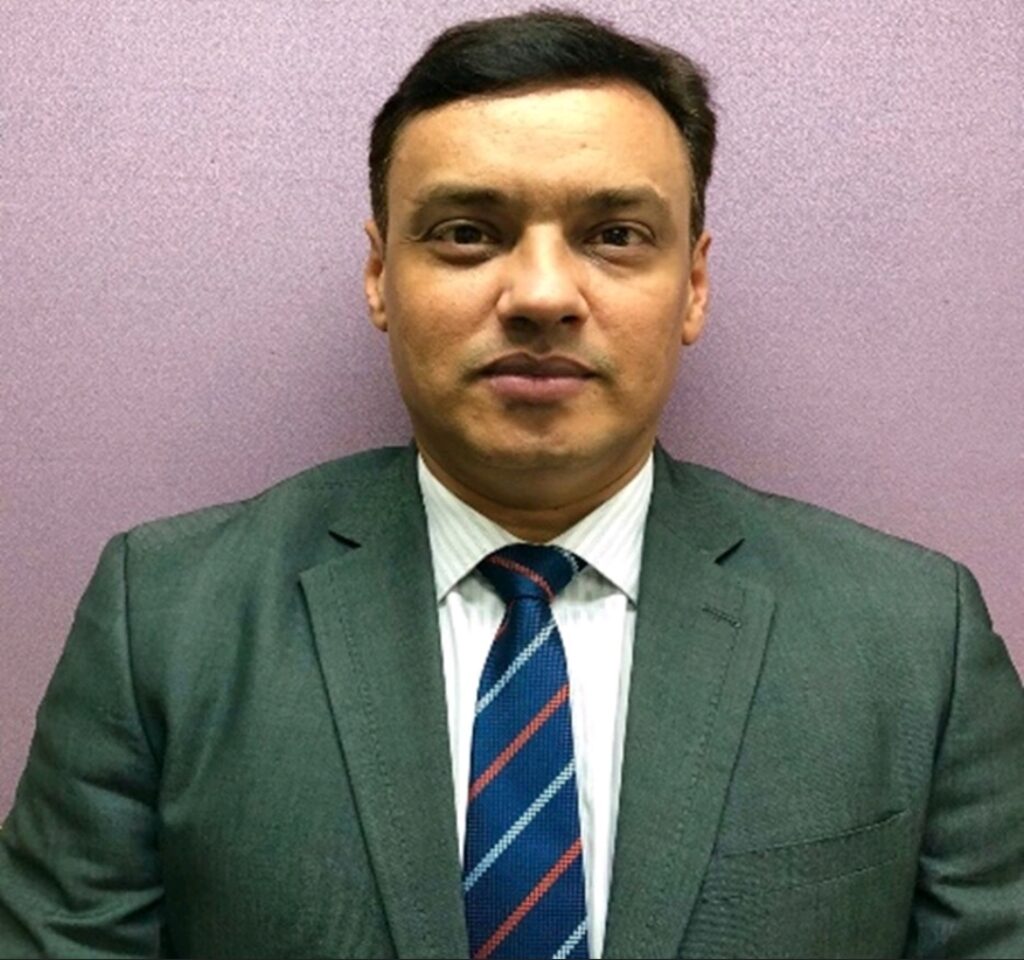
The announcement that Mastercard Appoints Amarjit Singh Walia as Senior Vice President, Account Management, South Asia may appear at first glance to be a routine leadership appointment. Yet viewed through the lens of customer experience, payments strategy, and ecosystem competition, it signals something much larger.
As digital payments mature across South Asia, growth is no longer determined solely by network scale, transaction processing capabilities, or card issuance volumes. Increasingly, success depends on the ability to build stronger relationships with financial institutions, orchestrate ecosystem partnerships, and create differentiated customer experiences.
Against this backdrop, Mastercard has appointed Amarjit Singh Walia to lead relationships with financial institutions, support market expansion opportunities, and accelerate digital payments adoption across South Asia.
The move comes at a pivotal moment for the payments industry as banks, fintech firms, payment networks, and merchants compete to deliver faster, simpler, and more personalized financial experiences.
Mastercard Appoints Amarjit Singh Walia as South Asia Becomes a Global Payments Growth Market
South Asia has emerged as one of the world’s most dynamic digital payments markets.
Rapid smartphone adoption, increasing internet penetration, expanding e-commerce activity, and government-led digitization initiatives have fundamentally altered consumer behavior. Customers increasingly expect frictionless onboarding, real-time transactions, embedded financial services, and seamless omnichannel experiences.
For payment networks, these shifts create significant growth opportunities but also intensify competition.
Historically, payment providers focused on expanding acceptance networks and increasing transaction volumes. Today, the competitive landscape has evolved. Banks and ecosystem partners expect payment networks to contribute strategic insights, innovation support, risk management expertise, loyalty capabilities, and customer engagement frameworks.
This evolution means relationship management has become a strategic capability rather than an operational function.
That context makes Mastercard’s latest leadership decision particularly significant.
A Leadership Appointment Rooted in Banking Experience
Amarjit Singh Walia joins Mastercard with more than three decades of experience across banking, payments, and financial services.
Most recently, he served as Business Head for credit cards, debit cards, and commercial cards at ICICI Bank. During his 22-year tenure at the institution, he held leadership positions spanning cards, retail assets, liabilities, personal loans, business loans, education loans, NRI banking, retail sales, and corporate sales.
This breadth of experience provides a unique perspective.
Unlike leaders whose expertise is confined to a single payments domain, Walia has operated across multiple dimensions of financial services. He has managed lending businesses, customer acquisition strategies, product portfolios, distribution channels, and relationship ecosystems.
That experience could prove particularly valuable as Mastercard seeks deeper collaboration with issuing banks throughout South Asia.
As Gautam Aggarwal, Division President, South Asia, Mastercard, stated:
The emphasis on partnerships and customer-centric growth highlights the broader strategic intent behind the appointment.
Why Ecosystem Relationships Are Becoming a Competitive Advantage
The payments industry is experiencing a structural shift.
In the past, competitive advantage largely came from network reach and transaction processing infrastructure. While these remain important, they are increasingly becoming table stakes.
The new battleground is ecosystem collaboration.
Banks are no longer seeking vendors. They are seeking partners capable of accelerating innovation, improving customer engagement, enhancing loyalty programs, and supporting digital transformation initiatives.
From a strategic perspective, this changes the role of account management dramatically.
Rather than maintaining commercial relationships, account leaders are increasingly expected to identify growth opportunities, align stakeholder priorities, coordinate innovation efforts, and support long-term business transformation.
This is where the appointment of Amarjit Singh Walia becomes particularly relevant.
His experience working inside one of India’s largest private-sector banks provides firsthand insight into how financial institutions evaluate partnerships, prioritize investments, and measure customer outcomes.
For Mastercard, that perspective may help strengthen collaboration with banks across South Asia while identifying new opportunities for portfolio expansion.
Mastercard Appoints Amarjit Singh Walia Amid Intensifying Industry Competition
The appointment also arrives during a period of heightened competition across the payments ecosystem.
Global payment networks continue investing heavily in digital experiences, loyalty innovation, commercial payments, and data-driven services.
At the same time, fintech firms are introducing new payment experiences that prioritize convenience, speed, and personalization. Real-time payment systems are reshaping consumer expectations around transaction speed and accessibility. Digital wallets continue gaining adoption across multiple customer segments.
These developments create pressure on traditional payment players to evolve beyond transaction processing.
Success increasingly depends on helping partners create differentiated customer experiences.
That means supporting everything from cardholder engagement and rewards programs to fraud prevention, digital onboarding, analytics, and customer retention strategies.
Leadership capable of navigating these complex ecosystems therefore becomes a strategic asset.
Rather than focusing exclusively on network expansion, payment providers must increasingly focus on relationship expansion.
The Technology Layer Behind Modern Payment Growth
Although the announcement centers on leadership, technology remains an essential part of the story.
Modern payment ecosystems rely on a complex combination of infrastructure, data platforms, security frameworks, authorization systems, fraud detection engines, loyalty platforms, tokenization services, and analytics capabilities.
The challenge is no longer simply building these capabilities.
The challenge is orchestrating them effectively across multiple stakeholders.
Banks need technology partners capable of integrating solutions without disrupting customer experiences. Merchants seek seamless payment acceptance. Consumers expect security without friction.
Operationally, this translates into increasing demand for ecosystem coordination.
Strong account leadership can help bridge gaps between technology capabilities and business outcomes by ensuring that innovations align with customer needs and partner priorities.
In that sense, relationship management functions as a strategic integration layer between technology investments and market adoption.
What This Means for Customer Experience
From a CX standpoint, the implications extend well beyond organizational structure.
When payment networks strengthen relationships with issuing banks, customers often experience the benefits indirectly but meaningfully.
These benefits can include:
- Faster introduction of new payment products
- Improved rewards and loyalty experiences
- Better digital onboarding journeys
- Enhanced security and fraud protection
- Greater acceptance and usability
- More personalized customer engagement
The customer rarely sees the partnership discussions occurring behind the scenes.
However, those discussions frequently determine how quickly innovations reach the market and how effectively they address customer needs.
This becomes critical when customer expectations continue rising.
Consumers increasingly compare financial experiences not only against banks but against technology platforms, e-commerce providers, and digital-native services.
Meeting those expectations requires deeper collaboration throughout the ecosystem.
Assessing Mastercard’s CX Maturity Position
Viewed through a customer experience maturity framework, Mastercard’s strategy reflects characteristics of an advanced ecosystem-driven model.
At a foundational level, payment providers focus on transaction processing.
More mature organizations emphasize customer outcomes, partner collaboration, and experience innovation.
Mastercard’s continued investment in relationship leadership suggests an emphasis on ecosystem enablement rather than isolated product delivery.
The company appears focused on helping partners achieve growth rather than merely providing infrastructure.
However, opportunities remain.
The next stage of maturity will likely involve deeper integration of data intelligence, predictive engagement capabilities, AI-driven personalization, and ecosystem-wide customer journey optimization.
Organizations that successfully combine relationship strength with technology innovation are likely to define the next phase of payments competition.
Decision Intelligence: The Strategic Signal for Industry Leaders
The broader lesson extends beyond Mastercard itself.
Financial institutions across South Asia face an important strategic decision.
Should growth be pursued primarily through internal capability development, external partnerships, or hybrid ecosystem models?
Increasingly, the answer appears to be partnership.
The complexity of modern payment ecosystems makes it difficult for any single organization to innovate independently across every domain.
Partnership-driven growth enables faster innovation, lower implementation risk, broader market reach, and stronger customer outcomes.
The appointment of an executive with extensive banking experience reinforces the importance of relationship-led growth strategies.
For competitors, the signal is clear: ecosystem leadership is becoming as important as technology leadership.
The Future of Payments Is Increasingly Relationship-Led
As South Asia’s payments market continues evolving, competitive advantage will increasingly depend on the ability to align stakeholders around shared customer outcomes.
Technology remains essential.
Innovation remains critical.
Infrastructure remains foundational.
Yet none of these capabilities achieve their full potential without strong ecosystem relationships.
That is why the decision that Mastercard Appoints Amarjit Singh Walia carries significance beyond a leadership announcement.
It reflects a broader industry shift toward partnership-centric growth, deeper collaboration with financial institutions, and customer-focused ecosystem development.
As Walia stated:
Those remarks capture the central theme behind the appointment.
The future of payments will not be shaped solely by networks, platforms, or products.
It will be shaped by the strength of the relationships that connect them.
Key Takeaways
- Mastercard has appointed Amarjit Singh Walia as Senior Vice President, Account Management, South Asia.
- Walia brings more than 30 years of banking, cards, lending, and financial services experience.
- The appointment highlights the growing strategic importance of ecosystem relationships in payments.
- Customer experience outcomes increasingly depend on collaboration between payment networks and financial institutions.
- The move reflects Mastercard’s focus on digital payments growth, consumer card expansion, and partner-led innovation across South Asia.
- As digital payments mature, relationship leadership is becoming a critical source of competitive advantage.
About Mastercard
Mastercard powers economies and empowers people in more than 200 countries and territories worldwide. Through technology, partnerships, innovation, and secure digital payment capabilities, Mastercard supports consumers, businesses, and governments in building more inclusive and resilient economies.
The post Mastercard Appoints Amarjit Singh Walia to Accelerate South Asia Payments Growth appeared first on CX Quest.


You May Also Like
Stephen Miller's 'radical ideas' face pushback from unlikely White House advisers: report

Solana Price Today: Can SOL’s $71 Bounce Survive a Bear Market?

CoreWeave (CRWV) Stock Jumps on Historic $8.5B GPU-Backed Loan — What Investors Need to Know



