

Hashrate Exodus Triggers a 10% Bitcoin Mining Difficulty Drop, Boosting Miner Margins
Key highlights:
- A double-digit Bitcoin mining difficulty drop has triggered a wave of profitability for miners.
- The decline is the 11th largest in Bitcoin history and the second-largest in 2026.
- Bitcoin price rallied following thawing geopolitical sentiments between the US and Iran.
Bitcoin mining became significantly easier this week after the network recorded a 10.09% drop in mining difficulty, marking one of the steepest downward adjustments of 2026.
Analysts say falling hashrates triggered the difficulty drop, with miner profitability surging by 9% more per machine.
Miner exits push Bitcoin mining difficulty lower
According to Galaxy Research, mining difficulty slipped from 138.96 trillion to 124.93 trillion at block 953,568, representing the 11th-largest downward adjustment in Bitcoin’s history.
The adjustment follows a noticeable drop in network hashrate, a metric that measures the total computing power securing the Bitcoin network.
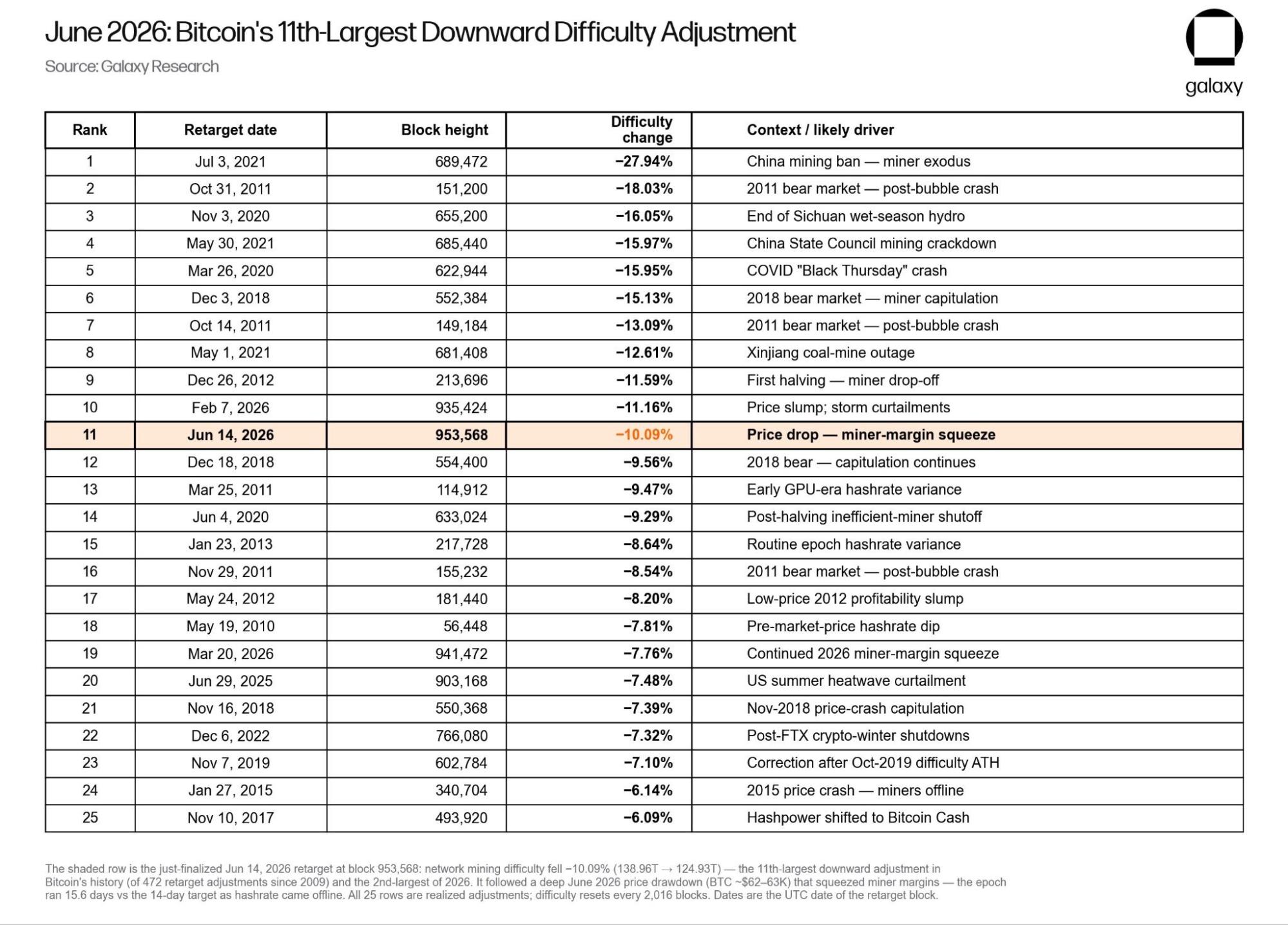
Source: Galaxy Digital
Galaxy noted that the hashrate came offline during the recent epoch, extending block times to 15.6 days compared to the standard 14-day adjustment cycle. Data from Blockchain.com pegs the network’s hashrate at 886 exa hashes per second, a steep decline of 12% over the last month.
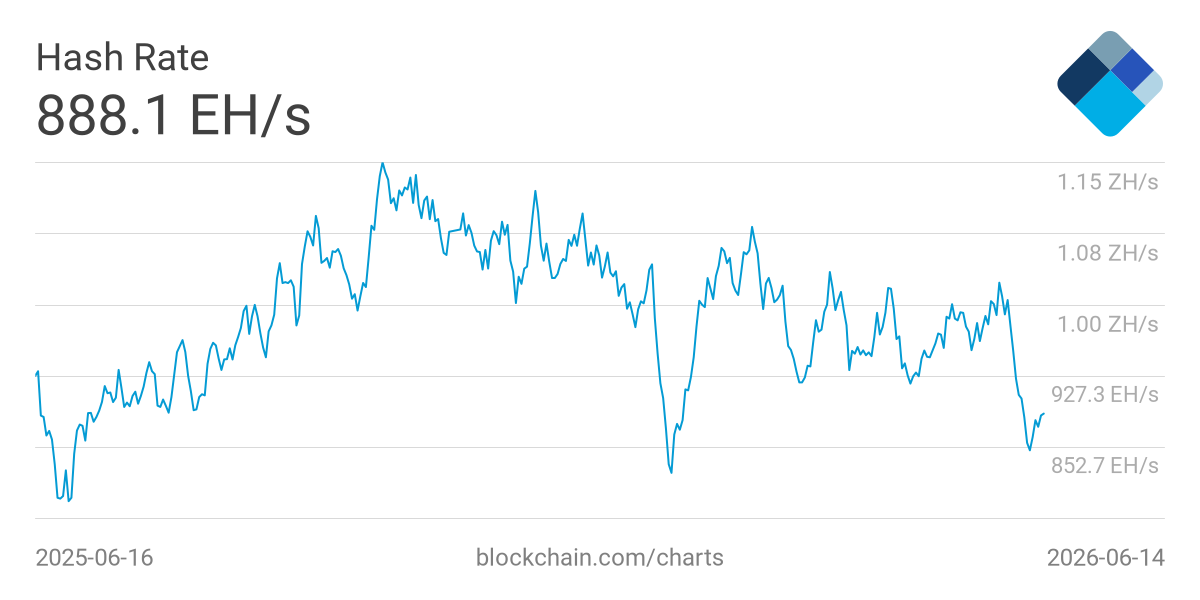
Source: Blockchain.com
A bird’s-eye view reveals a 23% decline in the Bitcoin hashrate from its peak in October 2025. The falling metrics are indicative of miners shutting their operations, with lower Bitcoin prices affecting the profitability of less efficient operators.
Amid falling mining difficulty and hashrates, analysts are peering at the economic implications for active miners. With fewer participants now competing for block rewards, the remaining operators are now earning a larger share of Bitcoin issuance.
Crypto analyst Merlijn Enkelaar estimated that miners are now earning approximately 9% more per GPU following the adjustment. He added that the improvement will help offset recent price declines in the short term.“The June crash pushed miners offline. The survivors now earn 9% more per machine,” said Enkelaar. “Weak hands flush out at every level.”
Hashprice, a key metric that measures expected miner revenue per unit of hashrate, has also rebounded. At press time, it is sitting above $33 per petahash per second per day, a 13% increase following the difficulty reset.
Macro sentiment offers brief lift as Bitcoin reacts to geopolitical easing
Meanwhile, the Bitcoin price ticked higher after reports of a peace deal between the US and Iran. Still, mining profitability remains largely insulated from geopolitical swings, with difficulty and hashrate acting as the main drivers.
The adjustment highlights a recurring pattern in Bitcoin mining cycles where falling prices lead to miner exits, which in turn reduces difficulty and restores profitability for surviving operators.Previously, large difficulty drops have coincided with periods of market stress, including the 2021 post-China mining ban exodus.
Similar dynamics were seen during a 25% Bitcoin price crash earlier in 2026 after hashrates fell by nearly 15% as miners turned their gaze to AI services.
The next difficulty adjustment is expected on June 27, with forecasts suggesting a modest increase of around 1.69. If hashrate stabilizes, the forecasted difficulty adjustment could partially reverse recent gains for miners.


You May Also Like

Robotics Automation Prototyping: Engineering Kinetic Agility into End-Effectors

Craving work-life balance is a huge red flag, says Fortune 500 Europe CEO—and like Barack Obama, he happily works through weekends

China Nabs Another Huione Group Core Member in Cambodia Extradition



