

Lennar’s big housing bet has Wall Street sounding alarms
Lennar’s (LEN) asset-light strategy was intended to make the homebuilder more nimble.
Bank of America also said it might complicate the earnings story.
The brokerage restated its Underperform rating on Lennar, cutting its price target to $77 from $84 and reducing its profit projections after the homebuilder’s fiscal second quarter results. It wasn't the quarter itself that was the real problem. Lennar’s profits were mostly in line with estimates, with gross margin indicating stabilization.
The bigger issue is what BofA sees coming.
The bank is warning that Lennar’s land-light business, which focuses on managing homesites through land banks and options rather than outright land ownership, may involve a growing cost that hasn’t completely hit the income statement yet.
That matters since Lennar's turnaround has been crucial to its investor presentation. The corporation has maintained that holding less land can decrease balance-sheet risk, increase flexibility and make the business more capital efficient. BofA now questions the timing of the payout.
BofA warned that Lennar’s “near-term margins understate the economic burden” of its land-bank costs.
BofA puts Lennar’s land-light strategy under pressure
The BofA call is compelling because it captures the essence of Lennar's transformation story.
Lennar has been seeking to move away from the traditional homebuilder model, in which businesses buy and retain big swaths of land before erecting homes. Instead, Lennar has shifted to a more asset-light model that employs land banks, option contracts and faster inventory rotations.
That can be an enticing option in a tough housing market. Financing affordability is tight, buyer demand is uneven and builders have resorted to employing pricing, incentives and financing instruments to move homes.
It is safer in such a world to own less land.
Lennar has called the plan a "fundamental reimagining" of its business, saying its land developer agreements and land-bank relationships generated a just-in-time finished homesite model that saves cash locked up in land and improves operational flexibility.
But BofA’s issue is that land-light isn’t always cost-light. It can just affect the timing and nature of some expenses flowing through Lennar’s financials.
That's the bombshell in the note.
BofA said Lennar has around $18.5 billion of partner capital in managed lots. Option maintenance expenses pay for the implicit cost of capital in those agreements, which is about 10%. The firm stated those fees are paid in cash when incurred but capitalized to deposits and pre-acquisition expenditures on real estate and then flow through cost of sales when homesites are purchased and delivered.
Related: What the stock market is saying about the housing market
In plain English, BofA is saying that Lennar may be paying more now than investors can see in current margins. That creates a timing mismatch, and it raises the likelihood that margins come under more pressure as those costs feed through to future deliveries.
Lennar’s quarter looked stable but BofA focused on what comes next
Lennar's fiscal second quarter wasn't a disaster.
The company reported net earnings per diluted share of $1.24, or $1.31, excluding mark-to-market losses on technology investments. It delivered 20,519 homes, up 2% from a year ago, but new orders declined 4% to 21,749 dwellings.
Gross margin on home sales was 15.6%, down from 17.8% a year ago, but management forecasts a gross margin of around 16% for the fiscal third quarter. Lennar also lowered its full-year delivery forecast to 82,000 to 83,000 homes and sees fiscal third-quarter deliveries of 20,500 to 21,500 units.
It’s these data that have BofA looking beyond the headline earnings number.
The company cut its fiscal 2026 earnings-per-share projection by 10% and its fiscal 2027 estimate by 8% because of reduced deliveries and poorer income from financial services. It also dropped its price target to $77 from $84, saying Lennar's value looks inflated given a lower return-on-tangible-equity expectation.
The more serious investment problem is the land bank issue.
Lennar's deposits and pre-acquisition expenditures on real estate rose $237 million from the prior quarter, largely due to capitalized option maintenance fees, BofA said. The firm expects that balance to continue to grow until it stabilizes in around two years as Lennar expands its asset-light approach.
More Real Estate:
- Why selling a home to your child for a dollar can backfire
- Commercial Real Estate Outlook 2026: Analysts See Signs of Recovery
- Redfin says mortgage rates, profits are hitting real estate now
The reason is evident from Lennar’s own investor presentation. The company said land banks had an estimated $18.5 billion of inventory under management as of Feb. 28, and it touted its asset-light strategy as a less risky way to control lots compared with holding more land on the balance sheet.
This situation creates the primary pressure on Lennar stock. The corporation prefers a more flexible model. BofA sees the cost continuing to grow until margins are fully normalized.
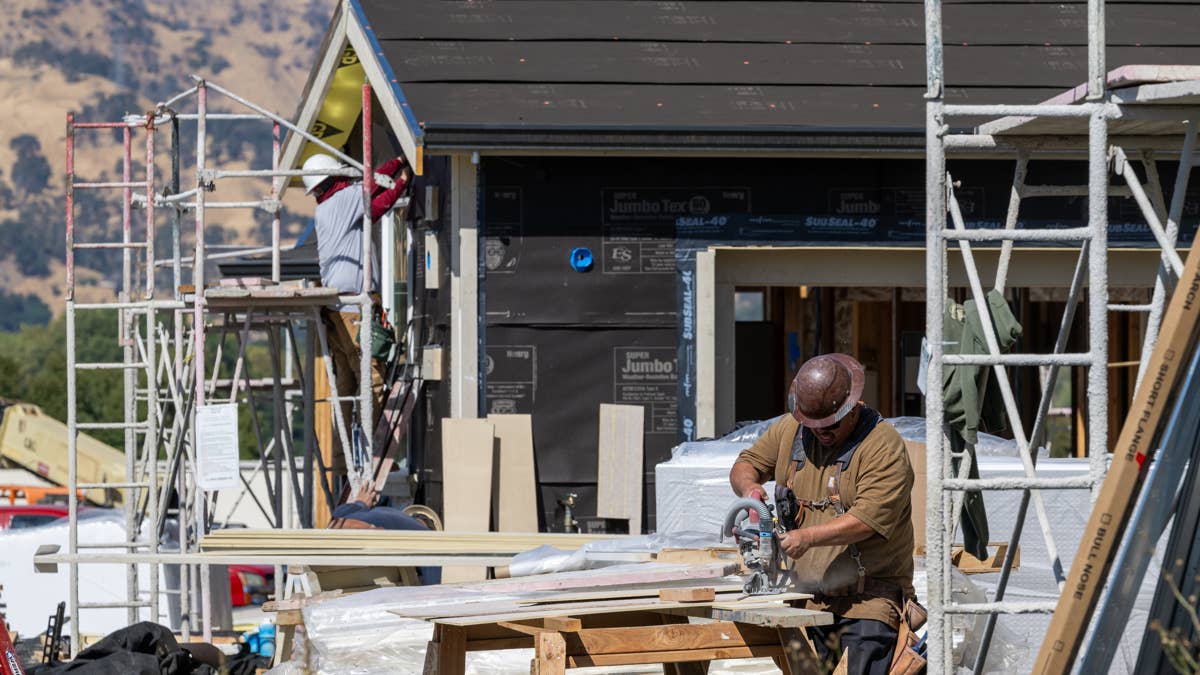 Lennar’s housing reset may not be as light as it looks
Bloomberg &sol Getty Images
Lennar investors now have a margin problem to watch
For Lennar investors, the question is not whether the business can sell homes.
The question is whether the corporation can prove that its land-light move provides higher profits when it takes all the expenditures into account. Over the next several quarters, gross margin, deposits and pre-acquisition expenditures, deliveries, and incentives will be especially crucial.
Lennar has some advantages. The company said that building costs fell consecutively and that it improved cycle time to a record low. Management also predicted the homebuilding gross margin should be around 16% in the fiscal third quarter.
But BofA’s caution indicates that investors should not simply look at gross margin.
Land-bank expenses are rising, and therefore stabilizing the margin may not be enough to support the stock. Lennar also cut its full-year delivery guidance, and BofA said demand is still turbulent as purchasers are feeling affordability pressure.
That leaves Lennar in a pickle.
Key takeaways for Lennar investors
- BofA reiterated its Underperform rating on Lennar.
- The firm cut its price objective to $77 from $84.
- BofA lowered its fiscal 2026 and 2027 earnings estimates.
- The bank says land-bank costs may pressure future margins.
- Lennar lowered its full-year delivery outlook to 82,000 to 83,000 homes.
- Investors should watch whether land-light savings outweigh rising option costs.
The corporation is seeking to protect volume and enhance efficiency and change its land strategy at the same time. If the asset-light strategy works, it may be supportive of stronger long-term returns and a better valuation case. If BofA is accurate, the switch might squeeze earnings before investors get to realize the upside.
BofA’s warning changes the Lennar stock debate
Less land ownership can minimize risk, free up funds and provide a corporation greater flexibility should the housing market slow. That’s the tale Lennar wants investors to buy, and it’s why the firm has been working to convince backers it’s more of an efficient, asset-light homebuilder.
BofA is getting investors to think about the other side.
Lennar’s methodology could mean a deferred cost that could hurt profits as the company buys and sells house sites managed through land bank agreements.
That sharpens the stock debate.
Lennar is no longer measured by deliveries or quarterly earnings. The question is whether its whole asset-light transition can yield superior returns before the land-bank costs weigh too heavily on profitability.
That's why BofA's caution is significant.
If Lennar’s land-light model can sustain capital efficiency and margins rebound, the business will be able to support its long-term argument with investors. But if costs keep piling up and returns remain under pressure, BofA’s $77 price objective could start to feel less like a prudent judgment and more like an early warning.
Related: Warren Buffett, Greg Abel send key message on housing


You May Also Like

Ondo Finance Shakes Up Solana With 200+ Tokenized Stocks Surge

Metaplanet buys 5,075 Bitcoin in Q1 to become 3rd-largest treasury

Exclusive interview with Smokey The Bera, co-founder of Berachain: How the innovative PoL public chain solves the liquidity problem and may be launched in a few months



