

THE INVESTMENT WORLD is full of storytellers. And while these folks might be entertaining, they generally aren’t very helpful. There’s one category of stories,THE INVESTMENT WORLD is full of storytellers. And while these folks might be entertaining, they generally aren’t very helpful. There’s one category of stories,
Investment Wisdom
For feedback or concerns regarding this content, please contact us at [email protected]
THE INVESTMENT WORLD is full of storytellers. And while these folks might be entertaining, they generally aren’t very helpful. There’s one category of stories, however, that I do think is useful: They’re what I might call investment fables. They’re apocryphal stories that likely aren’t real. But they’re helpful nonetheless because each carries a useful lesson. Here are some of the more popular ones. Consumer choice. In 1999, Richard Mille and a partner launched a company to make wristwatches. By 2001, the company was ready to begin taking orders for its first model, the RM 001. They knew they wanted to target a high-end market, so they chose the Financial Times for their first advertisement. According to legend, however, a graphic designer at the newspaper made a mistake. Instead of including the watch’s intended price of $13,500, an extra zero was added, making the price $135,000. At first, the company was furious at the newspaper for the mistake. But then the phone started to ring. The sky-high price turned out to be attractive to a certain class of buyers, and the initial run of the 001 quickly sold out. Today, Richard Mille sells several models priced in the hundreds of thousands, and some limited editions carry price tags north of $1 million. For its part, the company denies this story, maintaining that $135,000 was always the price it intended. But whether this story is true or not, it illustrates a concept in personal finance known as the Veblen effect. This occurs when the traditional shape of a demand curve gets turned upside down. Instead of consumers buying less of something as its price rises, when it comes to Veblen goods, consumers want to buy more as the price increases. Hermes handbags and Ferrari sportscars are other examples. What should we make of the Veblen effect? To answer this question, it’s worth examining its origins. Thorstein Veblen was a sociologist and economist. Perhaps owing to his background as the sixth of 12 children growing up in modest, rural surroundings, Veblen became broadly critical of capitalism. In his 1899 book, The Theory of the Leisure Class, he coined the term “conspicuous consumption.” And while Veblen didn’t explicitly see himself as a socialist, he leaned in that direction. He would have been bitterly critical of something like a Richard Mille watch. In making spending decisions, though, I wouldn’t worry too much about value judgments like this. The reality is that each of us is different, and we each value different things. That’s why I prefer to stick to the numbers. The most important thing, in my view, is simply to have a framework for your household finances, to ensure that your overall spending level is in line with your long-term plan. Other people’s subjective judgments, in my opinion, shouldn’t factor in. Investment gains. When it comes to investing, what’s the best strategy? According to lore, Fidelity Investments once looked into this question by examining the performance of all of the accounts on its platform. What did they find? The accounts that had done the best were those that had been abandoned due to the death of the owner, with the result that the investments hadn’t changed for years. There’s no evidence that this story is true, but it’s repeated frequently because it aligns with real data. In studies going back more than 25 years, research has shown that frequent trading is generally associated with worse investment results. This is true for both individual and professional investors. To be sure, some active managers have delivered impressive results. In the past, this has included the likes of Warren Buffett and James Simons. More recently, a 24-year-old named Leopold Aschenbrenner has delivered returns of more than 1,000% in the two years since he founded a hedge fund to bet on AI stocks. But cases like this are the exceptions that prove the rule. For most investors, most of the time, the data tell us that it’s better to trade less rather than more. Market tops. On a related note, there’s a tale about Joseph Kennedy—President Kennedy’s father. He was an active investor in the 1920s, but he said he realized it was time to sell when the fellow giving him a shoeshine one day started offering stock tips. What’s interesting about this story is that Kennedy did actually sell his stocks and even took a short position early in 1929, earning him a fortune when the market dropped. The shoeshine aspect of this story likely isn’t true. But it’s a favorite because it carries a useful message. Veteran investor Jeremy Grantham has often talked about the market signals he pays attention to. In addition to P/E ratios and other quantitative measures, he’s noted that he looks for “signs of craziness”—things like the GameStop mania in 2021. When the stock market begins to look more like a casino—and when we see YouTube influencers making stock calls from their gaming chairs—Grantham gets nervous. Intuitively, this does make sense, but it may not be very useful. Consider how the market has performed in recent years. After Grantham urged caution in 2021, the market did drop in 2022. But then it rose in 2023, 2024, 2025 and in the first half of 2026. So an investor who sold in 2021 would have missed out on significant gains. The bottom line: Just as the number of world-class stock-pickers is limited, so too is the number of tactical traders who have profited in the way Joe Kennedy did by getting out at just the right moment. Market forecasts. What’s a better way to think about the stock market? According to another Wall Street tale, J.P. Morgan was once asked what he thought the market would do over the coming year. His reply: “It will fluctuate.” There’s no evidence that Morgan ever actually said this, but in this case too, the story is popular because it sounds right. And in my view, this is exactly the right way to think about the stock market. At the end of the day, the only thing we can know for sure about the stock market is that it will either go up, go down or stay about the same. If we can structure our portfolios so we won’t be too negatively affected whichever way it goes, that, in my opinion, is the road to success.  Adam M. Grossman is the founder of Mayport, a fixed-fee wealth management firm. Sign up for Adam's Daily Ideas email, follow him on X @AdamMGrossman and check out his earlier articles.
Adam M. Grossman is the founder of Mayport, a fixed-fee wealth management firm. Sign up for Adam's Daily Ideas email, follow him on X @AdamMGrossman and check out his earlier articles.
The post Investment Wisdom appeared first on HumbleDollar.
Market Opportunity
Folks Finance Price(FOLKS)
$2.2244
$2.2244$2.2244
USD
Folks Finance (FOLKS) Live Price Chart


Disclaimer: The articles reposted on this site are sourced from public platforms and are provided for informational purposes only. They do not necessarily reflect the views of MEXC. All rights remain with the original authors. If you believe any content infringes on third-party rights, please contact [email protected] for removal. MEXC makes no guarantees regarding the accuracy, completeness, or timeliness of the content and is not responsible for any actions taken based on the information provided. The content does not constitute financial, legal, or other professional advice, nor should it be considered a recommendation or endorsement by MEXC.
You May Also Like

Jais raids Petaling Jaya premise over Shiite activities — 226 foreign nationals questioned
SHAH ALAM, June 27 — The Selangor Islamic Religious Department (Jais) raided a premise at Jalan Pusat Perdagangan...
Share
Malaymail2026/06/27 18:46
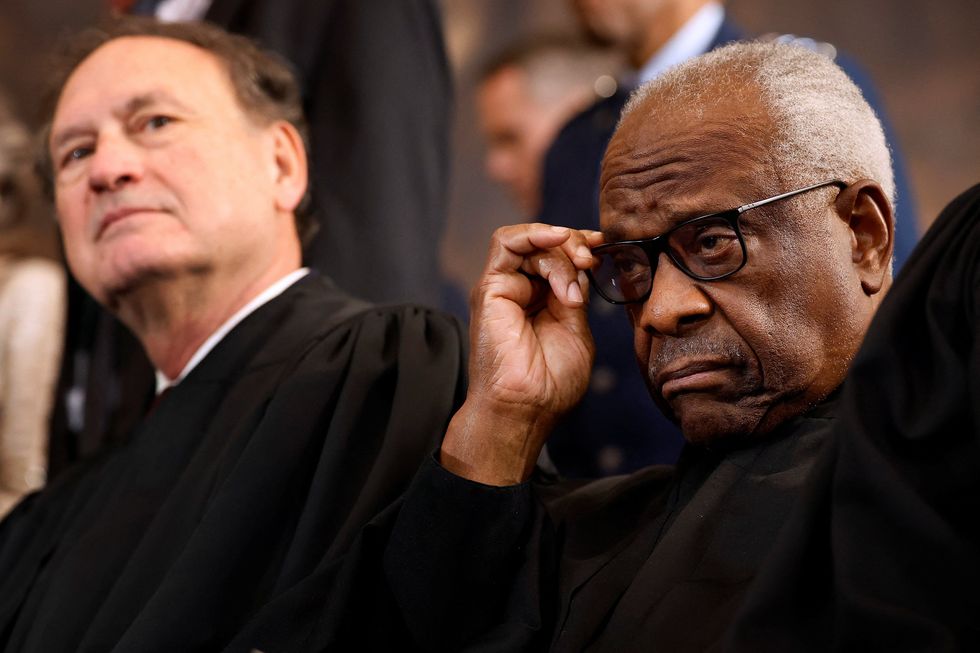
The Supreme Court may have set a trap for conservative Christians that could backfire
For more than two decades, the Supreme Court has issued a long series of wins for plaintiffs seeking to protect their religious practices. On June 23, 2026, though
Share
Alternet2026/06/27 18:49

Ripple Prime Executive Confirms: XRP Is Being Used As Collateral Right Now
Crypto commentator X Finance Bull has noted recent comments from Ripple Prime executive Mike Higgins as evidence that XRP is already being utilized within institutional
Share
Timestabloid2026/06/27 18:02



