By comparison, year-on-year inflation stood at 68% in February, prior to the outbreak of the war launched by the US and Israel against the Islamic republic.By comparison, year-on-year inflation stood at 68% in February, prior to the outbreak of the war launched by the US and Israel against the Islamic republic.

Iran’s stats agency says year-on-year inflation hits 88.6%

For feedback or concerns regarding this content, please contact us at [email protected]
Iranians shop at a street market in northern Tehran, Iran, 16 April 2026. After failed negotiations in Islamabad, US President Trump directed the US Navy to implement a blockade of Iranian ports in the Strait of Hormuz to halt Iran's maritime trade. EPAFood prices have more than doubled year-on-year in Iran, which is already plagued by hyperinflation due to sanctions. (EPA Images pic)

TEHRAN: Inflation in Iran rose sharply in June, driven by the Middle East war, reaching a peak of 88.6% year-on-year, according to official figures released on Saturday.

According to the Statistical Centre of Iran, during the Persian month of Khordad (May 22–June 21), food prices more than doubled year-on-year in a country already long plagued by hyperinflation due to sanctions.

Bread and grain prices rose by 138.8%, milk, cheese and eggs by 151.9%, while the prices of red meat and poultry skyrocketed by 178.2%.

By comparison, year-on-year inflation stood at 68% in February, prior to the outbreak of the war launched by the US and Israel against the Islamic republic.

In December 2025, when protests against the high cost of living erupted – later expanding to include political demands – inflation had risen by 52.6% year-on-year.

Iranian statistics are reported monthly based on the Persian calendar, with each year beginning in March.

For years, the Iranian economy has been hampered by chronic hyperinflation and a sharp depreciation of the national currency, the rial, largely as a result of international sanctions imposed on the country.

This phenomenon, which has eroded Iranians’ purchasing power, has intensified in recent months and triggered widespread protests in December.

The Middle East war has further exacerbated the economic crisis.

Disclaimer: The articles reposted on this site are sourced from public platforms and are provided for informational purposes only. They do not necessarily reflect the views of MEXC. All rights remain with the original authors. If you believe any content infringes on third-party rights, please contact [email protected] for removal. MEXC makes no guarantees regarding the accuracy, completeness, or timeliness of the content and is not responsible for any actions taken based on the information provided. The content does not constitute financial, legal, or other professional advice, nor should it be considered a recommendation or endorsement by MEXC.

You May Also Like

UK crypto holders brace for FCA’s expanded regulatory reach
UK crypto holders brace for FCA’s expanded regulatory reach

The post UK crypto holders brace for FCA’s expanded regulatory reach appeared on BitcoinEthereumNews.com. British crypto holders may soon face a very different landscape as the Financial Conduct Authority (FCA) moves to expand its regulatory reach in the industry. A new consultation paper outlines how the watchdog intends to apply its rulebook to crypto firms, shaping everything from asset safeguarding to trading platform operation. According to the financial regulator, these proposals would translate into clearer protections for retail investors and stricter oversight of crypto firms. UK FCA plans Until now, UK crypto users mostly encountered the FCA through rules on promotions and anti-money laundering checks. The consultation paper goes much further. It proposes direct oversight of stablecoin issuers, custodians, and crypto-asset trading platforms (CATPs). For investors, that means the wallets, exchanges, and coins they rely on could soon be subject to the same governance and resilience standards as traditional financial institutions. The regulator has also clarified that firms need official authorization before serving customers. This condition should, in theory, reduce the risk of sudden platform failures or unclear accountability. David Geale, the FCA’s executive director of payments and digital finance, said the proposals are designed to strike a balance between innovation and protection. He explained: “We want to develop a sustainable and competitive crypto sector – balancing innovation, market integrity and trust.” Geale noted that while the rules will not eliminate investment risks, they will create consistent standards, helping consumers understand what to expect from registered firms. Why does this matter for crypto holders? The UK regulatory framework shift would provide safer custody of assets, better disclosure of risks, and clearer recourse if something goes wrong. However, the regulator was also frank in its submission, arguing that no rulebook can eliminate the volatility or inherent risks of holding digital assets. Instead, the focus is on ensuring that when consumers choose to invest, they do…
Share
BitcoinEthereumNews2025/09/17 23:52
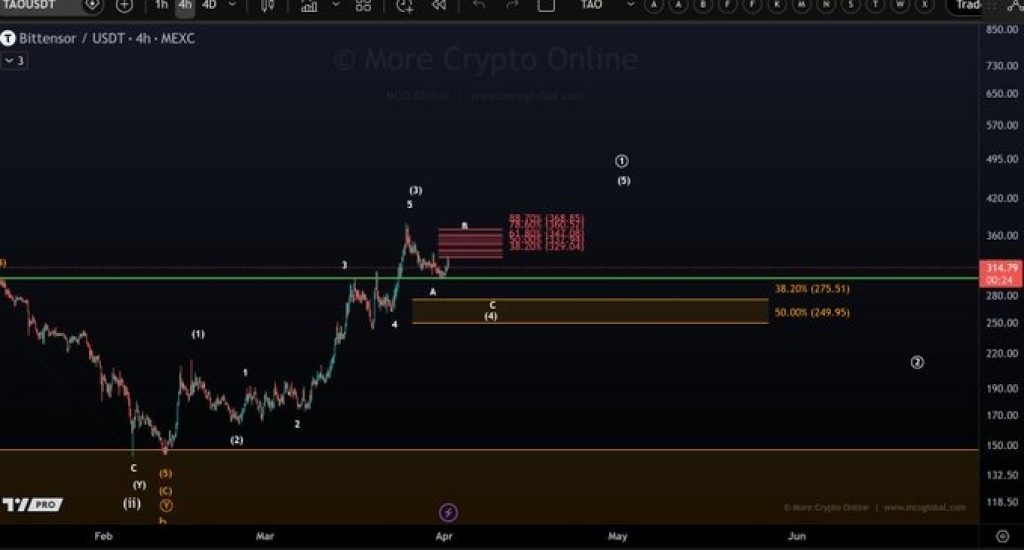
Thinking of Buying Bittensor? Watch These TAO Price Correction Levels First

Thinking of Buying Bittensor? Watch These TAO Price Correction Levels First

Bittensor (TAO) is navigating a rough patch as broader market conditions turn shaky. TAO just took a hit along with the rest of the AI token crowd, but if you look
Share
Captainaltcoin2026/04/03 00:30
China Nabs Another Huione Group Core Member in Cambodia Extradition

China Nabs Another Huione Group Core Member in Cambodia Extradition

The post China Nabs Another Huione Group Core Member in Cambodia Extradition appeared on BitcoinEthereumNews.com. Li Xiong, a senior figure at Huione Group, an
Share
BitcoinEthereumNews2026/04/02 17:54

Newbies:Deposit $100, Get $1,000

Newbies:Deposit $100, Get $1,000Newbies:Deposit $100, Get $1,000

Plus Up to a $50 Referral Bonus