

Former Nasdaq CEO reveals SpaceX biggest make-or-break test
I have now covered SpaceX's post-IPO story from at least two major angles. Jim Cramer's verdict that it "couldn't sustain the walk-up," and Doug Kass's short thesis. My colleague also covered Michael Burry studying the trade and walking away.
I have noticed one thing. Each voice has added something to the picture. Yes, that's for sure. But the conversation that stuck with me most came from Robert Greifeld, the former Chairman and CEO of Nasdaq itself.
When the man who runs the exchange SpaceX chose to list on sits down on CNBC and gives you a blunt assessment of what actually matters for the stock and not the aspirational story, but the mechanics, that is worth paying close attention to.
According to Yahoo Finance, SPCX closed June 26 at $153.23, down sharply from its all-time high of $225.64 reached June 16, just days after its record-setting $135 IPO. The stock is now trading 32% below that peak.
Also Read: SpaceX Latest News and Stories
What Greifeld actually said and why the lockup math is the dominant factor
Greifeld was direct in a way that financial executives rarely are on television. His framework stripped the SpaceX story down to two competing forces, and he was clear about which one wins.
On the S&P 500 fast-track rules that allowed SpaceX's listing, Robert had this to say.
"I would say just very clearly when the rules were set, it never contemplated a $75 billion IPO. IPOs were small back in the day. And they were concerned with having enough float out there. So, $75 billion is enough float for a public company, that's for sure. The rules didn't reflect the reality that exists today." Robert Greifeld said in a CNBC interview.
More SpaceX:
- SpaceX IPO gives Elon Musk a net worth number that stuns Wall Street
- Oppenheimer issues bold SpaceX stock price target
- SpaceX lands $30 billion Google deal a week before its IPO
Asked about the Nasdaq-100 inclusion expected in early July, Robert said this.
"You do the math on what the likely buying power is. The cues are coming in. It's somewhat muted. It's going to happen over time. It'll clearly be a positive."
Now here is where Robert got specific about the real risk.
"The dominant factor here is you have $800 billion of locked-up shares that will become unlocked between now and the end of October. A lot of these shares were early investors. Whether they're getting a 10x return or an 11x return, they're going to be relatively price-insensitive. Their main issue, after waiting a long time, some of them over a decade, is liquidity."
My read of that framing is that index fund buying provides a floor, but $800 billion in unlocked shares held by decade-long investors who have already won spectacularly is a ceiling that the market's incremental demand from passive funds cannot easily offset.
Greifeld's personal trade and his honest assessment of the valuation
What made the CNBC segment particularly interesting was Greifeld's disclosure that he personally flipped SpaceX shares on its debut day. Not through his hedge fund, Cornerstone Financial Technology Management, which operates on a quantitative systematic basis, but as an individual investor making a judgment call.
His reasoning was honest in a way you do not often hear from Wall Street veterans.
"When you think about this stock trading at 100 times revenue, it's hard to come up with a model that gets you there. If you discount money at 10% over 30 years, you have to have a tremendous amount of money 30 years out. So it doesn't meet fundamental criteria, the way I look at it. But clearly it meets aspirational criteria. And to bet against Elon has not been a smart move over the years. So from my perspective, it's a speculative bet based on what you believe is possible."
That is as clear-eyed a framing of the SpaceX trade as I have seen from anyone with genuine skin in the game.
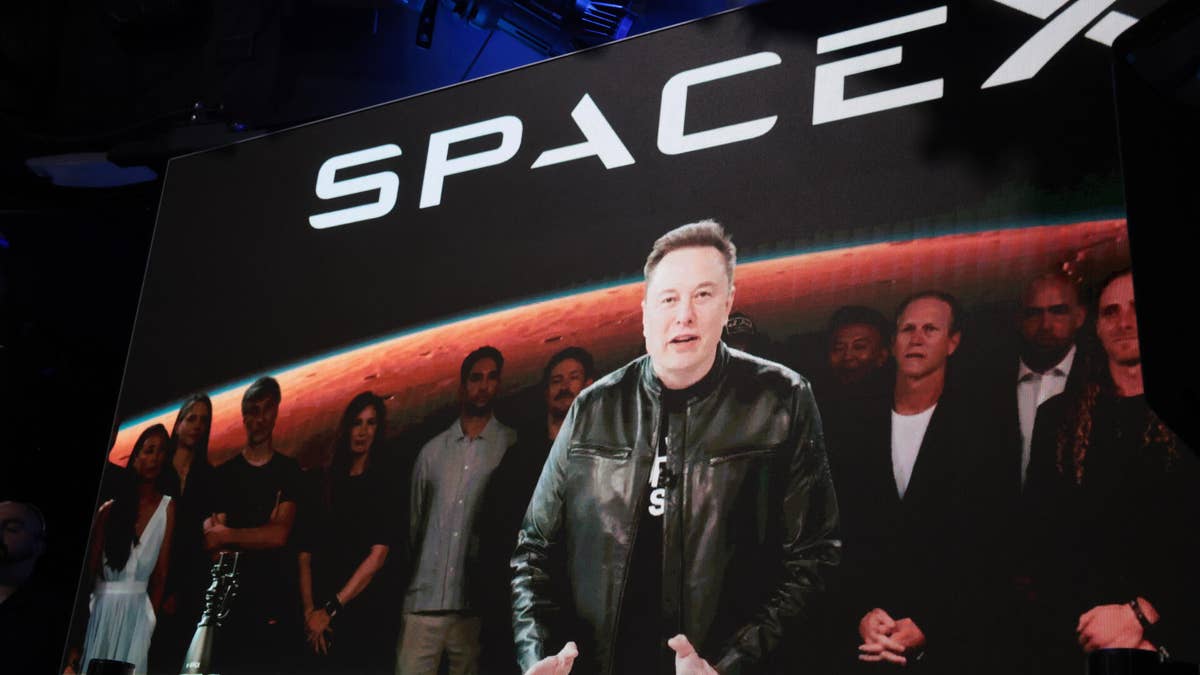 SpaceX is set to join the Nasdaq-100 on July 7, 2026.
Spencer Platt&solGetty Images
The valuation context that supports Greifeld's caution
Greifeld's fundamental concern is not new, but it has independent support from multiple directions.
TheStreet reported that Morningstar analyst Nicolas Owens maintained a fair value estimate of $62 per share even after SpaceX's IPO, and lowered it modestly following the $60 billion Cursor acquisition, citing sizable dilution.
Even after the post-peak selloff, SPCX trades at more than 90 times 2025 revenue on a company that posted a net loss of $4.9 billion for the year, according to CNBC reporting. Total accumulated losses since founding in 2002 stand at $41.3 billion.
Related: SpaceX volatility just entered ordinary 401(k)s
The only profitable segment is Starlink, which generated approximately $4.4 billion in earnings before interest and taxes (EBIT) in 2025. The Artificial Intelligence (AI) business lost $6.4 billion. The rocket business also runs at a loss. In Q1 2026, net losses deepened to $4.3 billion as AI data center scale-up costs accelerated, Thestreet reported.
SpaceX does carry meaningful contracted future revenue. Google's $30 billion cloud services agreement running through mid-2029 and Anthropic's roughly $45 billion deal over approximately three years provide visibility that most newly public companies cannot point to.
Those contracts are real. But they are already known, already priced into a $2 trillion-plus market cap.
The Nasdaq-100 addition and what it means for the stock
CNBC reports that SpaceX is set to join the Nasdaq-100 on July 7. This inclusion will trigger mandatory buying from index funds tracking the index.
That is a genuine near-term catalyst. But as Greifeld framed it, the quantum of passive fund buying is muted relative to the $800 billion in locked-up shares coming free between now and October.
The lockup dynamic is the make-or-break test Greifeld identified. Not the technology, not the revenue model, not even Elon Musk's track record. It is the simple mechanical reality that early investors who have waited a decade for liquidity and are sitting on extraordinary returns will not hold out for an extra 10% gain. They will sell.
The next few months will answer the question of whether SpaceX's aspirational story is large enough to absorb the selling.
Related: SpaceX’s 32% crash may force Musk into radical move
You May Also Like
Trump failures spark global 'shift' — and his irrelevancy in 'only a few months': expert
Republican tears into Trump for demanding ‘impossible task’ as midterms loom

EUR/GBP Exchange Rate Surges as Bank of England Rate Hike Expectations Intensify – Market Analysis

