Oracle stock suffers its worst weekly slump since 2001 dot-com bust
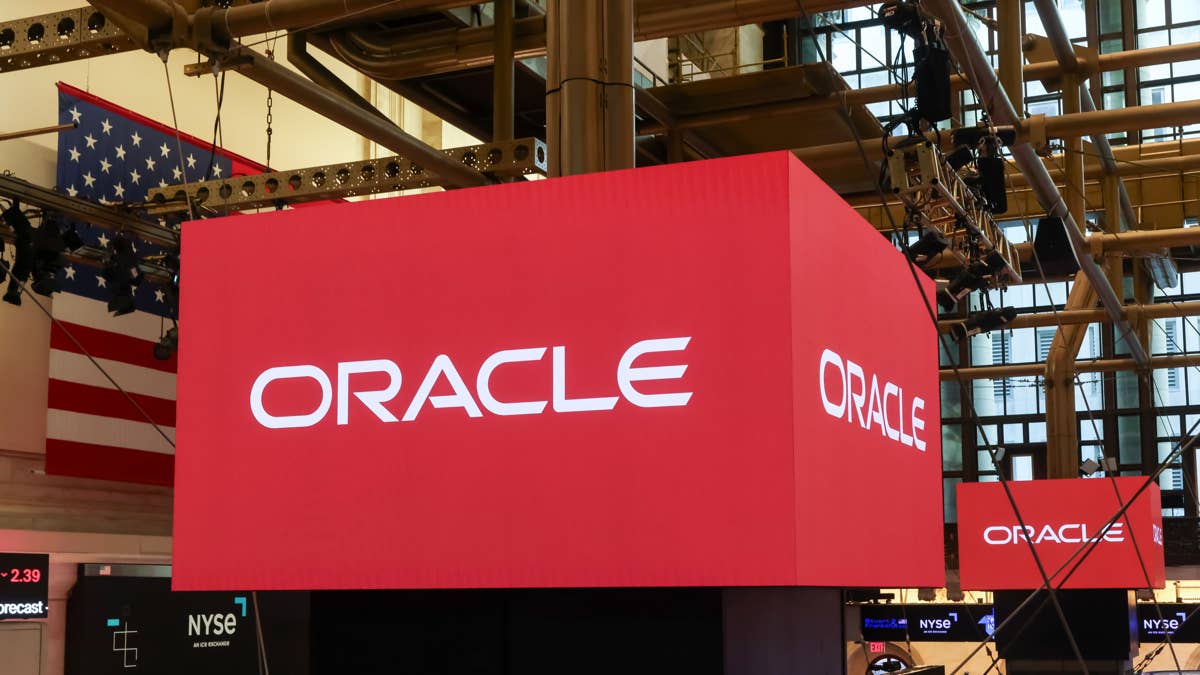
Oracle just had a week that made Wall Street nervous. The software giant's stock fell 19% in a single week ending June 27, its steepest weekly drop in 25 years, according to CNBC.
The last time Oracle (ORCL) shed this much ground in a week was August 2001, right in the depths of the dot-com collapse.
So, what’s driving the sell-off in ORCL stock?
A growing pile of debt, rising questions about its all-in bet on artificial intelligence infrastructure, and a market that is starting to ask whether the payoff is worth the risk.
Oracle's AI bet is enormous and expensive
Oracle is not tiptoeing into artificial intelligence. It is sprinting in, building massive data centers, and signing long-term contracts with AI customers like OpenAI.
Oracle's remaining performance obligations, basically committed future revenue, finished the most recent quarter at $638 billion, up 363% year over year. But locking in that demand has come at an enormous cost.
- Capital expenditures surged roughly 162% to nearly $56 billion in fiscal year 2026.
- Free cash flow turned deeply negative, coming in at almost negative $24 billion for the year.
- And Oracle ended May sitting on around $122 billion in long-term debt.
To keep this buildout going, Oracle said on its earnings call that it plans to raise about $40 billion through debt and equity in fiscal year 2027. That includes a $20 billion share sale that the company had already announced.
Co-CEO Clay Magouyrk, who appeared to acknowledge the pressure on Chief Financial Officer Hilary Maxson, put it simply on the call:
"Hilary has a tough life."
 Oracle stock is under pressure in 2026
Bloomberg&solGetty Images
Does Oracle own a strong balance sheet
Looking at the financial statements, Oracle's balance sheet tells a nuanced story.
- Total assets rose sharply to $261.8 billion as of May 2026, up from $168.4 billion a year earlier.
- That growth is almost entirely driven by net property, plant, and equipment, which jumped to $129.6 billion from $56.7 billion.
- Long-term debt climbed to $122.3 billion, up from $85.3 billion a year ago.
- Total liabilities now stand at $218.7 billion, leaving shareholders' equity thin at just $43.1 billion. Retained earnings are deeply negative at $4.3 billion.
On the income statement, quarterly revenue rose 21% to $19.2 billion. Cloud infrastructure revenue was the standout, growing 93%.
But gross margins have compressed noticeably, falling around five percentage points for the full year as data center ramp-up costs bite into profitability.
More Tech:
- Microsoft CEO sends a blunt warning on AI and the tech ecosystem
- Amazon CEO just made things uncomfortable for Anthropic
- Microsoft has bad news for a key AI partner
Operating margin came in at 32% for the most recent quarter.
Cash from operating activities was $32 billion in the most recent quarter, a healthy number.
But capital spending of $55.6 billion in the same quarter means the tech giant is still burning cash at the net level. Free cash flow for the quarter was negative $23.7 billion.
Oracle is not financially weak in a traditional sense. Revenue is growing rapidly, demand is real, and operating cash flow is robust.
But the debt load is enormous, margin compression is a near-term headwind, and the company is betting that future revenue will more than justify its spending today.
Analysts like Oracle, but investors are nervous
Despite the selloff, most Wall Street analysts remain bullish. Out of the 33 analysts covering ORCL stock, 28 recommend “Buy,” and five recommend “Hold”. The average Oracle stock price target is $264, indicating 78% upside from current levels.
Evercore analysts, who maintain a “Buy” rating, noted that "financing, leverage, and the pace of equity issuance" will likely remain the central debate for investors in the near term, even as demand signals stay strong, per CNBC.
Maxson, for her part, addressed investor concerns directly during the earnings call, stating:
"As we pursue these opportunities, we'll remain focused on disciplined capital allocation, maintaining a strong balance sheet, and preserving our investment-grade credit rating."
The company also cut its workforce by 13% to 141,000 employees in fiscal year 2026, with deep cuts in sales and marketing, as Oracle disclosed in its annual report, which CNBC cited.
Related: Bank of America reconsiders Oracle stock price target after tumble
Oracle is not in financial trouble. But it is in a high-stakes transition, one where it is spending aggressively on infrastructure that will take time to generate its full revenue potential.
The debt is rising, and margins are under pressure, driving Oracle stock lower by 55% from all-time highs.
Long-term investors who believe Oracle's AI infrastructure buildout will pay off may see the selloff as an opportunity.
Those with lower risk tolerance may want to wait and see whether the company can convert its record $638 billion backlog into the revenue growth it has promised by fiscal year 2030.
Either way, this is not a story that gets resolved in a single quarter.
Related: 5 things Oracle's CEOs want you to know


You May Also Like

Bitcoin-Backed Lending Market Shifts Toward Institutional Players, SVB Report Finds

Ethena Partners With BlackRock to Bring USDe to Aladdin Using BUIDL