

Online ID Verification is Evolving Beyond Photo Uploads
Online ID verification is part of our everyday life. Businesses across entertainment, banking, retail, and even government services are now using online verification as a way to try to speed up the process of sign-ups or enrolments, but now, things look to be changing.
Sectors where ID Verification is Established
One of the sectors where ID verification is well-established would be Klarna and payment providers. They require customers to verify themselves by uploading a picture of a passport that matches the name of the account.
Traditional banks are also using automated ID verification as a way to verify when accounts are created. Casinos also verify the identity of their users to meet Know Your Customer requirements. UK casino platforms often require a photo of a driver’s licence or a passport, as well as a bank statement or utility bill.
Platforms have become so advanced over the years that there are now dedicated parts of the site where you can upload a photo of the document. Other sectors require a live selfie with the ID, showing how things are becoming smoother to reduce friction for users having to prove their identity without putting people at risk by eliminating measures like this.
Mobile technology is also helping to blaze a new path for ID verification. US company Apple has introduced support for digital identity documents that allow users to secure their ID within their Apple wallet. Users can then use this as a way to prove their credentials, rather than having to carry a physical ID with them at all times.
Apple only shares the information that is required per request, which gives people more control over their personal information as a whole. The Apple ID verification tool was only introduced last month, with users being asked to upload a snapshot of their passport as part of an iPhone update.
Governments across the world are also investing in similar infrastructures. The UK Government’s One Login is an example of a unified ID system when accessing a number of public services, and the EU is also taking steps to introduce Digital Identity Wallets that help people to prove their qualifications or their identity across different sectors.
Identity verification is also emerging in sectors that did not previously require it so that security can be prioritized. Online marketplaces now require sellers to verify their identity before a payout can be given, and holiday rental platforms vary between the host and the guest, when in the past, this was not required.
What Does the Future Hold for ID Verification?
One of the biggest developments that we could see as we move through 2026 would be the rise of privacy verification techniques. Instead of having to send a passport photo every time proof of age, or even proof of identity, is required, it’s possible more simplified measures will emerge.
This could be sending someone’s age to prove that they are over 25, rather than sending their passport number and other details along with it. When combined with biometric authentication, which is already taking the security sector by storm, it becomes possible to create a system that is not only more secure but also faster and more secure.
The US is making advancements here, with Samsung and Google Wallet partnering with different states to allow Mobile Driver’s License storage, or mDL. This can be used for identity checks, with some states, such as Utah and Louisiana, having their own state-managed apps.
Eventually, it may be that we see one unified system that covers a whole country, with one dedicated system. Right now, systems are fragmented, with different sectors having their own portals to ensure that a user’s identity can be confirmed.
The next stage of online verification could include AI-powered fraud detection, with worldwide initiatives focusing on iris scanning. Private initiatives, such as World ID, are working to expand their global presence with hardware, including Orbs.
This scans a person’s eye to provide a proof-of-personhood identity. This advanced technology helps to stop AI bots from deepfaking people, and although the use of that is more for high-security systems and digital accessibility for high-risk sites, it is interesting to see how it could easily be rolled out across different sectors for both ease and convenience.
As digital IDs aim to reduce fraud, it is important to know that they are also sparking a global debate. Some have concerns that by using biometric data, it could be possible to reduce privacy.
At the same time, there are so many advances being made to try and limit this, showing that the sector is moving in the right direction by not just prioritizing speed and efficiency, but also privacy, which is going to be a key trend in digital ID verification moving forward, as we move beyond basic photo uploads to more advanced systems that cover multiple sectors and industries.
The post Online ID Verification is Evolving Beyond Photo Uploads appeared first on FintechZoom IO.


You May Also Like

Cryptocurrency Companies Fleeing Europe! High Interest in This Country Due to MICA Regulation! Here Are the Details
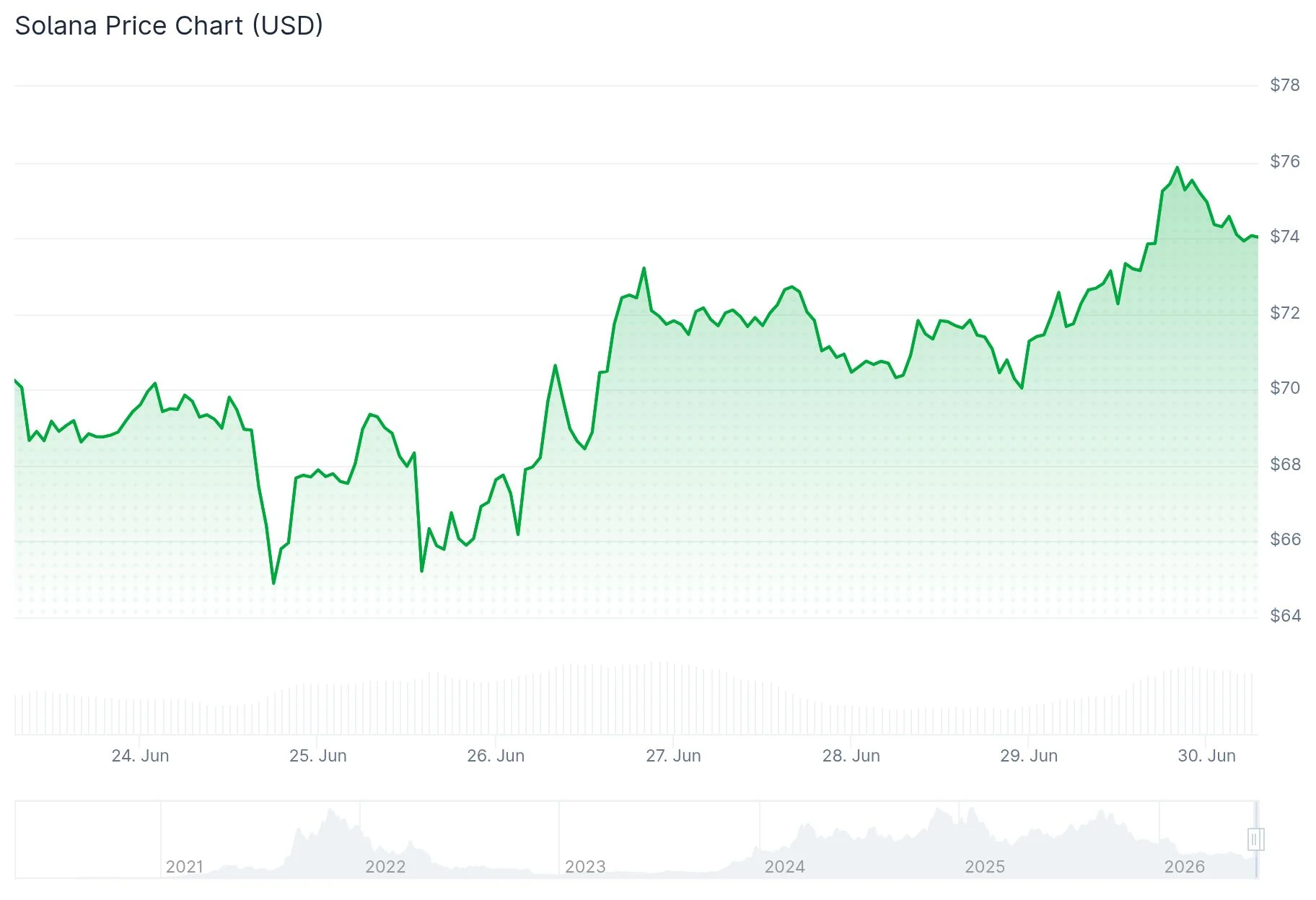
Solana (SOL) Faces Critical Juncture: $50 Downside or $150 Breakout Ahead


