

Must Read
Mindanao State University history professor Tirmizy speaks during the peace rally in Binidayan, Lanao del Sur on Thursday, June 25, 2026. Abdul Hafiz TacorangaMindanao State University history professor Tirmizy speaks during the peace rally in Binidayan, Lanao del Sur on Thursday, June 25, 2026. Abdul Hafiz Tacoranga
BARMM transition strained by peace deal implementation issues ahead of polls
For feedback or concerns regarding this content, please contact us at [email protected]
LANAO DEL SUR, Philippines – Years after the government and the Moro Islamic Liberation Front (MILF) began negotiating an end to one of the country’s longest-running insurgencies, tensions are mounting in the Bangsamoro over what supporters of the peace process describe as a steady erosion of the landmark 2014 peace accord that ended decades of armed conflict in Mindanao.
With the Bangsamoro Autonomous Region in Muslim Mindanao (BARMM) preparing for its first parliamentary elections in September, political disputes over leadership, power-sharing, and the implementation of key provisions of the agreement are raising fears that hard-won gains could begin to unravel.
The concerns extend beyond the electoral contest itself. Peace advocates, academics, and former rebel leaders say a series of government decisions over the past two years – including changes in the Bangsamoro leadership, delays in filling key peace process posts, and what they describe as deviations from the agreement’s political and normalization commitments – have weakened confidence in the Comprehensive Agreement on the Bangsamoro (CAB), the blueprint that paved the way for the region’s self-rule after decades of conflict.
Anxieties spilled into public view last week, when thousands took to the streets in Lanao del Sur and Cotabato City, calling on President Ferdinand Marcos Jr.’s administration to fully implement the CAB and warning that continued departures from the accord could undermine the fragile peace forged after years of negotiations.
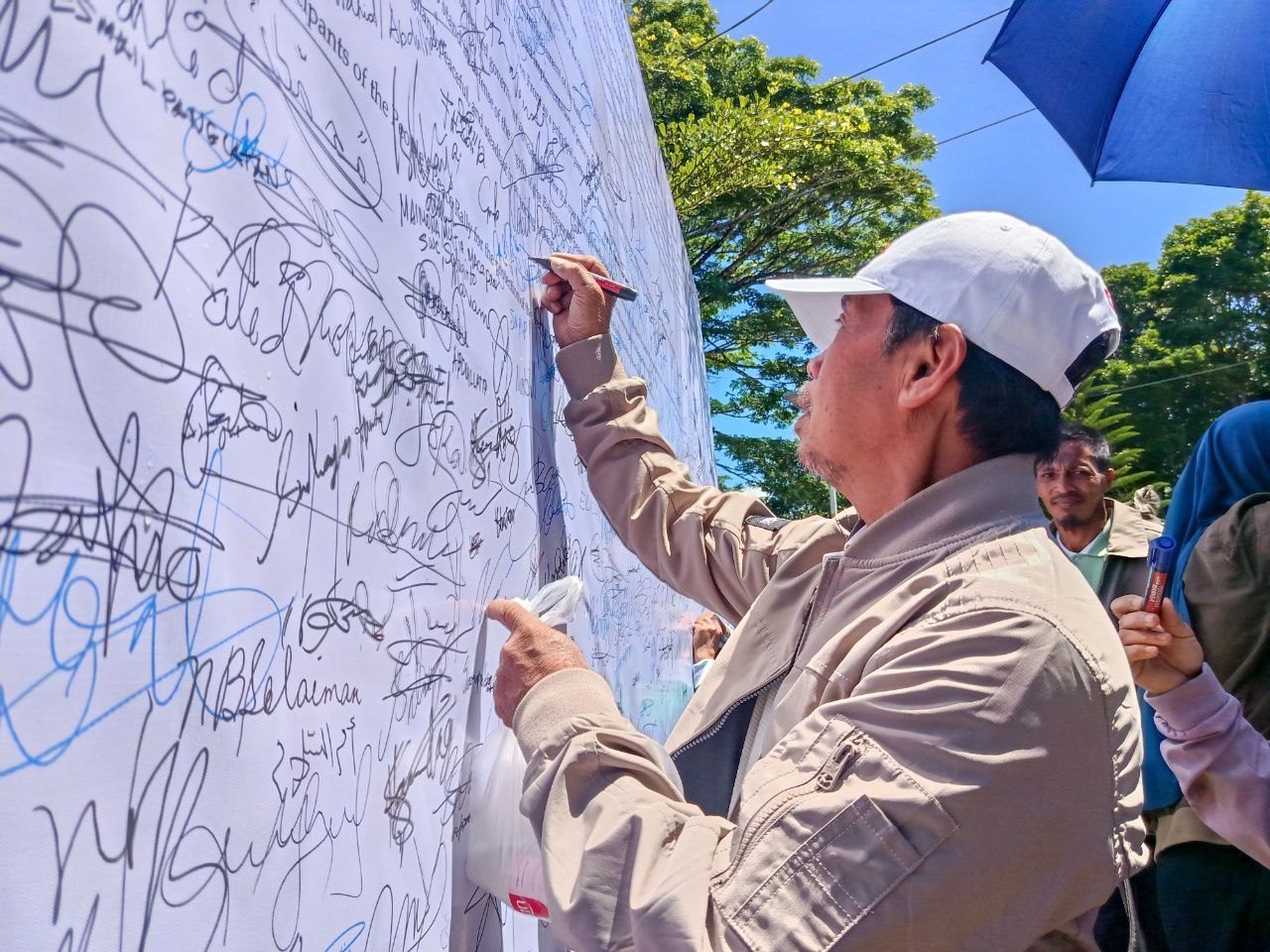 SIGN. A Meranaw man signs the peace rally manifesto board in Binidayan, Lanao del Sur, on Thursday, June 25, 2026. Abdul Hafiz Tacoranga Malawani/Rappler
Peace agreement
Formal peace negotiations between the government and the MILF began in 1997 with the signing of the Agreement for General Cessation of Hostilities. The talks resumed in 2001 under Malaysian facilitation after being suspended during the government’s all-out war against the MILF in 2000.
The Framework Agreement on the Bangsamoro (FAB) was signed in October 2012, followed by the CAB in March 2014. The agreement’s political and normalization tracks aim to address historical injustices and recognize the rights of the Bangsamoro people.
In 2019, a plebiscite ratified the Bangsamoro Organic Law (BOL), creating BARMM and replacing the now-defunct Autonomous Region in Muslim Mindanao (ARMM) under the political track. The normalization track covers decommissioning MILF firearms, dismantling private armed groups, and transforming MILF camps.
‘Checklist for convenience’
“We challenge PBBM (President Bongbong Marcos) to stop treating the Comprehensive Agreement on the Bangsamoro as a checklist for convenience that you can pause, bypass, or neglect whenever your political will changes,” Ompongan Youth Organization president Mu-ahz Omar said during the rally in Lanao del Sur.
Omar said the government has yet to appoint a chairperson for its peace implementing panel, prompting the MILF to suspend decommissioning until a counterpart panel is designated and commitments are fulfilled.
The government panel was headed by a retired general, Cesar Yano, who eventually resigned early this year.
On Tuesday, June 30, Presidential Peace Adviser Mel Senen Sarmiento said Marcos remains committed to the Bangsamoro peace process while the appointment of a new chair of the Government Peace Implementing Panel undergoes its third and final round of vetting.
“Giyaman a siwa tano na long overdue. Dapat na sii ko paganay a violate iran so Comprehensive Agreement on the Bangsamoro, a da iran man oto appointa, so mga recommendations of MILF central committee,” said MSU history professor Tirmizy Abdullah.
(These peace rallies are long overdue. We should have staged them earlier, when the government violated the agreement by rejecting the MILF Central Committee’s recommended appointments.)
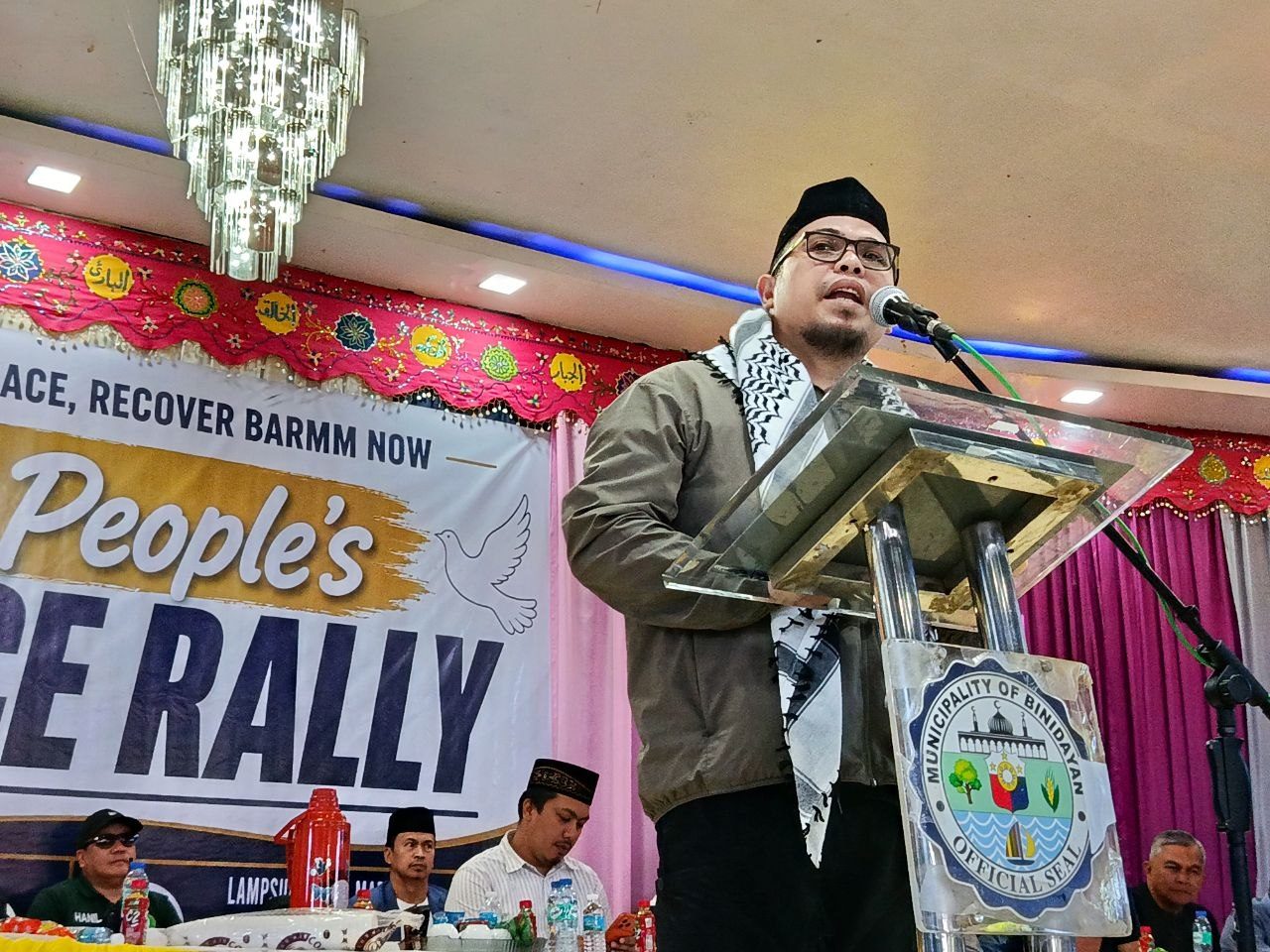 Mindanao State University history professor Tirmizy Abdullah speaks during the peace rally in Binidayan, Lanao del Sur on Thursday, June 25, 2026. Abdul Hafiz Tacoranga Malawani/Rappler
Abdullah cited the appointment of former Maguindanao del Norte governor Abdulraouf Macacua as BARMM interim chief minister, replacing MILF chairman Ahod “Al Haj Murad” Ebrahim in 2025.
He said the leadership change was followed by the MILF losing its parliamentary majority after it submitted 41 nominees but only 35 were appointed by Marcos, leaving it short of the 41-seat threshold under the peace agreement.
Implementation issues
Since the 2022 election postponement, BARMM has faced political challenges, including the Supreme Court’s 2024 ruling excluding Sulu from the Muslim-majority region and redistricting controversies that contributed to another election delay until September 2026.
“Since the beginning, there has been a deceptive attitude toward the Bangsamoro. Remember the 1637 Spanish-Moro agreement with Sultan Kudarat, the Kiram-Bates Treaty, the 1976 Tripoli Agreement, the 1996 Final Peace Agreement, and now the Comprehensive Agreement on the Bangsamoro,” Abdullah said in Meranaw.
He said reappointing former chief minister Ebrahim would be one step toward addressing what he described as violations of the peace agreement, adding that the government should restore trust in the Bangsamoro peace process.
He also cited the slow pace of camp transformation and continued calls to decommission MILF combatants despite the presence of private armed groups in the region.
Critical phase
Amid the leadership changes and political shifts, BARMM Member of Parliament Abdullah Macapaar, more known as “Commander Bravo,” called for unity among BARMM leaders and political families, saying the sacrifices of the Bangsamoro people should not be wasted.
“I’m asking my older brother, Abdulraof Macacua, and his allies to come together and visit Chairman Ebrahim. Muslims are strong when united,” Macapaar said in Meranaw.
Macapaar also committed to pursuing reforms and raising these concerns through legal means. However, he warned that the MILF remains prepared to return to armed struggle should the government fail to honor its commitments under the 2014 CAB.
“The implementation of the CAB has now entered a critical phase,” Sarmiento said, noting that the BARMM elections will proceed as the Bangsamoro transitions to a fully functioning parliamentary government.
Calls for full implementation of the CAB persist as unresolved provisions of the peace deal, questions over political autonomy, and the unfinished normalization process remain central to the transition. How these issues are addressed through legal remedies – or, in the worst case, through renewed armed conflict – will shape the future of the Bangsamoro’s quest for autonomy. – Rappler.com


Disclaimer: The articles reposted on this site are sourced from public platforms and are provided for informational purposes only. They do not necessarily reflect the views of MEXC. All rights remain with the original authors. If you believe any content infringes on third-party rights, please contact [email protected] for removal. MEXC makes no guarantees regarding the accuracy, completeness, or timeliness of the content and is not responsible for any actions taken based on the information provided. The content does not constitute financial, legal, or other professional advice, nor should it be considered a recommendation or endorsement by MEXC.
You May Also Like

Why Is ETH Still Weak While Ethereum Staking Hits Record Highs?
Ethereum’s growing staking base is tightening liquid supply, but ETH still needs stronger demand before bulls can claim a recovery.
Share
Yellow2026/07/02 00:05

Binance Surpasses $1B in Stock Trading AUM within 30 Days
Binance’s stock trading platform surpasses $1B in AUM and $3B in trading volume within 30 days, which reflects the strong demand for tokenized equities.
Share
Blockchainreporter2026/07/02 00:30

Elon's Next Move: Your Money
Elon's Next Move: Your Money Authored by Adam Sharp via DailyReckoning.com, For years, Elon Musk has dreamed of turning X (formerly Twitter) into
Share
ZeroHedge2026/07/02 00:25

