How did previous impeachment cases end?
Impeachment trials are not new in the Philippines. Ever since their inclusion in the 1987 Constitution, the rules of impeachment were already tested as early as the 2000s.
The president, vice president, members of the Supreme Court (SC) and constitutional commissions, and the Ombudsman may be removed from office if found guilty of treason, bribery, corruption, or betrayal of public trust, and deemed to have violated the Constitution.
The House of Representatives already impeached five public officials, with Vice President Sara Duterte impeached twice and set to face trial starting Monday, July 6.
But not every impeachment effort ended the same.
Joseph Estrada (2000)
The impeachment trial of then-president Joseph Estrada, the first in Philippine history, started on December 7, 2000, and ended on January 16, 2001.
Estrada was tried based on four grounds: bribery, graft and corruption, betrayal of public trust, and culpable violation of the Constitution.
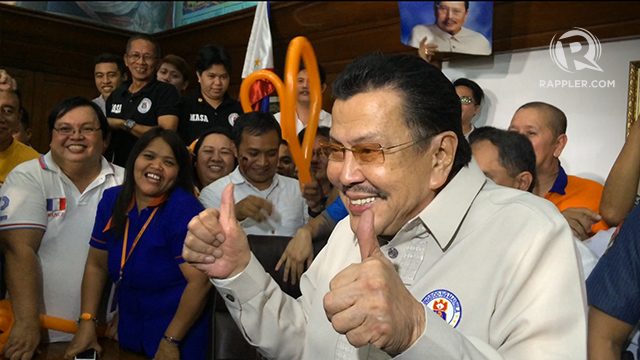 File photo
The complaint accused him of receiving P10 million monthly as bribery from jueteng lords and of receiving protection money. Estrada was also accused of directly diverting and getting P130 million of the P200-million tobacco excise tax allocations supposedly for the province of Ilocos.
Investigative reports released by the Philippine Center for Investigative Journalism also discovered that Estrada accumulated substantial wealth through his family members’ businesses. Only three business entities were, however, listed in his Statement of Assets, Liabilities, and Net Worth (SALN) in 1999.
The trial revealed the controversial “Jose Velarde” alias, which was proven to be, in fact, Estrada himself. Clarissa Ocampo, then-senior vice president of Equitable PCI Bank, testified that she saw Estrada sign a loan using the Velarde name. This was followed by the controversial 11-10 vote not to open the second brown envelope, which contained vital evidence supporting the charges against Estrada.
This led to the walkout of the prosecutors and subsequently EDSA 2, eventually resulting in Estrada’s resignation on January 20, 2001.
Merceditas Gutierrez (2011)
Former ombudsman Merceditas Gutierrez was the second public official to be impeached.
 NEW GSIS BOARD MEMBER. Executive Secretary Lucas Bersamin administers the oath of new acting Government Service Insurance System (GSIS) board member Ma. Merceditas Navarro Gutierrez on April 28. Photo from Presidential Communications Office
The House of Representatives impeached her on March 22, 2011, voting 212-46 with four abstentions. The former ombudsman was impeached for betraying public trust because of her inactivity on the following:
- fertilizer scam that diverted P728 million in fertilizer funds to the 2004 campaign of then-president Gloria Macapagal-Arroyo
- $329.5 million controversial National Broadband Network-ZTE telecommunications deal with China
- Mega Pacific poll automation contract worth P1.2 billion awarded by the Commission on Elections (Comelec) despite the company not participating in the bidding process and machines not meeting the required accuracy levels
- Euro generals scandal, which involved high-ranking Philippine National Police officials carrying undeclared cash in euros, amounting to P6.9 million at the time, for an Interpol assembly in Russia
- delay in the investigation into the death of Philip Pestaño, who revealed the involvement of fellow navy men in drug trades and corrupt practices
- low conviction rate, which reached a low of 12% in 2010, before her successor, Conchita Carpio-Morales, brought it back up to 41% the following year
Two weeks before the scheduled Senate impeachment trial, on April 29, 2011, Gutierrez submitted her resignation to former president Benigno Aquino III.
Renato Corona (2011-2012)
Chief Justice Renato Corona was impeached on December 12, 2011, the second to receive the same fate during the year.
At least 188 of the 284 members of the lower chamber voted in favor of impeachment on the grounds of betrayal of public trust, culpable violation of the Constitution, graft and corruption.
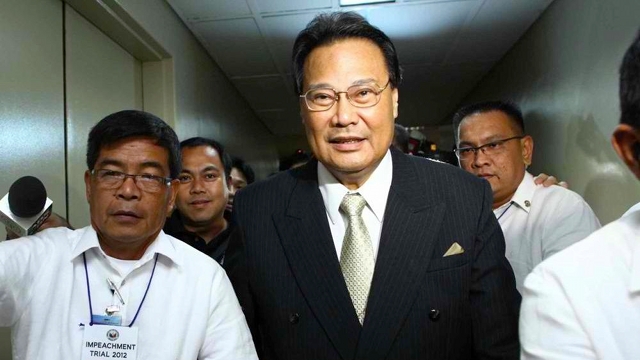 LATE CJ. File photo of late former Supreme Court chief justice Renato Corona.
The grounds for impeachment were based on the following:
- partiality and subservience in cases involving the Arroyo administration from the time of his appointment
- failure to meet and observe stringent standards under Article VIII, Section 7 (3) of the Constitution
- blatant disregard of the principle of separation of powers in the case concerning the impeachment of then-ombudsman Gutierrez.
- making personal decisions in cases and disrespecting the principle of res judicata, which essentially means a matter that has been decided by another court must be accepted as correct and therefore not subject to litigation again based on the same claims
- overstepping his power to create a special committee for an investigation into a fellow judge with the goal of removal
- allowing former president Gloria Macapagal Arroyo and her husband to escape prosecution
- graft and corruption through refusal to show receipts on how special court funds were spent
- omissions in his SALN
Andres Bautista (2017)
On October 11, 2017, then-Comelec chairperson Andres Bautista was impeached by the House, with a vote of 137-75.
This came after Bautista’s ex-wife, Patricia Paz, accused the former Comelec chair of having undeclared wealth, prompting an investigation.
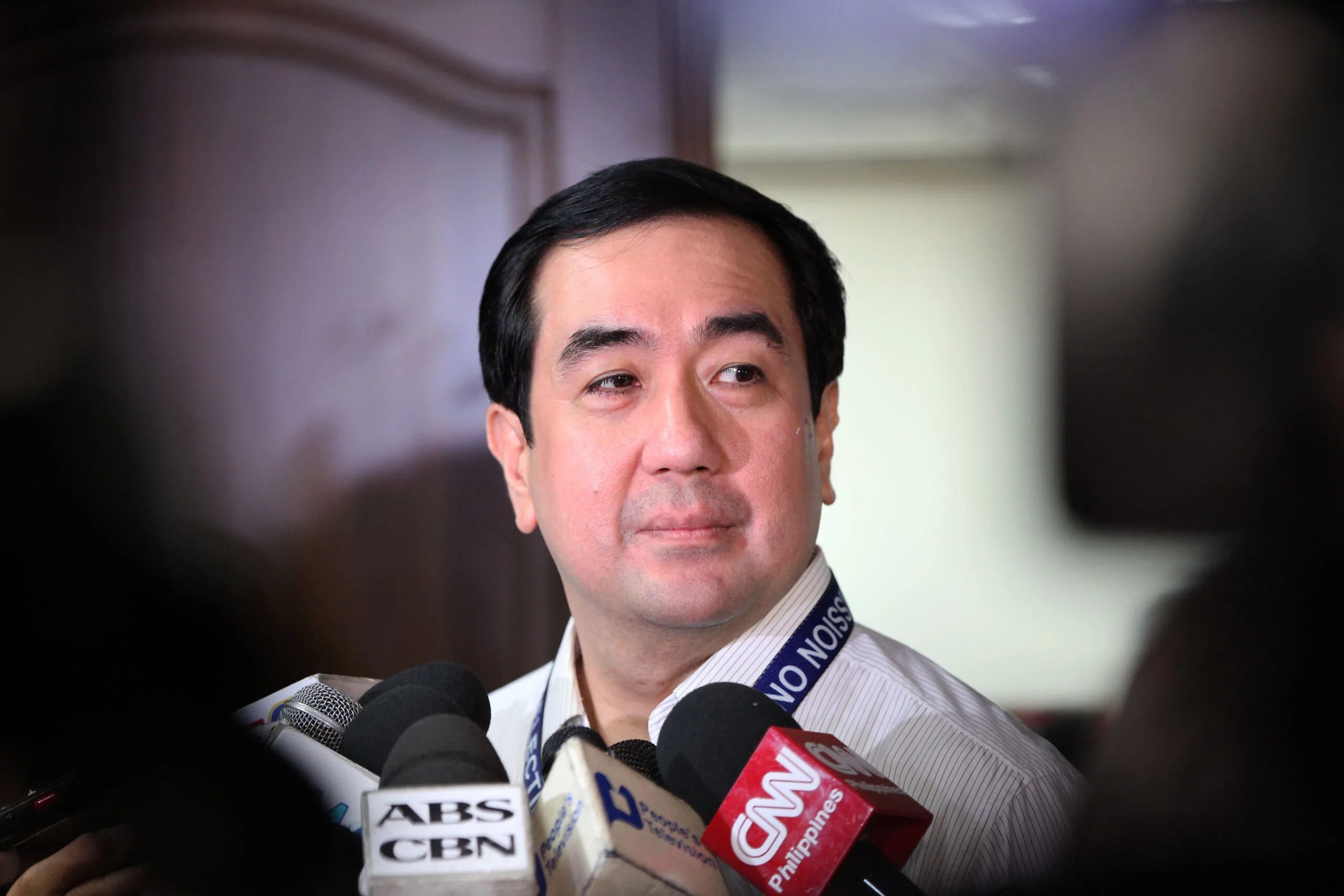 ELECTIONS. Former poll chief Andres Bautista in this file photo.
The impeachment decision overturned the House justice committee’s decision to junk the impeachment complaint.
Bautista, however, already filed his resignation hours before the House impeached him. His resignation was supposed to take effect at the end of 2017, but Malacañang, according to Bautista, wanted his resignation to take effect immediately.
Sara Duterte (2025)
Vice President Sara Duterte is the latest public official to be impeached.
She was first impeached on February 5, 2025, with more than two-thirds of the House members backing the decision based on allegations of betrayal of public trust, culpable violation of the Constitution, bribery, graft and corruption, and other high crimes.
 DUTERTE. Vice President Sara Duterte announces that she is running for the presidency in 2028 during a press conference at the Office of the Vice President’s headquarters in Mandaluyong City on February 18, 2026.
Then-Senate president Francis Escudero, however, said that the Senate would not hold Duterte’s impeachment trial during the session break and that the court could only be convened in a plenary session.
The Senate convened into an impeachment court on June 10, and decided to return the articles of impeachment to the House to allow the Vice President to address the charges filed against her.
On July 25, the SC barred impeachment proceedings because of the one-year rule, also saying that due process or fairness applies in all stages of the impeachment process. The Senate later archived the articles of impeachment against Duterte.
On May 11, 2026, Duterte became the first government official to be impeached twice, with 257 lawmakers voting in favor. The lower chamber’s decision was based on the justice committee report finding probable cause.
Duterte’s trial is set to start on July 6, 2026. – Rappler.com


You May Also Like

Marvell Stock Rose 7% After UBS Backed a $340 Target on CXL. Here’s Where the Stock Could Go

Hamster Kombat Daily Cipher 2 July 2026: Play And Win