I have two phones: one that uses primarily Face ID and PIN to unlock and to do certain transactions, and another that uses a thumbprint and PIN. Which is safer?I have two phones: one that uses primarily Face ID and PIN to unlock and to do certain transactions, and another that uses a thumbprint and PIN. Which is safer?

Identity as password

For feedback or concerns regarding this content, please contact us at [email protected]

I have two phones: one that uses primarily Face ID and PIN to unlock and to do certain transactions, and another that uses a thumbprint and PIN. Which is safer? Which is more secure? And with authorities now requiring banks to end text-based OTP (one-time password) confirmations for financial transactions, which is safer and more secure for customers?

In a recent visit to my bank’s branch, the teller asked for my ID, made me sign forms, and required me to provide my thumbprint through a biometric device on her desk. It was only after all these that she proceeded to finalize my transaction request.

I recall visiting the World Expo in Osaka last year and walking through Kansai Airport with cameras throughout the terminal tracking my family’s movement. With facial recognition, the system was providing directional instructions through monitors scattered throughout.

With banks, back in the day, my signature and ID would have been enough. An addition later on was the use of a PIN, or perhaps a password. Nowadays, my identity has also become my password via thumbprints and facial recognition, among others.

Identity is now the convergence of data privacy, cybersecurity, banking, constitutional law, and public policy. The question in my mind is whether our laws have evolved alongside these developments to consider issues beyond smartphones, banking, immigration, acceptable IDs, and digital identity.

In the United States, the prevailing legal view is that compelling a suspect to unlock a phone using a fingerprint or facial recognition is generally considered the production of physical evidence, akin to providing fingerprints or a DNA sample, and therefore does not ordinarily implicate the protection against compelled self-incrimination. By contrast, compelling a suspect to reveal or enter a memorized PIN or passcode requires disclosing the contents of the mind and is typically regarded as testimonial, triggering constitutional protection.

Locally, while the Supreme Court has yet to rule on a case explicitly involving smartphones, legal doctrines draw a similar distinction. The Court distinguishes between testimonial compulsion and physical compulsion. In Villaflor v. Summers, the Court ruled that forcing someone to provide physical evidence, like a fingerprint, is a mechanical act not protected by the Constitution.

And in Beltran v. Samson, the Court ruled that if an act requires the application of intelligence and attention, like remembering and typing a PIN, then it becomes a testimonial act and is protected by the right against self-incrimination. A court order is thus required.

My argument is that compelling biometric unlocking should also receive constitutional protection because it grants access to vast amounts of private digital information. Should the legal framework continue to distinguish between what you are, meaning your biometrics, and what you know, meaning your password? Should they both not enjoy the same constitutional protection?

As a technical matter, both Face ID and fingerprint authentication are very secure, arguably even more secure than PIN and passwords. Face ID is harder to fool and works even when hands are wet, too dry, or covered. Facial features cannot be lifted from surfaces the way fingerprints can. And yet, the Constitution treats it with less regard.

Given the level of security now required for electronic transactions, it is only normal that people will favor a more secured face ID or fingerprint or eye scan over a PIN or password. But authorities can compel you to unlock your phone via any of these mechanical methods without first going to court.

Under current Philippine doctrine, only a phone PIN or a password is protected from disclosure without a court order. A thumbprint or a Face ID is not. By opting for a more secured protocol, to what extent is my privacy now protected? And to what extent can my own private information, my biometrics, my credentials, be used against me?

The Bangko Sentral ng Pilipinas (BSP) is directing all BSP-supervised financial institutions to phase out SMS-based OTPs. Banks are moving to in-app soft tokens and biometric approvals. Does this mean that banking regulation is compelling people to shift to security protocols that are not constitutionally protected?

Will it make a difference to a bank in deciding on a fraud complaint whether the transaction was confirmed by biometrics or by password or PIN? Biometrics suppose the smartphone is in the hands of the customer. A PIN does not. Biometrics skew the burden of proving the fraud to the customer.

Face ID and thumbprints are permanent credentials. I cannot change them or get new ones. If the servers that keep them — government servers, private servers, banking servers — are hacked and the biometrics are compromised, the stakes are far greater than a forgotten password.

In visiting my bank branch, my IDs, my signature, and my physical presence were no longer enough. The bank wanted physical proof that the customer in front of them was truly me, the account owner. My thumbprint was deemed necessary. The thumbprint was deemed necessary to guard against someone impersonating me with a fake ID and a forged signature.

I understand that this helps prevent fraud. But government servers, immigration and visa servers wherever I have traveled, bank servers, and payment solutions providers all hold copies of my face, my fingerprints, my IDs, and my personal details. These servers can be hacked. My identity can be compromised.

For decades, banking identity relied on passbooks, then IDs and signatures, then PINs and passwords. Now it relies on fingerprints, faces, and iris or retinal scans. This changes the balance between convenience, security, privacy, and government power.

The Constitution protects the contents of your mind. Modern authentication increasingly bypasses your mind entirely. Authorities may not compel you to disclose a password or PIN. But they can compel your face and your fingerprints. Those are already on file somewhere, anyway.

As biometrics become more widely used, should they not enjoy the same constitutional protection as PINs and passwords? As banks, airports, and smartphones replace passwords with biometrics, are we trading a piece of our privacy and constitutional right for greater convenience and security?

The Constitution was written to protect what the state cannot see. It may not have anticipated the day when the state would simply learn to read your face.

Marvin Tort is a former managing editor of BusinessWorld, and a former chairman of the Philippine Press Council.


[email protected]

Market Opportunity
PinLink Logo
PinLink Price(PIN)
$0,03355
$0,03355$0,03355
-0,73%
USD
PinLink (PIN) Live Price Chart

World Cup Combo: Aim for 200x

World Cup Combo: Aim for 200xWorld Cup Combo: Aim for 200x

Combine up to 20 World Cup matches in one order

Disclaimer: The articles reposted on this site are sourced from public platforms and are provided for informational purposes only. They do not necessarily reflect the views of MEXC. All rights remain with the original authors. If you believe any content infringes on third-party rights, please contact [email protected] for removal. MEXC makes no guarantees regarding the accuracy, completeness, or timeliness of the content and is not responsible for any actions taken based on the information provided. The content does not constitute financial, legal, or other professional advice, nor should it be considered a recommendation or endorsement by MEXC.

You May Also Like

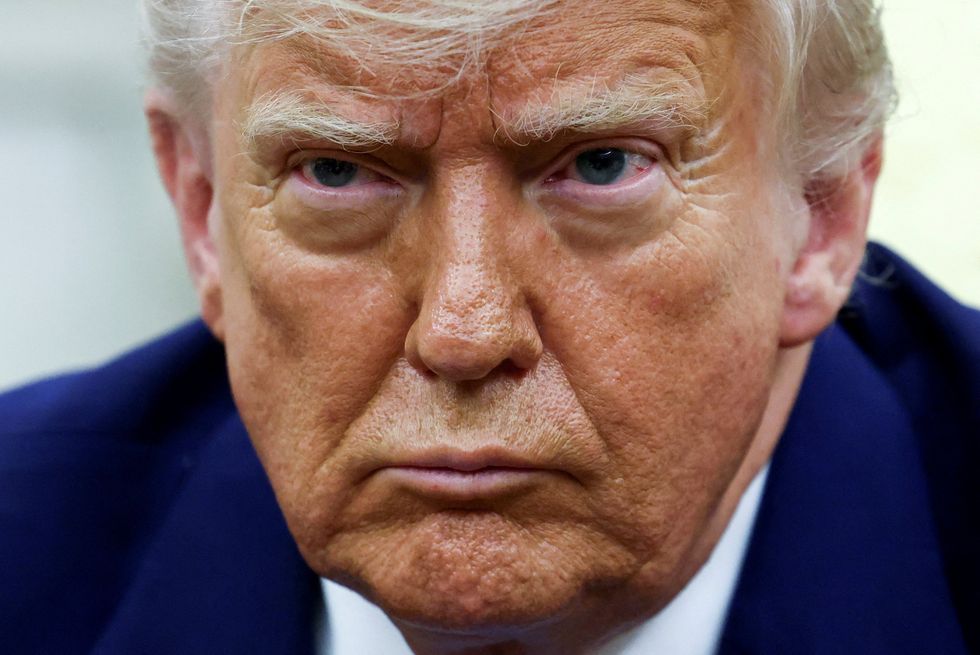
Lovable AI’s Astonishing Rise: Anton Osika Reveals Startup Secrets at Bitcoin World Disrupt 2025
Lovable AI’s Astonishing Rise: Anton Osika Reveals Startup Secrets at Bitcoin World Disrupt 2025

BitcoinWorld Lovable AI’s Astonishing Rise: Anton Osika Reveals Startup Secrets at Bitcoin World Disrupt 2025 Are you ready to witness a phenomenon? The world of technology is abuzz with the incredible rise of Lovable AI, a startup that’s not just breaking records but rewriting the rulebook for rapid growth. Imagine creating powerful apps and websites just by speaking to an AI – that’s the magic Lovable brings to the masses. This groundbreaking approach has propelled the company into the spotlight, making it one of the fastest-growing software firms in history. And now, the visionary behind this sensation, co-founder and CEO Anton Osika, is set to share his invaluable insights on the Disrupt Stage at the highly anticipated Bitcoin World Disrupt 2025. If you’re a founder, investor, or tech enthusiast eager to understand the future of innovation, this is an event you cannot afford to miss. Lovable AI’s Meteoric Ascent: Redefining Software Creation In an era where digital transformation is paramount, Lovable AI has emerged as a true game-changer. Its core premise is deceptively simple yet profoundly impactful: democratize software creation. By enabling anyone to build applications and websites through intuitive AI conversations, Lovable is empowering the vast majority of individuals who lack coding skills to transform their ideas into tangible digital products. This mission has resonated globally, leading to unprecedented momentum. The numbers speak for themselves: Achieved an astonishing $100 million Annual Recurring Revenue (ARR) in less than a year. Successfully raised a $200 million Series A funding round, valuing the company at $1.8 billion, led by industry giant Accel. Is currently fielding unsolicited investor offers, pushing its valuation towards an incredible $4 billion. As industry reports suggest, investors are unequivocally “loving Lovable,” and it’s clear why. This isn’t just about impressive financial metrics; it’s about a company that has tapped into a fundamental need, offering a solution that is both innovative and accessible. The rapid scaling of Lovable AI provides a compelling case study for any entrepreneur aiming for similar exponential growth. The Visionary Behind the Hype: Anton Osika’s Journey to Innovation Every groundbreaking company has a driving force, and for Lovable, that force is co-founder and CEO Anton Osika. His journey is as fascinating as his company’s success. A physicist by training, Osika previously contributed to the cutting-edge research at CERN, the European Organization for Nuclear Research. This deep technical background, combined with his entrepreneurial spirit, has been instrumental in Lovable’s rapid ascent. Before Lovable, he honed his skills as a co-founder of Depict.ai and a Founding Engineer at Sana. Based in Stockholm, Osika has masterfully steered Lovable from a nascent idea to a global phenomenon in record time. His leadership embodies a unique blend of profound technical understanding and a keen, consumer-first vision. At Bitcoin World Disrupt 2025, attendees will have the rare opportunity to hear directly from Osika about what it truly takes to build a brand that not only scales at an incredible pace in a fiercely competitive market but also adeptly manages the intense cultural conversations that inevitably accompany such swift and significant success. His insights will be crucial for anyone looking to understand the dynamics of high-growth tech leadership. Unpacking Consumer Tech Innovation at Bitcoin World Disrupt 2025 The 20th anniversary of Bitcoin World is set to be marked by a truly special event: Bitcoin World Disrupt 2025. From October 27–29, Moscone West in San Francisco will transform into the epicenter of innovation, gathering over 10,000 founders, investors, and tech leaders. It’s the ideal platform to explore the future of consumer tech innovation, and Anton Osika’s presence on the Disrupt Stage is a highlight. His session will delve into how Lovable is not just participating in but actively shaping the next wave of consumer-facing technologies. Why is this session particularly relevant for those interested in the future of consumer experiences? Osika’s discussion will go beyond the superficial, offering a deep dive into the strategies that have allowed Lovable to carve out a unique category in a market long thought to be saturated. Attendees will gain a front-row seat to understanding how to identify unmet consumer needs, leverage advanced AI to meet those needs, and build a product that captivates users globally. The event itself promises a rich tapestry of ideas and networking opportunities: For Founders: Sharpen your pitch and connect with potential investors. For Investors: Discover the next breakout startup poised for massive growth. For Innovators: Claim your spot at the forefront of technological advancements. The insights shared regarding consumer tech innovation at this event will be invaluable for anyone looking to navigate the complexities and capitalize on the opportunities within this dynamic sector. Mastering Startup Growth Strategies: A Blueprint for the Future Lovable’s journey isn’t just another startup success story; it’s a meticulously crafted blueprint for effective startup growth strategies in the modern era. Anton Osika’s experience offers a rare glimpse into the practicalities of scaling a business at breakneck speed while maintaining product integrity and managing external pressures. For entrepreneurs and aspiring tech leaders, his talk will serve as a masterclass in several critical areas: Strategy Focus Key Takeaways from Lovable’s Journey Rapid Scaling How to build infrastructure and teams that support exponential user and revenue growth without compromising quality. Product-Market Fit Identifying a significant, underserved market (the 99% who can’t code) and developing a truly innovative solution (AI-powered app creation). Investor Relations Balancing intense investor interest and pressure with a steadfast focus on product development and long-term vision. Category Creation Carving out an entirely new niche by democratizing complex technologies, rather than competing in existing crowded markets. Understanding these startup growth strategies is essential for anyone aiming to build a resilient and impactful consumer experience. Osika’s session will provide actionable insights into how to replicate elements of Lovable’s success, offering guidance on navigating challenges from product development to market penetration and investor management. Conclusion: Seize the Future of Tech The story of Lovable, under the astute leadership of Anton Osika, is a testament to the power of innovative ideas meeting flawless execution. Their remarkable journey from concept to a multi-billion-dollar valuation in record time is a compelling narrative for anyone interested in the future of technology. By democratizing software creation through Lovable AI, they are not just building a company; they are fostering a new generation of creators. His appearance at Bitcoin World Disrupt 2025 is an unmissable opportunity to gain direct insights from a leader who is truly shaping the landscape of consumer tech innovation. Don’t miss this chance to learn about cutting-edge startup growth strategies and secure your front-row seat to the future. Register now and save up to $668 before Regular Bird rates end on September 26. To learn more about the latest AI market trends, explore our article on key developments shaping AI features. This post Lovable AI’s Astonishing Rise: Anton Osika Reveals Startup Secrets at Bitcoin World Disrupt 2025 first appeared on BitcoinWorld.
Share
Coinstats2025/09/17 23:40
Conservative slams Dems for not riding Trump's corruption harder

Conservative slams Dems for not riding Trump's corruption harder

A conservative writer scolded Democrats on Thursday for not focusing on President Donald Trump’s unprecedented corruption in the months leading up to the November
Share
Alternet2026/07/03 09:43
Google Africa Investment Moves Beyond Connectivity into AI and Cloud Infrastructure

Google Africa Investment Moves Beyond Connectivity into AI and Cloud Infrastructure

Google Africa investment surpasses $1bn target, launching AI labs, cloud infrastructure and startup support across South Africa and Ghana. The post Google Africa
Share
Furtherafrica2026/07/03 09:04