

Gold Tumbles Over 1% as Iranian Vessel Attacks Spark Market Volatility
TLDR
- Precious metals retreated Tuesday following Iranian strikes on commercial vessels near a critical Middle Eastern shipping lane
- Gold slipped to $4,121.25 per ounce while silver declined 2.1% and platinum dropped 1.2%
- Dollar gains driven by energy-related inflation concerns pressured metal valuations
- Investors anticipate Federal Reserve June meeting minutes for monetary policy clues
- Federal Reserve Chairman Kevin Warsh has reinforced commitment to the 2% inflation objective
Precious metals experienced significant declines on Tuesday following news of Iranian military actions against two commercial ships near the Strait of Hormuz, intensifying worries about potential energy supply constraints and inflationary pressures.
Spot gold declined 1% to reach $4,121.25 per ounce, with gold futures contracts sliding 0.9% to $4,132.15. During earlier European market hours, New York gold futures had registered a 0.7% decrease at $4,138.50 per troy ounce.
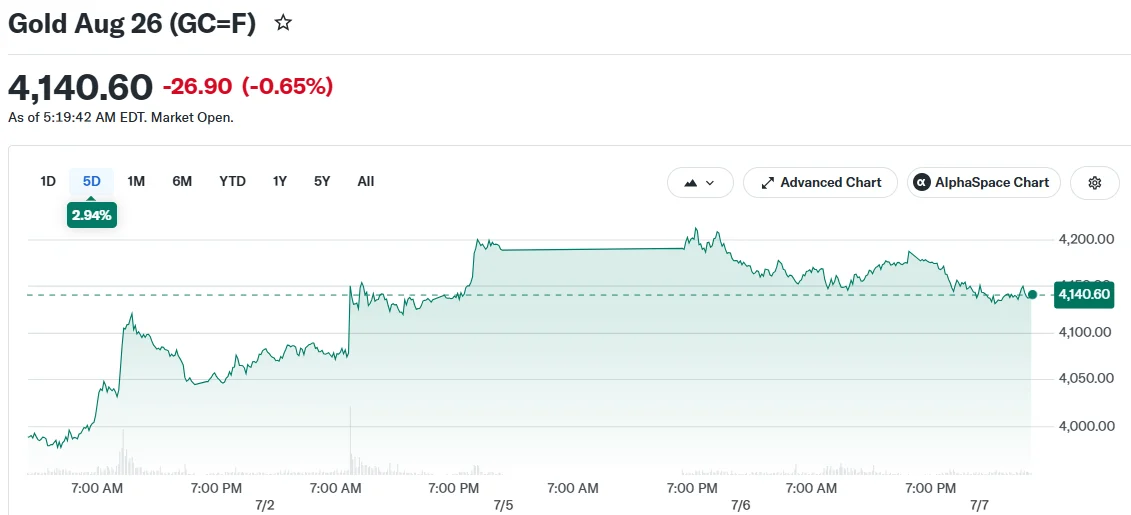 Gold Aug 26 (GC=F)
The broader precious metals complex mirrored gold’s weakness. Spot silver tumbled 2.1% to $60.76 per ounce, while spot platinum decreased 1.2% to settle at $1,614.72 per ounce.
The military incidents in the Hormuz region drove oil prices upward, amplifying concerns that energy-driven inflation could remain persistent. This dynamic bolstered the U.S. dollar, which typically exerts downward pressure on precious metal valuations.
Tuesday’s decline erased substantial gains from the prior week, when weaker-than-anticipated U.S. employment figures had temporarily boosted gold while pushing the dollar down from its 13-month peak.
Federal Reserve Minutes Awaited
Market participants are eagerly awaiting the release of minutes from the Federal Reserve’s June policy meeting, scheduled for this week. Traders are hoping the document will provide additional insight into the central bank’s interest rate trajectory.
Federal Reserve Chairman Kevin Warsh has emphasized that the institution maintains its dedication to returning inflation to the 2% annual benchmark. His statements have sustained market uncertainty regarding the potential for an additional rate increase before year-end.
Elevated interest rates diminish gold’s appeal since the metal generates no yield or dividend payments. As borrowing costs increase, capital tends to flow toward bonds and other income-producing investments.
Challenging Period for Gold
Gold reached all-time peaks in January but has faced headwinds since then. Concerns about monetary tightening have deterred investors from accumulating non-yielding assets, erasing most of the metal’s early 2026 appreciation.
The precious metal has also seen diminished safe-haven demand this year. While gold typically appreciates during periods of market stress, ongoing inflation anxieties and dollar resilience have capped any meaningful recovery.
Saxo Bank’s research team emphasized that a more substantial shift toward lower rate expectations would be necessary to fuel a sustained rally in gold valuations.
With the Federal Reserve minutes release imminent and the situation near the Strait of Hormuz remaining fluid, market participants are likely to maintain a cautious stance until greater certainty emerges on both issues.
As of Tuesday’s close, spot gold was quoted at $4,121.92, representing a 1.04% decline for the session.
The post Gold Tumbles Over 1% as Iranian Vessel Attacks Spark Market Volatility appeared first on Blockonomi.


You May Also Like

Next Block Expo 2026 in Warsaw Brings Institutional Focus to Crypto

Bithumb to Temporarily Halt HBAR Deposits and Withdrawals for Network Upgrade on July 8

Strive CEO Vows Not to Sell Bitcoin Even If Price Falls to One Cent



