

Bitcoin (BTC) Slides Below $64K as Middle East Tensions and Tech Selloff Shake Markets
Key Highlights
- BTC declined 1.4% to $63,305 following U.S. military action targeting Iranian assets
- Crude oil surged more than 5% amid escalating tensions in the Strait of Hormuz region
- Technology sector experienced significant losses, with Micron plummeting over 9%
- Spot Bitcoin ETFs attracted $265.7 million in net capital on Monday
- Technical analyst Ted Pillows cautions that breaking below $62,500 may trigger a slide to $60,000
Bitcoin retreated to approximately $63,000 on Tuesday following U.S. military operations targeting Iranian positions. The escalation followed incidents involving three commercial oil tankers in the vicinity of the Strait of Hormuz.
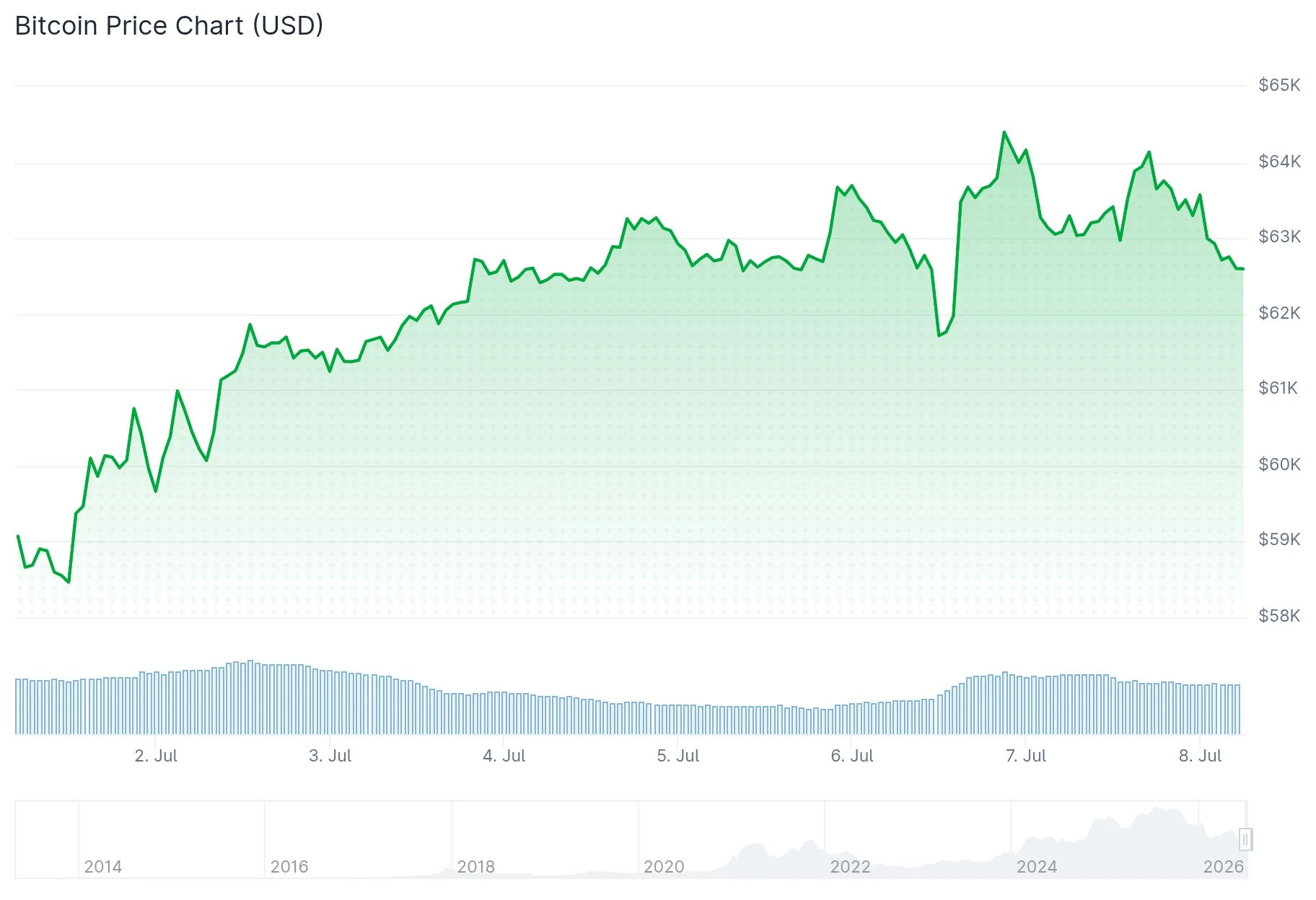 Bitcoin (BTC) Price
U.S. Central Command characterized the military response as retaliation for Iranian hostile actions directed at civilian shipping vessels. Three tankers sustained damage—two from projectile impacts and one from an unmanned aerial vehicle. Fortunately, no injuries were recorded.
The United Kingdom’s Maritime Trade Operations division elevated its risk assessment for the area to “severe.” Crude oil markets reacted swiftly, with prices climbing more than 5% following the developments.
Earlier in Tuesday’s trading session, Bitcoin had touched $64,660—marking its strongest performance since June 22—before reversing course. The cryptocurrency’s decline mirrored broader weakness across American equity indexes.
The S&P 500 shed 0.6% while the Nasdaq 100 tumbled 2.1%. Semiconductor manufacturers bore the brunt of the selloff, exemplified by Micron Technologies’ dramatic 9% single-day loss.
Cryptocurrency analyst Ted Pillows identified crucial support and resistance zones on X. He observed that Bitcoin faced rejection at the $64,500–$65,000 ceiling and emphasized that maintaining the $62,500–$62,800 floor was essential. Pillows warned that closing below this support band on a daily basis could catalyze a move toward $60,000.
Institutional Interest Remains Robust
Notwithstanding the price correction, institutional appetite demonstrated resilience. American-listed spot Bitcoin exchange-traded funds registered $265.7 million in net capital inflows on Monday, building on the $221.7 million recorded on July 2.
This represented a notable turnaround following a challenging period in late June, when approximately $2.4 billion exited spot Bitcoin investment vehicles across multiple trading sessions.
Trader Daan Crypto Trades highlighted on X that Bitcoin’s correlation coefficient with the Nasdaq experienced a dramatic reversal, swinging from -0.87 to +0.72 within a matter of days. This transformation indicates Bitcoin is currently behaving more like a volatile technology equity than a safe-haven asset.
Federal Reserve Commentary Awaited
Market participants are now focusing attention on Wednesday’s Federal Reserve meeting minutes for guidance regarding monetary policy trajectory. The publication could significantly influence both equity and cryptocurrency valuations.
John Bollinger, the developer behind Bollinger Bands technical analysis, characterized Bitcoin’s price behavior as reaching “a critical juncture.” He continues monitoring for signs of a potential long-term trend reversal in BTC valuation.
Additionally, U.S. authorities canceled a general license that previously permitted Iranian crude oil production and export activities, forming part of the broader response to the tanker incidents.
As of 6:04 PM ET on Tuesday, Bitcoin was trading at $63,305.
The post Bitcoin (BTC) Slides Below $64K as Middle East Tensions and Tech Selloff Shake Markets appeared first on Blockonomi.


You May Also Like

Franklin Templeton CEO Dismisses 50bps Rate Cut Ahead FOMC

Robotics Automation Prototyping: Engineering Kinetic Agility into End-Effectors

Cryptocurrency scam losses hit $56.8 million in Texas! What are officials doing in response?



