

SpaceCoin and the 2.9 Billion Left Offline: A New Dawn for Global Connectivity
Nearly 3 billion people still don't have reliable internet, but satellite-based DePIN networks could help by using decentralized infrastructure and blockchain payments. I first wrote about global connectivity in 2020, looking at how the digital divide affects economic growth. This issue is still important because, despite years of investment in infrastructure, 2.6 billion people, or about 32% of the world's population, are still offline in 2024, down from 2.8 billion in 2023.
The International Telecommunication Union's "Facts and Figures 2024" report provides the latest data on the connectivity gap. My analysis is based on their detailed global connectivity statistics, which are the best source for understanding internet access worldwide. I've updated my knowledge of connectivity solutions with new info about satellite-based decentralized networks. This analysis looks at how projects like SpaceCoin could address the infrastructure and economic challenges that keep billions offline
The scale of disconnection
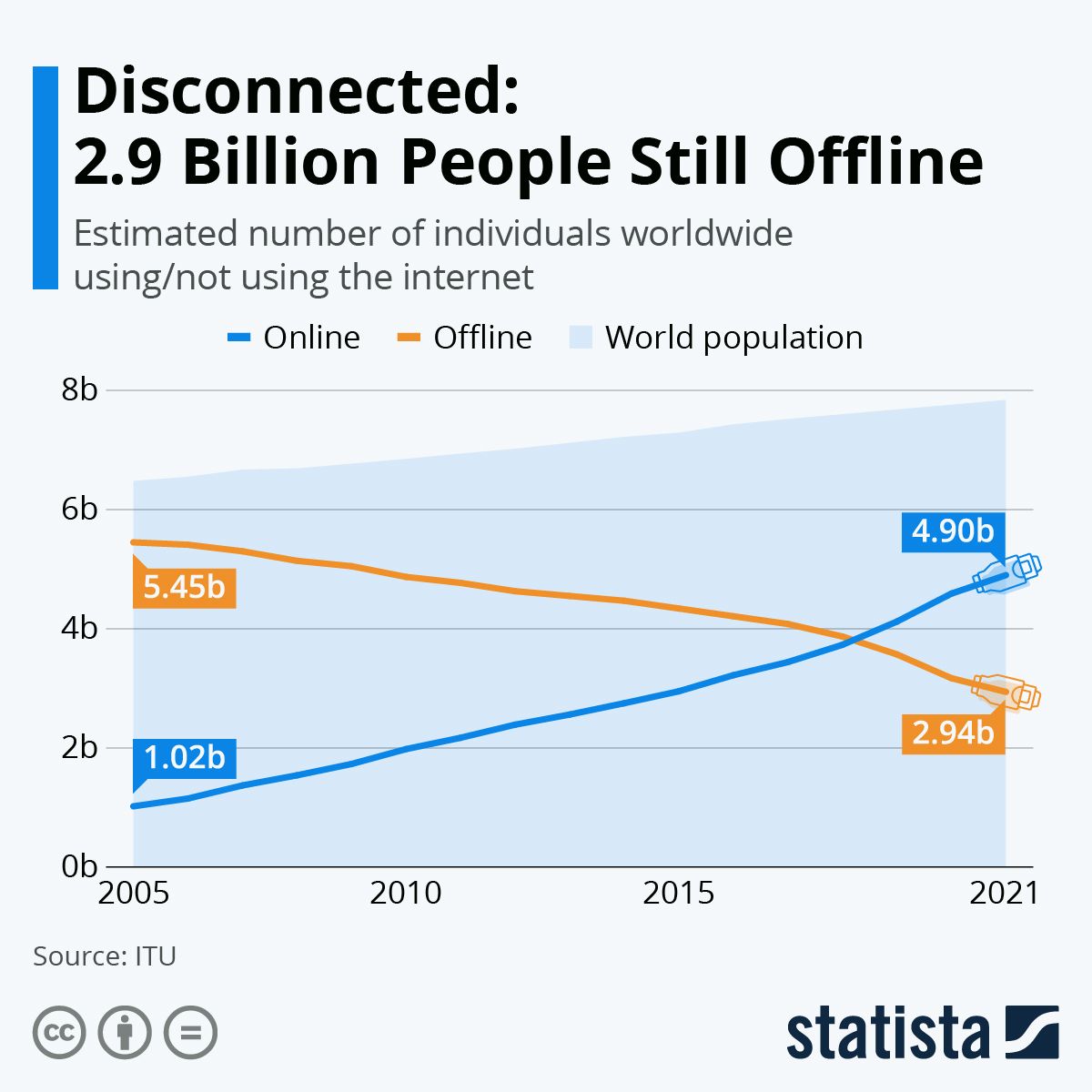
\ By 2024, 5.5 billion people, or 68% of the world's population, will be online, while 2.6 billion will not have internet access. In wealthy countries, 93% will use the internet, but only 27% will in poorer countries, showing a 66-point difference. The ITU says that to get everyone online by 2030, it would cost $2.6 to $2.8 trillion. ITU data is trusted for understanding internet access and use.
Why connectivity matters for development
Internet access improves education, health, and economic opportunities for people and communities. Rural areas with fiber internet have better educational results. Students in these areas can use online resources and learn digital skills. During the COVID-19 pandemic, students with good internet managed remote learning better, while others had difficulties.
\ Studies show that rural areas with fiber internet have 213% more business growth because of better education and skilled workers. Telemedicine needs good internet to work well. Rural areas with broadband can access specialist medical services and digital health records. The USDA says rural healthcare needs internet to fight the opioid crisis. Without good internet, rural clinics can't track prescriptions properly.
Internet access lets people join the global digital economy in many ways. Rural business owners can reach international markets, farmers can get real-time prices and weather updates, and workers can find remote jobs. Studies on rural broadband show that areas with over 80% broadband use have 10% higher self-employment rates, proving that internet access supports new businesses that might not happen otherwise.
Traditional infrastructure limitations
The connectivity gap highlights the limits of traditional telecom systems, especially in rural areas where fewer people make it expensive. Fiber optic networks have high setup and upkeep costs, which are manageable in cities but not in rural areas. This results in higher costs per user in rural areas, often making it too expensive for them. The USDA reports that 22.3% of rural Americans lack 25/3 Mbps broadband, compared to 1.5% in urban areas, showing that the issue is more about money than technology.
Traditional telecom systems face delays due to the need for coordination across different areas and regulatory hurdles. International connections are further complicated by cross-border data flows and diplomatic issues. Geographic challenges like mountains and water make laying cables costly or impossible. Island nations and remote communities struggle with expensive underwater cables or satellite links, often not worth it due to the small local market
The SpaceCoin solution
SpaceCoin uses satellites instead of regular telecom systems, cutting costs by not needing ground infrastructure. Users connect through satellites instead of fiber networks. In December 2024, SpaceCoin's CTC-0 satellite sent blockchain transactions from Chile to Portugal, showing the system works. The network is decentralized, so no single group can control access or pricing.
Traditional telecom services often have complicated bills and long contracts, which can exclude people without banking or credit histories. SpaceCoin's blockchain payment system removes these barriers by allowing direct cryptocurrency payments. With Creditcoin, users can pay network fees using on-chain assets, lowering costs. The "Buy Now, Pay Later" feature lets users in emerging markets use services right away, helping them build credit profiles. Satellite networks offer global coverage without needing local infrastructure.
SpaceCoin plans to launch more satellites in 2025 to test different frequency bands, aiming to connect 2.9 billion unconnected people by the end of 2025. In 2026, they want users to launch their own satellites and join the network, creating a fully decentralized system. This method could grow much faster than traditional infrastructure, which takes years to plan, get permits, and build for each new area.
Potential impact scenarios
Connecting the remaining 2.6 billion people who are offline could have a big impact on different areas. History shows that being connected helps farmers increase productivity and income by giving them real-time market prices and weather updates. Studies show that connected farmers can improve planting, save money, and find better markets by dealing directly with buyers. SpaceCoin's satellite network could offer these services to farmers in remote areas, and its blockchain payment system could allow direct transactions, lowering costs and making prices clearer.
Access to online resources improves education, as seen during the COVID-19 pandemic. Connected students can access global educational content and gain digital skills, especially in rural areas. The Giga partnership aims to connect all schools by 2030. SpaceCoin's satellite network could provide connectivity where traditional infrastructure isn't possible. Internet access also helps remote entrepreneurs join global e-commerce. High-speed internet in rural areas encourages new businesses, as entrepreneurs can use online tools to compete globally. SpaceCoin's payment system helps those with limited banking, allowing international transactions without traditional banks
The road ahead
Connecting the remaining 2.6 billion offline people requires addressing technical, economic, regulatory, and local adoption challenges. Successful satellite-based connectivity needs partnerships with local organizations, governments, and telecom providers. SpaceCoin's pilot tests in Africa and South Asia are key to understanding deployment in underserved markets, providing insights on user adoption, technical performance, and economic viability.
The regulatory environment for satellite communications is complex and varies by region, needing collaboration with regulatory bodies to support innovation and address interference and debris concerns. Blockchain-based satellite networks may require new regulatory approaches, posing challenges and opportunities for projects like SpaceCoin. Scaling from demonstration satellites to global connectivity involves enhancing technical capabilities and operations, including satellite manufacturing, launch logistics, and customer support. Satellite connectivity must be affordable for those in need, which may require technological advancements, economies of scale, and possible subsidies.
Measuring success
The success of satellite-based connectivity solutions should be measured not just by technical metrics like coverage area or data throughput, but by their impact on economic development, educational outcomes, and social inclusion.
Key metrics for evaluation include:
- Adoption rates in target populations, particularly in rural and low-income areas
- Economic impact measured through business formation, income growth, and employment creation
- Educational outcomes including school connectivity rates and student performance metrics
- Healthcare access improvements through telemedicine and digital health services
- Cost accessibility compared to existing connectivity options
- Technical performance including latency, reliability, and bandwidth capabilities
Conclusion
SpaceCoin is more than just a Web3 experiment; it aims to improve digital access by tackling global connectivity problems. It uses satellite technology, blockchain payments, and decentralized management to offer new solutions. While space-based blockchain transactions can happen, making them affordable and compliant is still a challenge.
Connecting the 2.6 billion people who are offline could increase productivity and innovation worldwide. It's unclear if SpaceCoin can close the digital gap, but its potential impact makes it worth investing in. The coming years will reveal if decentralized satellite networks can achieve universal connectivity, which will need new ideas, cost-effective methods, supportive rules, and partnerships. If successful, SpaceCoin could transform global connectivity, making information and opportunities available to everyone.
\


You May Also Like

Political dynasties are an evil institution

German pork import ban lifted after ASF regionalization deal




