What the Data Says About AI’s Impact in the Workplace
\
Just two years ago, using AI at work was an experiment.
Today, it’s part of the daily routine for millions.
When ChatGPT launched in late 2022, few expected it to become the fastest-adopted workplace tool in history. In less than three years, it’s gone from curiosity to necessity replacing Google as the go-to place for answers. It’s now used by more than a quarter of U.S. workers and nearly half of those with graduate degrees. Engineers rely on it to debug code, marketers to brainstorm campaigns, and analysts to interpret data. AI has become as essential to work as smartphones are to daily life.
What’s striking is how this transformation began. It wasn’t driven by corporate mandates or top-down rollouts, but by individual initiative often from younger employees more open to new technology. Once others saw its usefulness, adoption spread organically across teams. Workers brought ChatGPT into their jobs on their own, and now entire organizations are formalizing what began as personal experimentation.
This report explores how that shift is unfolding. It looks at who’s using ChatGPT at work, how adoption differs across industries and roles, and what these patterns reveal about the future of productivity. From engineers automating code reviews to marketers accelerating campaign cycles, the data shows that AI is no longer an add-on, it’s becoming infrastructure.
\
What’s in the Report?
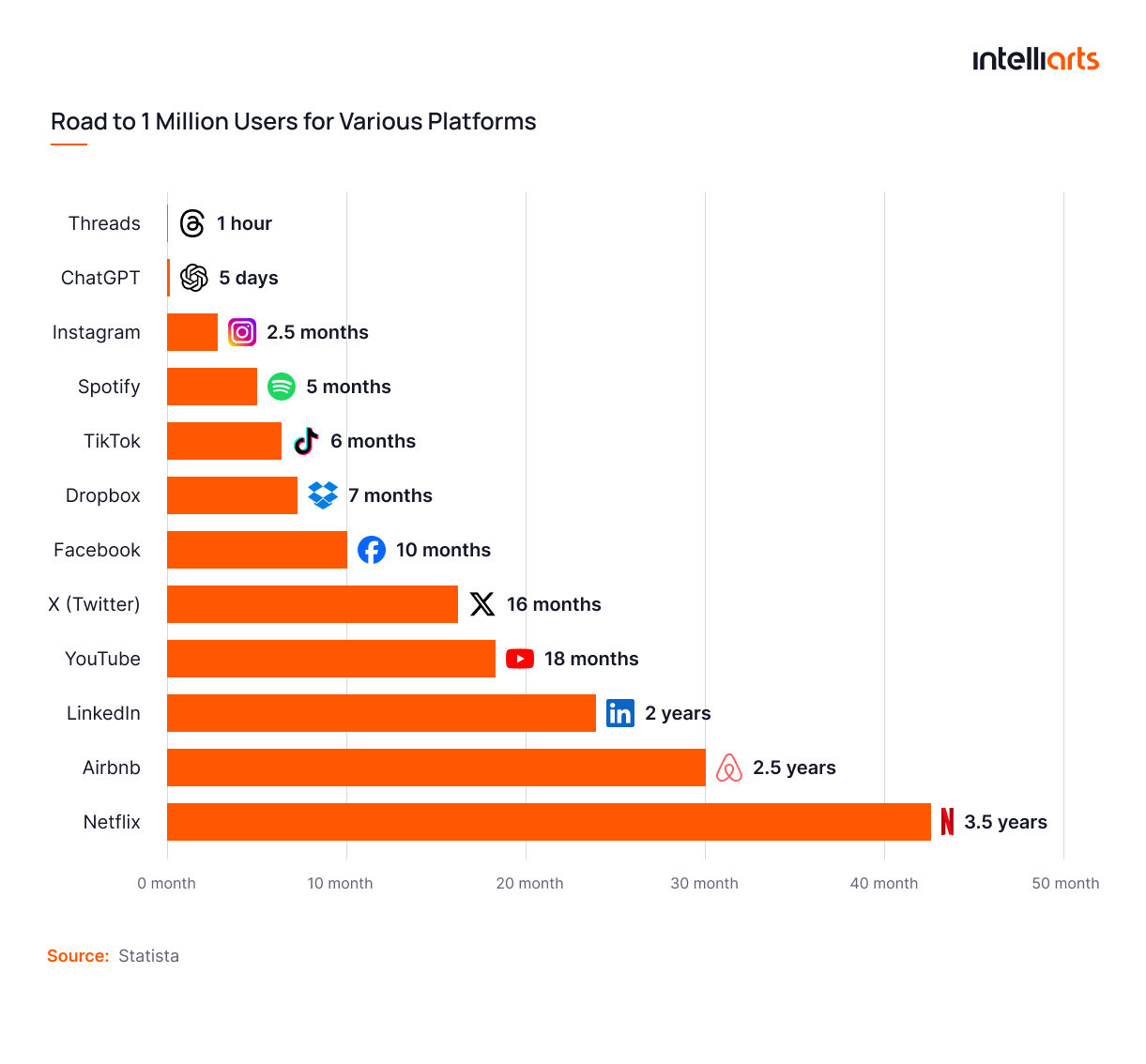
ChatGPT’s rise since its public release in 2022 has been nothing short of extraordinary. What began as a tool for enthusiasts and researchers has grown into one of the fastest technology adoptions in history, reaching an estimated 700 million weekly active users.
Its appeal is easy to understand. For decades, we’ve seen intelligent assistants like Iron Man’s Jarvis only on screen. ChatGPT was the first consumer-facing product that came close to that vision; an AI you could actually talk to, that could reason, code, and write. Naturally, curiosity turned into habit. Young professionals and early adopters found it useful enough to bring into their daily work and, eventually, into their companies.
\ 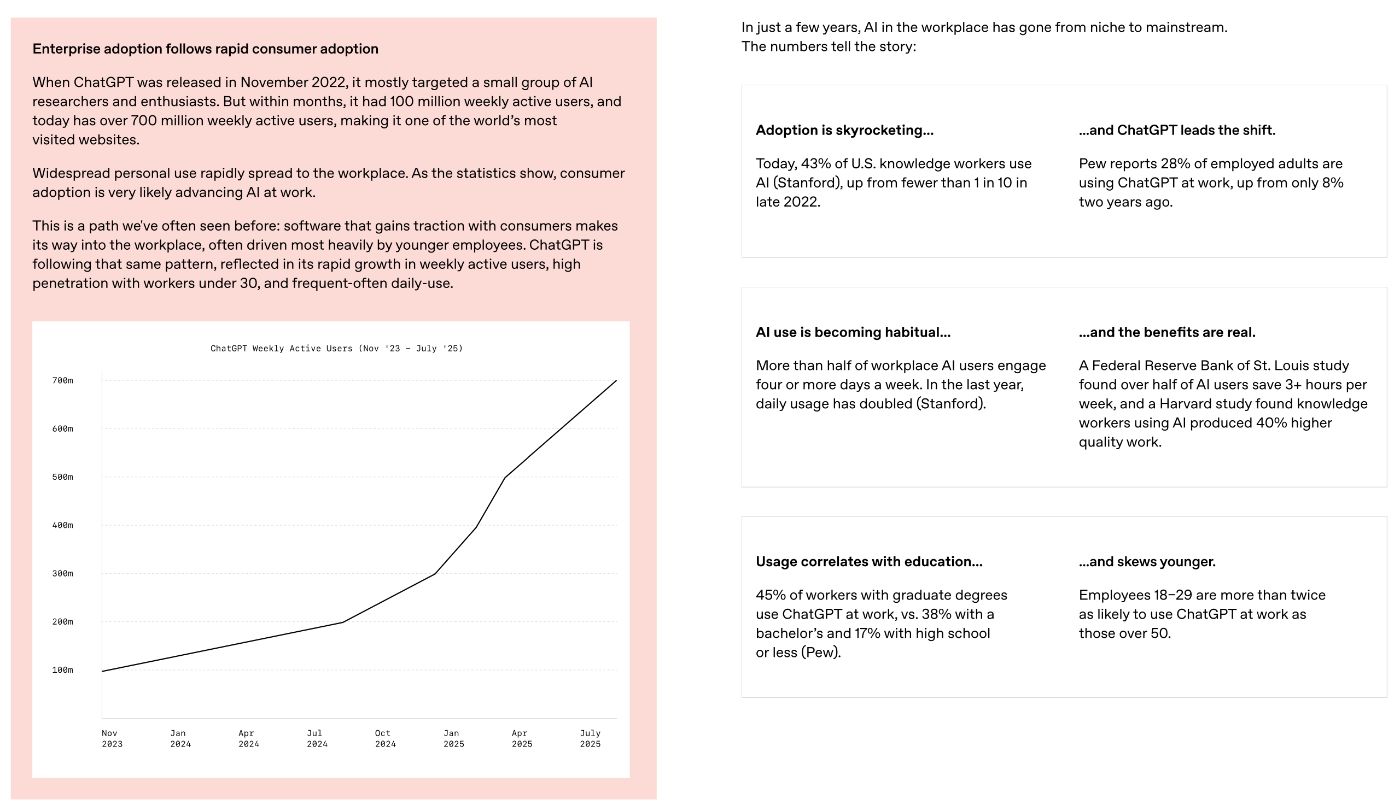
According to multiple studies, AI adoption in the U.S. is skyrocketing, especially among knowledge workers. The percentage of employed adults using ChatGPT continues to grow each year. Organizations have started recognizing AI’s productivity benefits several studies, including those from the Federal Reserve Bank of St. Louis and Harvard University, report that ChatGPT users save several hours of work per week while improving quality.
\
Who’s using ChatGPT?
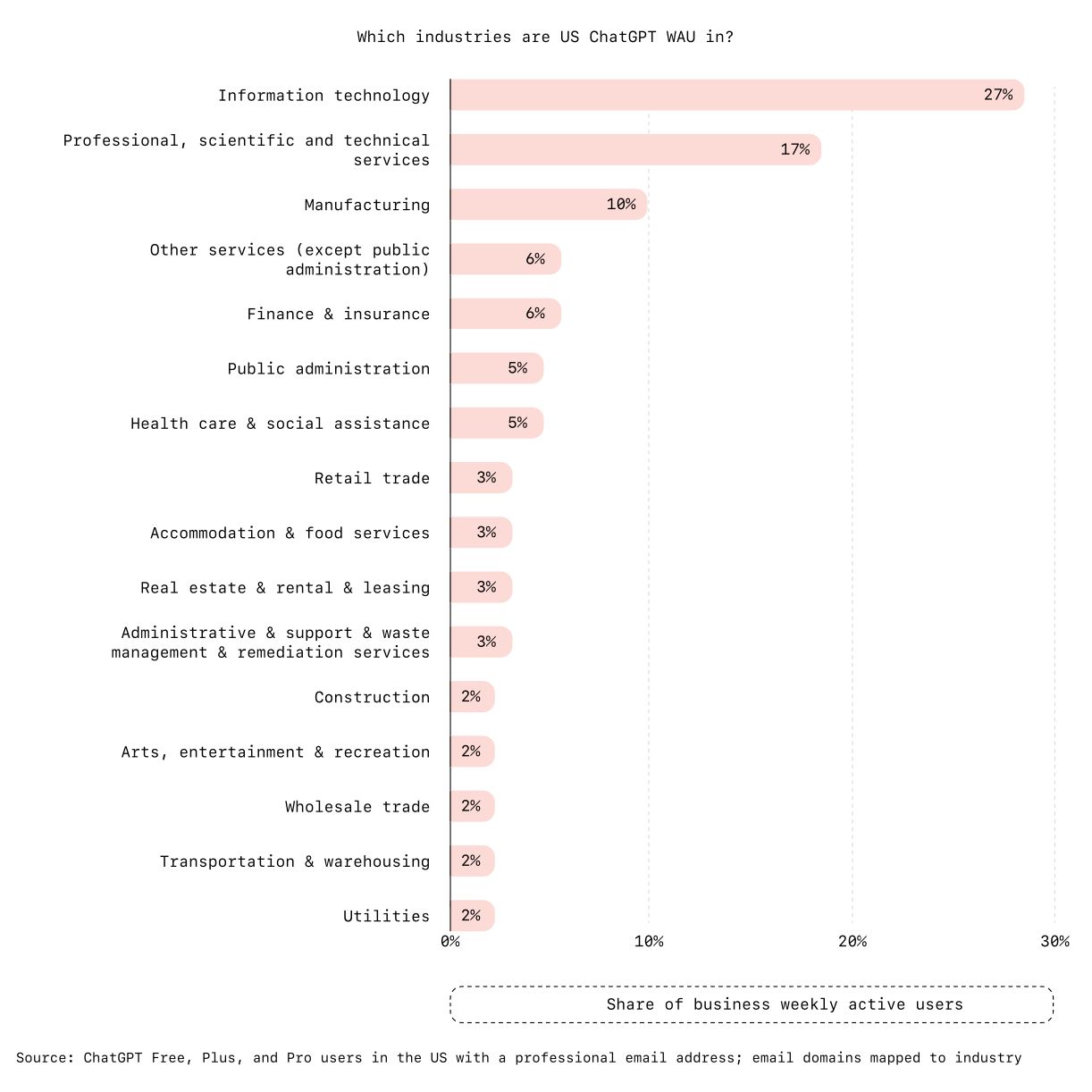
The report shows that Information Technology leads all industries in ChatGPT adoption which isn’t surprising. Developers, engineers, and IT professionals were among the earliest adopters, drawn by ChatGPT’s ability to assist with coding, debugging, and documentation.
Interestingly, the report shows that manufacturing ranks higher than finance in ChatGPT usage; a surprising finding at first glance. Finance is typically considered a knowledge-heavy industry where AI could be valuable for data analysis and reporting. Yet, manufacturing appears to be adopting ChatGPT more quickly. The report doesn’t specify why, but it highlights that AI adoption isn’t always aligned with traditional expectations. In some cases, industries that are less associated with “knowledge work” are moving faster to experiment with and integrate these tools into their workflows.
\
How It’s Being Used
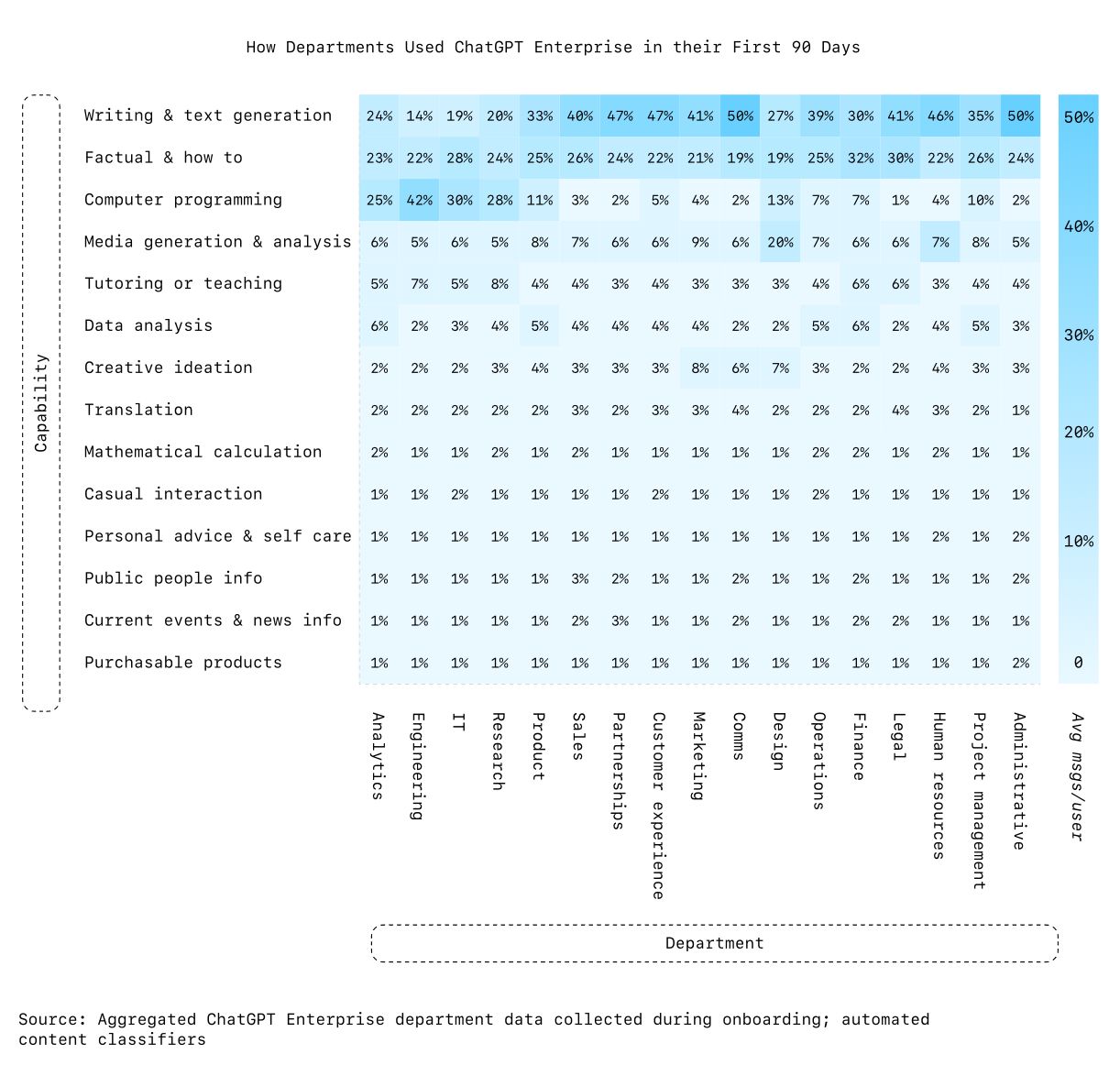
Across enterprises, ChatGPT’s top three use cases are:
- Writing and text generation
- Fact-based queries and research assistance
- Computer programming (code generation, debugging, and explanations)
What’s surprising is that data analysis ranks lower than expected. This may reflect lingering skepticism around using large language models for quantitative tasks given the potential for errors or “hallucinations.” Companies may still prefer specialized, domain-specific tools for critical data work.
\ 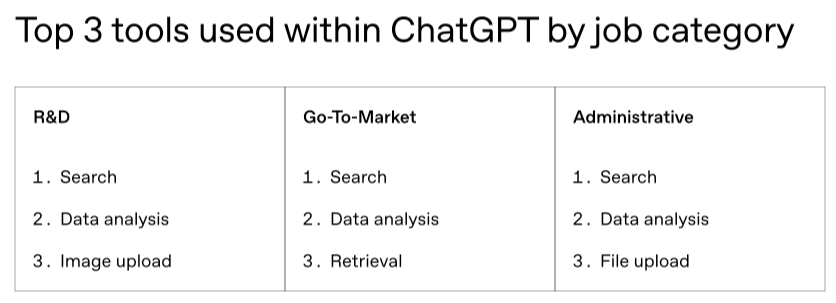
The report makes one thing clear: ChatGPT has outgrown its reputation as a simple “text generation” tool. It’s now a multi-capability platform supporting not just writing and search, but also coding, analysis, and even image generation.
It’s no longer just a better Google—it’s becoming an AI-powered workspace where people think, build, and collaborate.
\ 
Key Insights
OpenAI’s latest report, “ChatGPT Usage and Adoption Patterns at Work”, draws from both internal data and third-party research to map how AI is reshaping work. Here’s what it found:
- Mass adoption: 43% of U.S. knowledge workers now use AI tools, and 28% use ChatGPT specifically for work; up from just 8% two years ago.
- Younger workers lead the way: Employees under 30 are twice as likely to use ChatGPT compared to those over 50.
- Education matters: 45% of workers with graduate degrees use ChatGPT, versus 17% of those with only a high school diploma.
- Productivity gains: Studies show that ChatGPT users save 3+ hours a week and produce 40% higher-quality work.
- Adoption across industries: IT, professional service, and manufacturing lead usage, while healthcare adoption is growing despite privacy challenges.
- Core use cases: Writing, research, programming, and media generation dominate the first 90 days of workplace adoption.
- Advanced features are underused: Most people use ChatGPT for surface-level tasks, but deeper capabilities like reasoning and retrieval are where the next productivity leap will happen.
- Grassroots adoption drives change: ChatGPT didn’t enter work through IT departments; it entered through employees. That makes this shift more organic, faster, and harder to control.
ChatGPT is evolving from a Q&A tool to an “operating system for work.” It’s being used for coding, analysis, planning, communication, and decision-making. It’s becoming the shared layer where modern teams collaborate.
What This Means for Us?
- AI literacy is the new workplace skill. Knowing how to prompt, validate, and integrate AI output will soon be as fundamental as knowing how to Google or use Excel.
- For developers, analysts, and creative professionals, the message is clear: AI is a tool that can multiply your productivity. It is something that people must learn in this era of AI.
- The most valuable workers won’t be those who resist automation, but those who learn to orchestrate it.
- As GPT-5, other LLMs and agentic workflows evolve, we’ll move from “asking AI questions” to delegating end-to-end tasks from writing reports to running data pipelines or designing prototypes. The boundary between human reasoning and machine reasoning will blur.
- For teams, this means rethinking how work is organized. AI will take over repetitive execution, while humans focus on synthesis, strategy, and problem-solving the work that’s hardest to automate but most rewarding to do.
- There’s also a broader lesson for builders and founders: great products don’t always spread top-down; they can spread from the bottom up. ChatGPT’s rise is proof that if a product delivers real value and utility, people will bring it into their workflows voluntarily. So when creating AI-powered tools or apps, focus on making them genuinely useful — so good that people choose to adopt them on their own.
Conclusions
ChatGPT’s rise marks a turning point in how we work. Just as spreadsheets transformed accounting and browsers transformed communication, AI assistants are transforming how we think, create, and collaborate.
The takeaway isn’t that AI will replace us! It’s that those who learn to work with AI will replace those who don’t.
We’re witnessing the birth of a new workplace operating system; one that runs on human curiosity, guided by machine intelligence.
\


You May Also Like

Kimmel Mocks Trump For Making ‘A Joke About His Death’ Amid FCC Review

Strategy’s High-Yield Stock Will Continue to Fuel Bitcoin Surge, Says Bitwise CIO