

Bitcoin Joins Gold in 2025's Dedollarization Trend
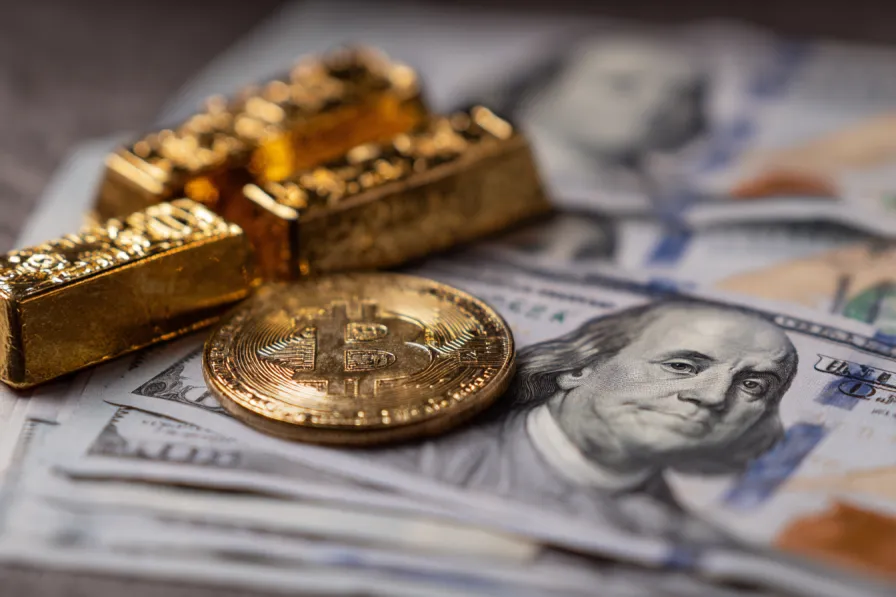
The US dollar is on track to have its worst year since 1973, signaling a "generational" macroeconomic shift.
This change, which many are calling the "debasement trade" has led to a new all-time high for precious metals, Bitcoin, and, at the same time, risk assets like stocks have soared to records.
The price of gold has doubled this year, Bitcoin has surged past $125,000, and the S&P 500 is in the midst of a blistering rally of over $20 trillion since April lows.
Nonetheless, this does not indicate robust global economic growth.
The differing bets on risk-on and risk-off assets are a telling story when the dollar is losing significantly.
Fiat currencies, and the dollar in particular, are taking a nosedive during Trump's second term in office. To put that into context, the greenback has lost 10% of its value, and its purchasing power is down nearly 40% since the early 2000s.
The traditional prosperity measures' mistaken reality is collapsing. The last time the dollar devalued as much as it has this year was in 1973 when the Bretton Woods System collapsed under former US president Richard Nixon.
Financial markets are drawing parallels between Trump 2.0 to Nixon.
Collapse of the Bretton Woods System
Back in the day, the Bretton Woods system established a fixed exchange rate between the US dollar and other foreign currencies, with the value of the dollar stated in gold at a price set by Congress at $35 per ounce.
By the 1960s, the system was in jeopardy due to an excess of US dollars brought about by foreign investment, military spending, and foreign aid.
The dollar had become overvalued because the United States lacked the gold reserves to cover the amount of dollars in circulation around the world at $35 per ounce.
To keep Bretton Woods going and the dollar strong, former Presidents Kennedy and Johnson instituted a number of policies, including prohibitions on foreign lending, measures to discourage official dollar outflows, international monetary reform, cooperation among nations, and investment disincentives for foreign countries.
The experiment was a failure.
At the same time, traders in the foreign exchange markets were more likely to sell dollars, thinking that the dollar would eventually be devalued due to its overvaluation.
Periodic runs on the dollar were the outcome of this.
This prompted former President Richard M. Nixon to act. Nixon initiated the halt of the dollar's exchangeability for gold to facilitate his plans for tax reductions and a temporary freeze on prices and wages lasting 90 days.
In addition to the halt of the dollar's gold convertibility, he implemented an extra 10% tariff on all dutiable imports. This initiative aimed to motivate the primary trading partners of the United States to enhance the value of their currencies and reduce trade barriers, facilitating increased imports from the US.
A triumph domestically, Nixon’s plan surprised numerous international observers, who interpreted it as a concerning display of unilateral action.
The dollar was eventually devalued in 1973.
Gold Bets Surge Under Trump 2.0
That is eerily similar to what's happening under Trump's second term.
Now, central banks have joined a gold rush, with nearly a quarter of their foreign exchange reserves in the yellow metal.
At the same time, the dollar's proportion of the reserves held by the world's main central banks fell by 1.5 percentage points in the June quarter, reaching 56.3%, the lowest level since 1994.
This trend is indicative of the dollar's declining dominance as a reserve currency, with the dollar's reserves composition dropping by sixteen percentage points since 2000.
Traditional world safe havens, long-term treasuries, are under scrutiny due to concerns over inflation, US fiscal health, Federal Reserve independence, and geopolitical instability.
This has led several national banks to return to the "barbarous relic" that is gold.
Earlier in September, many long-term bond yields reached levels not seen in years, if not ever, and at the same time, the price of bullion hit a new high.
Over the past few years, US treasures have been "treading water" in international reserve portfolios. At the same time, rising prices and faster demand have caused central banks' gold holdings to mushroom.
After the US dollar, gold is now the second-largest global reserve asset, having just surpassed the euro.
Central banks' reserves contain more gold than treasuries, a first since 1996.
Bitcoin & the Dedollarization Trend
This year, Bitcoin joined gold in the dedollarization trend.
The price of the OG crypto token soared over $125,000 over the weekend, setting a new record. At $2.5 trillion, Bitcoin is now the seventh largest publicly traded or investable asset in the world.
Macroeconomic factors, including the recent US government shutdown, are now propelling the top token's appeal.
Wednesday marked the start of the government shutdown. That resulted in regulatory agencies and bureaucracies having to shut down or run on a shoestring budget with few staff.
New interest from crypto investors has been sparked by the "political dysfunction" that has resulted from the shutdown.
The decline of faith in established institutions has led to the OG token's transformation into a store-of-value monetary technology.
The shift away from fiat is here to stay, not a passing fad.
The traditional banking system is getting a message from gold's meteoric rise near $4,000 and Bitcoin's over $125,000 price action: developed-market economies are losing their reputation as responsible custodians of money.
Elsewhere
 Blockhead
 Blockhead
 Blockhead

 Blockhead



You May Also Like

Data focus shifts to payrolls – Societe Generale

Venezuela Stablecoin Pitch Emerges as Latam Assets Shine in Volatility Spell




