The post $21 Million Vanishes After Hyperliquid Wallet Hack appeared first on Coinpedia Fintech News In another shocking on-chain exploit, blockchain security firm PeckShieldAlert has revealed that an address linked to the Hyperliquid platform suffered a massive loss of around $21 million in crypto assets.  The incident reportedly occurred after the attacker managed to compromise the wallet’s private key, allowing full access to the victim’s fund Hyperliquid’s Victim wallet Lost $21 Million According to PeckShield’s on-chain data the hacker transferred 17.5 million DAI and 3.11 million SYRUPUSDP from the victim’s wallet. Soon after stealing the money, the hacker quickly bridged the assets across chains, making it harder to trace them.  However, the parts of the funds are now sitting in different Ethereum wallets, and investigators believe they may soon be swapped or laundered further. PeckShield also shared a screenshots which show several wallet addresses connected to the incident, each reflecting traces of the stolen tokens being transferred, swapped, and distributed, a pattern commonly seen in laundering attempts after major crypto heists How the Hacker Got In What stands out about this hack is the precision of the attack. Unlike smart contract bugs or exchange exploits, this attack happened because of a private key leak. That means the attacker got direct access to the wallet’s login credentials. Such leaks often occur due to phishing links, malware, or unsafe key storage. Security experts have long warned that high-value accounts should always use cold wallets or multi-signature protection to prevent such incidents. As investigations continue, PeckShield has urged all traders and project teams to stay alert, avoid clicking on suspicious links, and store private keys offline.The post $21 Million Vanishes After Hyperliquid Wallet Hack appeared first on Coinpedia Fintech News In another shocking on-chain exploit, blockchain security firm PeckShieldAlert has revealed that an address linked to the Hyperliquid platform suffered a massive loss of around $21 million in crypto assets.  The incident reportedly occurred after the attacker managed to compromise the wallet’s private key, allowing full access to the victim’s fund Hyperliquid’s Victim wallet Lost $21 Million According to PeckShield’s on-chain data the hacker transferred 17.5 million DAI and 3.11 million SYRUPUSDP from the victim’s wallet. Soon after stealing the money, the hacker quickly bridged the assets across chains, making it harder to trace them.  However, the parts of the funds are now sitting in different Ethereum wallets, and investigators believe they may soon be swapped or laundered further. PeckShield also shared a screenshots which show several wallet addresses connected to the incident, each reflecting traces of the stolen tokens being transferred, swapped, and distributed, a pattern commonly seen in laundering attempts after major crypto heists How the Hacker Got In What stands out about this hack is the precision of the attack. Unlike smart contract bugs or exchange exploits, this attack happened because of a private key leak. That means the attacker got direct access to the wallet’s login credentials. Such leaks often occur due to phishing links, malware, or unsafe key storage. Security experts have long warned that high-value accounts should always use cold wallets or multi-signature protection to prevent such incidents. As investigations continue, PeckShield has urged all traders and project teams to stay alert, avoid clicking on suspicious links, and store private keys offline.

$21 Million Vanishes After Hyperliquid Wallet Hack

Thorchain

The post $21 Million Vanishes After Hyperliquid Wallet Hack appeared first on Coinpedia Fintech News

In another shocking on-chain exploit, blockchain security firm PeckShieldAlert has revealed that an address linked to the Hyperliquid platform suffered a massive loss of around $21 million in crypto assets. 

The incident reportedly occurred after the attacker managed to compromise the wallet’s private key, allowing full access to the victim’s fund

Hyperliquid’s Victim wallet Lost $21 Million

According to PeckShield’s on-chain data the hacker transferred 17.5 million DAI and 3.11 million SYRUPUSDP from the victim’s wallet. Soon after stealing the money, the hacker quickly bridged the assets across chains, making it harder to trace them. 

However, the parts of the funds are now sitting in different Ethereum wallets, and investigators believe they may soon be swapped or laundered further.

PeckShield also shared a screenshots which show several wallet addresses connected to the incident, each reflecting traces of the stolen tokens being transferred, swapped, and distributed, a pattern commonly seen in laundering attempts after major crypto heists
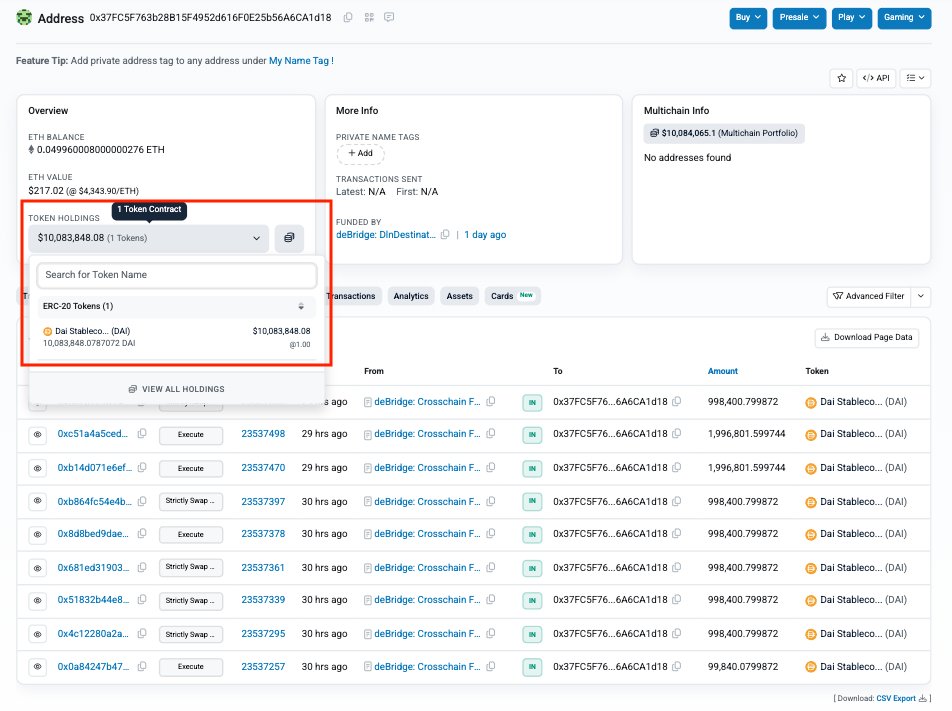
hyperliquid wallet hack $21 million

How the Hacker Got In

What stands out about this hack is the precision of the attack. Unlike smart contract bugs or exchange exploits, this attack happened because of a private key leak. That means the attacker got direct access to the wallet’s login credentials. Such leaks often occur due to phishing links, malware, or unsafe key storage.

Security experts have long warned that high-value accounts should always use cold wallets or multi-signature protection to prevent such incidents.

As investigations continue, PeckShield has urged all traders and project teams to stay alert, avoid clicking on suspicious links, and store private keys offline.


Market Opportunity
Ambire Wallet Logo
Ambire Wallet Price(WALLET)
$0.00662
$0.00662$0.00662
0.00%
USD
Ambire Wallet (WALLET) Live Price Chart
Disclaimer: The articles reposted on this site are sourced from public platforms and are provided for informational purposes only. They do not necessarily reflect the views of MEXC. All rights remain with the original authors. If you believe any content infringes on third-party rights, please contact [email protected] for removal. MEXC makes no guarantees regarding the accuracy, completeness, or timeliness of the content and is not responsible for any actions taken based on the information provided. The content does not constitute financial, legal, or other professional advice, nor should it be considered a recommendation or endorsement by MEXC.