Nigel Farage has pledged to slash crypto taxes and establish a UK Bitcoin reserve if elected. Reform UK’s leader declared at the Digital Asset Summit in London on Monday that “when it comes to your industry, when it comes to growth in this industry, then I am your champion.” The proposed legislation would reduce the capital gains tax on crypto investments from 24% to a flat 10% and mandate that the Bank of England establish a Bitcoin reserve using approximately £5 billion worth of Bitcoin currently held from seized criminal assets. Reform has become the first major UK political party to accept crypto donations, currently receiving Bitcoin, Ethereum, Solana, and USD Coin through its website.Nigel Farage in Bitcoin ‘25 Conference | Source: The London Economic What Reform’s Crypto Bill Would Actually Do Farage’s platform mirrors the approach taken by U.S. President Donald Trump, who cultivated industry support before his 2024 election victory and has pursued a crypto-friendly agenda since taking office in January 2025. The Reform Party chief’s proposed bill would allow British taxpayers to pay taxes directly in Bitcoin, with funds either converted to pounds or directed to the reserve fund. Additionally, banks would be prohibited from denying or withdrawing services to customers based on lawful crypto-related activities, directly addressing industry concerns over “debanking.” Farage connected the debanking issue to his own experience, telling the conference crowd, “I went to 10 banks, all of whom refused me an account,” and adding, “No wonder so many people are going for Bitcoin—because they can’t close you down, and that is the ultimate freedom.” Meanwhile, Farage characterized the Bank of England’s plans for a central bank digital currency as “the ultimate authoritarian nightmare” and vowed to “stop it overnight” should Reform win the next election. He also targeted the Bank of England’s proposed stablecoin holding limits, capping personal holdings at £10,000 to £20,000 and business holdings at £10 million, calling the restrictions “frankly ridiculous.” According to Bloomberg, Farage claimed he had discussed the stablecoin caps directly with Andrew Bailey, the Governor of the Bank of England. The Reform leader stated that the UK government is falling behind international competitors and must act quickly to regulate the crypto industry to safeguard Britain’s position as a financial hub. Farage said “this whole area of digital assets and crypto just isn’t being talked about at all,” and pointed out that “we’ve got no regulated market.” He also said that if Reform wins the next election, his government would enact the Crypto Assets and Digital Finance Bill “very, very quickly.” Reform UK currently leads in numerous polling projections. However, Britain’s first-past-the-post electoral system presents a major structural challenge to translating that support into parliamentary seats, as demonstrated in the 2024 general election when Reform received 4.1 million votes but secured only five seats. The next UK general election is not expected until 2029, leaving four years for both political and market conditions to shift. Why Global Crypto Competition is Forcing UK Regulators to Act Britain’s regulatory environment now faces competitive pressure from the United States, where the Trump administration accelerated crypto-friendly policies, including the GENIUS Act for stablecoin oversight. The European Union has also instituted a unified regulatory framework for digital assets, creating incentives for UK policymakers to clarify their own approach to crypto regulation. Earlier this month, the Bank of England announced that it was considering exemption plans for its proposed stablecoin holding limits for crypto exchanges and other firms requiring large holdings for liquidity purposes. Most recently, Governor Andrew Bailey acknowledged that stablecoins could drive financial innovation and coexist with traditional banking systems. The Bank of England is also preparing to permit stablecoins as settlement assets in its Digital Securities Sandbox, a controlled environment for testing blockchain-based trading and issuance. The uncertain stance of the nation has prompted industry executives to warn that overly restrictive regulations in the UK will risk diverting business and talent to jurisdictions with more favorable crypto frameworks. As it stands now, the Financial Conduct Authority will complete its consultation on whether crypto firms should face the same regulatory standards as traditional financial institutions by year-end, with implementation expected to begin in January 2026Nigel Farage has pledged to slash crypto taxes and establish a UK Bitcoin reserve if elected. Reform UK’s leader declared at the Digital Asset Summit in London on Monday that “when it comes to your industry, when it comes to growth in this industry, then I am your champion.” The proposed legislation would reduce the capital gains tax on crypto investments from 24% to a flat 10% and mandate that the Bank of England establish a Bitcoin reserve using approximately £5 billion worth of Bitcoin currently held from seized criminal assets. Reform has become the first major UK political party to accept crypto donations, currently receiving Bitcoin, Ethereum, Solana, and USD Coin through its website.Nigel Farage in Bitcoin ‘25 Conference | Source: The London Economic What Reform’s Crypto Bill Would Actually Do Farage’s platform mirrors the approach taken by U.S. President Donald Trump, who cultivated industry support before his 2024 election victory and has pursued a crypto-friendly agenda since taking office in January 2025. The Reform Party chief’s proposed bill would allow British taxpayers to pay taxes directly in Bitcoin, with funds either converted to pounds or directed to the reserve fund. Additionally, banks would be prohibited from denying or withdrawing services to customers based on lawful crypto-related activities, directly addressing industry concerns over “debanking.” Farage connected the debanking issue to his own experience, telling the conference crowd, “I went to 10 banks, all of whom refused me an account,” and adding, “No wonder so many people are going for Bitcoin—because they can’t close you down, and that is the ultimate freedom.” Meanwhile, Farage characterized the Bank of England’s plans for a central bank digital currency as “the ultimate authoritarian nightmare” and vowed to “stop it overnight” should Reform win the next election. He also targeted the Bank of England’s proposed stablecoin holding limits, capping personal holdings at £10,000 to £20,000 and business holdings at £10 million, calling the restrictions “frankly ridiculous.” According to Bloomberg, Farage claimed he had discussed the stablecoin caps directly with Andrew Bailey, the Governor of the Bank of England. The Reform leader stated that the UK government is falling behind international competitors and must act quickly to regulate the crypto industry to safeguard Britain’s position as a financial hub. Farage said “this whole area of digital assets and crypto just isn’t being talked about at all,” and pointed out that “we’ve got no regulated market.” He also said that if Reform wins the next election, his government would enact the Crypto Assets and Digital Finance Bill “very, very quickly.” Reform UK currently leads in numerous polling projections. However, Britain’s first-past-the-post electoral system presents a major structural challenge to translating that support into parliamentary seats, as demonstrated in the 2024 general election when Reform received 4.1 million votes but secured only five seats. The next UK general election is not expected until 2029, leaving four years for both political and market conditions to shift. Why Global Crypto Competition is Forcing UK Regulators to Act Britain’s regulatory environment now faces competitive pressure from the United States, where the Trump administration accelerated crypto-friendly policies, including the GENIUS Act for stablecoin oversight. The European Union has also instituted a unified regulatory framework for digital assets, creating incentives for UK policymakers to clarify their own approach to crypto regulation. Earlier this month, the Bank of England announced that it was considering exemption plans for its proposed stablecoin holding limits for crypto exchanges and other firms requiring large holdings for liquidity purposes. Most recently, Governor Andrew Bailey acknowledged that stablecoins could drive financial innovation and coexist with traditional banking systems. The Bank of England is also preparing to permit stablecoins as settlement assets in its Digital Securities Sandbox, a controlled environment for testing blockchain-based trading and issuance. The uncertain stance of the nation has prompted industry executives to warn that overly restrictive regulations in the UK will risk diverting business and talent to jurisdictions with more favorable crypto frameworks. As it stands now, the Financial Conduct Authority will complete its consultation on whether crypto firms should face the same regulatory standards as traditional financial institutions by year-end, with implementation expected to begin in January 2026

Farage Pitches Himself as Crypto’s ‘Champion,’ Proposes UK Bitcoin Reserve and Tax Cuts

2025/10/14 03:52
4 min read

Nigel Farage has pledged to slash crypto taxes and establish a UK Bitcoin reserve if elected. Reform UK’s leader declared at the Digital Asset Summit in London on Monday that “when it comes to your industry, when it comes to growth in this industry, then I am your champion.”

The proposed legislation would reduce the capital gains tax on crypto investments from 24% to a flat 10% and mandate that the Bank of England establish a Bitcoin reserve using approximately £5 billion worth of Bitcoin currently held from seized criminal assets.

Reform has become the first major UK political party to accept crypto donations, currently receiving Bitcoin, Ethereum, Solana, and USD Coin through its website.
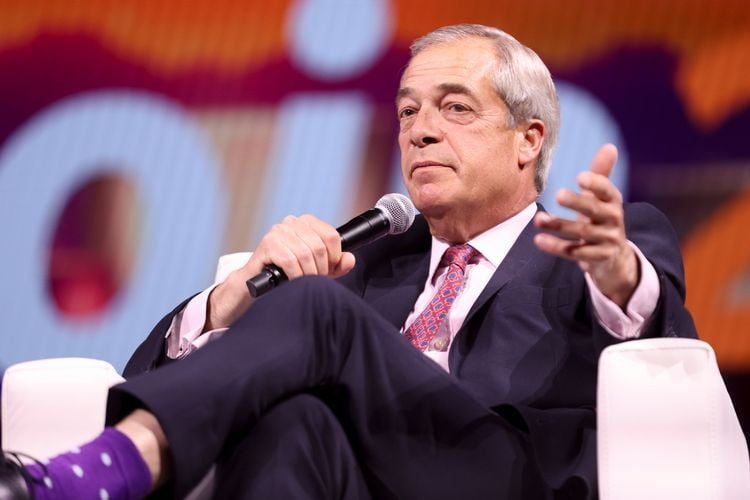
Farage Pitches Himself as Crypto's 'Champion,' Proposes UK Bitcoin Reserve and Tax CutsNigel Farage in Bitcoin ‘25 Conference | Source: The London Economic

What Reform’s Crypto Bill Would Actually Do

Farage’s platform mirrors the approach taken by U.S. President Donald Trump, who cultivated industry support before his 2024 election victory and has pursued a crypto-friendly agenda since taking office in January 2025.

The Reform Party chief’s proposed bill would allow British taxpayers to pay taxes directly in Bitcoin, with funds either converted to pounds or directed to the reserve fund.

Additionally, banks would be prohibited from denying or withdrawing services to customers based on lawful crypto-related activities, directly addressing industry concerns over “debanking.”

Farage connected the debanking issue to his own experience, telling the conference crowd, “I went to 10 banks, all of whom refused me an account,” and adding, “No wonder so many people are going for Bitcoin—because they can’t close you down, and that is the ultimate freedom.”

Meanwhile, Farage characterized the Bank of England’s plans for a central bank digital currency as “the ultimate authoritarian nightmare” and vowed to “stop it overnight” should Reform win the next election.

He also targeted the Bank of England’s proposed stablecoin holding limits, capping personal holdings at £10,000 to £20,000 and business holdings at £10 million, calling the restrictions “frankly ridiculous.”

According to Bloomberg, Farage claimed he had discussed the stablecoin caps directly with Andrew Bailey, the Governor of the Bank of England.

The Reform leader stated that the UK government is falling behind international competitors and must act quickly to regulate the crypto industry to safeguard Britain’s position as a financial hub.

Farage said “this whole area of digital assets and crypto just isn’t being talked about at all,” and pointed out that “we’ve got no regulated market.”

He also said that if Reform wins the next election, his government would enact the Crypto Assets and Digital Finance Bill “very, very quickly.”

Reform UK currently leads in numerous polling projections.

However, Britain’s first-past-the-post electoral system presents a major structural challenge to translating that support into parliamentary seats, as demonstrated in the 2024 general election when Reform received 4.1 million votes but secured only five seats.

The next UK general election is not expected until 2029, leaving four years for both political and market conditions to shift.

Why Global Crypto Competition is Forcing UK Regulators to Act

Britain’s regulatory environment now faces competitive pressure from the United States, where the Trump administration accelerated crypto-friendly policies, including the GENIUS Act for stablecoin oversight.

The European Union has also instituted a unified regulatory framework for digital assets, creating incentives for UK policymakers to clarify their own approach to crypto regulation.

Earlier this month, the Bank of England announced that it was considering exemption plans for its proposed stablecoin holding limits for crypto exchanges and other firms requiring large holdings for liquidity purposes.

Most recently, Governor Andrew Bailey acknowledged that stablecoins could drive financial innovation and coexist with traditional banking systems.

The Bank of England is also preparing to permit stablecoins as settlement assets in its Digital Securities Sandbox, a controlled environment for testing blockchain-based trading and issuance.

The uncertain stance of the nation has prompted industry executives to warn that overly restrictive regulations in the UK will risk diverting business and talent to jurisdictions with more favorable crypto frameworks.

As it stands now, the Financial Conduct Authority will complete its consultation on whether crypto firms should face the same regulatory standards as traditional financial institutions by year-end, with implementation expected to begin in January 2026.


Disclaimer: The articles reposted on this site are sourced from public platforms and are provided for informational purposes only. They do not necessarily reflect the views of MEXC. All rights remain with the original authors. If you believe any content infringes on third-party rights, please contact [email protected] for removal. MEXC makes no guarantees regarding the accuracy, completeness, or timeliness of the content and is not responsible for any actions taken based on the information provided. The content does not constitute financial, legal, or other professional advice, nor should it be considered a recommendation or endorsement by MEXC.

You May Also Like

Crucial Fed Rate Cut: October Probability Surges to 94%

Crucial Fed Rate Cut: October Probability Surges to 94%

BitcoinWorld Crucial Fed Rate Cut: October Probability Surges to 94% The financial world is buzzing with a significant development: the probability of a Fed rate cut in October has just seen a dramatic increase. This isn’t just a minor shift; it’s a monumental change that could ripple through global markets, including the dynamic cryptocurrency space. For anyone tracking economic indicators and their impact on investments, this update from the U.S. interest rate futures market is absolutely crucial. What Just Happened? Unpacking the FOMC Statement’s Impact Following the latest Federal Open Market Committee (FOMC) statement, market sentiment has decisively shifted. Before the announcement, the U.S. interest rate futures market had priced in a 71.6% chance of an October rate cut. However, after the statement, this figure surged to an astounding 94%. This jump indicates that traders and analysts are now overwhelmingly confident that the Federal Reserve will lower interest rates next month. Such a high probability suggests a strong consensus emerging from the Fed’s latest communications and economic outlook. A Fed rate cut typically means cheaper borrowing costs for businesses and consumers, which can stimulate economic activity. But what does this really signify for investors, especially those in the digital asset realm? Why is a Fed Rate Cut So Significant for Markets? When the Federal Reserve adjusts interest rates, it sends powerful signals across the entire financial ecosystem. A rate cut generally implies a more accommodative monetary policy, often enacted to boost economic growth or combat deflationary pressures. Impact on Traditional Markets: Stocks: Lower interest rates can make borrowing cheaper for companies, potentially boosting earnings and making stocks more attractive compared to bonds. Bonds: Existing bonds with higher yields might become more valuable, but new bonds will likely offer lower returns. Dollar Strength: A rate cut can weaken the U.S. dollar, making exports cheaper and potentially benefiting multinational corporations. Potential for Cryptocurrency Markets: The cryptocurrency market, while often seen as uncorrelated, can still react significantly to macro-economic shifts. A Fed rate cut could be interpreted as: Increased Risk Appetite: With traditional investments offering lower returns, investors might seek higher-yielding or more volatile assets like cryptocurrencies. Inflation Hedge Narrative: If rate cuts are perceived as a precursor to inflation, assets like Bitcoin, often dubbed “digital gold,” could gain traction as an inflation hedge. Liquidity Influx: A more accommodative monetary environment generally means more liquidity in the financial system, some of which could flow into digital assets. Looking Ahead: What Could This Mean for Your Portfolio? While the 94% probability for a Fed rate cut in October is compelling, it’s essential to consider the nuances. Market probabilities can shift, and the Fed’s ultimate decision will depend on incoming economic data. Actionable Insights: Stay Informed: Continue to monitor economic reports, inflation data, and future Fed statements. Diversify: A diversified portfolio can help mitigate risks associated with sudden market shifts. Assess Risk Tolerance: Understand how a potential rate cut might affect your specific investments and adjust your strategy accordingly. This increased likelihood of a Fed rate cut presents both opportunities and challenges. It underscores the interconnectedness of traditional finance and the emerging digital asset space. Investors should remain vigilant and prepared for potential volatility. The financial landscape is always evolving, and the significant surge in the probability of an October Fed rate cut is a clear signal of impending change. From stimulating economic growth to potentially fueling interest in digital assets, the implications are vast. Staying informed and strategically positioned will be key as we approach this crucial decision point. The market is now almost certain of a rate cut, and understanding its potential ripple effects is paramount for every investor. Frequently Asked Questions (FAQs) Q1: What is the Federal Open Market Committee (FOMC)? A1: The FOMC is the monetary policymaking body of the Federal Reserve System. It sets the federal funds rate, which influences other interest rates and economic conditions. Q2: How does a Fed rate cut impact the U.S. dollar? A2: A rate cut typically makes the U.S. dollar less attractive to foreign investors seeking higher returns, potentially leading to a weakening of the dollar against other currencies. Q3: Why might a Fed rate cut be good for cryptocurrency? A3: Lower interest rates can reduce the appeal of traditional investments, encouraging investors to seek higher returns in alternative assets like cryptocurrencies. It can also be seen as a sign of increased liquidity or potential inflation, benefiting assets like Bitcoin. Q4: Is a 94% probability a guarantee of a rate cut? A4: While a 94% probability is very high, it is not a guarantee. Market probabilities reflect current sentiment and data, but the Federal Reserve’s final decision will depend on all available economic information leading up to their meeting. Q5: What should investors do in response to this news? A5: Investors should stay informed about economic developments, review their portfolio diversification, and assess their risk tolerance. Consider how potential changes in interest rates might affect different asset classes and adjust strategies as needed. Did you find this analysis helpful? Share this article with your network to keep others informed about the potential impact of the upcoming Fed rate cut and its implications for the financial markets! To learn more about the latest crypto market trends, explore our article on key developments shaping Bitcoin price action. This post Crucial Fed Rate Cut: October Probability Surges to 94% first appeared on BitcoinWorld.
Share
Coinstats2025/09/18 02:25
Vitalik Buterin Selling Ethereum 'Faster,' Says On-Chain Tracking Firm As Second-Largest Crypto Plunges Over 5%

Vitalik Buterin Selling Ethereum 'Faster,' Says On-Chain Tracking Firm As Second-Largest Crypto Plunges Over 5%

Vitalik Buterin offloaded millions worth of Ethereum (CRYPTO: ETH) over the past couple of days, coinciding with a significant drop in the cryptocurrency’s priceread
Share
Coinstats2026/02/23 12:46
VeChain (VET) Daily Market Analysis 23 February 2026

VeChain (VET) Daily Market Analysis 23 February 2026

VeChain faces price pressure despite major ecosystem upgrades – here's the latest: • VET price down 10.80% over 7 days, underperforming global crypto market (16
Share
Coinstats2026/02/23 12:47