Investor enthusiasm over AI has powered record stock market highs, but it is now facing scrutiny
While the rapid growth of AI has benefited many companies and industries, investors are now closely watching for any signs that the demand for AI technology will begin to decline.
Investor confidence in artificial intelligence has carried the U.S. stock market to record highs, but signs of doubt are beginning to appear.
For nearly three years, AI has dominated Wall Street, lifting technology stocks and bringing in trillions in market value, but investors are now scrutinizing the potential weaknesses that could threaten the momentum.
Analysts are warning that the cost of AI innovation, including capital spending and energy costs, makes it risky for investors.
Investors question the strength of market gains from AI
Since the launch of ChatGPT in November 2022, AI’s potential has become a central theme for investors. Citigroup estimates that nearly half of the S&P 500’s total market capitalization, which is around $57 trillion, has “high” or “medium” exposure to AI. The S&P 500 has climbed roughly 13% this year, while the tech-heavy Nasdaq Composite is up about 17%.
“So much of what is holding up the markets is either directly or indirectly related to that trade,” Yung-Yu Ma, a chief investment strategist at PNC Financial Services Group, said.
But the same dependence on AI that’s fueling record highs could also leave the market vulnerable if expectations are not met.
Investors are watching for any signs that AI demand might taper off or that the expected returns will fail to materialize. “One potential trigger is that suddenly the needs just look like they are going to be less than was originally anticipated,” Ma said.
Several stumbles in the industry this year include the launch of China’s low-cost AI model, Deepseek, which caused brief turmoil in tech stocks and raised concerns about the high costs of building and maintaining advanced AI systems.
A similar incident occurred in August, but both times, the market recovered. Still, the risks have not disappeared.
“There is a huge opportunity here, but it really just comes down to what’s priced in and what’s not,” Steve Lowe, a chief investment strategist at Thrivent Financial, said. “There’s a lot of growth priced in, and that’s one of the concerns, because there are still a number of risks that could trip up people’s expectations.”
Major U.S. companies are set to release their quarterly results, and investors will be able to assess how sustainable AI investments are and whether the earnings are equivalent to the hype.
Analysts weigh in
Building and maintaining the infrastructure needed to power AI applications requires massive investments. Barclays strategists estimate that capital expenses from major AI and cloud companies, including Microsoft, Amazon, Alphabet, Meta, and Oracle, will nearly double by 2027 to about $500B annually.
While these firms generate vast amounts of cash, rising costs of AI innovation could erode profits. “It’s important to watch whether they’re spending faster than their growth rates and eating into their free cash flow margins,” Michael Arone, a chief investment strategist at State Street Investment Management, said.
However, any reduction in spending or investing in AI by these companies could alarm investors, as AI expansion depends heavily on continuous investment.
“The bigger risk is not investing too much; it’s not investing enough right now,” Garrett Melson, a portfolio strategist at Natixis Investment Managers Solutions, said.
Nvidia’s recent plan to invest up to $100B in OpenAI also shows the interconnection between many leaders in the AI and tech industry.
“There is significant systemic risk in such close financial and operational ties,” Irene Tunkel, the chief U.S. equity strategist at BCA Research, warned.
Anastacio Teodoro, the senior portfolio manager at Federated Hermes, added that investors should pay attention to how large tech companies fund their deals.
“When you see these big announcements, you want to see it funded through cash flow, not debt or equity raises,” she said. Heavy borrowing or dilution could signal that companies are stretching too far.
Venu Krishna, the head of U.S. equity strategy at Barclays warned about the potential inability of the U.S. power supply to keep up with the energy needs of data centers and AI operations.
Patrick Ryan, the chief investment strategist at Madison Investments, added that so far, the evidence of AI’s economic payoff remains limited. “If you get to the point where it becomes questionable that all of this investment was really going to pay off, that is going to be something that would be very at risk,” he said.
Join a premium crypto trading community free for 30 days - normally $100/mo.


You May Also Like
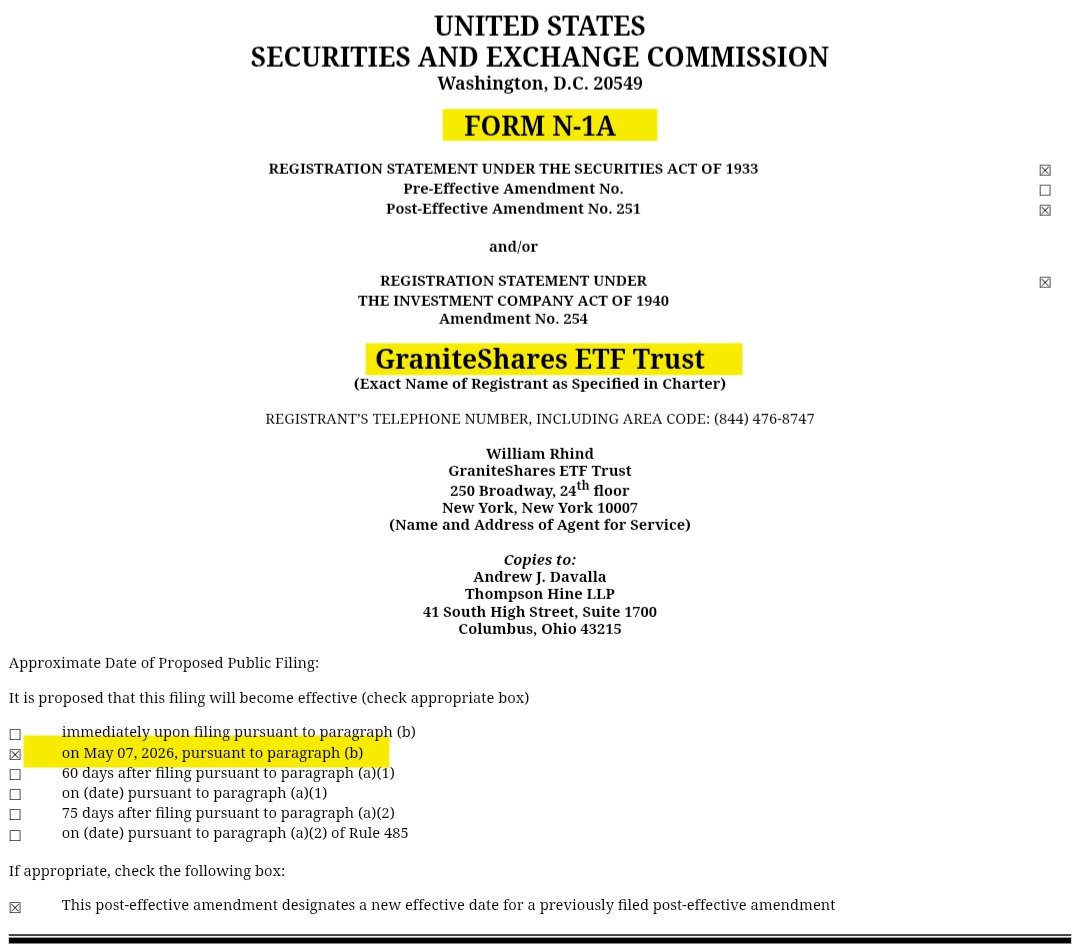
GraniteShares Delays 3x XRP ETF Launch But Accumulation Continues

XRP Sends Bullish On-Chain Signal Despite Weak Price Action