Highlights: OpenSea to debut $SEA token in 2026, dedicating half to community holders. Platform plans to use 50% of revenue for strategic SEA token buybacks. The goal is to make OpenSea a main place for all on-chain trading. OpenSea is preparing to expand its platform with the launch of the SEA token in the first quarter of 2026. In a message shared on X, CEO Devin Finzer confirmed that half of the total token supply will go directly to the community. Early claims will focus on OG users and participants in past rewards programs. OpenSea to Reward Early Users with SEA Token and Staking Features OpenSea plans to integrate SEA closely into its platform and will use 50% of its launch revenue to buy back tokens. SEA tokens will go to early users and people who joined OpenSea’s past rewards programs, so longtime supporters are rewarded. The token also lets holders stake SEA with their favorite tokens and collections. Staking is designed to keep users engaged and make the OpenSea ecosystem stronger. “SEA isn’t being created to be launched and forgotten,” the CEO emphasized. Finzer shared that the platform reached $2.6 billion in trading volume this month, with more than 90% coming from token trading. He said this shows strong user engagement and adoption of OpenSea’s wider trading features. It also highlights the market’s interest in integrated token ecosystems.  OpenSea crossed $2.6B in trading volume this month, with over 90% from token trading. This is just the beginning of our transformation, from “NFT marketplace” to “trade everything.” NFTs were chapter one for us. In 2021, OpenSea brought the first wave of everyday internet users… — dfinzer.eth | opensea (@dfinzer) October 17, 2025 Finzer explained in a post that NFTs were just the first chapter for OpenSea. He said the next phase is to build a complete destination for the entire on-chain economy. According to him, the goal is to create one place where users can trade everything, tokens, culture, art, ideas, and both digital and physical assets, in an environment that feels like a home rather than a bank. He added that the company aims to remove the need for centralized exchanges. Finzer said that the platform will become the main hub for the whole on-chain economy. OpenSea CEO said: “You shouldn’t have to use a CEX and give up custody of your assets. But you also shouldn’t need to navigate a maze of chains, bridges, wallets, and protocols in order to use onchain liquidity.” Crypto Projects Join Airdrop Wave to Reward Users OpenSea’s upcoming SEA token rollout follows a wider trend of airdrops spreading fast across the crypto world. Several major projects are turning to community rewards to attract and retain users. MetaMask, for instance, recently launched a rewards dashboard, sparking excitement about a possible MASK token airdrop. Metamask Rewards Are Coming Soon! The @MetaMask rewards page is live (well, almost). https://t.co/h2PLVDgflx Right now, the page opens but immediately redirects to the dashboard. That means rewards are coming soon but are not available yet. What’s clear now is that… pic.twitter.com/LpZQqxndU8 — Pranjal Bora (@Crypto_Pranjal) October 3, 2025 Aster has also kicked off its own campaign, where users can earn points, trade, and add liquidity through “point farming” to unlock future rewards. BNB Chain and Four Meme have joined the movement too, launching a $45 million “Reload Airdrop” to help traders hit by recent market swings. The campaign will distribute rewards to over 160,000 users. Similarly, Cardano’s NIGHT airdrop earlier this year showed how such community-driven initiatives can boost loyalty and activity among crypto holders. eToro Platform Best Crypto Exchange Over 90 top cryptos to trade Regulated by top-tier entities User-friendly trading app 30+ million users 9.9 Visit eToro eToro is a multi-asset investment platform. The value of your investments may go up or down. Your capital is at risk. Don’t invest unless you’re prepared to lose all the money you invest. This is a high-risk investment, and you should not expect to be protected if something goes wrong. Highlights: OpenSea to debut $SEA token in 2026, dedicating half to community holders. Platform plans to use 50% of revenue for strategic SEA token buybacks. The goal is to make OpenSea a main place for all on-chain trading. OpenSea is preparing to expand its platform with the launch of the SEA token in the first quarter of 2026. In a message shared on X, CEO Devin Finzer confirmed that half of the total token supply will go directly to the community. Early claims will focus on OG users and participants in past rewards programs. OpenSea to Reward Early Users with SEA Token and Staking Features OpenSea plans to integrate SEA closely into its platform and will use 50% of its launch revenue to buy back tokens. SEA tokens will go to early users and people who joined OpenSea’s past rewards programs, so longtime supporters are rewarded. The token also lets holders stake SEA with their favorite tokens and collections. Staking is designed to keep users engaged and make the OpenSea ecosystem stronger. “SEA isn’t being created to be launched and forgotten,” the CEO emphasized. Finzer shared that the platform reached $2.6 billion in trading volume this month, with more than 90% coming from token trading. He said this shows strong user engagement and adoption of OpenSea’s wider trading features. It also highlights the market’s interest in integrated token ecosystems.  OpenSea crossed $2.6B in trading volume this month, with over 90% from token trading. This is just the beginning of our transformation, from “NFT marketplace” to “trade everything.” NFTs were chapter one for us. In 2021, OpenSea brought the first wave of everyday internet users… — dfinzer.eth | opensea (@dfinzer) October 17, 2025 Finzer explained in a post that NFTs were just the first chapter for OpenSea. He said the next phase is to build a complete destination for the entire on-chain economy. According to him, the goal is to create one place where users can trade everything, tokens, culture, art, ideas, and both digital and physical assets, in an environment that feels like a home rather than a bank. He added that the company aims to remove the need for centralized exchanges. Finzer said that the platform will become the main hub for the whole on-chain economy. OpenSea CEO said: “You shouldn’t have to use a CEX and give up custody of your assets. But you also shouldn’t need to navigate a maze of chains, bridges, wallets, and protocols in order to use onchain liquidity.” Crypto Projects Join Airdrop Wave to Reward Users OpenSea’s upcoming SEA token rollout follows a wider trend of airdrops spreading fast across the crypto world. Several major projects are turning to community rewards to attract and retain users. MetaMask, for instance, recently launched a rewards dashboard, sparking excitement about a possible MASK token airdrop. Metamask Rewards Are Coming Soon! The @MetaMask rewards page is live (well, almost). https://t.co/h2PLVDgflx Right now, the page opens but immediately redirects to the dashboard. That means rewards are coming soon but are not available yet. What’s clear now is that… pic.twitter.com/LpZQqxndU8 — Pranjal Bora (@Crypto_Pranjal) October 3, 2025 Aster has also kicked off its own campaign, where users can earn points, trade, and add liquidity through “point farming” to unlock future rewards. BNB Chain and Four Meme have joined the movement too, launching a $45 million “Reload Airdrop” to help traders hit by recent market swings. The campaign will distribute rewards to over 160,000 users. Similarly, Cardano’s NIGHT airdrop earlier this year showed how such community-driven initiatives can boost loyalty and activity among crypto holders. eToro Platform Best Crypto Exchange Over 90 top cryptos to trade Regulated by top-tier entities User-friendly trading app 30+ million users 9.9 Visit eToro eToro is a multi-asset investment platform. The value of your investments may go up or down. Your capital is at risk. Don’t invest unless you’re prepared to lose all the money you invest. This is a high-risk investment, and you should not expect to be protected if something goes wrong.

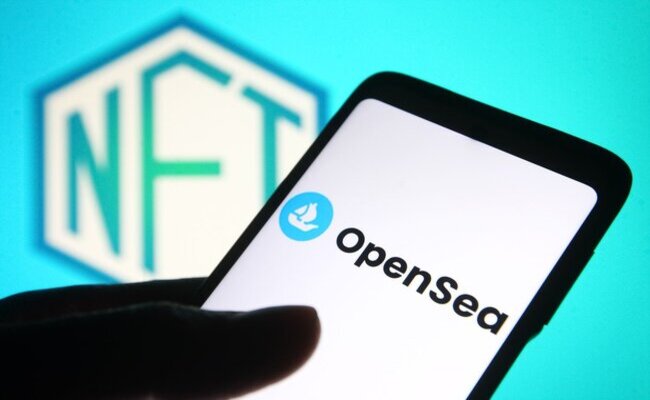
OpenSea to Launch SEA Token in Q1 2026 with Staking and Rewards
Highlights:

  • OpenSea to debut $SEA token in 2026, dedicating half to community holders.
  • Platform plans to use 50% of revenue for strategic SEA token buybacks.
  • The goal is to make OpenSea a main place for all on-chain trading.

OpenSea is preparing to expand its platform with the launch of the SEA token in the first quarter of 2026. In a message shared on X, CEO Devin Finzer confirmed that half of the total token supply will go directly to the community. Early claims will focus on OG users and participants in past rewards programs.

OpenSea to Reward Early Users with SEA Token and Staking Features

OpenSea plans to integrate SEA closely into its platform and will use 50% of its launch revenue to buy back tokens. SEA tokens will go to early users and people who joined OpenSea’s past rewards programs, so longtime supporters are rewarded. The token also lets holders stake SEA with their favorite tokens and collections. Staking is designed to keep users engaged and make the OpenSea ecosystem stronger. “SEA isn’t being created to be launched and forgotten,” the CEO emphasized.

Finzer shared that the platform reached $2.6 billion in trading volume this month, with more than 90% coming from token trading. He said this shows strong user engagement and adoption of OpenSea’s wider trading features. It also highlights the market’s interest in integrated token ecosystems. 

Finzer explained in a post that NFTs were just the first chapter for OpenSea. He said the next phase is to build a complete destination for the entire on-chain economy. According to him, the goal is to create one place where users can trade everything, tokens, culture, art, ideas, and both digital and physical assets, in an environment that feels like a home rather than a bank. He added that the company aims to remove the need for centralized exchanges. Finzer said that the platform will become the main hub for the whole on-chain economy.

OpenSea CEO said:

Crypto Projects Join Airdrop Wave to Reward Users

OpenSea’s upcoming SEA token rollout follows a wider trend of airdrops spreading fast across the crypto world. Several major projects are turning to community rewards to attract and retain users. MetaMask, for instance, recently launched a rewards dashboard, sparking excitement about a possible MASK token airdrop.

Aster has also kicked off its own campaign, where users can earn points, trade, and add liquidity through “point farming” to unlock future rewards. BNB Chain and Four Meme have joined the movement too, launching a $45 million “Reload Airdrop” to help traders hit by recent market swings. The campaign will distribute rewards to over 160,000 users. Similarly, Cardano’s NIGHT airdrop earlier this year showed how such community-driven initiatives can boost loyalty and activity among crypto holders.

eToro Platform

Best Crypto Exchange

  • Over 90 top cryptos to trade
  • Regulated by top-tier entities
  • User-friendly trading app
  • 30+ million users
9.9

5 Stars

Visit eToro

eToro is a multi-asset investment platform. The value of your investments may go up or down. Your capital is at risk. Don’t invest unless you’re prepared to lose all the money you invest. This is a high-risk investment, and you should not expect to be protected if something goes wrong.


Market Opportunity
TokenFi Logo
TokenFi Price(TOKEN)
$0.002495
$0.002495$0.002495
-3.55%
USD
TokenFi (TOKEN) Live Price Chart
Disclaimer: The articles reposted on this site are sourced from public platforms and are provided for informational purposes only. They do not necessarily reflect the views of MEXC. All rights remain with the original authors. If you believe any content infringes on third-party rights, please contact [email protected] for removal. MEXC makes no guarantees regarding the accuracy, completeness, or timeliness of the content and is not responsible for any actions taken based on the information provided. The content does not constitute financial, legal, or other professional advice, nor should it be considered a recommendation or endorsement by MEXC.

You May Also Like

U.S. Coinbase Premium Turns Negative Amid Asian Buying Surge

U.S. Coinbase Premium Turns Negative Amid Asian Buying Surge

U.S. institutional demand falls as Asian markets buy Bitcoin dips, causing negative Coinbase premium.
Share
CoinLive2025/12/23 14:20
Crucial ETH Unstaking Period: Vitalik Buterin’s Unwavering Defense for Network Security

Crucial ETH Unstaking Period: Vitalik Buterin’s Unwavering Defense for Network Security

BitcoinWorld Crucial ETH Unstaking Period: Vitalik Buterin’s Unwavering Defense for Network Security Ever wondered why withdrawing your staked Ethereum (ETH) isn’t an instant process? It’s a question that often sparks debate within the crypto community. Ethereum founder Vitalik Buterin recently stepped forward to defend the network’s approximately 45-day ETH unstaking period, asserting its crucial role in safeguarding the network’s integrity. This lengthy waiting time, while sometimes seen as an inconvenience, is a deliberate design choice with profound implications for security. Why is the ETH Unstaking Period a Vital Security Measure? Vitalik Buterin’s defense comes amidst comparisons to other networks, like Solana, which boast significantly shorter unstaking times. He drew a compelling parallel to military operations, explaining that an army cannot function effectively if its soldiers can simply abandon their posts at a moment’s notice. Similarly, a blockchain network requires a stable and committed validator set to maintain its security. The current ETH unstaking period isn’t merely an arbitrary delay. It acts as a critical buffer, providing the network with sufficient time to detect and respond to potential malicious activities. If validators could instantly exit, it would open doors for sophisticated attacks, jeopardizing the entire system. Currently, Ethereum boasts over one million active validators, collectively staking approximately 35.6 million ETH, representing about 30% of the total supply. This massive commitment underpins the network’s robust security model, and the unstaking period helps preserve this stability. Network Security: Ethereum’s Paramount Concern A shorter ETH unstaking period might seem appealing for liquidity, but it introduces significant risks. Imagine a scenario where a large number of validators, potentially colluding, could quickly withdraw their stake after committing a malicious act. Without a substantial delay, the network would have limited time to penalize them or mitigate the damage. This “exit queue” mechanism is designed to prevent sudden validator exodus, which could lead to: Reduced decentralization: A rapid drop in active validators could concentrate power among fewer participants. Increased vulnerability to attacks: A smaller, less stable validator set is easier to compromise. Network instability: Frequent and unpredictable changes in validator numbers can lead to performance issues and consensus failures. Therefore, the extended period is not a bug; it’s a feature. It’s a calculated trade-off between immediate liquidity for stakers and the foundational security of the entire Ethereum ecosystem. Ethereum vs. Solana: Different Approaches to Unstaking When discussing the ETH unstaking period, many point to networks like Solana, which offers a much quicker two-day unstaking process. While this might seem like an advantage for stakers seeking rapid access to their funds, it reflects fundamental differences in network architecture and security philosophies. Solana’s design prioritizes speed and immediate liquidity, often relying on different consensus mechanisms and validator economics to manage security risks. Ethereum, on the other hand, with its proof-of-stake evolution from proof-of-work, has adopted a more cautious approach to ensure its transition and long-term stability are uncompromised. Each network makes design choices based on its unique goals and threat models. Ethereum’s substantial value and its role as a foundational layer for countless dApps necessitate an extremely robust security posture, making the current unstaking duration a deliberate and necessary component. What Does the ETH Unstaking Period Mean for Stakers? For individuals and institutions staking ETH, understanding the ETH unstaking period is crucial for managing expectations and investment strategies. It means that while staking offers attractive rewards, it also comes with a commitment to the network’s long-term health. Here are key considerations for stakers: Liquidity Planning: Stakers should view their staked ETH as a longer-term commitment, not immediately liquid capital. Risk Management: The delay inherently reduces the ability to react quickly to market volatility with staked assets. Network Contribution: By participating, stakers contribute directly to the security and decentralization of Ethereum, reinforcing its value proposition. While the current waiting period may not be “optimal” in every sense, as Buterin acknowledged, simply shortening it without addressing the underlying security implications would be a dangerous gamble for the network’s reliability. In conclusion, Vitalik Buterin’s defense of the lengthy ETH unstaking period underscores a fundamental principle: network security cannot be compromised for the sake of convenience. It is a vital mechanism that protects Ethereum’s integrity, ensuring its stability and trustworthiness as a leading blockchain platform. This deliberate design choice, while requiring patience from stakers, ultimately fortifies the entire ecosystem against potential threats, paving the way for a more secure and reliable decentralized future. Frequently Asked Questions (FAQs) Q1: What is the main reason for Ethereum’s long unstaking period? A1: The primary reason is network security. A lengthy ETH unstaking period prevents malicious actors from quickly withdrawing their stake after an attack, giving the network time to detect and penalize them, thus maintaining stability and integrity. Q2: How long is the current ETH unstaking period? A2: The current ETH unstaking period is approximately 45 days. This duration can fluctuate based on network conditions and the number of validators in the exit queue. Q3: How does Ethereum’s unstaking period compare to other blockchains? A3: Ethereum’s unstaking period is notably longer than some other networks, such as Solana, which has a two-day period. This difference reflects varying network architectures and security priorities. Q4: Does the unstaking period affect ETH stakers? A4: Yes, it means stakers need to plan their liquidity carefully, as their staked ETH is not immediately accessible. It encourages a longer-term commitment to the network, aligning staker interests with Ethereum’s stability. Q5: Could the ETH unstaking period be shortened in the future? A5: While Vitalik Buterin acknowledged the current period might not be “optimal,” any significant shortening would likely require extensive research and network upgrades to ensure security isn’t compromised. For now, the focus remains on maintaining robust network defenses. Found this article insightful? Share it with your friends and fellow crypto enthusiasts on social media to spread awareness about the critical role of the ETH unstaking period in Ethereum’s security! To learn more about the latest Ethereum trends, explore our article on key developments shaping Ethereum’s institutional adoption. This post Crucial ETH Unstaking Period: Vitalik Buterin’s Unwavering Defense for Network Security first appeared on BitcoinWorld.
Share
Coinstats2025/09/18 15:30
USD/JPY jumps to near 148.30 as Fed Powell’s caution on rate cuts boosts US Dollar

USD/JPY jumps to near 148.30 as Fed Powell’s caution on rate cuts boosts US Dollar

The post USD/JPY jumps to near 148.30 as Fed Powell’s caution on rate cuts boosts US Dollar appeared on BitcoinEthereumNews.com. USD/JPY climbs to near 148.30 as Fed’s Powell didn’t endorse aggressive dovish stance. Fed’s Powell warns of slowing job demand and upside inflation risks. Japan’s Jibun Bank Manufacturing PMI declines at a faster pace in September. The USD/JPY pair trades 0.45% higher to near 148.30 during the European trading session on Wednesday. The pair gains sharply as the US Dollar (USD) outperforms a majority of its peers, following comments from Federal Reserve (Fed) Chair Jerome Powell that the central bank needs to be cautious on further interest rate cuts. During the press time, the US Dollar Index (DXY), which tracks the Greenback’s value against six major currencies, rises almost 0.4% to near 97.60. The USD Index resumes its upside journey after a two-day corrective move. On Tuesday, Fed’s Powell stated at the Greater Providence Chamber of Commerce that the upside inflation risks and labor market concerns have posed a challenging situation for the central bank, which is prompting officials to exercise caution on further monetary policy easing. Powell also stated that the current interest rate range is “well positioned to respond to potential economic developments”. Fed Powell’s comments were similar to statements from Federal Open Market Committee (FOMC) members St. Louis Fed President Alberto Musalem, Atlanta Fed President Raphael Bostic, and Cleveland Fed President Beth Hammack who stated on Monday that the central bank needs to cautious over unwinding monetary policy restrictiveness further, citing persistent inflation risks. Going forward, investors will focus on the US Durable Goods Orders and Personal Consumption Expenditure Price Index (PCE) data for August, which will be released on Thursday and Friday, respectively. In Japan, the manufacturing business activity has declined again in September. Preliminary Jibun Bank Manufacturing PMI data came in lower at 48.4 against 49.7 in August. Economists had anticipated the Manufacturing PMI to…
Share
BitcoinEthereumNews2025/09/25 01:31