Digitap ($TAP) takes on XRP and Hedera with a live omni-bank app, working Visa card, and deflationary token priced at just $0.0194.Digitap ($TAP) takes on XRP and Hedera with a live omni-bank app, working Visa card, and deflationary token priced at just $0.0194.

Record-Breaking Crypto Presale Digitap ($TAP)—Already Challenging XRP & Hedera (XLM)

For feedback or concerns regarding this content, please contact us at [email protected]

Just months ago, XRP and Hedera dominated talk of payments and enterprise tech. They were the names everyone looked to when it came to real-world use in crypto. But now, a new player is quietly rewriting that story. Digitap ($TAP) has taken its presale to another level — not with promises, but with delivery.

The project offers a working app where users can store both crypto and cash, send money worldwide, and spend it instantly through a Visa-linked card. The $TAP token is currently priced at $0.0194. For a project that already has a functioning product, that entry point looks early — and powerful.

XRP Fights to Stay on Top

XRP has been part of crypto’s core for years. It remains a key asset in global payments as it helps banks and payment networks move funds quickly and cheaply. The token currently trades around $2.46, up about 5% in a day. Analysts believe this rebound may be the start of a new phase.

chart864 1 1

Source: TradingView/XRP

The main story behind XRP right now is the growing excitement around possible spot ETFs and Ripple’s $1 billion buyback program. That buyback will remove a billion tokens from circulation, which will tighten supply as demand grows. 

On the technical side, XRP is trading inside a symmetrical triangle, with support near $2.30 and resistance close to $2.90–$3.00. Analysts say a breakout above that level could open the door to $3.40 or higher, though a drop under $2.30 could test $2 again. 

XRP’s growth depends on large institutions and slower-moving partnerships. The token has maturity and strength but lacks the speed of younger, more agile projects now entering the scene.

Hedera Faces a Test After a Rebound

Hedera stands out for its Hashgraph tech, known for being fast and energy-light compared to normal blockchains. Its token, HBAR, trades around $0.18 after bouncing from October lows near $0.10 — a strong comeback of about 76%.

Digitap 357 1

Source: TradingView/HBAR

The rally followed the broader crypto recovery as traders hoped the Federal Reserve would keep cutting interest rates. Even so, analysts warn the move might not hold. Charts still look bearish, and if HBAR can’t clear $0.206, it could drift back to around $0.15.

Hedera’s network has had a tough month. DeFi activity dropped over 20%, leaving just $180 million locked in its protocols. Its stablecoin market sits near $100 million, which is small compared with other large networks.

Investors still like Hedera’s strong tech base and its lineup of corporate partners, but short-term growth may depend on attracting more real users and practical projects.

Digitap Leaves XRP and Hedera Behind

Digitap stands out for one simple reason — it already works. The project is designed as the world’s first omni-bank, a live app that connects traditional money and crypto in one account. Users can download it now from both the Apple App Store and Google Play, create an account, and spend using a Visa-linked card that supports both fiat and crypto.

Digitap

That level of readiness is rare in presales, and it explains why Digitap is being called the best presale of the year. Here’s why it stands apart:

  • Live Utility: The app is active, letting users send, store, and spend crypto and cash under one account.
  • Working Card: The Digitap Visa card connects to Apple Pay and Google Pay for easy everyday use.
  • Security: The platform has passed audits by Solidproof and Coinsult, which shows a focus on safety and transparency.
  • Deflationary Tokenomics: Digitap commits 50% of all platform profits to buybacks and burns, cutting supply as activity grows.
  • Presale Price: The current $TAP price is $0.0194, with the next round set to rise to $0.0268.

Digitap has achieved what many presale projects only promise. It combines working technology, clear revenue plans, and active adoption — traits that give it both credibility and explosive upside potential.

Digitap 357 1

What Is the Top Crypto to Invest in Right Now?

XRP and Hedera both have proven networks and strong corporate support, but they move at the pace of traditional institutions. Digitap moves like a startup with momentum. It already delivers what others are still testing — real payments, live users, and direct utility.

The $TAP presale offers a low entry point into a project already tied to real-world use. If adoption continues to climb, early participants could see returns that far exceed what mature assets like XRP or HBAR can now offer.

In the current market cycle, investors are looking for practical products, not just future plans. Digitap fits that moment perfectly. It is not just another presale — it’s the one setting a new standard for what early-stage crypto success looks like.

Digitap is Live NOW. Learn more about their project here:

Presale https://presale.digitap.app

Website: https://digitap.app 

Social: https://linktr.ee/digitap.app

Disclaimer: The articles reposted on this site are sourced from public platforms and are provided for informational purposes only. They do not necessarily reflect the views of MEXC. All rights remain with the original authors. If you believe any content infringes on third-party rights, please contact [email protected] for removal. MEXC makes no guarantees regarding the accuracy, completeness, or timeliness of the content and is not responsible for any actions taken based on the information provided. The content does not constitute financial, legal, or other professional advice, nor should it be considered a recommendation or endorsement by MEXC.

You May Also Like

UNI Price Prediction: Testing $4.17 Upper Band Resistance, Targets $4.50 by April 2026
UNI Price Prediction: Testing $4.17 Upper Band Resistance, Targets $4.50 by April 2026

Uniswap trades at $3.88 with neutral RSI at 51.98. Technical analysis suggests potential breakout to $4.17 upper Bollinger Band, with bullish targets reaching $
Share
BlockChain News2026/03/12 17:21
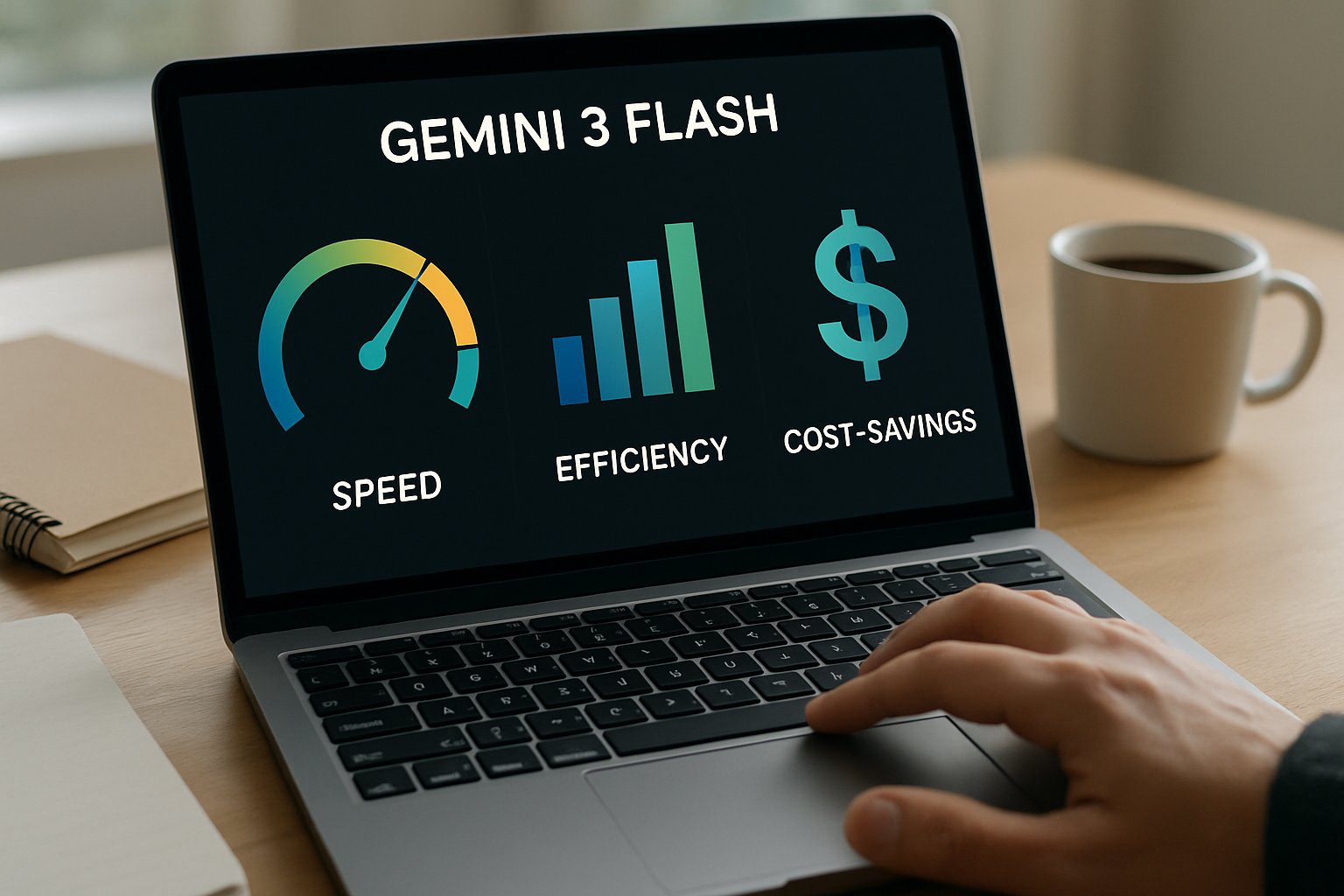
Speed, Cost, and Intelligence: How Kie.ai’s Gemini 3 Flash API Balances Performance and Budget for Developers

Speed, Cost, and Intelligence: How Kie.ai’s Gemini 3 Flash API Balances Performance and Budget for Developers

Integrating AI into applications is a balancing act between performance, cost, and intelligence. Traditionally, high-performance AI models come with steep costs
Share
Techbullion2026/03/12 16:55
Cash Flow Valuation HyperLiquid: Could $HYPE Reach $385 in Five Years?

Cash Flow Valuation HyperLiquid: Could $HYPE Reach $385 in Five Years?

Author: G3ronimo Compiled by: TechFlow HyperLiquid has grown into a mature crypto-native exchange, with the majority of its net fees programmatically distributed directly to token holders through an "Assistance Fund" (AF). This design makes $HYPE one of the few tokens capable of being valued based on cash flow. To date, most valuations of HyperLiquid have relied on traditional multiples, comparing it to established financial platforms like Coinbase and Robinhood, using EBITDA or revenue multiples as a reference. Unlike traditional corporate stocks, where management typically retains and reinvests earnings at their discretion, HyperLiquid systematically returns 93% of transaction fees directly to token holders through a support fund. This model creates predictable and quantifiable cash flows, making it well-suited for detailed discounted cash flow (DCF) analysis rather than static multiple comparisons. Our methodology begins by determining $HYPE's cost of capital. We then invert the current market price to determine the market-implied future earnings. Finally, we apply growth projections to these earnings streams and compare the resulting intrinsic value to today's market price, revealing the valuation gap between current pricing and fundamental value. Why choose discounted cash flow (DCF) over a multiple? While other valuation methods compare HyperLiquid to Coinbase and Robinhood via EBITDA multiples, these methods have the following limitations: The difference between the corporate and token structures: Coinbase and Robinhood are corporate stocks, whose capital allocation is guided by the board of directors, and profits are retained and reinvested by management; while HyperLiquid systematically returns 93% of trading fees directly to token holders through a relief fund. Direct Cash Flow: HyperLiquid's design generates predictable cash flows that are well-suited to DCF models, rather than static multiples. Growth and risk characteristics: DCFs are able to explicitly model different growth scenarios and risk adjustments, whereas multiples may not adequately capture growth and risk dynamics. Determining an appropriate discount rate To determine our cost of equity, we start with reference data from the public market and adjust for cryptocurrency-specific risks: Cost of equity (r) ≈ Risk-free rate + β × Market risk premium + Crypto/illiquidity premium Beta Analysis Based on regression analysis with the S&P 500: Robinhood (HOOD): Beta of 2.5, implied cost of equity of 15.6%; Coinbase (COIN): Beta of 2.0, implied cost of equity of 13.6%; HyperLiquid (HYPE): Beta is 1.38 and the implied cost of equity is 10.5%. At first glance, $HYPE appears to have a lower beta, and therefore a lower cost of equity than Robinhood and Coinbase. However, the R² value reveals an important limitation: HOOD: The S&P 500 explains 50% of its returns; COIN: The S&P 500 explains 34% of its return; HYPE: The S&P 500 only explains 5% of its returns. $HYPE’s low R² suggests that traditional stock market factors are insufficient to explain its price fluctuations, and crypto-native risk factors need to be considered. risk assessment Despite $HYPE’s lower beta, we still adjust its discount rate from 10.5% to 13% (which is more conservative compared to COIN’s 13.6% and HOOD’s 15.6%) for the following reasons: Lower governance risk: Direct programmatic distribution of 93% of fees reduces concerns about corporate governance. In contrast, COIN and HOOD do not return any earnings to shareholders, and their capital allocation is determined by management. Higher Market Risk: $HYPE is a crypto-native asset and is subject to additional regulatory and technological uncertainties. Liquidity considerations: Token markets are generally less liquid than established stock markets. Get the Market Implied Price (MIP) Using our 13% discount rate, we can reverse engineer the market’s implied earnings expectations at the current $HYPE token price of approximately $54: Current market expectations: 2025: Total revenue of $700 million 2026: Total revenue of $1.4 billion Terminal growth: 3% annual growth thereafter These assumptions yield an intrinsic value of approximately $54, which is consistent with current market prices. This suggests that the market is pricing in modest growth based on current fee levels. At this point we need to ask a question: Does the market-implied price (MIP) reflect future cash flows? Alternative growth scenarios @Keisan_Crypto presents an attractive 2-year and 5-year bull market scenario. Original tweet link: Click here Two-year bull market forecast According to @Keisan_Crypto’s analysis, if HyperLiquid achieves the following goals: Annualized fees: $3.6 billion Aid fund income: $3.35 billion (93% of fees) Result: HYPE's intrinsic value is $128 (140% undervalued at current price) Related links Five-year bull market scenario Under a five-year bull market scenario (link), he predicts that transaction fees will reach $10 billion annually, with $9.3 billion accruing to $HYPE. He assumes HyperLiquid's global market share will grow from its current 5% to 50% by 2030. Even if it doesn't reach 50% market share, these figures are still achievable with a smaller market share as global trading volumes continue to grow. Five-year bull market forecast Annualized fees: $10 billion Aid fund income: $9.3 billion Result: HYPE's intrinsic value is $385 (600% undervalued at current price) Related links While this valuation is lower than Keisan's $1,000 target, the difference stems from our assumption of normalized earnings growth at 3% annually thereafter, while Keisan's model uses a cash flow multiple. We believe using cash flow multiples to project long-term value is problematic, as market multiples are volatile and can vary significantly over time. Furthermore, the multiples themselves incorporate earnings growth assumptions, while using the same cash flow multiple five years from now as one or two years later implies that growth levels from 2030 onward will be consistent with those in 2026/2027. Therefore, the multiples are more appropriate for short-term asset pricing. However, regardless of which model is used, $HYPE remains undervalued; this is a subtle difference. Additional Value Driver: USDH Under the Native Market model, USDH will use 50% of its stablecoin revenue for buybacks similar to a bailout fund. As a result, $HYPE can increase its free cash flow by $100 million (50% of $200 million) annually. Looking ahead five years, if USDH's market capitalization reaches $25 billion (currently still one-third of USDC's, and an even smaller portion of the total stablecoin market five years from now), its annual revenue could reach $1 billion. Following the same 50% distribution model, this would generate an additional $500 million in free cash flow per year for the aid fund. This would value each token at over $400. Excluding Value Drivers: HIP-3 and HyperEVM This DCF analysis intentionally excludes two important potential value drivers that are not amenable to cash flow modeling. Clearly, these would provide additional incremental value and could therefore be evaluated separately using different valuation methodologies and then added to this valuation. Summarize Our DCF analysis indicates that if HyperLiquid can maintain its growth trajectory and market position, the $HYPE token is significantly undervalued. The token's unique feature of programmatic fee distribution makes it particularly suitable for cash flow-based valuation methodologies. Methodological Notes This analysis builds on research by @Keisan_Crypto and @GLC_Research. The DCF model is open source and can be modified at the following link: https://valypto.xyz/project/hyperliquid/oNQraQIg Market data and forecasts are subject to change, and models should be updated promptly based on the latest information.
Share
PANews2025/09/19 08:00
