Major crypto wallet maker Ledger has announced that its wallets are now ‘signers’, with the first of its kind, Ledger Nano Gen5, ready to ship. The company has highlighted a number of features meant to safeguard finances and digital identities, it said. First, the company has made some name changes to reflect the expanded concept. Previously called ‘hardware wallets’, its devices are now ‘Ledger signers’. The interface Ledger Live is now Ledger Wallet. Ledger signers will secure the interface, according to the announcement. “This update reflects their expanded role beyond securing financial transactions, including protecting digital identity in a world accelerated by AI,” the team says. The new Nano signer will usher in these changes. Ledger Nano Gen5 is ”the most powerful and playful Ledger Nano we’ve ever built,” they added. It will ”secure everything from assets to identity, smart contracts to tomorrow’s protocols.” Notably, the new device features NFC and Bluetooth for “on-the-go signing.” Its E Ink touchscreen enables Clear Signing, Transaction Check, and Ledger Security Key. “The Ledger Nano series is the most successful digital asset security device of all time, with millions sold and none ever hacked,” said Chairman and CEO Pascal Gauthier. “The all-new Ledger Nano is built for the challenges and opportunities of today, and ready for those coming in the future.” Ledger Nano is available to order, shipping immediately, for $179 (€179). You may also like: Ledger Launches Recovery Key, a Physical ‘Spare Key’ Major crypto wallet maker Ledger has released Ledger Recovery Key, a spare key for users to access digital assets. The company announced this product in late June 2025. It allows Ledger Flex and Ledger Stax users to create a spare key alongside the 24 words. According to the press release, Ledger Recovery Key is supposed to make accessing digital assets simple. The team claims it’s “as easy as tapping a card and entering a PIN.” The spare key connects directly to the wallet via NFC... DeFi Connection, Cash-To-Stablecoin, and Ledger Multisig At the same time, the Ledger Wallet app serves as a portfolio tracker and an “intuitive control center” for digital value. It provides services for buying, swapping, earning, and other actions. Per the announcement, the app’s Buy, Sell, Earn, and Swap features have been updated, providing heightened speed and reliability. Its new features include the ability to connect the Ledger signer directly to dapps. Moreover, it’s integrating Noah, aka ‘Cash-To-Stablecoin’. Users will be able to top up their wallet with USD or EUR without additional fees and instantly convert it to USDC. Chief Experience Officer Ian Rogers commented that “the combination of Ledger Wallet on your smartphone or computer and your Ledger signer makes it easy and safe to use the full range of services offered by decentralized finance.” Meanwhile, Ledger Signers will also “enable Proof of Authority beyond the individual.” It will expand into the institutional area, via Ledger’s platform for banks, custodians, governments, foundations, and crypto-native businesses. Expanding its Ledger Enterprise, the company unveiled the Ledger Multisig, aiming to turn “high-stakes operations into precise, verifiable decisions,” it said. “Every approval is Clear Signed on a Ledger device, so every action is seen, understood, and locked with cryptographic certainty.” The team designed Multisig for treasury management, smart contract governance, and multi-chain workflows. The Ledger Nano, Ledger Wallet, and Ledger Enterprise Multisig were tested by the Donjon, Ledger’s white hat hacker team. External security experts audited the products, the announcement says. Spare Key With Every Nano Ledger Recovery Key will be included in every Nano Gen5 box. In July this year, Ledger released its Ledger Recovery Key, a spare key for users to access digital assets. First announced in late June 2025, the product allows Ledger Flex and Ledger Stax users to create a spare key alongside the 24 words. The spare key connects directly to the wallet via NFC wireless channels. It’s kept on hardware and is protected by its own PIN code. Now, per the latest announcement, “NFC support further enables Ledger Security Key, allowing you to use FIDO2 Passkeys to protect your logins using your Ledger signer.” Meanwhile, Susan Kare, the artist and graphic designer behind the Apple Macintosh’s original iconography, has designed iconography for an exclusive series of Badges to personalize Ledger Nano. You may also like: Ledger Starts Shipping its New Ledger Stax Hardware Wallet After 18 Months French startup Ledger has finally begun shipping its latest Ledger Stax devices, nearly 18 months after their initial announcement. Collaborating with Tony Fadell, one of the key designers behind the iPod, Ledger has introduced an updated wallet featuring an E-Ink display, according to a report from TechCrunch. E-Ink technology, commonly used in e-book readers like the Amazon Kindle and Rakuten Kobo, provides a clear display in daylight while consuming minimal power. Following the... Competitor Reveals Trezor Safe 7 Just a couple of days prior to Ledger’s announcement, wallet maker Trezor presented its latest offering, Safe 7. The features focus on security, with the company claiming to be the first to include several key elements. These too are future- and protection-focused: while Ledger highlighted AI, Trezor noted quantum computers. These new features include TROPIC01, described as “the world’s first transparent and auditable secure element.” There’s also key isolation, Bluetooth communication secured via the novel Trezor Host Protocol (THP), as well as architecture that supports “quantum-secure updates.” Trezor Safe 7 costs $249 (€249) and is available in Charcoal Black and Bitcoin-only editions, with Obsidian Green coming soon. Cryptonews talked exclusively with Tomáš Sušánka, Chief Technology Officer at Trezor, on the day of the launch. Read the interview below. You may also like: Exclusive: Blockchains Are Not Ready for the Quantum Threat, But Trezor Is, Says CTO Cryptonews has talked with Tomáš Sušánka, Chief Technology Officer at Trezor, at the wallet maker’s Prague conference on 21 October, titled Trustless by Design. Sušánka has discussed the launch of the Trezor Safe 7, specifically the post-quantum security, and whether there is really a need for this feature (currently). He also answered our questions about utilizing Bluetooth, which is known to have security issues. Finally, the CTO noted the advantages of the latest introductions,... Major crypto wallet maker Ledger has announced that its wallets are now ‘signers’, with the first of its kind, Ledger Nano Gen5, ready to ship. The company has highlighted a number of features meant to safeguard finances and digital identities, it said. First, the company has made some name changes to reflect the expanded concept. Previously called ‘hardware wallets’, its devices are now ‘Ledger signers’. The interface Ledger Live is now Ledger Wallet. Ledger signers will secure the interface, according to the announcement. “This update reflects their expanded role beyond securing financial transactions, including protecting digital identity in a world accelerated by AI,” the team says. The new Nano signer will usher in these changes. Ledger Nano Gen5 is ”the most powerful and playful Ledger Nano we’ve ever built,” they added. It will ”secure everything from assets to identity, smart contracts to tomorrow’s protocols.” Notably, the new device features NFC and Bluetooth for “on-the-go signing.” Its E Ink touchscreen enables Clear Signing, Transaction Check, and Ledger Security Key. “The Ledger Nano series is the most successful digital asset security device of all time, with millions sold and none ever hacked,” said Chairman and CEO Pascal Gauthier. “The all-new Ledger Nano is built for the challenges and opportunities of today, and ready for those coming in the future.” Ledger Nano is available to order, shipping immediately, for $179 (€179). You may also like: Ledger Launches Recovery Key, a Physical ‘Spare Key’ Major crypto wallet maker Ledger has released Ledger Recovery Key, a spare key for users to access digital assets. The company announced this product in late June 2025. It allows Ledger Flex and Ledger Stax users to create a spare key alongside the 24 words. According to the press release, Ledger Recovery Key is supposed to make accessing digital assets simple. The team claims it’s “as easy as tapping a card and entering a PIN.” The spare key connects directly to the wallet via NFC... DeFi Connection, Cash-To-Stablecoin, and Ledger Multisig At the same time, the Ledger Wallet app serves as a portfolio tracker and an “intuitive control center” for digital value. It provides services for buying, swapping, earning, and other actions. Per the announcement, the app’s Buy, Sell, Earn, and Swap features have been updated, providing heightened speed and reliability. Its new features include the ability to connect the Ledger signer directly to dapps. Moreover, it’s integrating Noah, aka ‘Cash-To-Stablecoin’. Users will be able to top up their wallet with USD or EUR without additional fees and instantly convert it to USDC. Chief Experience Officer Ian Rogers commented that “the combination of Ledger Wallet on your smartphone or computer and your Ledger signer makes it easy and safe to use the full range of services offered by decentralized finance.” Meanwhile, Ledger Signers will also “enable Proof of Authority beyond the individual.” It will expand into the institutional area, via Ledger’s platform for banks, custodians, governments, foundations, and crypto-native businesses. Expanding its Ledger Enterprise, the company unveiled the Ledger Multisig, aiming to turn “high-stakes operations into precise, verifiable decisions,” it said. “Every approval is Clear Signed on a Ledger device, so every action is seen, understood, and locked with cryptographic certainty.” The team designed Multisig for treasury management, smart contract governance, and multi-chain workflows. The Ledger Nano, Ledger Wallet, and Ledger Enterprise Multisig were tested by the Donjon, Ledger’s white hat hacker team. External security experts audited the products, the announcement says. Spare Key With Every Nano Ledger Recovery Key will be included in every Nano Gen5 box. In July this year, Ledger released its Ledger Recovery Key, a spare key for users to access digital assets. First announced in late June 2025, the product allows Ledger Flex and Ledger Stax users to create a spare key alongside the 24 words. The spare key connects directly to the wallet via NFC wireless channels. It’s kept on hardware and is protected by its own PIN code. Now, per the latest announcement, “NFC support further enables Ledger Security Key, allowing you to use FIDO2 Passkeys to protect your logins using your Ledger signer.” Meanwhile, Susan Kare, the artist and graphic designer behind the Apple Macintosh’s original iconography, has designed iconography for an exclusive series of Badges to personalize Ledger Nano. You may also like: Ledger Starts Shipping its New Ledger Stax Hardware Wallet After 18 Months French startup Ledger has finally begun shipping its latest Ledger Stax devices, nearly 18 months after their initial announcement. Collaborating with Tony Fadell, one of the key designers behind the iPod, Ledger has introduced an updated wallet featuring an E-Ink display, according to a report from TechCrunch. E-Ink technology, commonly used in e-book readers like the Amazon Kindle and Rakuten Kobo, provides a clear display in daylight while consuming minimal power. Following the... Competitor Reveals Trezor Safe 7 Just a couple of days prior to Ledger’s announcement, wallet maker Trezor presented its latest offering, Safe 7. The features focus on security, with the company claiming to be the first to include several key elements. These too are future- and protection-focused: while Ledger highlighted AI, Trezor noted quantum computers. These new features include TROPIC01, described as “the world’s first transparent and auditable secure element.” There’s also key isolation, Bluetooth communication secured via the novel Trezor Host Protocol (THP), as well as architecture that supports “quantum-secure updates.” Trezor Safe 7 costs $249 (€249) and is available in Charcoal Black and Bitcoin-only editions, with Obsidian Green coming soon. Cryptonews talked exclusively with Tomáš Sušánka, Chief Technology Officer at Trezor, on the day of the launch. Read the interview below. You may also like: Exclusive: Blockchains Are Not Ready for the Quantum Threat, But Trezor Is, Says CTO Cryptonews has talked with Tomáš Sušánka, Chief Technology Officer at Trezor, at the wallet maker’s Prague conference on 21 October, titled Trustless by Design. Sušánka has discussed the launch of the Trezor Safe 7, specifically the post-quantum security, and whether there is really a need for this feature (currently). He also answered our questions about utilizing Bluetooth, which is known to have security issues. Finally, the CTO noted the advantages of the latest introductions,...

Ledger Unveils ‘Ledger Signers’ with New Nano Gen5, Announces Enterprise Multisig

2025/10/23 20:07
6 min read
For feedback or concerns regarding this content, please contact us at [email protected]

Major crypto wallet maker Ledger has announced that its wallets are now ‘signers’, with the first of its kind, Ledger Nano Gen5, ready to ship. The company has highlighted a number of features meant to safeguard finances and digital identities, it said.

First, the company has made some name changes to reflect the expanded concept. Previously called ‘hardware wallets’, its devices are now ‘Ledger signers’.

The interface Ledger Live is now Ledger Wallet. Ledger signers will secure the interface, according to the announcement.

“This update reflects their expanded role beyond securing financial transactions, including protecting digital identity in a world accelerated by AI,” the team says.

The new Nano signer will usher in these changes. Ledger Nano Gen5 is ”the most powerful and playful Ledger Nano we’ve ever built,” they added. It will ”secure everything from assets to identity, smart contracts to tomorrow’s protocols.”
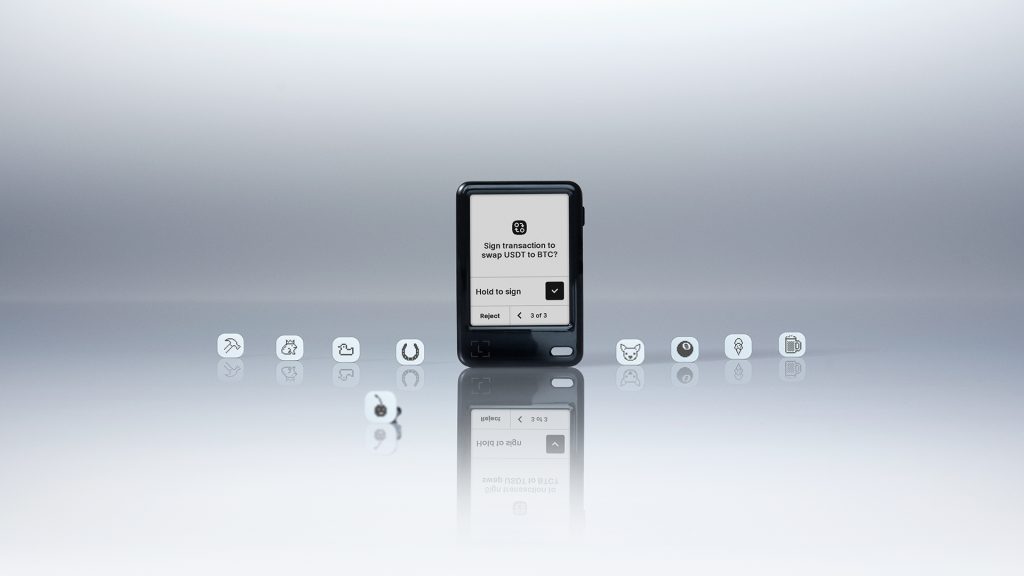
Notably, the new device features NFC and Bluetooth for “on-the-go signing.”

Its E Ink touchscreen enables Clear Signing, Transaction Check, and Ledger Security Key.

“The Ledger Nano series is the most successful digital asset security device of all time, with millions sold and none ever hacked,” said Chairman and CEO Pascal Gauthier. “The all-new Ledger Nano is built for the challenges and opportunities of today, and ready for those coming in the future.”

Ledger Nano is available to order, shipping immediately, for $179 (€179).

You may also like:
Ledger Launches Recovery Key, a Physical ‘Spare Key’
Major crypto wallet maker Ledger has released Ledger Recovery Key, a spare key for users to access digital assets. The company announced this product in late June 2025. It allows Ledger Flex and Ledger Stax users to create a spare key alongside the 24 words. According to the press release, Ledger Recovery Key is supposed to make accessing digital assets simple. The team claims it’s “as easy as tapping a card and entering a PIN.” The spare key connects directly to the wallet via NFC...

DeFi Connection, Cash-To-Stablecoin, and Ledger Multisig

At the same time, the Ledger Wallet app serves as a portfolio tracker and an “intuitive control center” for digital value. It provides services for buying, swapping, earning, and other actions.

Per the announcement, the app’s Buy, Sell, Earn, and Swap features have been updated, providing heightened speed and reliability.

Its new features include the ability to connect the Ledger signer directly to dapps.

Moreover, it’s integrating Noah, aka ‘Cash-To-Stablecoin’. Users will be able to top up their wallet with USD or EUR without additional fees and instantly convert it to USDC.

Chief Experience Officer Ian Rogers commented that “the combination of Ledger Wallet on your smartphone or computer and your Ledger signer makes it easy and safe to use the full range of services offered by decentralized finance.”

Meanwhile, Ledger Signers will also “enable Proof of Authority beyond the individual.” It will expand into the institutional area, via Ledger’s platform for banks, custodians, governments, foundations, and crypto-native businesses.

Expanding its Ledger Enterprise, the company unveiled the Ledger Multisig, aiming to turn “high-stakes operations into precise, verifiable decisions,” it said. “Every approval is Clear Signed on a Ledger device, so every action is seen, understood, and locked with cryptographic certainty.”

The team designed Multisig for treasury management, smart contract governance, and multi-chain workflows.

The Ledger Nano, Ledger Wallet, and Ledger Enterprise Multisig were tested by the Donjon, Ledger’s white hat hacker team. External security experts audited the products, the announcement says.

Spare Key With Every Nano

Ledger Recovery Key will be included in every Nano Gen5 box.

In July this year, Ledger released its Ledger Recovery Key, a spare key for users to access digital assets. First announced in late June 2025, the product allows Ledger Flex and Ledger Stax users to create a spare key alongside the 24 words.

The spare key connects directly to the wallet via NFC wireless channels. It’s kept on hardware and is protected by its own PIN code.

Now, per the latest announcement, “NFC support further enables Ledger Security Key, allowing you to use FIDO2 Passkeys to protect your logins using your Ledger signer.”

Meanwhile, Susan Kare, the artist and graphic designer behind the Apple Macintosh’s original iconography, has designed iconography for an exclusive series of Badges to personalize Ledger Nano.

You may also like:
Ledger Starts Shipping its New Ledger Stax Hardware Wallet After 18 Months
French startup Ledger has finally begun shipping its latest Ledger Stax devices, nearly 18 months after their initial announcement. Collaborating with Tony Fadell, one of the key designers behind the iPod, Ledger has introduced an updated wallet featuring an E-Ink display, according to a report from TechCrunch. E-Ink technology, commonly used in e-book readers like the Amazon Kindle and Rakuten Kobo, provides a clear display in daylight while consuming minimal power. Following the...

Competitor Reveals Trezor Safe 7

Just a couple of days prior to Ledger’s announcement, wallet maker Trezor presented its latest offering, Safe 7.

The features focus on security, with the company claiming to be the first to include several key elements. These too are future- and protection-focused: while Ledger highlighted AI, Trezor noted quantum computers.

These new features include TROPIC01, described as “the world’s first transparent and auditable secure element.” There’s also key isolation, Bluetooth communication secured via the novel Trezor Host Protocol (THP), as well as architecture that supports “quantum-secure updates.”

Trezor Safe 7 costs $249 (€249) and is available in Charcoal Black and Bitcoin-only editions, with Obsidian Green coming soon.

Cryptonews talked exclusively with Tomáš Sušánka, Chief Technology Officer at Trezor, on the day of the launch. Read the interview below.


You may also like:
Exclusive: Blockchains Are Not Ready for the Quantum Threat, But Trezor Is, Says CTO
Cryptonews has talked with Tomáš Sušánka, Chief Technology Officer at Trezor, at the wallet maker’s Prague conference on 21 October, titled Trustless by Design. Sušánka has discussed the launch of the Trezor Safe 7, specifically the post-quantum security, and whether there is really a need for this feature (currently). He also answered our questions about utilizing Bluetooth, which is known to have security issues. Finally, the CTO noted the advantages of the latest introductions,...
Disclaimer: The articles reposted on this site are sourced from public platforms and are provided for informational purposes only. They do not necessarily reflect the views of MEXC. All rights remain with the original authors. If you believe any content infringes on third-party rights, please contact [email protected] for removal. MEXC makes no guarantees regarding the accuracy, completeness, or timeliness of the content and is not responsible for any actions taken based on the information provided. The content does not constitute financial, legal, or other professional advice, nor should it be considered a recommendation or endorsement by MEXC.

You May Also Like

Tether Backs Ark Labs’ $5.2 Million Bet on Bitcoin’s Stablecoin Revival

Tether Backs Ark Labs’ $5.2 Million Bet on Bitcoin’s Stablecoin Revival

The post Tether Backs Ark Labs’ $5.2 Million Bet on Bitcoin’s Stablecoin Revival appeared on BitcoinEthereumNews.com. In brief Ark Labs secured backing from Tether
Share
BitcoinEthereumNews2026/03/12 21:44
MySQL Single Leader Replication with Node.js and Docker

MySQL Single Leader Replication with Node.js and Docker

Modern applications demand high availability and the ability to scale reads without compromising performance. One of the most common strategies to achieve this is Replication. In this setup, we configured a single database to act as the leader (master) and handle all write operations, while three replicas handle read operations. In this article, we’ll walk through how to set up MySQL single-leader replication on your local machine using Docker. Once the replication is working, we’ll connect it to a Node.js application using Sequelize ORM, so that reads are routed to the replica and writes go to the master. By the end, you’ll have a working environment where you can see replication in real time Prerequisites knowledge of database replication Background knowledge of docker and docker compose Background knowledge of Nodejs and how to run a NodeJS server An Overview of what we are building Setup Setup our database servers on docker compose in the root of our project directory, create a file named docker-compose.yml with the following content to setup our mysql primary and replica databases. \ \ name: "learn-replica" volumes: mysqlMasterDatabase: mysqlSlaveDatabase: mysqlSlaveDatabaseII: mysqlSlaveDatabaseIII: networks: mysql-replication-network: services: mysql-master: image: mysql:latest container_name: mysql-master command: --server-id=1 --log-bin=ON environment: MYSQL_ROOT_PASSWORD: master MYSQL_DATABASE: replicaDb ports: - "3306:3306" volumes: - mysqlMasterDatabase:/var/lib/mysql networks: - mysql-replication-network mysql-slave: image: mysql:latest container_name: mysql-slave command: --server-id=2 --log-bin=ON environment: MYSQL_ROOT_PASSWORD: slave MYSQL_DATABASE: replicaDb MYSQL_ROOT_HOST: "%" ports: - "3307:3306" volumes: - mysqlSlaveDatabase:/var/lib/mysql depends_on: - mysql-master networks: - mysql-replication-network mysql-slaveII: image: mysql:latest container_name: mysql-slaveII command: --server-id=2 --log-bin=ON environment: MYSQL_ROOT_PASSWORD: slave MYSQL_DATABASE: replicaDb MYSQL_ROOT_HOST: "%" ports: - "3308:3306" volumes: - mysqlSlaveDatabaseII:/var/lib/mysql depends_on: - mysql-master networks: - mysql-replication-network mysql-slaveIII: image: mysql:latest container_name: mysql-slaveIII command: --server-id=3 --log-bin=ON environment: MYSQL_ROOT_PASSWORD: slave MYSQL_DATABASE: replicaDb MYSQL_ROOT_HOST: "%" ports: - "3309:3306" volumes: - mysqlSlaveDatabaseIII:/var/lib/mysql depends_on: - mysql-master networks: - mysql-replication-network In this setup, I’m creating a master database container called mysql-master and 3 replica containers called mysql-slave, mysql-slaveII and mysql-slaveIII. I won’t go too deep into the docker-compose.yml file since it’s just a basic setup, but I do want to walk you through the command line instructions used in all four services because that’s where things get interesting.
command: --server-id=1 --log-bin=ON The --server-id option gives each MySQL server in your replication setup its own name tag. Each one has to be unique and without it, replication won’t work at all. Another cool option not included here is binlog_format=ROW. This tells MySQL how to keep track of changes before passing them along to the replicas. By default, MySQL already uses row-based replication, but you can explicitly set it to ROW to be sure or switch it to STATEMENT if you’d rather log the actual SQL statements instead of row-by-row changes. \ Run our containers on docker Now, in the terminal, we can run the following command to spin up our database containers: docker-compose up -d \ Setting Up Our Master (Primary) Server To configure our master server, we would have to first access the running instance on docker using the following command docker exec -it mysql-master bash This command opens an interactive Bash shell inside the running Docker container named mysql-master, allowing us to run commands directly inside that container. \ Now that we’re inside the container, we can access the MySQL server and start running commands. type: mysql -uroot -p This will log you into MySQL as the root user. You’ll be prompted to enter the password you set in your docker-compose.yml file. \ Next, we need to create a special user that our replicas will use to connect to the master server and pull data. Inside the MySQL prompt, run the following commands: \ CREATE USER 'repl_user'@'%' IDENTIFIED BY 'replication_pass'; GRANT REPLICATION SLAVE ON . TO 'repl_user'@'%'; FLUSH PRIVILEGES; Here’s what’s happening: CREATE USER makes a new MySQL user called repl_user with the password replication_pass. GRANT REPLICATION SLAVE gives this user permission to act as a replication client. FLUSH PRIVILEGES tells MySQL to reload the user permissions so they take effect immediately. \ Time to Configure the Replica (Secondary) Servers a. First, let’s access the replica containers the same way we did with the master. Run this command in your terminal for each of the replica containers: \ docker exec -it <replica_container_name> bash mysql -uroot -p <replica_container_name> should be replace with the name of the replica container you are trying to setup b. Now it’s time to tell our replica where to get its data from. While inside the replica’s MySQL shell, run the following command to configure replication using the master’s details: CHANGE REPLICATION SOURCE TO SOURCE_HOST='mysql-master', SOURCE_USER='repl_user', SOURCE_PASSWORD='replication_pass', GET_SOURCE_PUBLIC_KEY=1; With the replication settings in place, let’s fire up the replica and get it syncing with the master. Still inside the MySQL shell on the replica, run: START REPLICA; This starts the replication process. To make sure everything is working, check the replica’s status with:
SHOW REPLICA STATUS\G; Look for Replica_IO_Running and Replica_SQL_Running — if both say Yes, congratulations! 🎉 Your replica is now successfully connected to the master and replicating data in real time.
Testing Our Replication Setup from the Node.js App Now that our replication is successfully set up, we can configure our Node.js server to observe the real-time effect of data being replicated from the master server to the replica server whenever we write to it. We start by installing the following dependencies:
npm i express mysql2 sequelize \ Now create a folder called src in the root directory and add the following files inside that folder connection.js, index.js and model.js. Our current directory should look like this We can now set up our connections to our master and replica server in the connection.js file as shown below
const Sequelize = require("sequelize"); const sequelize = new Sequelize({ dialect: "mysql", replication: { write: { host: "127.0.0.1", username: "root", password: "master", database: "replicaDb", }, read: [ { host: "127.0.0.1", username: "root", password: "slave", database: "replicaDb", port: 3307 }, { host: "127.0.0.1", username: "root", password: "slave", database: "replicaDb", port: 3308 }, { host: "127.0.0.1", username: "root", password: "slave", database: "replicaDb", port: 3309 }, ], }, }); async function connectdb() { try { await sequelize.authenticate(); } catch (error) { console.error("❌ unable to connect to the follower database", error); } } connectdb(); module.exports = { sequelize, }; \ We can now create a User table in the model.js file
const {DataTypes} = require("sequelize"); const { sequelize } = require("./connection"); const User = sequelize.define("User", { name: { type: DataTypes.STRING, allowNull: false, }, email: { type: DataTypes.STRING, unique: true, allowNull: false, }, }); module.exports = User \ and finally in our index.js file we can start our server and listen for connections on port 3000. from the code sample below, all inserts or updates will be routed by sequelize to the master server. while all read queries will be routed to the read replicas.
const express = require("express"); const { sequelize } = require("./connection"); const User = require("./model"); const app = express(); app.use(express.json()); async function main() { await sequelize.sync({ alter: true }); app.get("/", (req, res) => { res.status(200).json({ message: "first step to setting server up", }); }); app.post("/user", async (req, res) => { const { email, name } = req.body; let newUser = await User.build({ name, email, }); // This INSERT will go to the write (master) connection newUser = newUser.save({ returning: false }); res.status(201).json({ message: "User successfully created", }); }); app.get("/user", async (req, res) => { // This SELECT query will go to one of the read replicas const users = await User.findAll(); res.status(200).json(users); }); app.listen(3000, () => { console.log("server has connected"); }); } main(); When you make a POST request to the /users endpoint, take a moment to check both the master and replica servers to observe how data is replicated in real time. Right now, we are relying on Sequelize to automatically route requests, which works for development but isn’t robust enough for a production environment. In particular, if the master node goes down, Sequelize cannot automatically redirect requests to a newly elected leader. In the next part of this series, we’ll explore strategies to handle these challenges
Share
Hackernoon2025/09/18 14:44
Nvidia shares fall 3%

Nvidia shares fall 3%

The post Nvidia shares fall 3% appeared on BitcoinEthereumNews.com. Home » AI » Nvidia shares fall 3% Chipmaker extends decline as investors continue to take profits from recent highs. Photo: Budrul Chukrut/SOPA Images/LightRocket via Getty Images Key Takeaways Nvidia’s stock decreased by 3% today. The decline extends Nvidia’s recent losing streak. Nvidia shares fell 3% today, extending the chipmaker’s recent decline. The stock dropped further during trading as the artificial intelligence chip leader continued its pullback from recent highs. Disclaimer Source: https://cryptobriefing.com/nvidia-shares-fall-2-8/
Share
BitcoinEthereumNews2025/09/18 03:13