China’s central bank has issued one of its strongest warnings yet against stablecoins, calling them a threat to global financial stability and vowing to tighten its crackdown on domestic cryptocurrency activities. Speaking at the 2025 Financial Street Annual Meeting in Beijing, Pan Gongsheng, governor of the People’s Bank of China (PBoC), said that stablecoins, digital assets pegged to fiat currencies like the U.S. dollar, have created new vulnerabilities in the global financial system and could undermine the monetary sovereignty of smaller economies.Sign for the Annual Conference of Financial Street Forum 2025, Beijing, October 26, 2025. Source: VCG Can Stablecoins Ever Meet China’s Strict Financial Standards? Pan said virtual currencies remain in their early stages of development, despite the rapid expansion of the market in recent years. He warned that “stablecoins have amplified weaknesses in the global financial system,” citing their role in market speculation and their failure to meet key compliance standards such as customer identification and anti-money laundering (AML) requirements. “Stablecoins, as a form of financial activity, still cannot meet the basic requirements of financial supervision,” Pan told the conference. “They expose loopholes that can facilitate illegal fund transfers, terrorist financing, and money laundering.” Pan said the central bank would continue to work closely with law enforcement to crack down on cryptocurrency operations and speculative activities within mainland China. He described the measures implemented by the PBoC in recent years as “effective,” reaffirming the country’s zero-tolerance policy toward private digital currencies. China has maintained a sweeping ban on crypto trading, mining, and exchange operations since 2017, citing financial risks and the potential for consumer harm. The PBoC has consistently positioned digital assets as a threat to economic order while promoting the state-backed digital yuan (e-CNY) as a safer alternative. Pan also said the central bank would “closely monitor and assess the development of stablecoins in overseas markets,” suggesting that the PBoC remains wary of how foreign stablecoin growth could influence China’s financial stability. The warning comes amid growing global debate over the rapid expansion of the stablecoin sector. Chinese Economists Warn USD Stablecoin Growth Threatens Yuan Internationalization According to data from blockchain analytics firm DefiLlama, the total market capitalization of stablecoins has reached about $308 billion, with Tether (USDT) and USD Coin (USDC) accounting for nearly 87% of the supply.Source: DefiLlama The two tokens have processed more than $27 trillion in settlements over the past year, according to research from Andreessen Horowitz. Stablecoin transaction volumes have surged to $46 trillion in total value over the past twelve months, roughly comparable to the U.S. Automated Clearing House (ACH) system that underpins much of the American banking network.Source: A16z Even when adjusted for artificial trading activity, the sector processed about $9 trillion, representing more than half of Visa’s global payment volume. This explosive growth has sparked warnings not only from China but also from international regulators. During the recent International Monetary Fund (IMF) and World Bank Annual Meetings in Washington, D.C., global finance ministers and central bank governors raised concerns about the systemic risks posed by stablecoins. Many officials echoed Pan’s comments, saying the tokens fall short of basic AML and know-your-customer (KYC) standards and could enable illicit financial flows. Economists in China have also voiced concerns that the global rise of U.S. dollar-backed stablecoins could weaken the country’s financial autonomy. Wang Yongli, a former deputy governor of the Bank of China, wrote in June that the dominance of USD-pegged stablecoins “poses a strategic challenge” to the renminbi’s internationalization. He warned that if the digital yuan cannot compete with the efficiency and global reach of these tokens, China’s efforts to promote its currency abroad could face “serious obstacles.” Wang urged the government to accelerate the rollout of the e-CNY and explore the possibility of an offshore yuan-denominated stablecoin through Hong Kong. China Blocks Tech Giants’ Stablecoin Ambitions as Hong Kong Opens Licensing Regime The issue has also touched China’s major tech companies. Earlier this month, Ant Group and JD.com paused their plans to issue stablecoins in Hong Kong following reported instructions from the PBoC and the Cyberspace Administration of China. Officials reportedly told both firms to suspend their projects to prevent private companies from issuing tokens that function like money, arguing that the right to issue currency must remain with the state. Hong Kong, however, has moved in the opposite direction. In August, the city introduced one of the world’s first dedicated stablecoin licensing regimes, inviting applications from major financial institutions and blockchain firms. The Hong Kong Monetary Authority (HKMA) has already received expressions of interest from more than 40 companies, including Ant Group, JD.com, Circle, and Standard Chartered. While Hong Kong positions itself as a global digital asset hub, Beijing’s stance remains strict. In August, Chinese regulators ordered brokerages and think tanks to halt the publication of reports or seminars that promote stablecoins, citing fraud and speculative risks. Pan’s latest remarks reinforce that Beijing’s long-standing crypto policy is unlikely to soften soon. He emphasized that while blockchain technology holds promise, its application must “operate within strict regulatory boundaries.” “Virtual assets and their derivatives must never undermine financial stability or monetary sovereignty,” he said. “The People’s Bank of China will continue to act decisively to safeguard economic and financial order.”China’s central bank has issued one of its strongest warnings yet against stablecoins, calling them a threat to global financial stability and vowing to tighten its crackdown on domestic cryptocurrency activities. Speaking at the 2025 Financial Street Annual Meeting in Beijing, Pan Gongsheng, governor of the People’s Bank of China (PBoC), said that stablecoins, digital assets pegged to fiat currencies like the U.S. dollar, have created new vulnerabilities in the global financial system and could undermine the monetary sovereignty of smaller economies.Sign for the Annual Conference of Financial Street Forum 2025, Beijing, October 26, 2025. Source: VCG Can Stablecoins Ever Meet China’s Strict Financial Standards? Pan said virtual currencies remain in their early stages of development, despite the rapid expansion of the market in recent years. He warned that “stablecoins have amplified weaknesses in the global financial system,” citing their role in market speculation and their failure to meet key compliance standards such as customer identification and anti-money laundering (AML) requirements. “Stablecoins, as a form of financial activity, still cannot meet the basic requirements of financial supervision,” Pan told the conference. “They expose loopholes that can facilitate illegal fund transfers, terrorist financing, and money laundering.” Pan said the central bank would continue to work closely with law enforcement to crack down on cryptocurrency operations and speculative activities within mainland China. He described the measures implemented by the PBoC in recent years as “effective,” reaffirming the country’s zero-tolerance policy toward private digital currencies. China has maintained a sweeping ban on crypto trading, mining, and exchange operations since 2017, citing financial risks and the potential for consumer harm. The PBoC has consistently positioned digital assets as a threat to economic order while promoting the state-backed digital yuan (e-CNY) as a safer alternative. Pan also said the central bank would “closely monitor and assess the development of stablecoins in overseas markets,” suggesting that the PBoC remains wary of how foreign stablecoin growth could influence China’s financial stability. The warning comes amid growing global debate over the rapid expansion of the stablecoin sector. Chinese Economists Warn USD Stablecoin Growth Threatens Yuan Internationalization According to data from blockchain analytics firm DefiLlama, the total market capitalization of stablecoins has reached about $308 billion, with Tether (USDT) and USD Coin (USDC) accounting for nearly 87% of the supply.Source: DefiLlama The two tokens have processed more than $27 trillion in settlements over the past year, according to research from Andreessen Horowitz. Stablecoin transaction volumes have surged to $46 trillion in total value over the past twelve months, roughly comparable to the U.S. Automated Clearing House (ACH) system that underpins much of the American banking network.Source: A16z Even when adjusted for artificial trading activity, the sector processed about $9 trillion, representing more than half of Visa’s global payment volume. This explosive growth has sparked warnings not only from China but also from international regulators. During the recent International Monetary Fund (IMF) and World Bank Annual Meetings in Washington, D.C., global finance ministers and central bank governors raised concerns about the systemic risks posed by stablecoins. Many officials echoed Pan’s comments, saying the tokens fall short of basic AML and know-your-customer (KYC) standards and could enable illicit financial flows. Economists in China have also voiced concerns that the global rise of U.S. dollar-backed stablecoins could weaken the country’s financial autonomy. Wang Yongli, a former deputy governor of the Bank of China, wrote in June that the dominance of USD-pegged stablecoins “poses a strategic challenge” to the renminbi’s internationalization. He warned that if the digital yuan cannot compete with the efficiency and global reach of these tokens, China’s efforts to promote its currency abroad could face “serious obstacles.” Wang urged the government to accelerate the rollout of the e-CNY and explore the possibility of an offshore yuan-denominated stablecoin through Hong Kong. China Blocks Tech Giants’ Stablecoin Ambitions as Hong Kong Opens Licensing Regime The issue has also touched China’s major tech companies. Earlier this month, Ant Group and JD.com paused their plans to issue stablecoins in Hong Kong following reported instructions from the PBoC and the Cyberspace Administration of China. Officials reportedly told both firms to suspend their projects to prevent private companies from issuing tokens that function like money, arguing that the right to issue currency must remain with the state. Hong Kong, however, has moved in the opposite direction. In August, the city introduced one of the world’s first dedicated stablecoin licensing regimes, inviting applications from major financial institutions and blockchain firms. The Hong Kong Monetary Authority (HKMA) has already received expressions of interest from more than 40 companies, including Ant Group, JD.com, Circle, and Standard Chartered. While Hong Kong positions itself as a global digital asset hub, Beijing’s stance remains strict. In August, Chinese regulators ordered brokerages and think tanks to halt the publication of reports or seminars that promote stablecoins, citing fraud and speculative risks. Pan’s latest remarks reinforce that Beijing’s long-standing crypto policy is unlikely to soften soon. He emphasized that while blockchain technology holds promise, its application must “operate within strict regulatory boundaries.” “Virtual assets and their derivatives must never undermine financial stability or monetary sovereignty,” he said. “The People’s Bank of China will continue to act decisively to safeguard economic and financial order.”

China’s Central Bank Calls Stablecoins a ‘Threat,’ Vows Crackdown: Report

China’s central bank has issued one of its strongest warnings yet against stablecoins, calling them a threat to global financial stability and vowing to tighten its crackdown on domestic cryptocurrency activities.

Speaking at the 2025 Financial Street Annual Meeting in Beijing, Pan Gongsheng, governor of the People’s Bank of China (PBoC), said that stablecoins, digital assets pegged to fiat currencies like the U.S. dollar, have created new vulnerabilities in the global financial system and could undermine the monetary sovereignty of smaller economies.
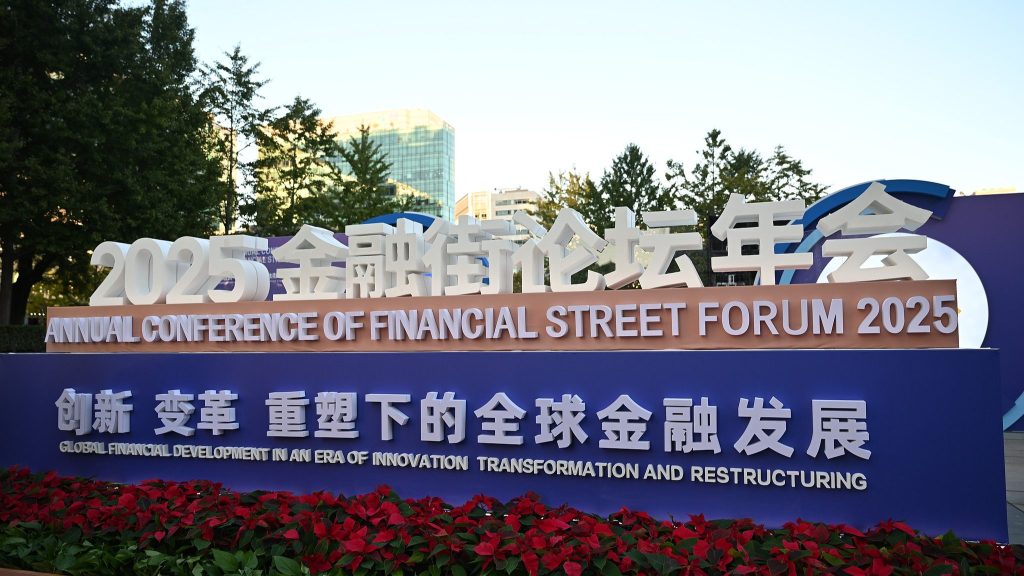
Sign for the Annual Conference of Financial Street Forum 2025, Beijing, October 26, 2025. Source: VCG

Can Stablecoins Ever Meet China’s Strict Financial Standards?

Pan said virtual currencies remain in their early stages of development, despite the rapid expansion of the market in recent years.

He warned that “stablecoins have amplified weaknesses in the global financial system,” citing their role in market speculation and their failure to meet key compliance standards such as customer identification and anti-money laundering (AML) requirements.

“Stablecoins, as a form of financial activity, still cannot meet the basic requirements of financial supervision,” Pan told the conference.

“They expose loopholes that can facilitate illegal fund transfers, terrorist financing, and money laundering.”

Pan said the central bank would continue to work closely with law enforcement to crack down on cryptocurrency operations and speculative activities within mainland China.

He described the measures implemented by the PBoC in recent years as “effective,” reaffirming the country’s zero-tolerance policy toward private digital currencies.

China has maintained a sweeping ban on crypto trading, mining, and exchange operations since 2017, citing financial risks and the potential for consumer harm.

The PBoC has consistently positioned digital assets as a threat to economic order while promoting the state-backed digital yuan (e-CNY) as a safer alternative.

Pan also said the central bank would “closely monitor and assess the development of stablecoins in overseas markets,” suggesting that the PBoC remains wary of how foreign stablecoin growth could influence China’s financial stability.

The warning comes amid growing global debate over the rapid expansion of the stablecoin sector.

Chinese Economists Warn USD Stablecoin Growth Threatens Yuan Internationalization

According to data from blockchain analytics firm DefiLlama, the total market capitalization of stablecoins has reached about $308 billion, with Tether (USDT) and USD Coin (USDC) accounting for nearly 87% of the supply.

Source: DefiLlama

The two tokens have processed more than $27 trillion in settlements over the past year, according to research from Andreessen Horowitz.

Stablecoin transaction volumes have surged to $46 trillion in total value over the past twelve months, roughly comparable to the U.S. Automated Clearing House (ACH) system that underpins much of the American banking network.

Source: A16z

Even when adjusted for artificial trading activity, the sector processed about $9 trillion, representing more than half of Visa’s global payment volume.

This explosive growth has sparked warnings not only from China but also from international regulators.

During the recent International Monetary Fund (IMF) and World Bank Annual Meetings in Washington, D.C., global finance ministers and central bank governors raised concerns about the systemic risks posed by stablecoins.

Many officials echoed Pan’s comments, saying the tokens fall short of basic AML and know-your-customer (KYC) standards and could enable illicit financial flows.

Economists in China have also voiced concerns that the global rise of U.S. dollar-backed stablecoins could weaken the country’s financial autonomy.

Wang Yongli, a former deputy governor of the Bank of China, wrote in June that the dominance of USD-pegged stablecoins “poses a strategic challenge” to the renminbi’s internationalization.

He warned that if the digital yuan cannot compete with the efficiency and global reach of these tokens, China’s efforts to promote its currency abroad could face “serious obstacles.”

Wang urged the government to accelerate the rollout of the e-CNY and explore the possibility of an offshore yuan-denominated stablecoin through Hong Kong.

China Blocks Tech Giants’ Stablecoin Ambitions as Hong Kong Opens Licensing Regime

The issue has also touched China’s major tech companies. Earlier this month, Ant Group and JD.com paused their plans to issue stablecoins in Hong Kong following reported instructions from the PBoC and the Cyberspace Administration of China.

Officials reportedly told both firms to suspend their projects to prevent private companies from issuing tokens that function like money, arguing that the right to issue currency must remain with the state.

Hong Kong, however, has moved in the opposite direction. In August, the city introduced one of the world’s first dedicated stablecoin licensing regimes, inviting applications from major financial institutions and blockchain firms.

The Hong Kong Monetary Authority (HKMA) has already received expressions of interest from more than 40 companies, including Ant Group, JD.com, Circle, and Standard Chartered.

While Hong Kong positions itself as a global digital asset hub, Beijing’s stance remains strict. In August, Chinese regulators ordered brokerages and think tanks to halt the publication of reports or seminars that promote stablecoins, citing fraud and speculative risks.

Pan’s latest remarks reinforce that Beijing’s long-standing crypto policy is unlikely to soften soon. He emphasized that while blockchain technology holds promise, its application must “operate within strict regulatory boundaries.”

“Virtual assets and their derivatives must never undermine financial stability or monetary sovereignty,” he said. “The People’s Bank of China will continue to act decisively to safeguard economic and financial order.”


Market Opportunity
Lorenzo Protocol Logo
Lorenzo Protocol Price(BANK)
$0.05221
$0.05221$0.05221
+2.87%
USD
Lorenzo Protocol (BANK) Live Price Chart
Disclaimer: The articles reposted on this site are sourced from public platforms and are provided for informational purposes only. They do not necessarily reflect the views of MEXC. All rights remain with the original authors. If you believe any content infringes on third-party rights, please contact [email protected] for removal. MEXC makes no guarantees regarding the accuracy, completeness, or timeliness of the content and is not responsible for any actions taken based on the information provided. The content does not constitute financial, legal, or other professional advice, nor should it be considered a recommendation or endorsement by MEXC.

You May Also Like

Trading time: Tonight, the US GDP and the upcoming non-farm data will become the market focus. Institutions are bullish on BTC to $120,000 in the second quarter.

Trading time: Tonight, the US GDP and the upcoming non-farm data will become the market focus. Institutions are bullish on BTC to $120,000 in the second quarter.

Daily market key data review and trend analysis, produced by PANews.
Share
PANews2025/04/30 13:50
We were right about all of it

We were right about all of it

Today is the saddest most depressing day in America since Nov. 5, 2024, when anybody with a brain in their head or a heart in their chest knew what was most assuredly
Share
Alternet2026/01/26 10:17
Polygon Tops RWA Rankings With $1.1B in Tokenized Assets

Polygon Tops RWA Rankings With $1.1B in Tokenized Assets

The post Polygon Tops RWA Rankings With $1.1B in Tokenized Assets appeared on BitcoinEthereumNews.com. Key Notes A new report from Dune and RWA.xyz highlights Polygon’s role in the growing RWA sector. Polygon PoS currently holds $1.13 billion in RWA Total Value Locked (TVL) across 269 assets. The network holds a 62% market share of tokenized global bonds, driven by European money market funds. The Polygon POL $0.25 24h volatility: 1.4% Market cap: $2.64 B Vol. 24h: $106.17 M network is securing a significant position in the rapidly growing tokenization space, now holding over $1.13 billion in total value locked (TVL) from Real World Assets (RWAs). This development comes as the network continues to evolve, recently deploying its major “Rio” upgrade on the Amoy testnet to enhance future scaling capabilities. This information comes from a new joint report on the state of the RWA market published on Sept. 17 by blockchain analytics firm Dune and data platform RWA.xyz. The focus on RWAs is intensifying across the industry, coinciding with events like the ongoing Real-World Asset Summit in New York. Sandeep Nailwal, CEO of the Polygon Foundation, highlighted the findings via a post on X, noting that the TVL is spread across 269 assets and 2,900 holders on the Polygon PoS chain. The Dune and https://t.co/W6WSFlHoQF report on RWA is out and it shows that RWA is happening on Polygon. Here are a few highlights: – Leading in Global Bonds: Polygon holds 62% share of tokenized global bonds (driven by Spiko’s euro MMF and Cashlink euro issues) – Spiko U.S.… — Sandeep | CEO, Polygon Foundation (※,※) (@sandeepnailwal) September 17, 2025 Key Trends From the 2025 RWA Report The joint publication, titled “RWA REPORT 2025,” offers a comprehensive look into the tokenized asset landscape, which it states has grown 224% since the start of 2024. The report identifies several key trends driving this expansion. According to…
Share
BitcoinEthereumNews2025/09/18 00:40