The post Canada Could Unveil Stablecoin Rules in Federal Budget: Report appeared on BitcoinEthereumNews.com. The Canadian federal government is reportedly preparing new rules for stablecoins, with an update potentially coming in next week’s federal budget, signaling that more countries may follow the United States’ lead after the landmark passage of the GENIUS Act. Citing people familiar with the discussions, Bloomberg reported Monday that government officials have been meeting with regulators and industry stakeholders for several weeks. The update on stablecoin regulation could be unveiled as early as Nov. 4, when Finance Minister François-Philippe Champagne presents the federal budget. Canada lacks a comprehensive legal framework for stablecoins, though regulators have previously indicated that certain tokens could qualify as securities or derivatives under existing laws. Source: Bloomberg The domestic market for Canadian-dollar-pegged stablecoins remains limited. The most notable example is QCAD, issued by Toronto-based Stablecorp, a fiat-collateralized token backed 1:1 by the Canadian dollar. US dollar–pegged stablecoins remain available in Canada, most notably USDC (USDC), following the discontinuation of support for Tether’s USDt (USDT)  in 2023. Related: Coinbase invests in Canadian stablecoin issuer Playing catch-up with the United States The developments come as the Bank of Canada has urged the federal government to establish clearer rules for stablecoins to modernize the country’s payment system — or risk falling behind other nations in adopting the technology. “Governments are moving to regulate stablecoins and other cryptocurrencies so consumers can reap their benefits and be protected from credit and liquidity risks,” said Ron Morrow, who oversees payments, supervision and oversight at the Bank of Canada. The United States has moved quickly on the stablecoin front since President Donald Trump took office. In June, lawmakers passed the GENIUS Act, which created a regulatory framework for issuing fully collateralized, dollar-backed stablecoins with anti–money laundering safeguards and regular audits. The new legislation will go into effect in January 2027. Since the passage… The post Canada Could Unveil Stablecoin Rules in Federal Budget: Report appeared on BitcoinEthereumNews.com. The Canadian federal government is reportedly preparing new rules for stablecoins, with an update potentially coming in next week’s federal budget, signaling that more countries may follow the United States’ lead after the landmark passage of the GENIUS Act. Citing people familiar with the discussions, Bloomberg reported Monday that government officials have been meeting with regulators and industry stakeholders for several weeks. The update on stablecoin regulation could be unveiled as early as Nov. 4, when Finance Minister François-Philippe Champagne presents the federal budget. Canada lacks a comprehensive legal framework for stablecoins, though regulators have previously indicated that certain tokens could qualify as securities or derivatives under existing laws. Source: Bloomberg The domestic market for Canadian-dollar-pegged stablecoins remains limited. The most notable example is QCAD, issued by Toronto-based Stablecorp, a fiat-collateralized token backed 1:1 by the Canadian dollar. US dollar–pegged stablecoins remain available in Canada, most notably USDC (USDC), following the discontinuation of support for Tether’s USDt (USDT)  in 2023. Related: Coinbase invests in Canadian stablecoin issuer Playing catch-up with the United States The developments come as the Bank of Canada has urged the federal government to establish clearer rules for stablecoins to modernize the country’s payment system — or risk falling behind other nations in adopting the technology. “Governments are moving to regulate stablecoins and other cryptocurrencies so consumers can reap their benefits and be protected from credit and liquidity risks,” said Ron Morrow, who oversees payments, supervision and oversight at the Bank of Canada. The United States has moved quickly on the stablecoin front since President Donald Trump took office. In June, lawmakers passed the GENIUS Act, which created a regulatory framework for issuing fully collateralized, dollar-backed stablecoins with anti–money laundering safeguards and regular audits. The new legislation will go into effect in January 2027. Since the passage…

Canada Could Unveil Stablecoin Rules in Federal Budget: Report

The Canadian federal government is reportedly preparing new rules for stablecoins, with an update potentially coming in next week’s federal budget, signaling that more countries may follow the United States’ lead after the landmark passage of the GENIUS Act.

Citing people familiar with the discussions, Bloomberg reported Monday that government officials have been meeting with regulators and industry stakeholders for several weeks. The update on stablecoin regulation could be unveiled as early as Nov. 4, when Finance Minister François-Philippe Champagne presents the federal budget.

Canada lacks a comprehensive legal framework for stablecoins, though regulators have previously indicated that certain tokens could qualify as securities or derivatives under existing laws.

Source: Bloomberg

The domestic market for Canadian-dollar-pegged stablecoins remains limited. The most notable example is QCAD, issued by Toronto-based Stablecorp, a fiat-collateralized token backed 1:1 by the Canadian dollar.

US dollar–pegged stablecoins remain available in Canada, most notably USDC (USDC), following the discontinuation of support for Tether’s USDt (USDT)  in 2023.

Related: Coinbase invests in Canadian stablecoin issuer

Playing catch-up with the United States

The developments come as the Bank of Canada has urged the federal government to establish clearer rules for stablecoins to modernize the country’s payment system — or risk falling behind other nations in adopting the technology.

“Governments are moving to regulate stablecoins and other cryptocurrencies so consumers can reap their benefits and be protected from credit and liquidity risks,” said Ron Morrow, who oversees payments, supervision and oversight at the Bank of Canada.

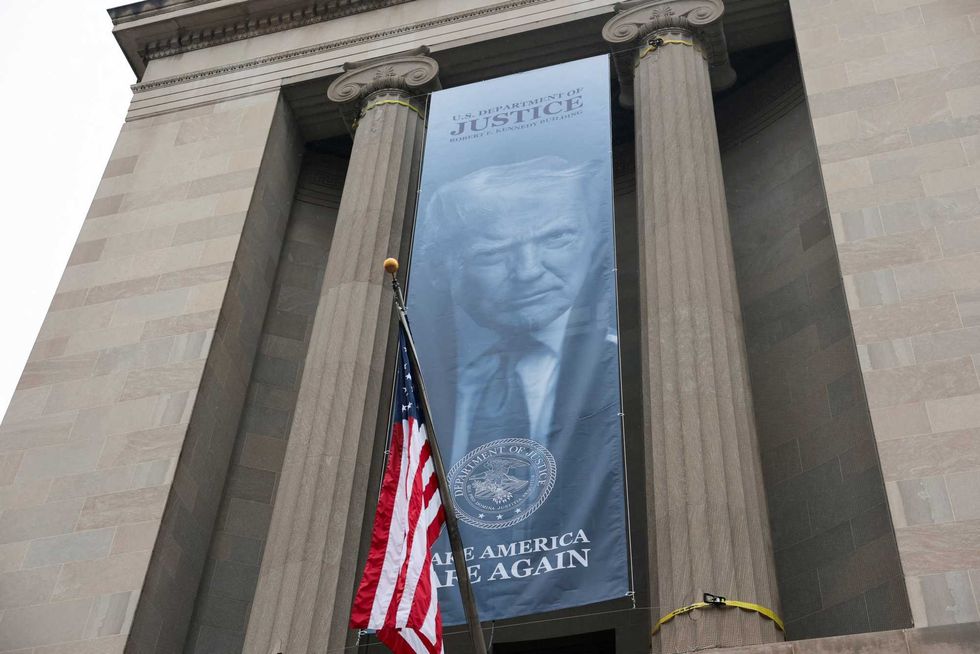
The United States has moved quickly on the stablecoin front since President Donald Trump took office. In June, lawmakers passed the GENIUS Act, which created a regulatory framework for issuing fully collateralized, dollar-backed stablecoins with anti–money laundering safeguards and regular audits.

The new legislation will go into effect in January 2027.

Since the passage of the GENIUS Act, more companies have shown interest in entering the stablecoin market, which has continued to expand. US dollar-pegged stablecoins now exceed $300 billion in total value.

Related: Despite gov’t shutdown, crypto market structure bill ‘90% there’ — Coinbase CEO

Source: https://cointelegraph.com/news/canada-stablecoin-rules-federal-budget-genius-act?utm_source=rss_feed&utm_medium=feed&utm_campaign=rss_partner_inbound


Market Opportunity
Moonveil Logo
Moonveil Price(MORE)
$0.002922
$0.002922$0.002922
+3.87%
USD
Moonveil (MORE) Live Price Chart
Disclaimer: The articles reposted on this site are sourced from public platforms and are provided for informational purposes only. They do not necessarily reflect the views of MEXC. All rights remain with the original authors. If you believe any content infringes on third-party rights, please contact [email protected] for removal. MEXC makes no guarantees regarding the accuracy, completeness, or timeliness of the content and is not responsible for any actions taken based on the information provided. The content does not constitute financial, legal, or other professional advice, nor should it be considered a recommendation or endorsement by MEXC.

You May Also Like

The Channel Factories We’ve Been Waiting For

The Channel Factories We’ve Been Waiting For

The post The Channel Factories We’ve Been Waiting For appeared on BitcoinEthereumNews.com. Visions of future technology are often prescient about the broad strokes while flubbing the details. The tablets in “2001: A Space Odyssey” do indeed look like iPads, but you never see the astronauts paying for subscriptions or wasting hours on Candy Crush.  Channel factories are one vision that arose early in the history of the Lightning Network to address some challenges that Lightning has faced from the beginning. Despite having grown to become Bitcoin’s most successful layer-2 scaling solution, with instant and low-fee payments, Lightning’s scale is limited by its reliance on payment channels. Although Lightning shifts most transactions off-chain, each payment channel still requires an on-chain transaction to open and (usually) another to close. As adoption grows, pressure on the blockchain grows with it. The need for a more scalable approach to managing channels is clear. Channel factories were supposed to meet this need, but where are they? In 2025, subnetworks are emerging that revive the impetus of channel factories with some new details that vastly increase their potential. They are natively interoperable with Lightning and achieve greater scale by allowing a group of participants to open a shared multisig UTXO and create multiple bilateral channels, which reduces the number of on-chain transactions and improves capital efficiency. Achieving greater scale by reducing complexity, Ark and Spark perform the same function as traditional channel factories with new designs and additional capabilities based on shared UTXOs.  Channel Factories 101 Channel factories have been around since the inception of Lightning. A factory is a multiparty contract where multiple users (not just two, as in a Dryja-Poon channel) cooperatively lock funds in a single multisig UTXO. They can open, close and update channels off-chain without updating the blockchain for each operation. Only when participants leave or the factory dissolves is an on-chain transaction…
Share
BitcoinEthereumNews2025/09/18 00:09
Craft Ventures Opens Austin Office

Craft Ventures Opens Austin Office

AUSTIN, Texas–(BUSINESS WIRE)–Craft Ventures, the venture capital firm co-founded in 2017 by David Sacks and Bill Lee, has opened a new office in Austin, Texas,
Share
AI Journal2026/01/01 08:00
Paxos launches new startup to help institutions offer DeFi products

Paxos launches new startup to help institutions offer DeFi products

PANews reported on June 19 that according to The Block, the stablecoin issuer Paxos launched a new startup Paxos Labs, which aims to help institutions integrate DeFi and on-chain products
Share
PANews2025/06/19 00:04