| COINOTAG recommends • Exchange signup |
| 💹 Trade with pro tools |
| Fast execution, robust charts, clean risk controls. |
| 👉 Open account → |
| COINOTAG recommends • Exchange signup |
| 🚀 Smooth orders, clear control |
| Advanced order types and market depth in one view. |
| 👉 Create account → |
| COINOTAG recommends • Exchange signup |
| 📈 Clarity in volatile markets |
| Plan entries & exits, manage positions with discipline. |
| 👉 Sign up → |
| COINOTAG recommends • Exchange signup |
| ⚡ Speed, depth, reliability |
| Execute confidently when timing matters. |
| 👉 Open account → |
| COINOTAG recommends • Exchange signup |
| 🧭 A focused workflow for traders |
| Alerts, watchlists, and a repeatable process. |
| 👉 Get started → |
| COINOTAG recommends • Exchange signup |
| ✅ Data‑driven decisions |
| Focus on process—not noise. |
| 👉 Sign up → |
Quantum computing presents a potential threat to Bitcoin by breaking its cryptographic foundations, but the technology remains years away from maturity. Experts like Amit Mehra emphasize the need for post-quantum security as advances accelerate, ensuring blockchain resilience against future risks.
-
Quantum computers could crack Bitcoin’s SHA-256 and ECDSA algorithms, exposing private keys and enabling theft.
-
Current quantum tech is in early stages, with practical threats not expected until late this decade.
-
Industry leaders urge immediate development of quantum-resistant cryptography, with solutions like SUI’s framework showing promise for select networks.
Explore the quantum computing threat to Bitcoin and how crypto is preparing. Discover expert insights on post-quantum security to safeguard your investments today.
What Is the Quantum Computing Threat to Bitcoin?
The quantum computing threat to Bitcoin stems from the ability of advanced quantum computers to solve complex mathematical problems exponentially faster than classical systems, potentially undermining Bitcoin’s core security mechanisms. Specifically, quantum algorithms like Shor’s could decrypt the elliptic curve digital signature algorithm (ECDSA) used in Bitcoin, allowing attackers to derive private keys from public addresses. While this risk is not immediate, rapid progress in quantum hardware underscores the urgency for the cryptocurrency ecosystem to adopt quantum-resistant alternatives, as highlighted by venture capitalist Amit Mehra.
| COINOTAG recommends • Professional traders group |
| 💎 Join a professional trading community |
| Work with senior traders, research‑backed setups, and risk‑first frameworks. |
| 👉 Join the group → |
| COINOTAG recommends • Professional traders group |
| 📊 Transparent performance, real process |
| Spot strategies with documented months of triple‑digit runs during strong trends; futures plans use defined R:R and sizing. |
| 👉 Get access → |
| COINOTAG recommends • Professional traders group |
| 🧭 Research → Plan → Execute |
| Daily levels, watchlists, and post‑trade reviews to build consistency. |
| 👉 Join now → |
| COINOTAG recommends • Professional traders group |
| 🛡️ Risk comes first |
| Sizing methods, invalidation rules, and R‑multiples baked into every plan. |
| 👉 Start today → |
| COINOTAG recommends • Professional traders group |
| 🧠 Learn the “why” behind each trade |
| Live breakdowns, playbooks, and framework‑first education. |
| 👉 Join the group → |
| COINOTAG recommends • Professional traders group |
| 🚀 Insider • APEX • INNER CIRCLE |
| Choose the depth you need—tools, coaching, and member rooms. |
| 👉 Explore tiers → |
Bitcoin’s proof-of-work consensus relies on SHA-256 hashing, which quantum computers might also challenge through Grover’s algorithm, though to a lesser extent. Mehra, a partner at Borderless Capital, noted during discussions at the Global Blockchain Congress Dubai 2025 that quantum computing is still in its infancy but evolving quickly due to breakthroughs in chip and decentralized compute technologies. This evolution could shorten timelines, making proactive measures essential to protect the integrity of Bitcoin’s $1 trillion-plus market.
How Is the Crypto Industry Preparing for Quantum Computing Threats?
The cryptocurrency sector is actively developing post-quantum cryptography to counter the quantum computing threat to Bitcoin and other blockchains. In July, SUI Research introduced a cryptographic framework that enhances security for networks like SUI, Near, Solana, and Cosmos without requiring hard forks or key migrations, demonstrating a scalable approach to quantum resistance.
| COINOTAG recommends • Exchange signup |
| 📈 Clear interface, precise orders |
| Sharp entries & exits with actionable alerts. |
| 👉 Create free account → |
| COINOTAG recommends • Exchange signup |
| 🧠 Smarter tools. Better decisions. |
| Depth analytics and risk features in one view. |
| 👉 Sign up → |
| COINOTAG recommends • Exchange signup |
| 🎯 Take control of entries & exits |
| Set alerts, define stops, execute consistently. |
| 👉 Open account → |
| COINOTAG recommends • Exchange signup |
| 🛠️ From idea to execution |
| Turn setups into plans with practical order types. |
| 👉 Join now → |
| COINOTAG recommends • Exchange signup |
| 📋 Trade your plan |
| Watchlists and routing that support focus. |
| 👉 Get started → |
| COINOTAG recommends • Exchange signup |
| 📊 Precision without the noise |
| Data‑first workflows for active traders. |
| 👉 Sign up → |
However, Bitcoin and Ethereum face unique challenges due to their established infrastructures. Experts recommend layered defenses, including upgraded signature schemes like lattice-based cryptography, as endorsed by the National Institute of Standards and Technology (NIST). Charles Edwards, founder of Capriole Investments, a quantitative Bitcoin fund, stressed the immediacy of this issue in an October 15 post on X, stating, “If Bitcoin doesn’t solve Quantum in the next year, Gold will keep outperforming it forever.” He advocated for swift adoption of solutions to avert long-term vulnerabilities.
Government involvement adds momentum; a Bloomberg report from October revealed that the US Department of Commerce is eyeing investments in quantum technologies to bolster national security and maintain an edge over global competitors like China. These efforts align with broader industry initiatives, where firms like Borderless Capital are investing in quantum-resistant startups. Mehra explained that such technologies must evolve to handle decentralized computing’s unique demands, ensuring that blockchains remain tamper-proof even as quantum capabilities advance.
| COINOTAG recommends • Traders club |
| ⚡ Futures with discipline |
| Defined R:R, pre‑set invalidation, execution checklists. |
| 👉 Join the club → |
| COINOTAG recommends • Traders club |
| 🎯 Spot strategies that compound |
| Momentum & accumulation frameworks managed with clear risk. |
| 👉 Get access → |
| COINOTAG recommends • Traders club |
| 🏛️ APEX tier for serious traders |
| Deep dives, analyst Q&A, and accountability sprints. |
| 👉 Explore APEX → |
| COINOTAG recommends • Traders club |
| 📈 Real‑time market structure |
| Key levels, liquidity zones, and actionable context. |
| 👉 Join now → |
| COINOTAG recommends • Traders club |
| 🔔 Smart alerts, not noise |
| Context‑rich notifications tied to plans and risk—never hype. |
| 👉 Get access → |
| COINOTAG recommends • Traders club |
| 🤝 Peer review & coaching |
| Hands‑on feedback that sharpens execution and risk control. |
| 👉 Join the club → |
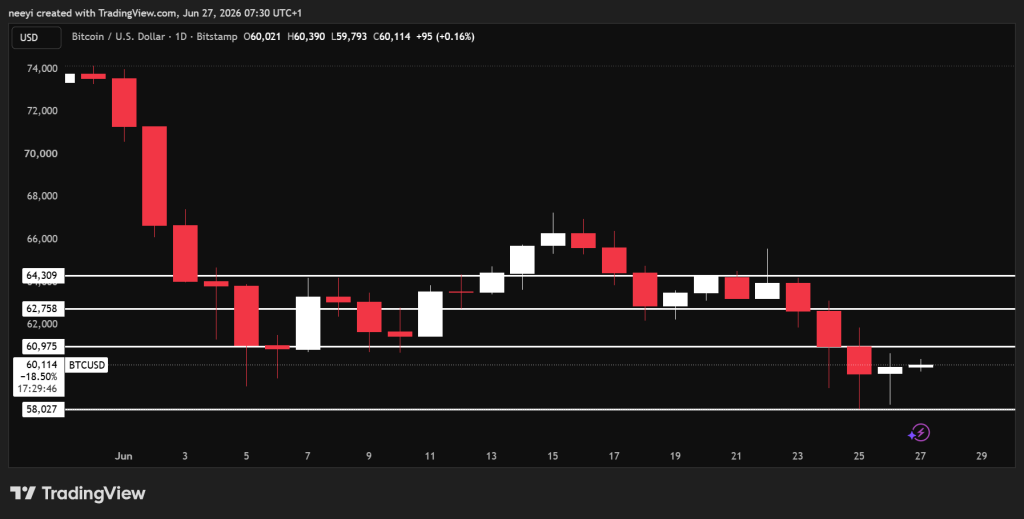
Source: Charles Edwards
Quantum computing leverages qubits, which exist in multiple states simultaneously, enabling parallel processing that dwarfs classical supercomputers. For Bitcoin, the primary concern is the exposure of over 20 million addresses with exposed public keys, which could be targeted if quantum supremacy is achieved. Yet, projections from IBM and Google suggest fault-tolerant quantum systems capable of this are 5-10 years away, providing a window for preparation.
Industry consensus, as voiced by Mehra, emphasizes underestimating technology’s pace: “Given the recent advancements in chip technology, in compute tech, and in the power of doing compute in a decentralized way, it is definitely a problem. If not imminent, in the very near future.” This calls for collaborative R&D, with protocols like the Quantum Resistant Ledger exploring hybrid classical-quantum models.
Sources: KostasCrypto
Frequently Asked Questions
Can Quantum Computers Break Bitcoin’s Encryption Soon?
Quantum computers capable of breaking Bitcoin’s ECDSA encryption are not expected for at least 5-10 years, according to current research from firms like IBM. However, accelerating advancements mean the industry must prioritize post-quantum alternatives now to avoid future disruptions in transaction security and wallet integrity.
What Steps Should Bitcoin Holders Take Against Quantum Threats?
Bitcoin users can mitigate risks by moving funds to new addresses with unexposed public keys and supporting network upgrades for quantum-resistant signatures. As Edwards noted, acting urgently—potentially within the next year—ensures Bitcoin’s longevity against emerging quantum capabilities, preserving its role as a store of value.
| COINOTAG recommends • Exchange signup |
| 📈 Clear control for futures |
| Sizing, stops, and scenario planning tools. |
| 👉 Open futures account → |
| COINOTAG recommends • Exchange signup |
| 🧩 Structure your futures trades |
| Define entries & exits with advanced orders. |
| 👉 Sign up → |
| COINOTAG recommends • Exchange signup |
| 🛡️ Control volatility |
| Automate alerts and manage positions with discipline. |
| 👉 Get started → |
| COINOTAG recommends • Exchange signup |
| ⚙️ Execution you can rely on |
| Fast routing and meaningful depth insights. |
| 👉 Create account → |
| COINOTAG recommends • Exchange signup |
| 📒 Plan. Execute. Review. |
| Frameworks for consistent decision‑making. |
| 👉 Join now → |
| COINOTAG recommends • Exchange signup |
| 🧩 Choose clarity over complexity |
| Actionable, pro‑grade tools—no fluff. |
| 👉 Open account → |
Key Takeaways
- Quantum Threat Timeline: Practical attacks on Bitcoin remain distant, but rapid tech evolution demands immediate post-quantum R&D.
- Industry Innovations: Frameworks from SUI Research offer quantum protection for multiple blockchains, excluding Bitcoin for now.
- Call to Action: Investors should monitor NIST standards and advocate for Bitcoin protocol enhancements to maintain security.
Conclusion
The quantum computing threat to Bitcoin highlights the dynamic nature of blockchain security, where emerging technologies like quantum processors challenge established encryption methods. As experts such as Amit Mehra and Charles Edwards warn, proactive adoption of post-quantum cryptography is vital to safeguard Bitcoin’s foundational principles. With institutional and governmental support accelerating defenses, the cryptocurrency ecosystem stands poised to evolve, ensuring robust protection for users worldwide in the coming years.
| COINOTAG recommends • Members‑only research |
| 📌 Curated setups, clearly explained |
| Entry, invalidation, targets, and R:R defined before execution. |
| 👉 Get access → |
| COINOTAG recommends • Members‑only research |
| 🧠 Data‑led decision making |
| Technical + flow + context synthesized into actionable plans. |
| 👉 Join now → |
| COINOTAG recommends • Members‑only research |
| 🧱 Consistency over hype |
| Repeatable rules, realistic expectations, and a calmer mindset. |
| 👉 Get access → |
| COINOTAG recommends • Members‑only research |
| 🕒 Patience is an edge |
| Wait for confirmation and manage risk with checklists. |
| 👉 Join now → |
| COINOTAG recommends • Members‑only research |
| 💼 Professional mentorship |
| Guidance from seasoned traders and structured feedback loops. |
| 👉 Get access → |
| COINOTAG recommends • Members‑only research |
| 🧮 Track • Review • Improve |
| Documented PnL tracking and post‑mortems to accelerate learning. |
| 👉 Join now → |
Source: https://en.coinotag.com/quantum-computing-may-pose-future-threat-to-bitcoin-experts-warn/