

How to Mine Bitcoin vs Staking XRP Tundra: Which Generates Better Returns?
After the latest halving, block rewards fell from 6.25 BTC to 3.125 BTC, cutting revenue by half while energy costs continued to rise. Average industrial miners now face electricity expenses exceeding $0.10 per kWh, forcing smaller operators out of the market and pushing hash rate consolidation toward large data centers.
This dynamic has introduced higher barriers to entry. Hardware capable of maintaining profitability – such as Bitmain’s Antminer S21, rated at 200 TH/s and consuming about 3,500 watts – sells for roughly $4,000–$5,000 on major distributors like Bitmain.com and CoinMiningCentral.com.
At current network difficulty and an average electricity cost of $0.10 per kWh, profitability calculators from ASIC Miner Value and Hashrate Index estimate break-even around $72,000–$74,000 per BTC. While miners operating at scale remain profitable, most retail participants earn only modest returns once energy, cooling, and hardware depreciation are factored in.
Why Energy-Based Rewards Are Losing Appeal
The proof-of-work system provides unmatched network security, but it links reward generation to physical resource consumption. Profitability depends on both computational efficiency and local energy pricing, creating a fundamentally variable outcome. As competition increases and rewards halve every four years, even institutional miners are exploring yield diversification through on-chain staking alternatives.
In this environment, energy-intensive mining is giving way to yield strategies that rely on contract logic rather than hardware scale. These newer systems, rooted in proof-of-stake and DeFi vault mechanics, replace electricity with token liquidity as the economic driver.
That shift is drawing traders who prefer algorithmic predictability over mechanical cost cycles. Among those systems, XRP Tundra stands out for providing staking architecture audited across both Solana and the XRP Ledger, combining verifiable transparency with measurable yield.
XRP Tundra Introduces Audited On-Ledger Staking
XRP Tundra operates under a dual-token framework: TUNDRA-S on Solana for staking and yield, and TUNDRA-X on the XRP Ledger for governance and reserves. This division separates liquidity generation from decision-making, reducing systemic risk during market stress.
The project’s presale has entered Phase 9, offering TUNDRA-S at $0.147 with an 11% bonus. Each purchase also includes a free allocation of TUNDRA-X, the governance token valued at $0.0735 for reference. To date, it has raised more than $2 million, with over $32,000 distributed through the Arctic Spinner rewards program. All presale data, including allocations and transaction records, are publicly viewable on-chain for full transparency.
Unlike mining, where energy input dictates performance, Tundra’s Cryo Vaults apply programmable APYs based on staking duration. Independent audits by Cyberscope, Solidproof, and FreshCoins, alongside Vital Block’s KYC verification, confirm the transparency of each contract.
As HotCuppaCrypto noted in a recent analysis, “staking mechanics now provide a more consistent yield path than energy-based systems,” describing audited DeFi vaults as a practical evolution of mining economics.
Three Reward Options for Verified Yield
Tundra’s Cryo Vaults divide staking into three clear tiers, offering flexibility for different time horizons:
- Liquid Staking: 4–6% APY, no commitment, instant withdrawals. Designed for active traders seeking low-risk liquidity with immediate access to funds.
- Balanced Staking: 8–12% APY with a 30-day commitment. Provides moderate yield with defined lock-up, suitable for medium-term participation.
- Premium Staking: 15–20% APY with a 90-day lock. Built for long-term holders who prefer maximum returns and predictable lock schedules.
These reward structures are published directly in the staking interface, ensuring no hidden yield modifiers or centralized control. The logic governing each vault – commitment period, APY range, and withdrawal conditions – is verifiable on-chain. Compared to Bitcoin mining, where operational costs vary daily, Tundra’s yield model sets clear parameters before participation.
Predictable Returns Without the Hardware Overhead
The comparison between mining Bitcoin and staking TUNDRA tokens reflects a broader transition in how crypto investors define “earning.” Mining remains capital-intensive and environmentally sensitive, while staking aligns rewards with network participation rather than hardware scale. XRP Tundra’s audited Cryo Vaults provide transparent, algorithmic returns backed by verifiable contract logic – an alternative designed for investors prioritizing efficiency and risk management over speculative cycles.
While Bitcoin’s proof-of-work architecture will always maintain historical significance, its economics now favor institutional miners. XRP Tundra demonstrates that yield generation can evolve toward accessibility, using security audits and on-ledger transparency to ensure participants understand every variable affecting return. As DeFi adoption matures, models like Tundra’s may increasingly define sustainable crypto income – efficient, predictable, and provable by design.
Secure your Phase 9 allocation and prepare for Cryo Vault activation at listing.
Buy Tundra Now: official XRP Tundra website
How to Buy Tundra: step-by-step buying guide
Security and Trust: Cyberscope audit
Join the Community: X (Twitter)
This is a sponsored article. Opinions expressed are solely those of the sponsor and readers should conduct their own due diligence before taking any action based on information presented in this article.


You May Also Like

SoftBank chief Son dismisses Musk’s idea for orbital data centres

Sky Quarry (SKYQ) Stock Doubles in a Day — Here’s Why Nevada’s Only Refinery Matters Now
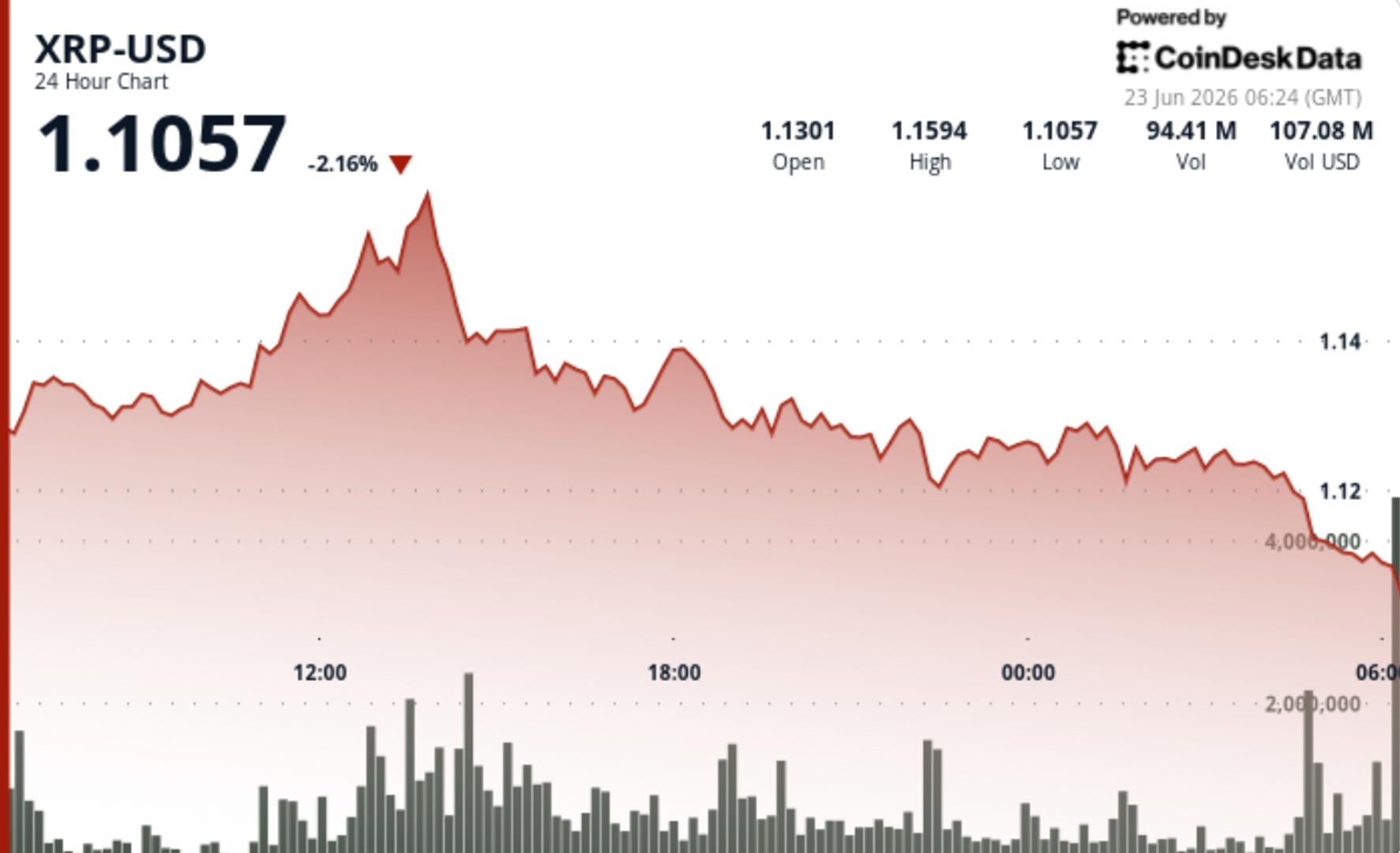
XRP drifts toward $1.10 support as traders await break from three-week range



