The post U.K. regulator mulls £20K cap on ‘systemic stablecoins’ for retail users appeared on BitcoinEthereumNews.com. Key Takeaways  Why has BoE ditched 2023 stablecoin proposals? To cater to industry demands and mirror other frameworks in other regions.  When will these rules be implemented?  The Bank of England will issue the final rules in H2 2026 after reviewing industry feedback early next year. In the latest revised plans for the stablecoin guidelines, the Bank of England (BoE) proposed that issuers back their Sterling-based stablecoins through a 60/40 formula.  The 60% reserve backing would be in interest-bearing short-term government debt or bonds (T-bills), while parking another 40% (non-interest) with the bank.  In contrast, the U.S. stablecoin law, the GENIUS Act, requires 100% of reserve backing to be in T-bills or cash equivalents, and issuers get all the yield.  The BoE’s move comes after industry players pushed back against the 2023 proposal, which sought to have the entire 100% reserve assets held by the bank, with no yield.  At that time, the players argued that the prior proposal was inconsistent with U.S. law and the stablecoin revenue model.  Reacting to the changes, BoE’s Governor, Andrew Bailey, said,  “We have listened carefully to and are grateful for the feedback received, which has shaped the proposals we are consulting on today. Following this consultation, we will consider the feedback received before consulting on and finalising our rules in 2026.” Stablecoin caps remain Despite the softer stance on reserve assets, the bank will continue to implement the controversial stablecoin caps for individual and business holdings at £20K and £30 million, respectively.  Worth noting that major financial hubs don’t have similar strict restrictions on stablecoin holdings. But for BoE, it would,  “Cap potential outflows of bank deposits to systemic stablecoins in aggregate and so limit the potential impact on credit availability.” The so-called “systematic stablecoins” or payment stablecoins, which are widely used, will… The post U.K. regulator mulls £20K cap on ‘systemic stablecoins’ for retail users appeared on BitcoinEthereumNews.com. Key Takeaways  Why has BoE ditched 2023 stablecoin proposals? To cater to industry demands and mirror other frameworks in other regions.  When will these rules be implemented?  The Bank of England will issue the final rules in H2 2026 after reviewing industry feedback early next year. In the latest revised plans for the stablecoin guidelines, the Bank of England (BoE) proposed that issuers back their Sterling-based stablecoins through a 60/40 formula.  The 60% reserve backing would be in interest-bearing short-term government debt or bonds (T-bills), while parking another 40% (non-interest) with the bank.  In contrast, the U.S. stablecoin law, the GENIUS Act, requires 100% of reserve backing to be in T-bills or cash equivalents, and issuers get all the yield.  The BoE’s move comes after industry players pushed back against the 2023 proposal, which sought to have the entire 100% reserve assets held by the bank, with no yield.  At that time, the players argued that the prior proposal was inconsistent with U.S. law and the stablecoin revenue model.  Reacting to the changes, BoE’s Governor, Andrew Bailey, said,  “We have listened carefully to and are grateful for the feedback received, which has shaped the proposals we are consulting on today. Following this consultation, we will consider the feedback received before consulting on and finalising our rules in 2026.” Stablecoin caps remain Despite the softer stance on reserve assets, the bank will continue to implement the controversial stablecoin caps for individual and business holdings at £20K and £30 million, respectively.  Worth noting that major financial hubs don’t have similar strict restrictions on stablecoin holdings. But for BoE, it would,  “Cap potential outflows of bank deposits to systemic stablecoins in aggregate and so limit the potential impact on credit availability.” The so-called “systematic stablecoins” or payment stablecoins, which are widely used, will…

U.K. regulator mulls £20K cap on ‘systemic stablecoins’ for retail users

For feedback or concerns regarding this content, please contact us at [email protected]

Key Takeaways 

Why has BoE ditched 2023 stablecoin proposals?

To cater to industry demands and mirror other frameworks in other regions. 

When will these rules be implemented? 

The Bank of England will issue the final rules in H2 2026 after reviewing industry feedback early next year.


In the latest revised plans for the stablecoin guidelines, the Bank of England (BoE) proposed that issuers back their Sterling-based stablecoins through a 60/40 formula. 

The 60% reserve backing would be in interest-bearing short-term government debt or bonds (T-bills), while parking another 40% (non-interest) with the bank. 

In contrast, the U.S. stablecoin law, the GENIUS Act, requires 100% of reserve backing to be in T-bills or cash equivalents, and issuers get all the yield. 

The BoE’s move comes after industry players pushed back against the 2023 proposal, which sought to have the entire 100% reserve assets held by the bank, with no yield. 

At that time, the players argued that the prior proposal was inconsistent with U.S. law and the stablecoin revenue model. 

Reacting to the changes, BoE’s Governor, Andrew Bailey, said, 

Stablecoin caps remain

Despite the softer stance on reserve assets, the bank will continue to implement the controversial stablecoin caps for individual and business holdings at £20K and £30 million, respectively. 

Worth noting that major financial hubs don’t have similar strict restrictions on stablecoin holdings. But for BoE, it would, 

The so-called “systematic stablecoins” or payment stablecoins, which are widely used, will fall under the purview of the bank. Think of it as Sterling-based versions of USDT or USDC. 

However, the Financial Conduct Authority (FCA) will monitor “non-systematic stablecoins” currently used for buying or selling crypto assets.

Additionally, issuers will keep the yield they accrue instead of sharing it with holders.

Timeline and implementation

After collecting industry feedback on the latest proposals by February 2026, the regulator will finalize the rules, which are expected to go live in H2 2026. 

Source: BoE

While the U.K.’s stablecoin approach closely mirrors the U.S framework, it appears more conservative to safeguard against any unforeseen systemic risk to the broader financial system. 

Besides pushing for clarity for the same, the U.K. has also softened its stance on retail owning crypto ETNs. 

Previous: Analyzing why Bitmine’s $12.4B Ethereum bet matters now
Next: Can NEAR target $3.2 breakout after $626M trading week?

Source: https://ambcrypto.com/u-k-regulator-mulls-20k-cap-on-systemic-stablecoins-for-retail-users/

Market Opportunity
Union Logo
Union Price(U)
$0.0008594
$0.0008594$0.0008594
-0.34%
USD
Union (U) Live Price Chart
Disclaimer: The articles reposted on this site are sourced from public platforms and are provided for informational purposes only. They do not necessarily reflect the views of MEXC. All rights remain with the original authors. If you believe any content infringes on third-party rights, please contact [email protected] for removal. MEXC makes no guarantees regarding the accuracy, completeness, or timeliness of the content and is not responsible for any actions taken based on the information provided. The content does not constitute financial, legal, or other professional advice, nor should it be considered a recommendation or endorsement by MEXC.

You May Also Like

CEO Sandeep Nailwal Shared Highlights About RWA on Polygon

CEO Sandeep Nailwal Shared Highlights About RWA on Polygon

The post CEO Sandeep Nailwal Shared Highlights About RWA on Polygon appeared on BitcoinEthereumNews.com. Polygon CEO Sandeep Nailwal highlighted Polygon’s lead in global bonds, Spiko US T-Bill, and Spiko Euro T-Bill. Polygon published an X post to share that its roadmap to GigaGas was still scaling. Sentiments around POL price were last seen to be bearish. Polygon CEO Sandeep Nailwal shared key pointers from the Dune and RWA.xyz report. These pertain to highlights about RWA on Polygon. Simultaneously, Polygon underlined its roadmap towards GigaGas. Sentiments around POL price were last seen fumbling under bearish emotions. Polygon CEO Sandeep Nailwal on Polygon RWA CEO Sandeep Nailwal highlighted three key points from the Dune and RWA.xyz report. The Chief Executive of Polygon maintained that Polygon PoS was hosting RWA TVL worth $1.13 billion across 269 assets plus 2,900 holders. Nailwal confirmed from the report that RWA was happening on Polygon. The Dune and https://t.co/W6WSFlHoQF report on RWA is out and it shows that RWA is happening on Polygon. Here are a few highlights: – Leading in Global Bonds: Polygon holds 62% share of tokenized global bonds (driven by Spiko’s euro MMF and Cashlink euro issues) – Spiko U.S.… — Sandeep | CEO, Polygon Foundation (※,※) (@sandeepnailwal) September 17, 2025 The X post published by Polygon CEO Sandeep Nailwal underlined that the ecosystem was leading in global bonds by holding a 62% share of tokenized global bonds. He further highlighted that Polygon was leading with Spiko US T-Bill at approximately 29% share of TVL along with Ethereum, adding that the ecosystem had more than 50% share in the number of holders. Finally, Sandeep highlighted from the report that there was a strong adoption for Spiko Euro T-Bill with 38% share of TVL. He added that 68% of returns were on Polygon across all the chains. Polygon Roadmap to GigaGas In a different update from Polygon, the community…
Share
BitcoinEthereumNews2025/09/18 01:10
Solana Sees $10M Capital Rotation, Eyes $100 Breakout

Solana Sees $10M Capital Rotation, Eyes $100 Breakout

The post Solana Sees $10M Capital Rotation, Eyes $100 Breakout appeared on BitcoinEthereumNews.com. Capital rotation into Solana accelerated this week as traders
Share
BitcoinEthereumNews2026/03/18 00:18
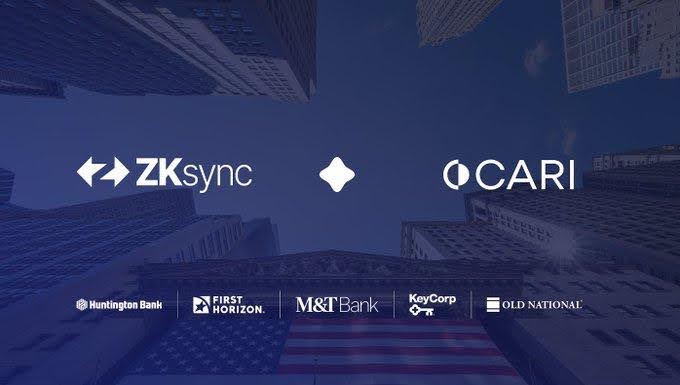
ZKsync Powers Tokenized Deposits in Major U.S. Bank Network

ZKsync Powers Tokenized Deposits in Major U.S. Bank Network

Key Takeaways: Five U.S. regional banks are building a tokenized deposit network on ZKsync. Deposits remain FDIC-insured bank liabilities, not stablecoins. The
Share
Crypto Ninjas2026/03/18 00:41