The post U.S. Treasury’s GENIUS Act Sets Stage for Privacy-First Crypto Regulation, Says a16z appeared first on Coinpedia Fintech News As the U.S. Treasury begins implementing the GENIUS Act, a landmark bill shaping the future of stablecoin and cryptocurrency regulation, Michele Korver, Head of Regulatory at a16z Crypto, has issued a powerful call for privacy-preserving innovation. In a detailed submission to the Treasury, Korver outlined how decentralized digital identity (DID) and zero-knowledge proofs (ZKPs) can …The post U.S. Treasury’s GENIUS Act Sets Stage for Privacy-First Crypto Regulation, Says a16z appeared first on Coinpedia Fintech News As the U.S. Treasury begins implementing the GENIUS Act, a landmark bill shaping the future of stablecoin and cryptocurrency regulation, Michele Korver, Head of Regulatory at a16z Crypto, has issued a powerful call for privacy-preserving innovation. In a detailed submission to the Treasury, Korver outlined how decentralized digital identity (DID) and zero-knowledge proofs (ZKPs) can …

U.S. Treasury’s GENIUS Act Sets Stage for Privacy-First Crypto Regulation, Says a16z
2025/11/12 14:28
3 min read
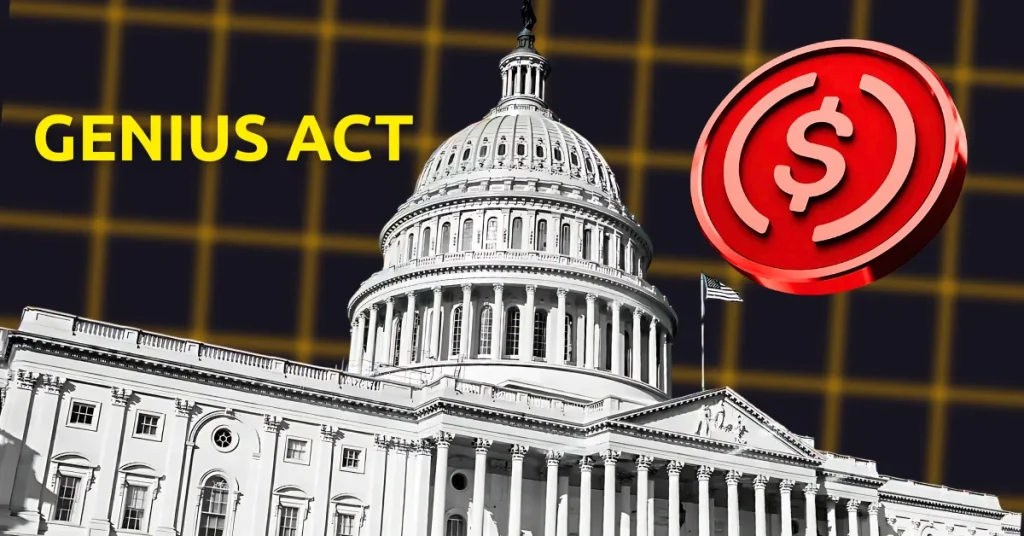
GENIUS Act

The post U.S. Treasury’s GENIUS Act Sets Stage for Privacy-First Crypto Regulation, Says a16z appeared first on Coinpedia Fintech News

As the U.S. Treasury begins implementing the GENIUS Act, a landmark bill shaping the future of stablecoin and cryptocurrency regulation, Michele Korver, Head of Regulatory at a16z Crypto, has issued a powerful call for privacy-preserving innovation.

In a detailed submission to the Treasury, Korver outlined how decentralized digital identity (DID) and zero-knowledge proofs (ZKPs) can revolutionize compliance, making the crypto ecosystem safer, more transparent, and less intrusive.

Building a Privacy-First Framework for Crypto Compliance

Korver emphasized that decentralized digital identity, supported by privacy-preserving cryptography, can achieve two critical goals simultaneously: strengthening national security and protecting civil liberties.

She argued that current AML/KYC rules are outdated, restricting financial institutions from adopting blockchain-based identity tools. a16z urged FinCEN to use its exceptive relief authority to modernize these frameworks, allowing both crypto firms and traditional financial institutions to verify users through digital wallets instead of centralized databases.

According to Korver, this approach would empower individuals to control their personal data while still giving regulators the visibility needed to prevent illicit activity. Technologies such as zero-knowledge proofs (ZKPs) and multi-party computation (MPC) enable verification without exposing private information, reducing risks of surveillance, hacking, and large-scale data breaches common in centralized systems.

Smarter Crypto Compliance, Not Stricter Surveillance

In its submission, a16z Crypto explained that decentralized identifiers (DIDs) and verifiable digital credentials (VDCs) can help meet obligations under the Bank Secrecy Act (BSA) and Anti-Money Laundering (AML) laws.

However, these innovations are not yet recognized under existing Customer Identification Program (CIP) rules. a16z urged FinCEN to officially recognize decentralized identity as a valid “non-documentary” compliance method and extend these exemptions to money service businesses (MSBs) a category that includes most crypto exchanges.

  • Also Read :
  •   Top Two ‘Whale Approved’ Altcoins To Stack For Massive December Rally
  •   ,

The firm also called for clearer definitions to distinguish decentralized stablecoins from payment stablecoins, a move that would promote fair competition and innovation-friendly oversight. a16z highlighted data showing that less than 1% of on-chain transactions are illicit, arguing that smart, tech-driven solutions, not tighter surveillance, are the key to effective compliance.

Crypto Community Backs a16z’s Privacy-First Approach

Following Korver’s remarks, crypto leaders and developers across X (Twitter) voiced strong support for privacy-first decentralized identity frameworks.

Notably, crypto user Phan Howellter and developers from Inception praised the initiative, calling it a major step toward responsible, innovation-driven digital finance.

Many see the GENIUS Act as a turning point for the U.S., offering a chance to lead globally in privacy-centric crypto regulation, proving that privacy, compliance, and progress can thrive together in the next chapter of digital asset oversight.

Never Miss a Beat in the Crypto World!

Stay ahead with breaking news, expert analysis, and real-time updates on the latest trends in Bitcoin, altcoins, DeFi, NFTs, and more.

bell icon Subscribe to News

FAQs

What is the GENIUS Act and why is it important for crypto?

The GENIUS Act is a U.S. Treasury initiative setting new standards for stablecoin and crypto regulation, focusing on innovation and financial safety.

How can decentralized digital identity improve crypto compliance?

It lets users verify identity through digital wallets, protecting privacy while meeting AML and KYC rules without centralized data storage.

What role do zero-knowledge proofs play in financial regulation?

ZKPs allow verification of user information without revealing personal data, reducing risks of hacking, leaks, and over-surveillance.

How could the GENIUS Act change crypto regulation in the U.S.?

It could modernize AML and stablecoin rules, promoting privacy-first innovation and making the U.S. a leader in responsible digital finance.


Market Opportunity
Union Logo
Union Price(U)
$0.001035
$0.001035$0.001035
-6.58%
USD
Union (U) Live Price Chart
Disclaimer: The articles reposted on this site are sourced from public platforms and are provided for informational purposes only. They do not necessarily reflect the views of MEXC. All rights remain with the original authors. If you believe any content infringes on third-party rights, please contact [email protected] for removal. MEXC makes no guarantees regarding the accuracy, completeness, or timeliness of the content and is not responsible for any actions taken based on the information provided. The content does not constitute financial, legal, or other professional advice, nor should it be considered a recommendation or endorsement by MEXC.

You May Also Like

New Children’s Book Celebrates Creative Discovery and Family Acceptance

New Children’s Book Celebrates Creative Discovery and Family Acceptance

Shelley Smith Adams' new children's book "Coley Bear's Blue-Tastic Day!" celebrates childhood creativity inspired by her son with Down Syndrome. Available on Amazon
Share
Citybuzz2026/02/19 16:00
If you put $1,000 in Intel at the start of 2025, here’s your return now

If you put $1,000 in Intel at the start of 2025, here’s your return now

The post If you put $1,000 in Intel at the start of 2025, here’s your return now appeared on BitcoinEthereumNews.com. Intel (NASDAQ: INTC) and Nvidia (NASDAQ: NVDA) announced a new partnership on Thursday, September 18, working on several generations of custom data center and computing chips designed to boost performance in hyperscale, enterprise, and consumer applications. As part of the collaboration, Nvidia, the undisputed leader of the semiconductor sector, will also invest $5 billion in Intel by purchasing its common stock at a price of $23.28 per share. Following the news, Intel stock jumped more than 30% in pre-market trading, while Nvidia saw a 3% uptick, a welcome change following weeks of shaky performance and controversies regarding its Chinese sales. Trading at $31.34 at the time of writing, INTC shares are up 54.99% year-to-date (YTD). INTC YTD stock price. Source: Google Accordingly, a $1,000 investment in the tech company at the start of the year would now be worth $1,549.90, giving you a return of $549.90. ‘The next era of computing’ The move follows a wave of fresh backing for the struggling Intel, including a nearly $9 billion U.S. government purchase of a 10% stake just weeks ago and a $2 billion investment from Japan’s SoftBank. As such, the deal has the potential to put Intel back into the game after years of trying to catch up not just with Nvidia but also AMD (NASDAQ: AMD) and Broadcom (NASDAQ: AVGO). “This historic collaboration tightly couples NVIDIA’s AI and accelerated computing stack with Intel’s CPUs and the vast x86 ecosystem — a fusion of two world-class platforms. Together, we will expand our ecosystems and lay the foundation for the next era of computing,” wrote Nvidia founder and chief executive officer (CEO), Jensen Huang.  However, the U.S. government’s direct involvement suggests that more is at stake than simply propping up Intel, as it likely reflects a broader concern about keeping America competitive…
Share
BitcoinEthereumNews2025/09/18 22:47
OpenAI and Paradigm Launch EVMbench to Measure AI Smart Contract Security

OpenAI and Paradigm Launch EVMbench to Measure AI Smart Contract Security

The post OpenAI and Paradigm Launch EVMbench to Measure AI Smart Contract Security appeared on BitcoinEthereumNews.com. OpenAI and Paradigm have introduced EVMbench
Share
BitcoinEthereumNews2026/02/19 16:46