The Future of Work and Gender Equality in the AI Era
The future of work and gender equality in the AI era is taking on increasingly tangible contours.
The statements made during a recent press conference at the Web Summit in Lisbon reveal how artificial intelligence is not only revolutionizing the way people work, but also how it could redefine social, cultural, and gender balances in the coming years.
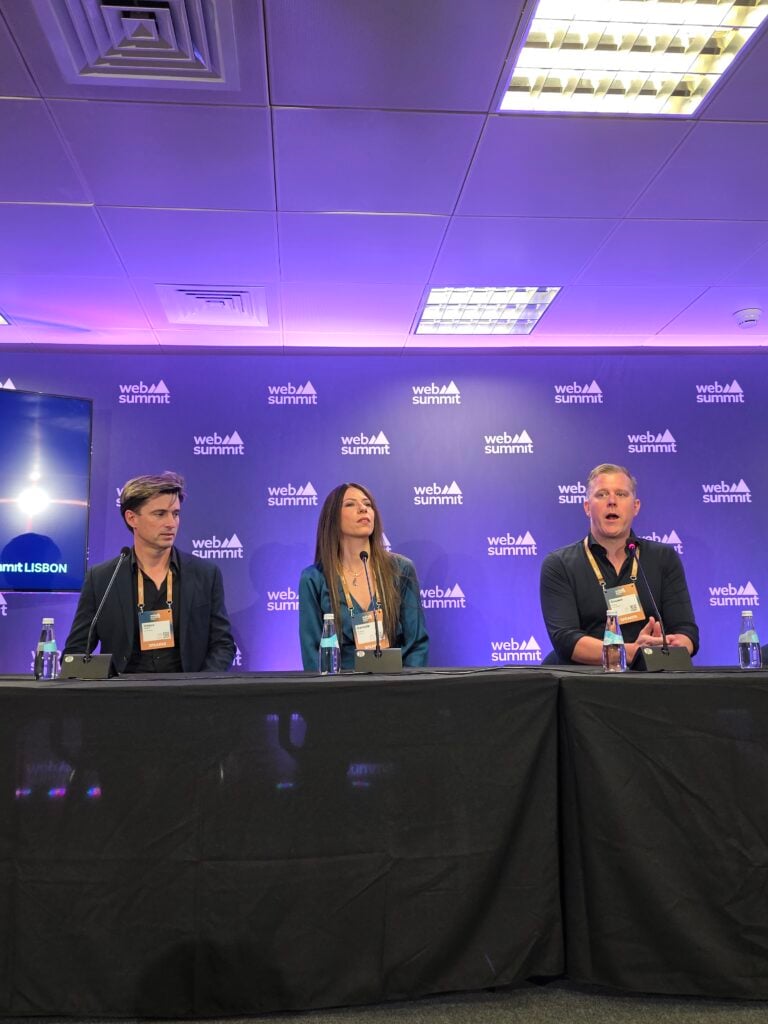
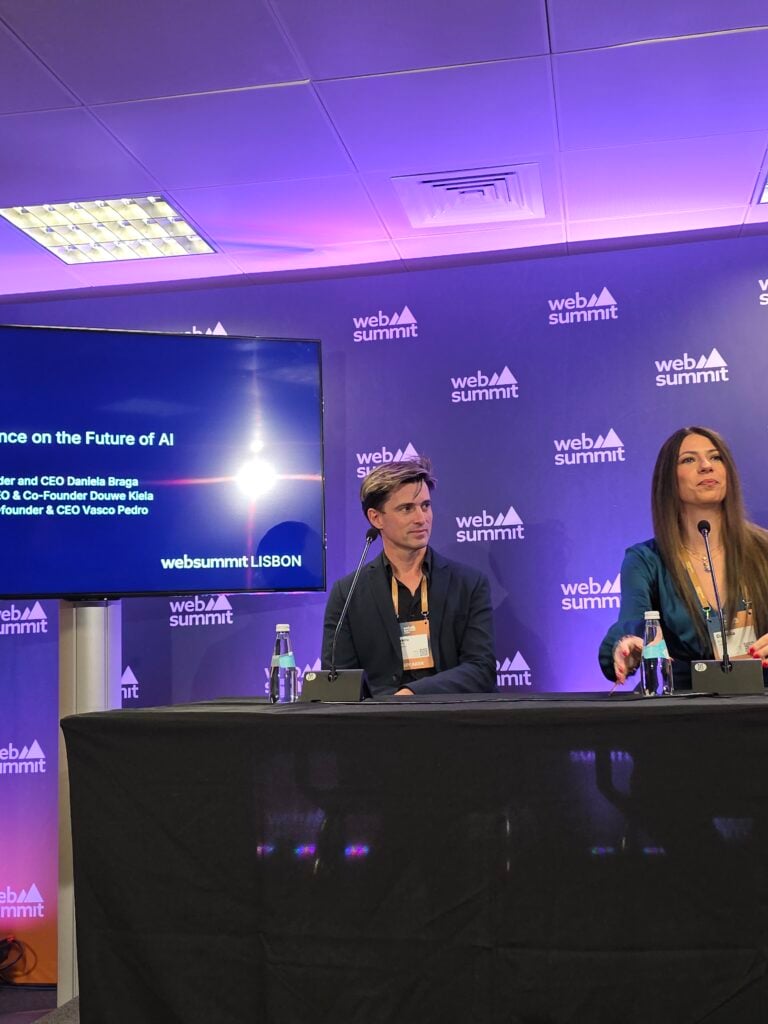
In the afternoon, a press conference was held with AI representatives such as Daniela Brega (Defined AI), Vasco Pedro (Spinnable), and Douwe Kiela (Contextual AI) on the future of artificial intelligence.
How AI is Transforming Work: From Code to Natural Language
One of the key points that emerged concerns the radical transformation of professions, particularly in the technology sector.
Engineers and developers, for instance, no longer simply write code: today they interact with language models to generate it, explained Kiela.
This shift from programming language to English — or a natural language — marks a new era where linguistic skills and the ability to formulate clear instructions become essential.
“A year ago they were writing code, today they are instructing language models on how to write it,” explains Kiela. “Productivity has increased enormously, but the nature of the work is completely different.”
Humans and AI as Team Colleagues
Another interesting point highlights how some companies are already operating with hybrid teams composed of humans and artificial agents.
“Our team consists of 15 members: 5 humans and 10 non-humans. The AI agents work on Slack as if they were people, producing as much as their human colleagues,” states Pedro.
This model, known as an AI-augmented organization, is becoming increasingly common. More agile companies avoid complex hierarchical structures and leverage the ability of artificial intelligences to handle repetitive tasks, analysis, and content production. The result is increased productivity and a reduction in management levels necessary to coordinate large workgroups.
The Ethical Challenge: AI as a Tool for Empowerment or Exclusion
One of the key dilemmas concerns how companies will decide to utilize these technologies.
On one hand, there are those who focus on automation to reduce costs and staff; on the other, those who choose to use AI to empower people and amplify their capabilities. “The companies that will use artificial intelligence to strengthen human capital will be the ones that succeed,” says Braga.
This distinction is crucial: AI can be seen as an occupational threat or as a strategic ally to renew skills, processes, and roles. It all depends on how it is integrated.
Gender Bias and Artificial Intelligence
The second part of the discussion addresses a frequently underestimated topic: gender equality in the AI era.
A journalist raises a provocative question: if for centuries men have dominated religion, politics, economy, and technology, isn’t it perhaps inevitable that artificial intelligence inherits these biases?
Braga responds by emphasizing that, while acknowledging the existence of the problem, the increasing interaction between humans and AI could lead to an unexpected outcome.
“The more artificial intelligence communicates at a human level, the more I see women benefiting from it,” he states. “Women, generally stronger in communication and empathy, are proving to be more effective in engaging with language models.”
A Gender Gap Still Too Wide
However, the data remains relentless. According to the World Economic Forum, the global gender gap is not narrowing: in fact, full parity is estimated to be more than 120 years away.
Only 10% of leadership roles in Fortune 500 companies are held by women. And, in many countries, female leadership continues to face cultural and political resistance.
“In the United States, diversity and inclusion are no longer a priority. And this is a worrying sign,” observed Braga. However, AI can represent neutral ground: “If we can influence models through data, we can counteract biases and create fairer systems, regardless of who leads them.”
The Future of Work and Gender Equality in the AI Era
The final reflection is clear: artificial intelligence is already here, and it is redefining the very concept of work and skills. Companies that can use it to empower — not replace — people will be the ones setting the new standards of success.
At the same time, technological progress offers a rare opportunity to rebalance gender representation, but only if data and models are designed in a truly inclusive manner.
Ultimately, the future of work and gender equality in the AI era will depend on ethical and strategic choices. Technology can be neutral, but the way we use it is not.


You May Also Like

One Of Frank Sinatra’s Most Famous Albums Is Back In The Spotlight

Data focus shifts to payrolls – Societe Generale